

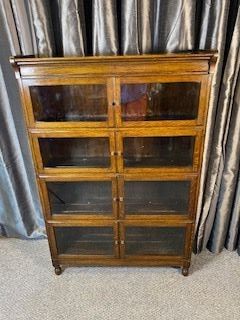
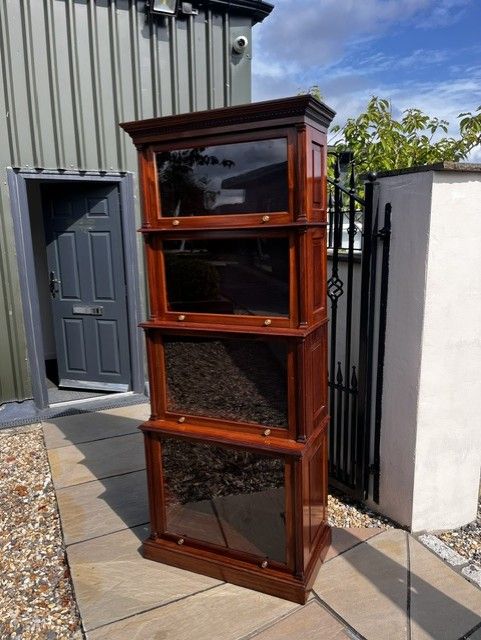
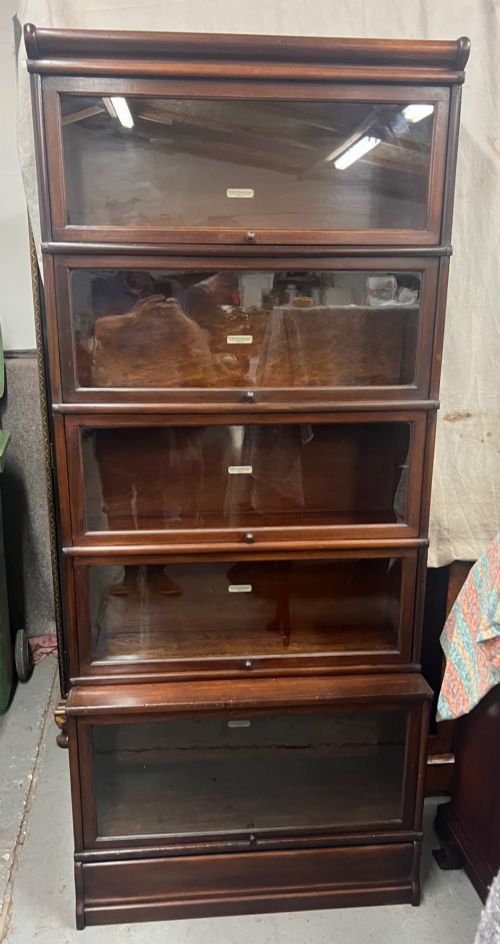
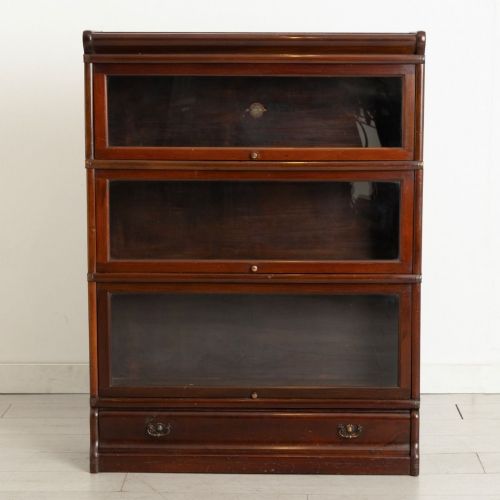
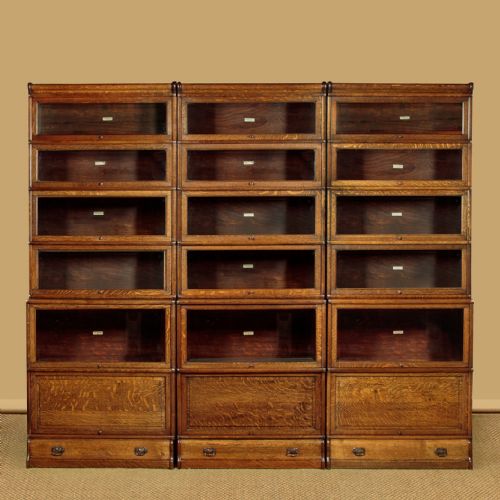

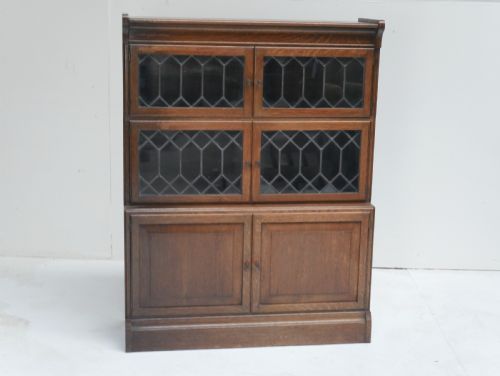

Edwardian Sectional Library Cabinet
An edwardian sectional library cabinet solves the perennial problem of housing a growing collection of books with modular elegance.
Edwardian Sectional Library Cabinet
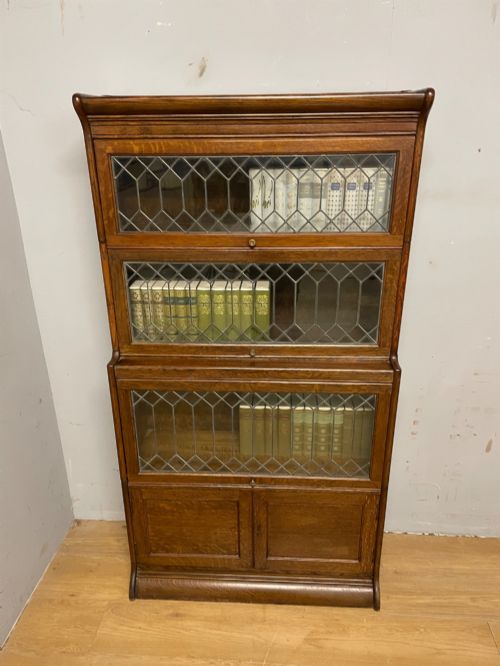
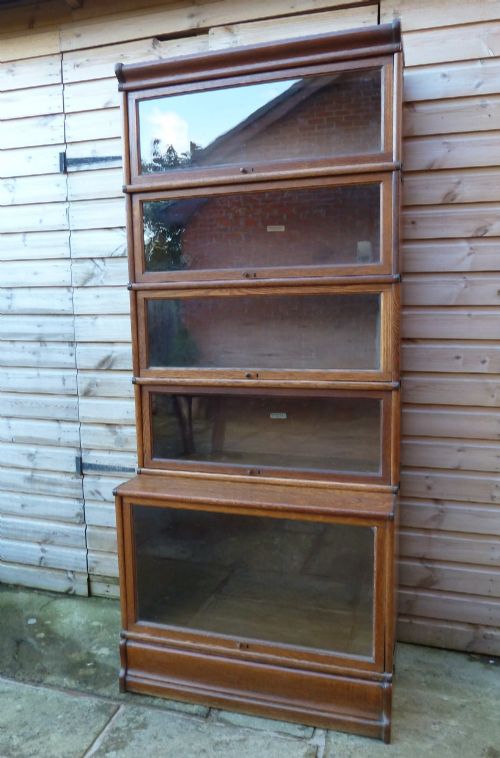
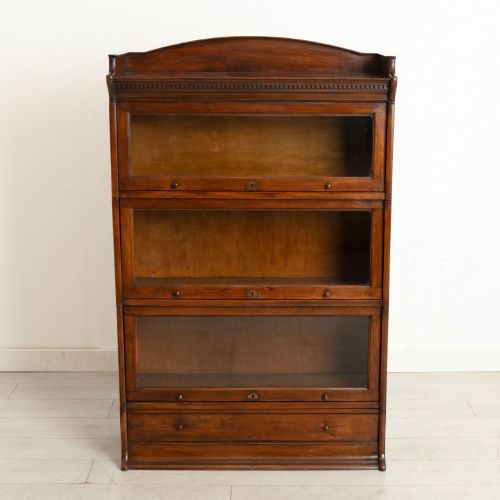
An edwardian sectional library cabinet is a modular bookcase designed with individual stacking tiers that allow the owner to add capacity as a library grows. These pieces typically date from the Edwardian era through the early twentieth century, spanning periods from nineteen hundred up to nineteen thirty.
The form is heavily represented by stacking barrister designs and modular office bookcases that separate into distinct glazed compartments. Oak and mahogany serve as the primary woods, often accompanied by specialist makers such as Globe Wernicke, Lebus, Minty, AMYL, and Gunn.
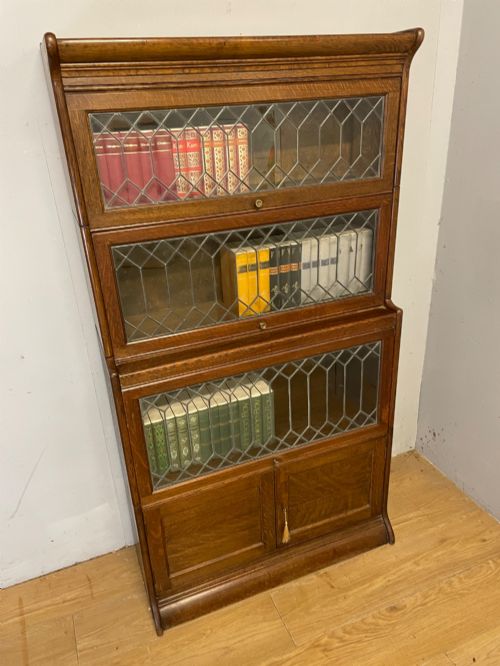
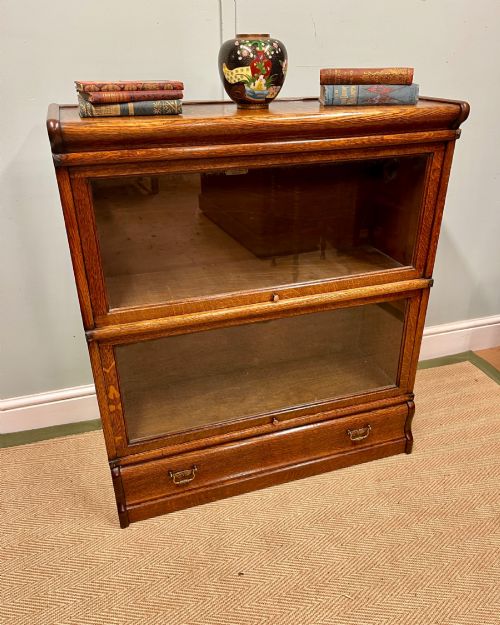
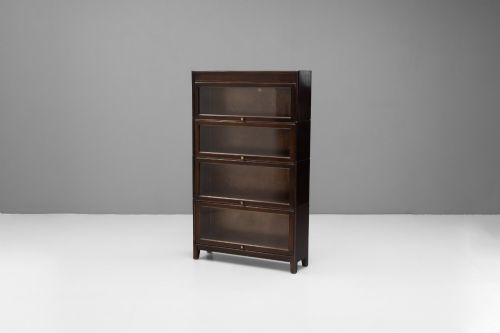
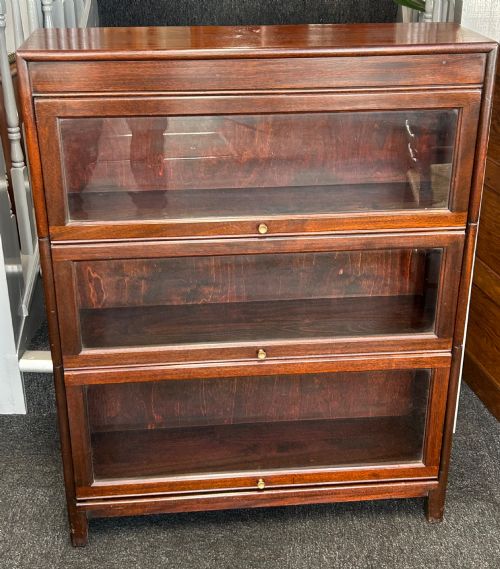
Most examples appear in either rich golden oak or solid mahogany, frequently featuring glass doors that lift and slide inside the tier. Buyers will encounter configurations ranging from tall narrow units to multi-tiered pairs designed for domestic studies and professional offices alike.
Materials and construction methods
Cabinet makers built these modular units using solid oak and mahogany, occasionally incorporating wood inlay for decorative distinction. Metal and brass hardware facilitated the complex lifting mechanisms required for each glazed tier to slide smoothly.
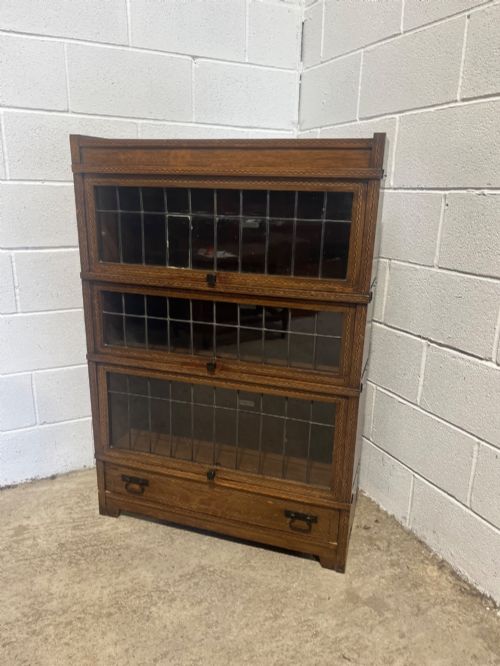
Lead also appears in specialised glazed doors, adding structural definition to the glass panels. Each tier was engineered to fit precisely upon the next without permanent fixtures, relying on accurate joinery to maintain stability when stacked.
Edwardian Sectional Library Cabinet Retail Price Guide 2026
Typical asking prices for edwardian sectional library cabinet among the pieces listed under this phrase on Sellingantiques today, from the lower quarter to the upper quarter. They describe what is for sale here now, not the wider market.
Some cabinet doors incorporate leaded glass, ensuring your oldest volumes can peer out through tiny lead squares.
Distinctions in craftsmanship and materials
The distinction between standard office utility pieces and finer domestic examples rests largely on the choice of timber and the sophistication of the internal action. Solid mahogany and figured golden oak command higher regard than plain utility variants.
Branded pieces bearing maker marks from established workshops demonstrate superior consistency in the brass hardware and the smooth operation of the glazed doors. Original glass and undisturbed wood finishes further separate standard utilitarian stacks from exceptional survivals.
Globe Wernicke·Lebus·Minty·AMYL·Gunn
The Edwardian Sectional Library Cabinet Glossary
- Sectional bookcase
- A modular shelving unit composed of separate stacking tiers that can be assembled to various heights. This design allows for easy transport and future expansion.
- Barrister bookcase
- A specific type of stacking cabinet traditionally used by lawyers to protect heavy volumes behind glass doors. The individual shelves feature lifting mechanisms.
- Globe Wernicke
- A prominent manufacturing firm synonymous with the patented stacking bookcase design. Their pieces often bear specific maker stamps.
- Leaded glass
- Small panes of glass held together by strips of lead to form decorative geometric patterns within the cabinet doors. This technique provides both strength and visual texture.
- Wood inlay
- The insertion of contrasting pieces of wood into the primary surface to create decorative patterns. This detail elevates plain timber cabinets into more formal furniture.
Edwardian Sectional Library Cabinet: Frequently Asked Questions
How do sectional library cabinets work?
Each tier is a separate wooden box with a glazed door that lifts on a metal pivot and slides into the top of the compartment. The sections simply stack one upon another beneath a base and beneath a top cornice.
This modular construction allows the entire bookcase to be dismantled easily for relocation or added to when a book collection expands.
What is a barrister bookcase?
A barrister bookcase is a specific stacking cabinet designed with enclosed glass tiers to protect legal volumes from dust and moisture. Barristers and lawyers relied on these modular units because they could be loaded with books and transported intact.
Over time, the domestic market adopted the form for home libraries and studies due to its practical proportions.
Are these cabinets stable when stacked high?
The individual tiers locate securely onto one another using tongue-and-groove or dowel joints built into the frames. When placed on a flat floor, the weight of the timber and the books keeps the entire column upright without wall fixings.
Tall configurations of four or five tiers remain remarkably sturdy when properly balanced.
How do I identify the maker?
Many sectional cabinets carry paper labels, metal tags, or stamped signatures inside the wooden carcass or on the metal hardware. Prominent makers such as Globe Wernicke, Lebus, and Minty typically placed their marks near the inner shelf or backing.
Examining the brass mechanism and the style of the wooden knob can also point toward a specific manufacturer.