



Edwardian Scroll Arm Sofa
These edwardian scroll arm sofa listings offer comfortable seating with distinctive curved supports that suit both traditional and relaxed rooms.
Edwardian Scroll Arm Sofa
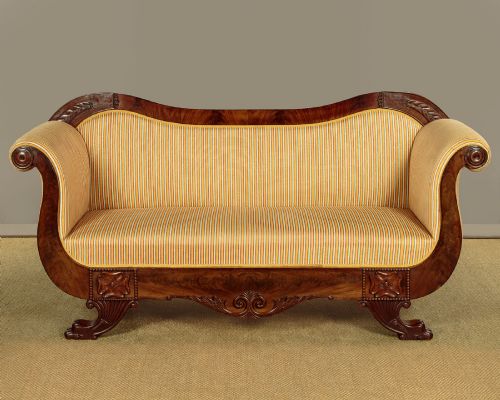
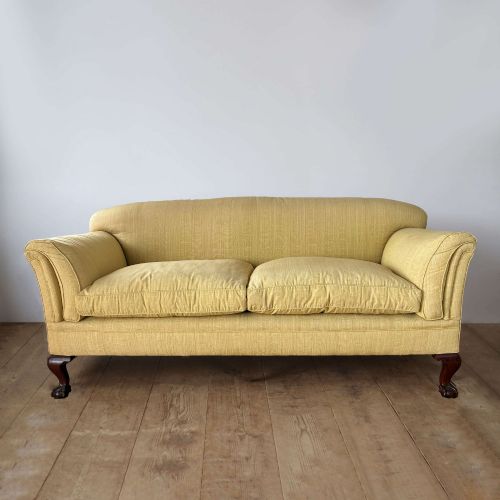
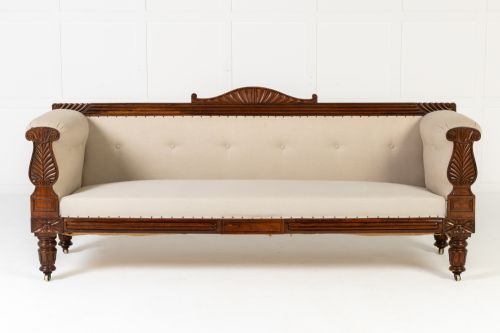
When you search for an edwardian scroll arm sofa, you are looking at upholstered seating that spans several periods including the Edwardian era, Victorian times, and the Regency period. These pieces encompass forms such as sofas, settees, window seats, benches, and chaise longues.
The version you are most likely to meet on this page combines generous upholstered seating with curved armrests. Pieces range from mahogany and walnut frames to examples featuring feather down fillings and various fabric coverings.
Makers such as Howard and Sons appear among these examples, alongside diverse pieces representing styles like Queen Anne Revival and English Country House. The selection draws on wood, brass, rosewood, and upholstery fabrics to create varied seating options.
How they were made
Frames rely on timbers such as mahogany, walnut, and rosewood, providing a sturdy skeleton for the upholstered body. Brass fittings occasionally appear on these frames as decorative or structural elements.
Upholstery involves fabric coverings stretched over padded interiors, sometimes incorporating feather down for cushioning. Traditional joinery and woodworking techniques shape the exposed wooden frames and scroll arms.
Edwardian Scroll Arm Sofa Retail Price Guide 2026
Typical asking prices for edwardian scroll arm sofa among the pieces listed under this phrase on Sellingantiques today, from the lower quarter to the upper quarter. They describe what is for sale here now, not the wider market.
The object types span standard sofas, window seats, benches, and chaise longues from the nineteenth and twentieth centuries.
What varies in quality
The choice of timber forms a primary distinction between pieces, with rich rosewood and figured mahogany sitting above simpler wooden frames. Finer construction shows in the precision of the scroll arm shaping and the integration of brass details.
Upholstery standards differentiate the range, particularly where feather down fillings provide superior comfort compared to standard padding. The pedigree of the maker, such as pieces associated with Howard and Sons, elevates the standing of an item.
Howard and Sons
The Edwardian Scroll Arm Sofa Glossary
- Scroll arm
- An armrest shaped into a tight inward or outward spiral. This profile defines the classic silhouette of many period couches and settees.
- Window seat
- A long, narrow upholstered bench designed to fit beneath a window recess. These items often feature low backs or simple arms.
- Feather down
- A soft mixture of feathers and fine plumage used for cushion stuffing. This material provides a plush and yielding seat.
Edwardian Scroll Arm Sofa: Frequently Asked Questions
What is an edwardian scroll arm sofa?
An edwardian scroll arm sofa is a piece of upholstered seating defined by its curved, scroll-shaped armrests. These items combine wooden frames with soft padding and fabric covers.
They draw on designs from the Edwardian period as well as earlier Victorian and Regency styles. Their distinctive armrests provide both comfortable support and a refined silhouette.
How do I identify a scroll arm?
A scroll arm curves inward or outward in a tight spiral reminiscent of a rolled scroll. This shape forms the distinct terminal point of the sofa's armrest.
Craftsmen carved these curves directly into the wooden framework or built them up using shaped upholstery over a sturdy armature.
Where were window seats used?
Window seats were traditionally placed in deep window recesses to provide a comfortable spot for reading or viewing the grounds. They offered convenient seating in formal rooms without blocking natural light.
These pieces match the height and depth of standard window sills while incorporating the upholstery styles of their respective periods.
What materials make up these frames?
Frames are constructed from various woods including mahogany, walnut, and rosewood. Brass components occasionally supplement the wooden structure.
The choice of timber depends on the period and the maker, with finer woods reserved for more formal reception rooms.