
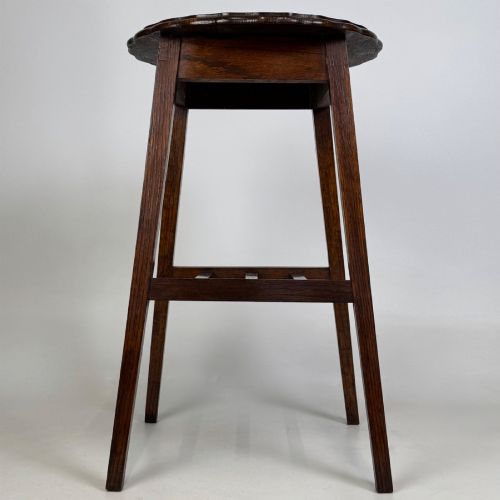
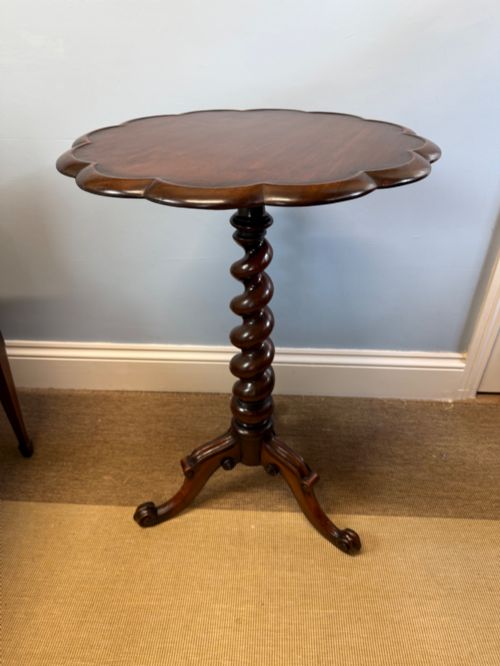
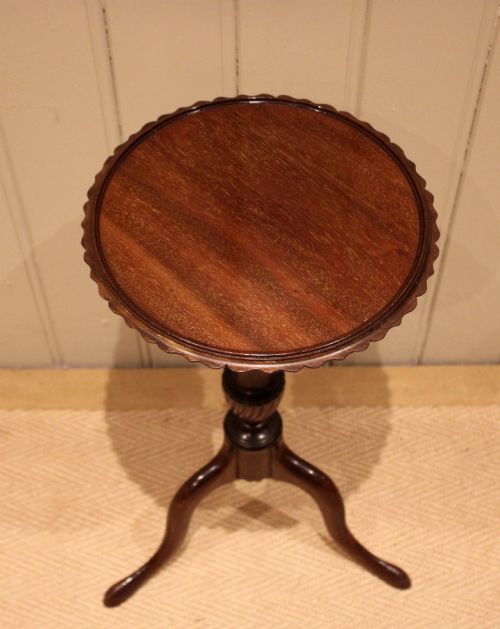
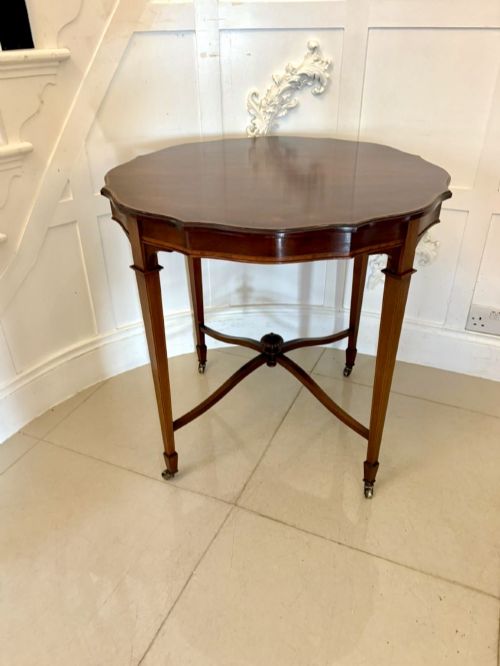
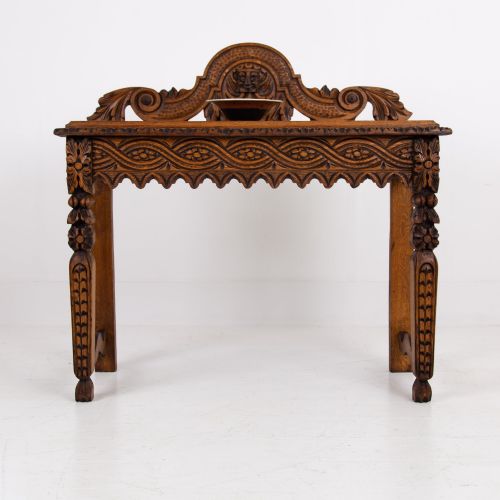
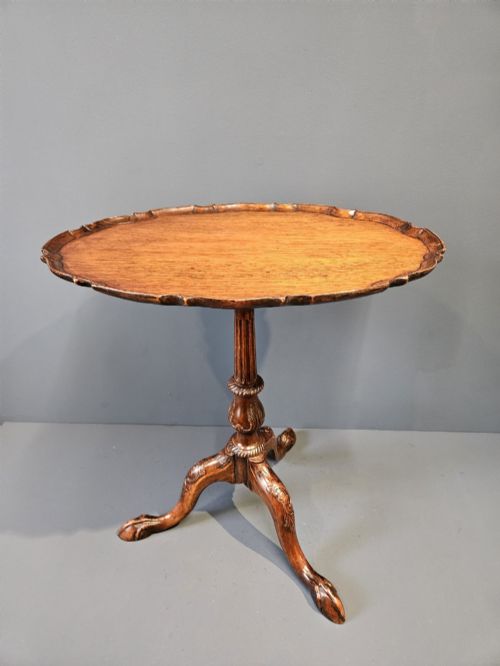
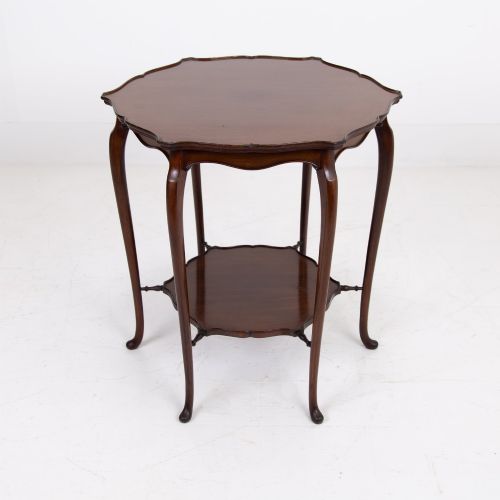
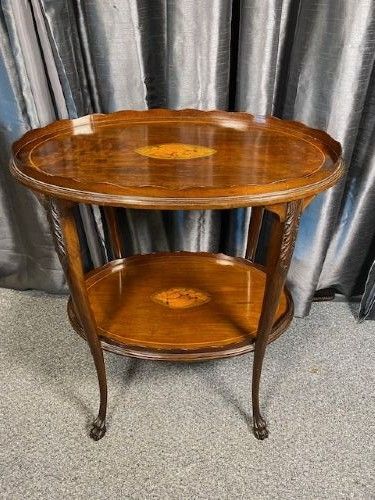
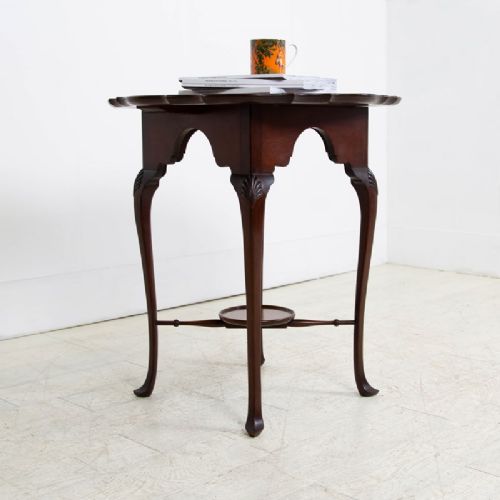
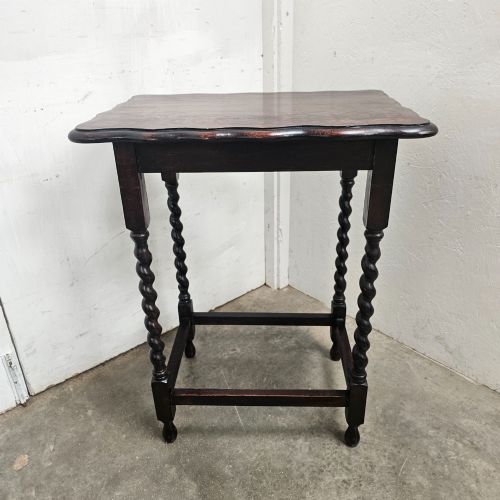
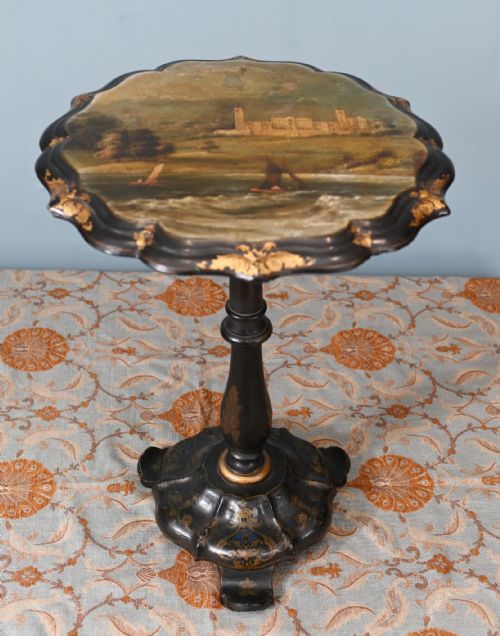
Edwardian Scalloped Side Table
An Edwardian scalloped side table brings gentle curves and warm timber to a room, offering a functional surface shaped by early twentieth-century cabinet-making.
Edwardian Scalloped Side Table
An edwardian scalloped side table sits quietly beside a sofa or chair, offering a compact surface for lamps, books or tea. These pieces generally date from the period around nineteen hundred to nineteen twenty, drawing on earlier georgian and victorian forms while keeping a lighter footprint.
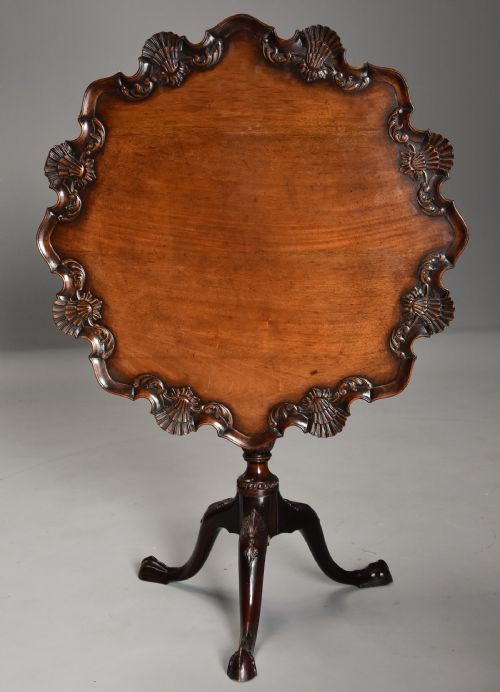
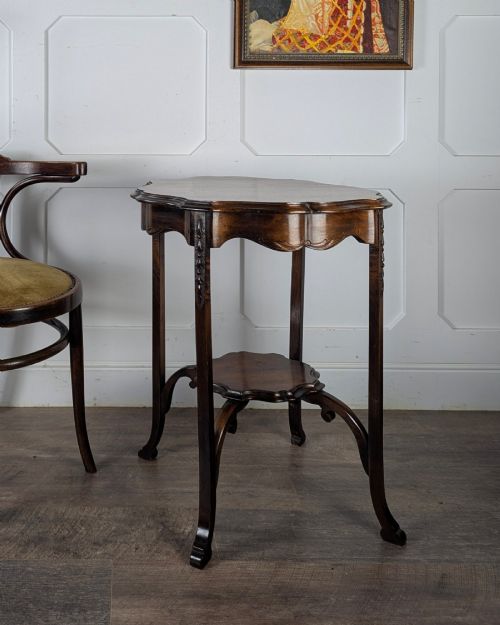
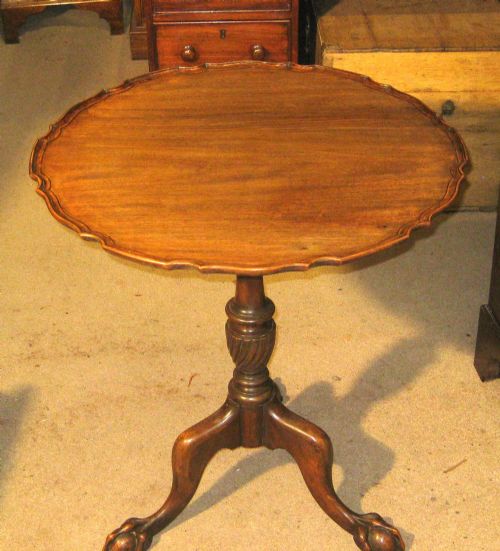
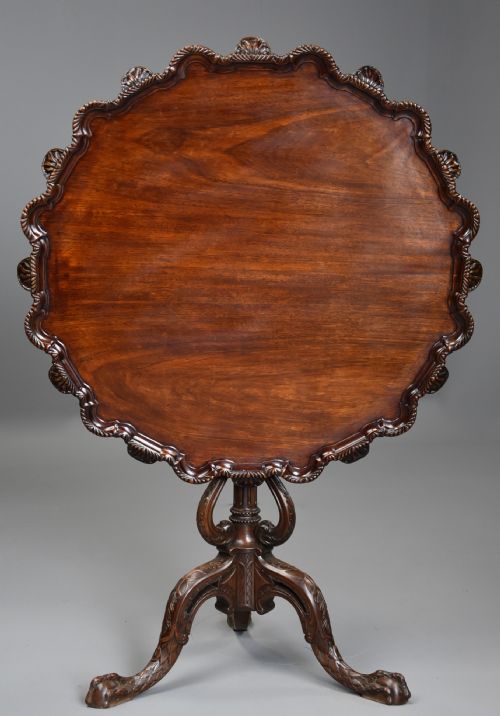
The selections on this page span occasional tables, wine tables and centre tables, often sharing the shaped or piecrust edges that define the style. Makers of the period drew on traditional timbers like mahogany and walnut to create functional furniture for the home.
Materials and Construction
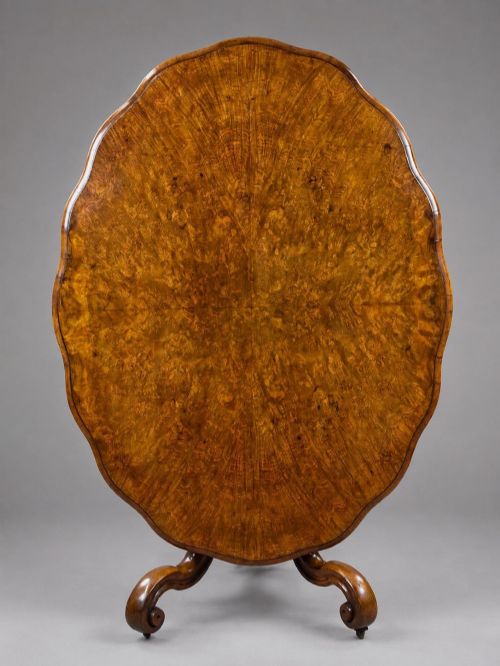
Cabinet-makers relied primarily on mahogany and walnut, frequently selecting figured grains or burr veneers to add texture to modest table tops. Satinwood inlay and intricate wood marquetry added decorative contrast along borders and friezes.
Tripod bases and turned pedestals provide support for tilt-top mechanisms, while fixed four-legged frames use sturdy joinery to bear weight. Brass fittings appear on associated pieces like candlesticks and occasional stands, completing the construction details.
Early twentieth-century households utilised portable wooden tables specifically designed to hold heavy brass candlesticks before electric lighting became universal.
Judging Quality
Quality rests on the crispness of the shaped or scalloped edge and the precision of any wood inlay. Plain timber requires rich grain and careful polishing, whereas lesser examples show flat surfaces and hurried finishing.
Structural integrity distinguishes everyday utility from finer workshop output, particularly in the fit of tilt-top mechanisms and the stability of tripod legs. Tables bearing maker attribution or refined proportion command closer attention from collectors.
Shapland and Petter·Morris and Co
The Edwardian Scalloped Side Table Glossary
- Scalloped edge
- A border shaped into a series of continuous curves resembling a scallop shell. This profile defines the decorative silhouette of the table top.
- Piecrust edge
- A raised, carved rim around a circular table top that mimics pastry work. It is typically found on tripod and wine tables.
- Tripod base
- A pedestal support resting on three legs spreading outward from a central column. This design keeps small tables stable on uneven floors.
- Occasional table
- A small, movable table designed for a specific, transient use in a sitting room or parlour. These pieces were produced in large numbers during the edwardian era.
- Marquetry
- Decorative patterns formed by inserting pieces of contrasting wood veneer into a solid ground. It appears on borders and table tops to add visual depth.
Edwardian Scalloped Side Table: Frequently Asked Questions
What is an edwardian scalloped side table used for?
These tables served as versatile surfaces in period drawing rooms and parlours for holding small lamps, tea cups or decorative items. Their compact footprint made them easy to reposition as domestic needs changed throughout the day.
Today they function effectively as bedside stands, plant holders or lamp tables in contemporary interiors. Their curved edges soften the straight lines of modern furniture.
How do I date an edwardian side table?
Dating relies on timber selection, construction methods and stylistic cues recorded in the inventory. Pieces from the edwardian period often feature lighter mahogany frames, satinwood stringing and subtle inlay work.
Earlier nineteenth-century antecedents tend to be heavier in construction, utilising denser walnut and more robust turning. Secondary woods inside drawers and block joints also help confirm the era of manufacture.
How do I care for a walnut or mahogany table top?
Timber surfaces respond best to regular dusting with a dry, soft cloth and occasional treatment with quality beeswax to nourish the grain. Direct sunlight and sudden changes in room temperature should be avoided to prevent the veneer from drying out.
Using coasters and mats protects the polished finish from moisture rings and heat marks. Careful placement away from radiators preserves both the wood and any delicate inlay.