


Edwardian Satinwood Settee
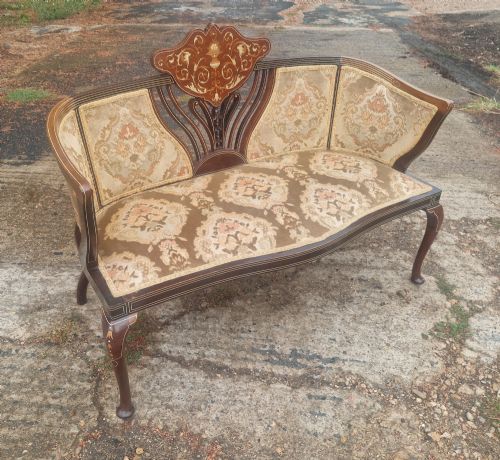
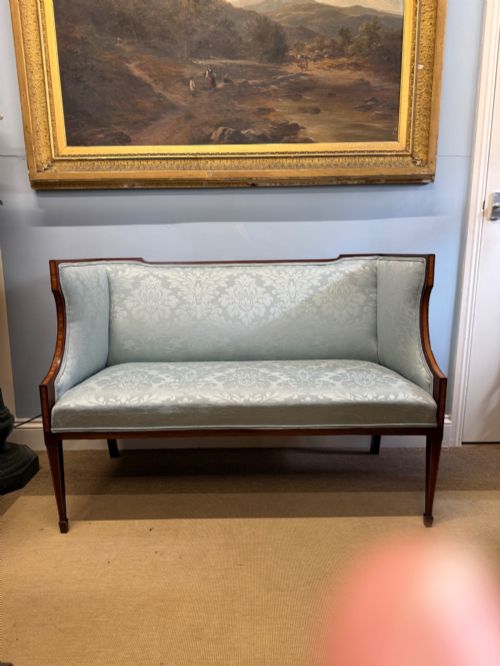
An edwardian satinwood settee brings light, figured timber and refined neoclassical grace into a drawing room.
Edwardian Satinwood Settee
These items appear in various forms, including two-seater sofas, salon settees, caned benches, and end-of-bed sofas. Some survive as part of larger salon suites alongside matching chairs, whilst others stand alone as decorative focal points.
Originating primarily from the Edwardian era and late Victorian times, these settees combine delicate proportions with decorative woodwork. They serve as both functional seating and artistic statements of their period.
How they were made
Makers utilised satinwood and mahogany as the primary timbers, frequently enhancing the surfaces with intricate marquetry inlays. Structural frames often incorporate cane panels or provide foundations for fabric upholstery, damask fabric, and traditional padding.
Artisans applied hand-painted details directly onto the timber, complemented occasionally by bone inlay work. These combined techniques defined the polished aesthetic of the Sheraton Revival style.
Several pieces feature bone inlay alongside painted satinwood, proving that Edwardian cabinetmakers loved a tiny touch of unexpected luxury.
What varies in quality
The distinction between tiers rests upon the precision of the marquetry and the crispness of any hand-painted decoration on the satinwood. Finer examples display meticulous craftsmanship in the joinery and superior selection of figured timber veneers.
The integrity of the underlying mahogany frame and the preservation of original caning or upholstery materials also influence the standing of a piece. Subtlety of design and harmony of proportions separate standard workshop production from exceptional items.
The Edwardian Satinwood Settee Glossary
- Satinwood
- A durable, lustrous timber with a golden sheen frequently employed for fine veneering and inlay work on period furniture. Its reflective surface gives these settees their characteristic brightness.
- Sheraton Revival
- A late nineteenth and early twentieth-century design movement inspired by eighteenth-century neoclassical furniture forms. It is marked by painted motifs, delicate tapered legs, and symmetrical geometry.
- Marquetry
- The art of applying decorative pieces of veneer to a structure to form intricate pictorial patterns. On these settees, floral and classical motifs frequently adorn the backrests.
- Caning
- A woven plant material used for seat panels or back inserts, offering lightweight strength and texture. It appears on selected painted satinwood examples.
Edwardian Satinwood Settee: Frequently Asked Questions
What is an edwardian satinwood settee?
It is a decorative upholstered or caned seat made around the early twentieth century, featuring light satinwood veneers and neoclassical design influences.
These pieces were traditionally designed for formal reception rooms and parlours rather than heavy daily lounging.
How do I tell an original edwardian piece apart?
Examine the timber construction methods, the ageing of the satinwood veneer, and the style of the hand-painted or inlaid decorations.
Period pieces typically show appropriate material shrinkage and hand-cut joinery beneath the upholstery or frame.
How do I live with a satinwood settee?
Position the settee away from direct sunlight and excessive heat sources to protect the delicate satinwood finish and painted details from fading.
Treat the surface with care, utilising soft cloths for dusting and maintaining stable indoor humidity.