



Edwardian Satinwood Card Table
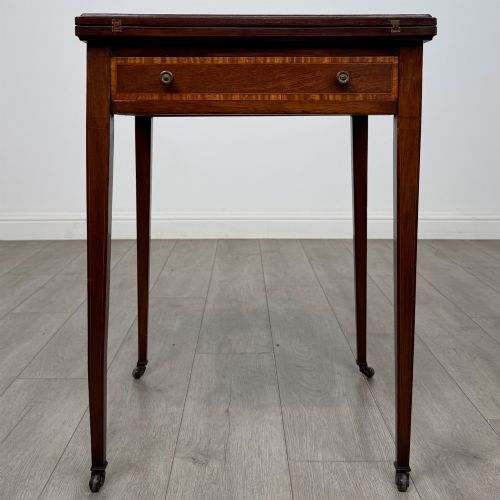
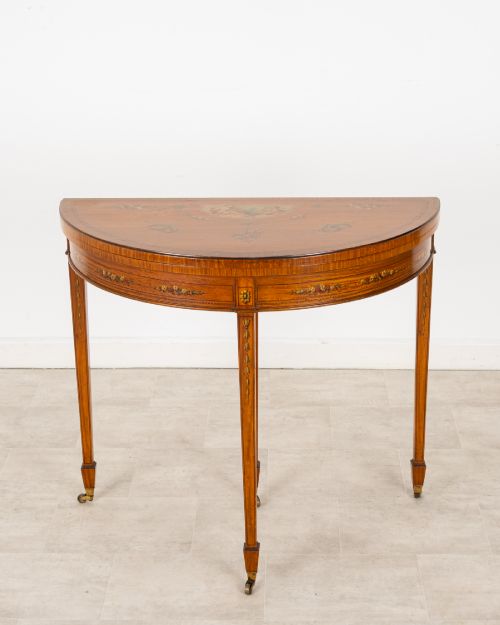
An edwardian satinwood card table brings polished timber and folding surfaces into a room, designed to open for games or sit flat against a wall.
Edwardian Satinwood Card Table
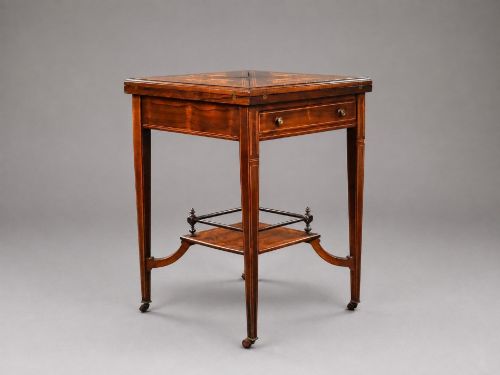
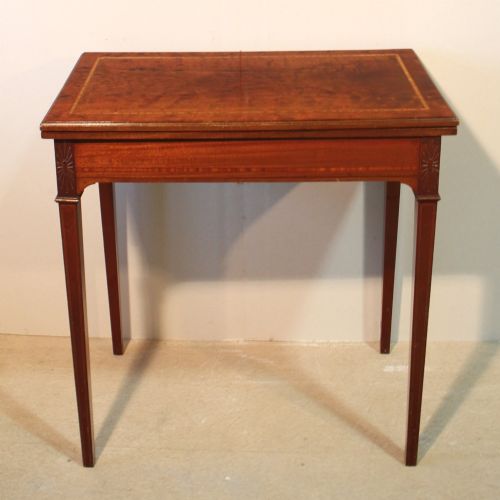
When you search for an edwardian satinwood card table, you encounter folding and envelope tops constructed during the early twentieth century alongside revival pieces referencing the eighteenth century. These forms function primarily as games tables and side tables within domestic settings.
How they were made
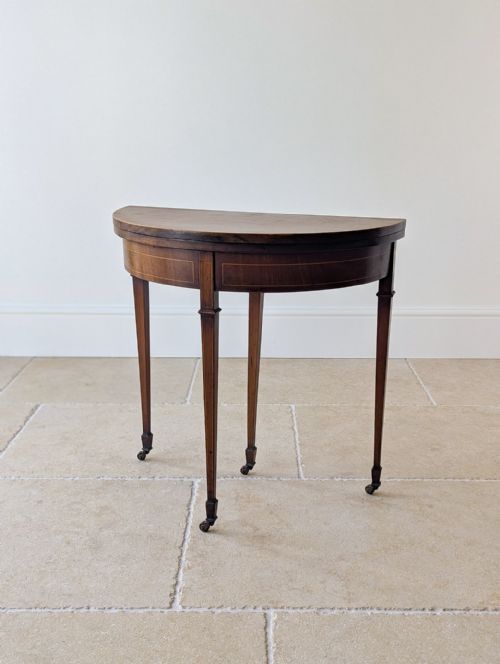
The construction relies on solid and veneered timbers such as satinwood, mahogany and rosewood, shaped into demi-lune, rectangular and envelope formats. Brass hinges and pivots support the folding leaves that transform a compact console into a square or semi-circular playing surface.
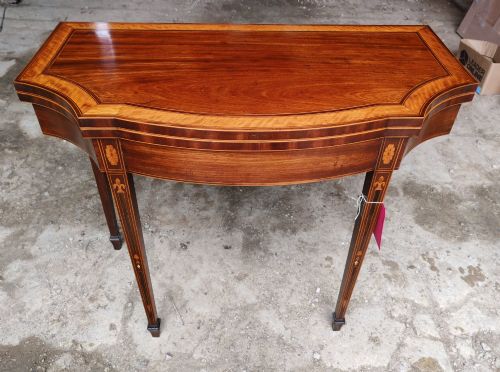
Decoration involves marquetry inlay, satinwood inlay, boxwood lines and hand painting applied directly to the timber. These techniques create contrasting borders and central motifs that define the aesthetic of the period.
Several examples incorporate drinks compartments alongside the traditional green baize, acknowledging that card games often involved refreshment.
What varies in quality
The degree of refinement in the painted decoration and marquetry inlay distinguishes standard examples from more ambitious ones. Crisp execution of cabinetwork and stable movement in the folding mechanism separate better workshops from simpler production.
The selection of figured timber veneers for the top influences the visual impact when the table stands closed. Coherence in the Sheraton revival styling and the integration of contrasting wood species dictate the overall character.
Howard And Son's·Maples Of London
The Edwardian Satinwood Card Table Glossary
- Demilune
- A half-moon shape used for table tops and console formats designed to stand flush against a wall.
- Envelope top
- A folding mechanism featuring four triangular flaps that rotate and open outward to reveal a baize-lined playing surface.
- Marquetry
- Fitted pieces of various woods and other materials assembled to form decorative pictures or geometric patterns on a surface.
- Sheraton Revival
- A late nineteenth and early twentieth century design movement drawing inspiration from the neoclassical furniture of Thomas Sheraton.
- Satinwood
- A lustrous yellow-brown timber imported from the tropics, prized for its fine grain and reflective quality.
Edwardian Satinwood Card Table: Frequently Asked Questions
How do I use an edwardian satinwood card table today?
These tables function effectively as side or console furniture against a wall when closed. Opening the top reveals a surface suited for occasional use or display.
Placing them in a drawing room or living space preserves their traditional purpose while keeping the timber protected from direct heat.
How do I distinguish an original eighteenth century table from a revival piece?
Construction methods, secondary timbers and the character of the wear help identify the manufacturing period. Eighteenth century examples show structural traits characteristic of the Georgian era.
Revival pieces from the Edwardian period or late nineteenth century adopt the Sheraton style with construction details typical of later workshops.
How do I care for satinwood veneer?
Maintaining satinwood requires keeping the timber away from direct sunlight and sudden changes in temperature. Regular dusting with a soft dry cloth protects the polished finish.
Avoiding moisture and harsh cleaning products ensures the delicate inlay and painted details remain stable over time.