
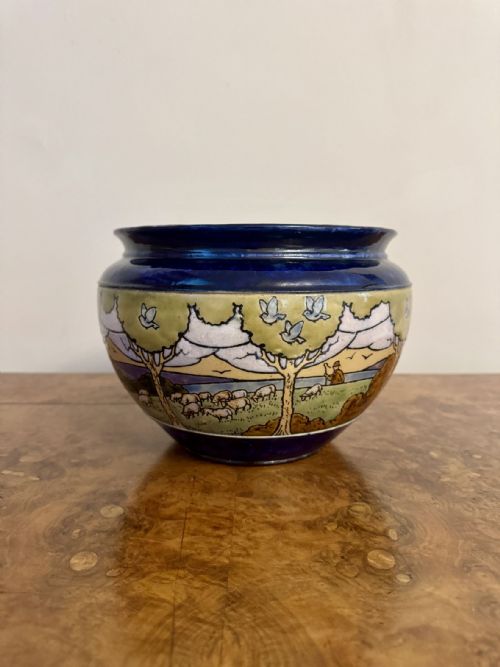
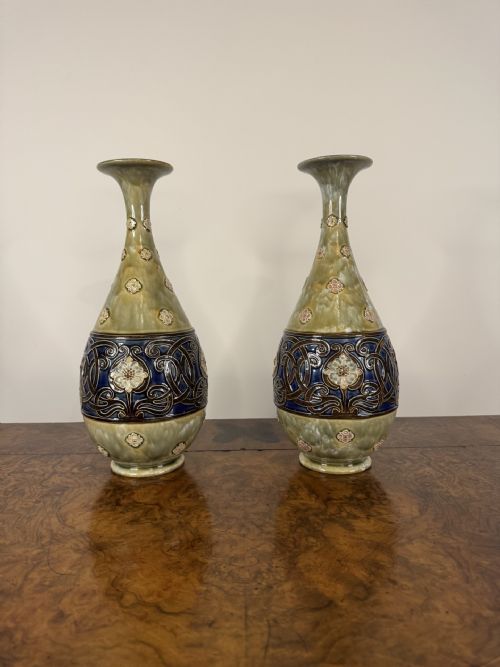


Edwardian Royal Doulton Pottery
Edwardian royal doulton pottery brings tactile richness to a room, combining robust stoneware forms with delicate hand-painted detail.
Edwardian Royal Doulton Pottery
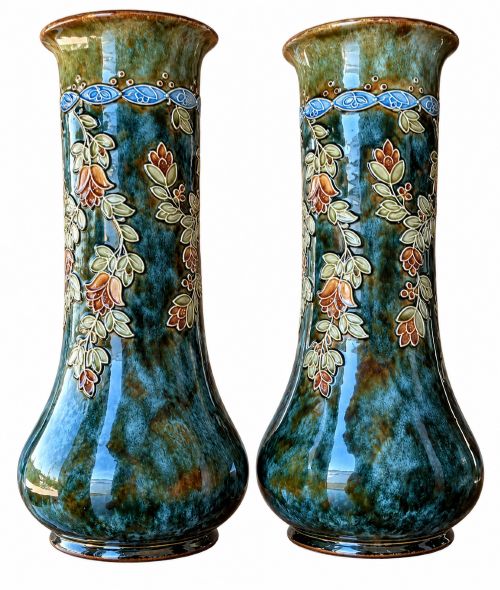
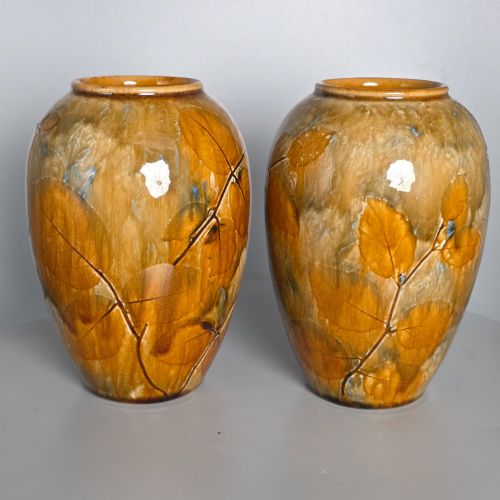
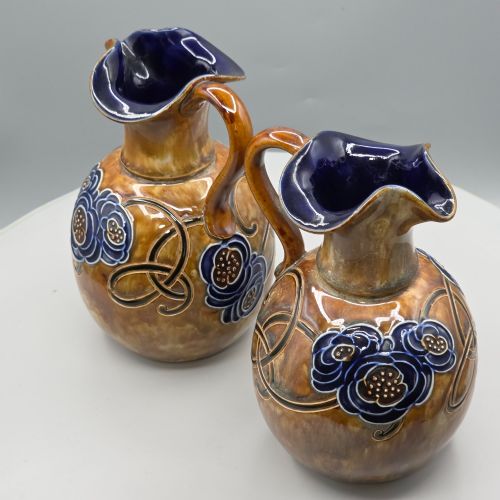
When searching for edwardian royal doulton pottery, buyers encounter robust domestic wares and decorative display pieces produced around the turn of the twentieth century. The selection leans heavily towards striking baluster vases, jugs, and jardinières shaped from dense stoneware and earthenware.
Pieces span styles from the flowing organic lines of Art Nouveau to the structured simplicity of the Arts and Crafts movement. Collectors often meet matched pairs and cabinet pieces bearing hand-painted floral motifs or rich autumnal colour palettes.
How they were made
Potters shaped dense stoneware and ceramic bodies on the wheel or pressed them into moulds before applying intricate surface decoration. Artisans utilised salt glazing and applied enamel details to achieve textured finishes that caught the light.
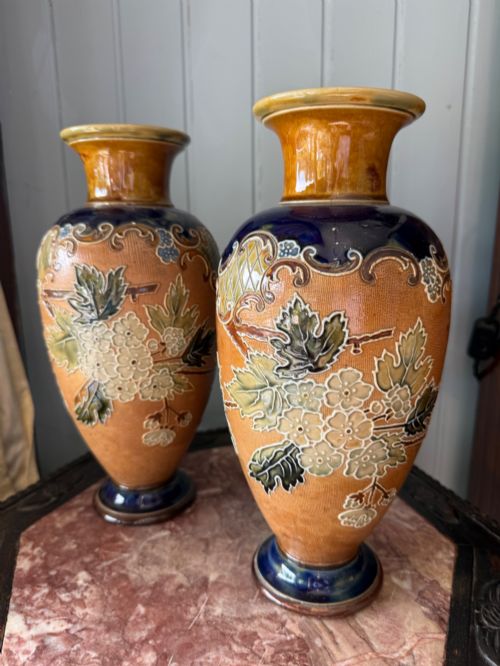
Many leading examples display hand-painted floral scenes or gilt highlights applied over coloured grounds and fired at high temperatures. Specialised techniques such as Slater's patent lace texturing imparted distinct pattern impressions directly into the clay body.
Listings feature items spanning the Victorian era through the 1920s, with stoneware and glazed ceramic predominating.
What varies in quality
Quality rests upon the crispness of the moulded relief and the control demonstrated in the hand-painted execution. Pieces bearing the named signatures of accomplished studio artists command attention for their individual artistic expression.
The harmony of the glaze application and the complexity of the decorative scheme separate standard production items from premier studio commissions. Balance in the vessel form and richness in the colour saturation define the upper tier.
Louisa Wakely·John H Plant·Ethel Beard·R Allen
The Edwardian Royal Doulton Pottery Glossary
- Stoneware
- A robust ceramic type fired at high temperatures until vitrified and impervious to liquid. This durable medium forms the backbone of many heavy studio vases and jardinières.
- Baluster
- A cylindrical vessel form that swells gently towards the lower portion before tapering at the neck. This silhouette provides a stable canvas for expansive floral decoration.
- Slater's Patent
- A specific decorative technique involving the pressing of lace or fabric into damp clay to create a textured surface. Artisans often enhanced these impressed patterns with coloured enamels.
- Jardiniere
- A large ornamental pot designed to hold potted plants or floral arrangements. These substantial vessels frequently mirror the glaze and pattern schemes of matching mantel vases.
- Flambe
- A rich, reduction-fired glaze technique producing mottled red and blue metallic streaks. This unpredictable chemical reaction creates unique cloud-like patterns across the ceramic surface.
Edwardian Royal Doulton Pottery: Frequently Asked Questions
How do I identify edwardian pieces?
Look for specific impressed factory backstamps and date ciphers underneath the ceramic base. Stylistic cues such as stylized floral motifs and naturalistic colour palettes also help pinpoint the era.
Matching the design characteristics with known period pattern books confirms the timeline of production. Studio signatures written by hand often provide an exact year or decorator attribution.
Were these pots used daily?
Many items served practical domestic functions alongside their decorative appeal, including tobacco jars, chamber sticks, and table lamp conversions. Robust stoneware bodies ensured daily utility in the Victorian and Edwardian household.
Display vessels such as large jardinières and baluster vases remained primarily in the drawing room. Their heavy construction nonetheless allowed them to hold water and fresh blooms safely.
What is lambeth stoneware?
Lambeth stoneware refers to the pottery produced at the London branch of the factory, renowned for utilitarian and decorative salt-glazed wares. This specific workshop nurtured many independent artists who signed their finished pieces.
The London studio distinguished itself through heavy textured surfaces and intricate applied ornamentation. These urban pieces often contrast with the finer porcelain bodies produced elsewhere.
How should I clean my pottery?
Dust surfaces gently with a soft, dry cloth to prevent the accumulation of grime within textured recesses. Avoid harsh chemical cleaners or abrasive scouring pads that might damage delicate enamel details.
Keep pieces away from direct, prolonged sunlight to protect painted surface colours from fading. Handle heavy stoneware securely by the base rather than the applied handles to prevent accidental strain.