


Edwardian Stoneware Vases
Edwardian stoneware vases are robust vessels of notable character, combining durable ceramic bodies with fluid glazes and distinct surface decoration to anchor any room.
Edwardian Stoneware Vases
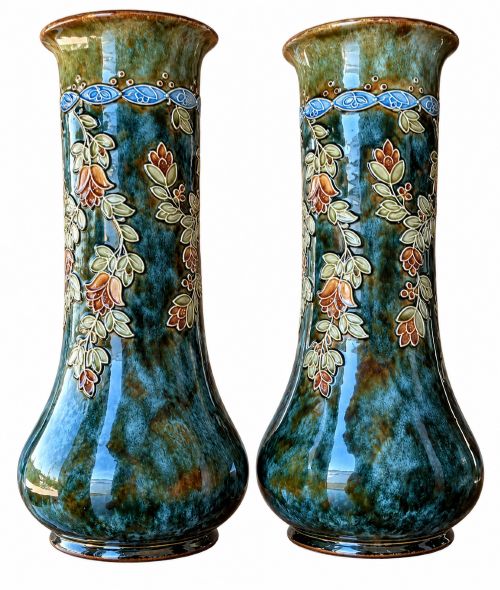
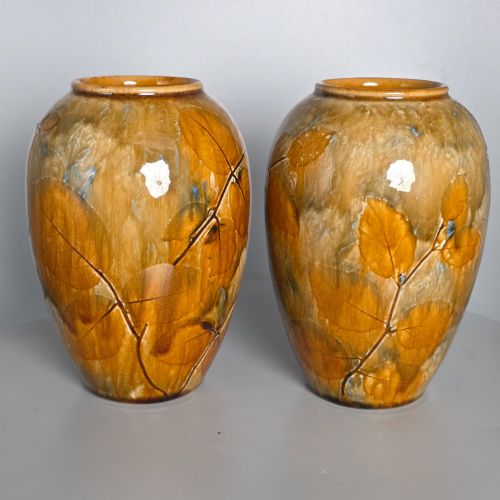
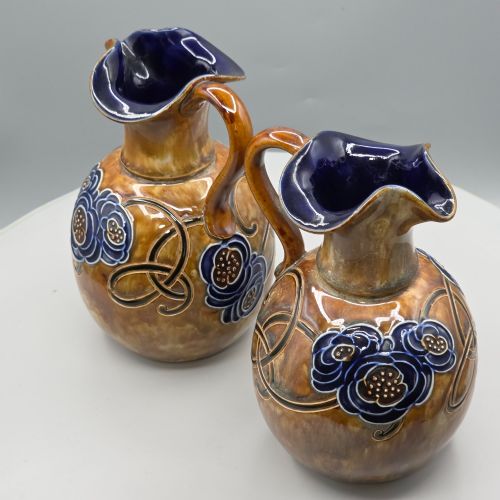
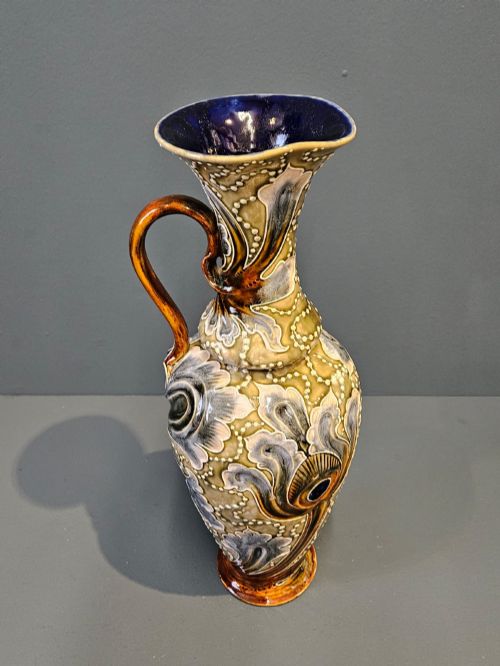
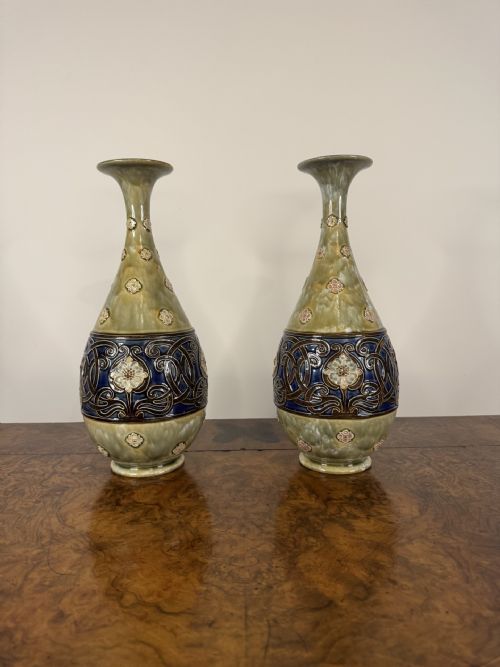
Edwardian stoneware vases encompass sturdy ceramic vessels produced around the turn of the twentieth century, often carrying stylistic traits from the preceding Victorian era as well as the emerging Art Nouveau and Arts and Crafts movements. The pieces appearing here range from baluster forms and shaped jugs to decorative ewers, demonstrating the heavy utilitarian roots and artistic aspirations of the period.
Makers of these objects utilised durable fired clay bodies, coating them in rich glazes and enamel highlights to achieve varied surface textures. Buyers encounter matched pairs and individual vessels carrying distinct floral patterns, leaf motifs, and patterned bands that reflect the design priorities of early twentieth-century workshops.
How they were made
Potters shaped durable stoneware and earthenware bodies on the wheel or in moulds before applying intricate surface decoration, such as raised paste floral motifs and textured lace impressions. These bodies required high-temperature firing to achieve strength and impermeability.
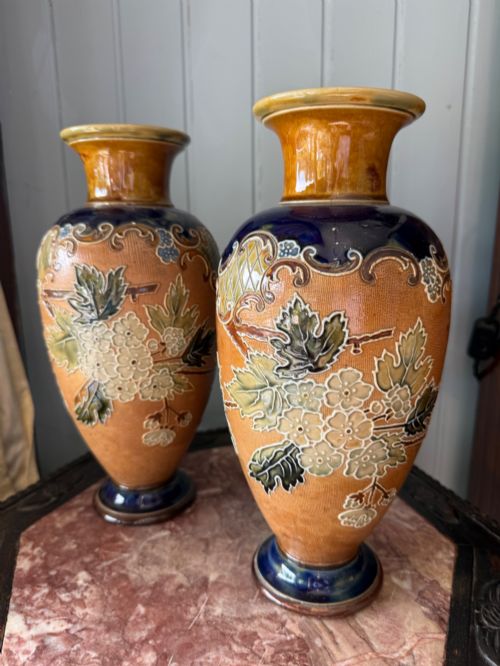
Glazes, enamel colours, and occasional gilt details were then applied to the fired ceramic surface, often followed by a secondary firing to fuse the decorative layers. Workshops employed specialised techniques like Slater's Patent texturing alongside hand-painted botanical designs executed by named studio artists.
Listings feature stoneware, earthenware, and ceramic materials embellished with glaze, enamel, and gilt across Victorian, Edwardian, and Art Deco styles.
What varies in quality
Quality rests in the crispness of the moulded or incised pattern and the intentional application of the glaze, where top examples exhibit confident brushwork and balanced enamel placement rather than muddy colour transitions. The presence of specific artist signatures or distinct decorative techniques elevates an individual piece above standard production wares.
Proportion and form define the upper tier of these vessels, showing harmonious contours in baluster shapes and ewers. Pairs matching precisely in height, tone, and decorative detail command greater recognition than assembled matches.
Royal Doulton·Royal Lancastrian·Louisa Wakely·Ethel Beard·Richard Joyce
The Edwardian Stoneware Vases Glossary
- Stoneware
- A dense, vitrified ceramic pottery fired at high temperatures until non-porous. It provides a durable foundation for complex glazes and surface ornament.
- Baluster
- A architectural form featuring a rounded lower body tapering to a narrower neck. This silhouette appears frequently among the taller decorative vessels.
- Ewer
- A large jug with a wide spout and looped handle, originally intended for pouring water. In this context, it functions primarily as an ornamental ceramic display piece.
- Enamel
- Opaque glass-like paint applied over a fired glaze or ceramic body for surface decoration. It adds vibrant colour accents to floral patterns and geometric bands.
Edwardian Stoneware Vases: Frequently Asked Questions
How do I clean my stoneware vase?
Dust the exterior gently with a dry or slightly damp soft cloth to protect delicate enamel and gilt details. Avoid submerging older ceramic pieces in water for extended periods.
Check the interior for residue and clean carefully with warm water if needed, ensuring the piece dries thoroughly afterwards.
Can these vases hold fresh flowers?
Most of these glazed stoneware vessels are fully vitrified and capable of holding water safely for short periods. However, older ceramic bodies can be porous or develop hairline fractures over time.
Place a small glass or plastic liner inside if you intend to use the vase regularly for fresh arrangements with water.
What defines the Art Nouveau style here?
Art Nouveau examples feature flowing, organic lines inspired by natural forms, including stylised plant stems, asymmetrical leaf patterns, and whipped curves. These motifs appear incised or painted across the ceramic body.
The palette often embraces autumnal tones and muted greens that complement the sinuous contour of the vase.
How do I identify Slater's Patent pieces?
Slater's Patent items display distinctive textured surfaces created by pressing lace or fabric directly into the damp clay before firing. This technique produced a characteristic patterned background.
Workshops then highlighted these textured areas with enamel colours and metallic glazes to create contrast against smooth glazed sections.