


Royal Doulton Lambeth Pottery
Royal Doulton Lambeth pottery comprises robust salt-glazed vessels and decorative art pottery that bring rich texture and organic form to any room.
Royal Doulton Lambeth Pottery
Royal Doulton Lambeth pottery represents a significant movement in British ceramics, encompassing robust salt-glazed vessels and decorative art pottery. When searching for royal doulton lambeth pottery, buyers encounter items produced across the late nineteenth and early twentieth centuries, spanning periods from Victorian and Edwardian eras up to the 1920s.
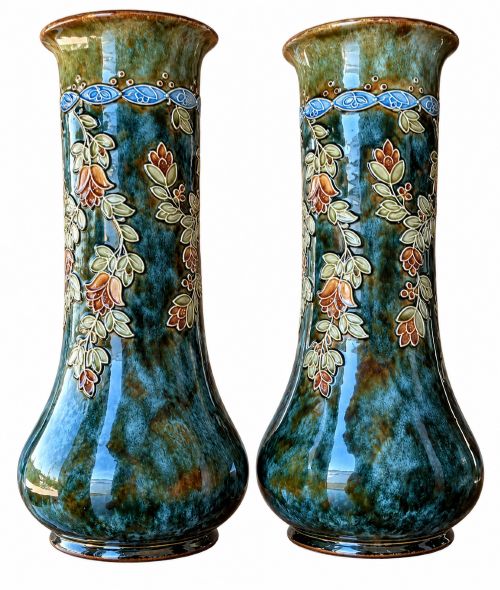
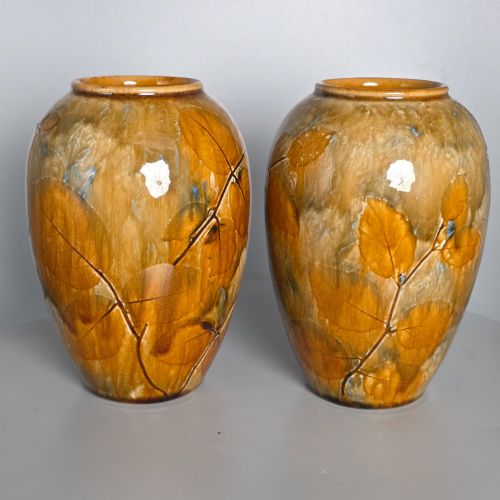
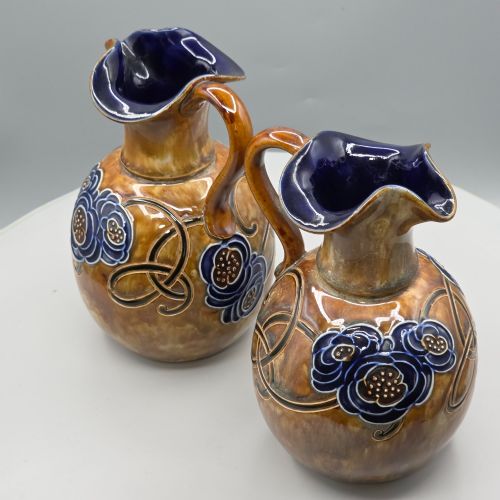
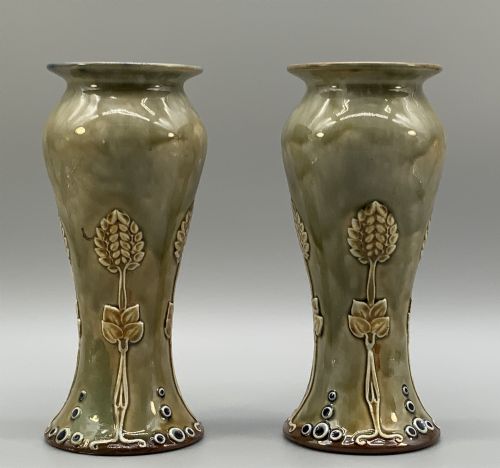
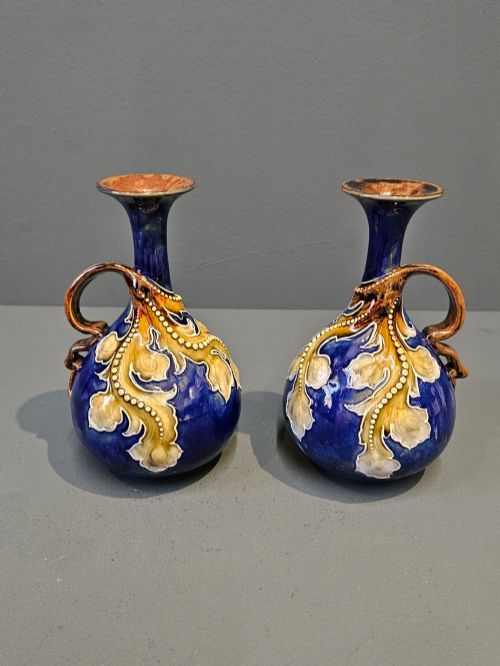
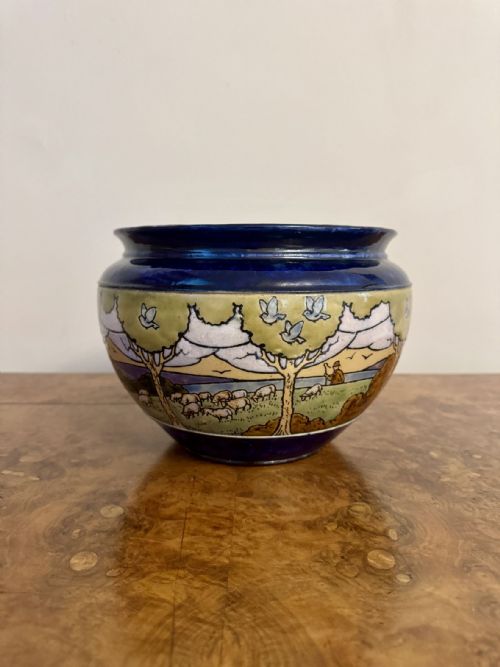
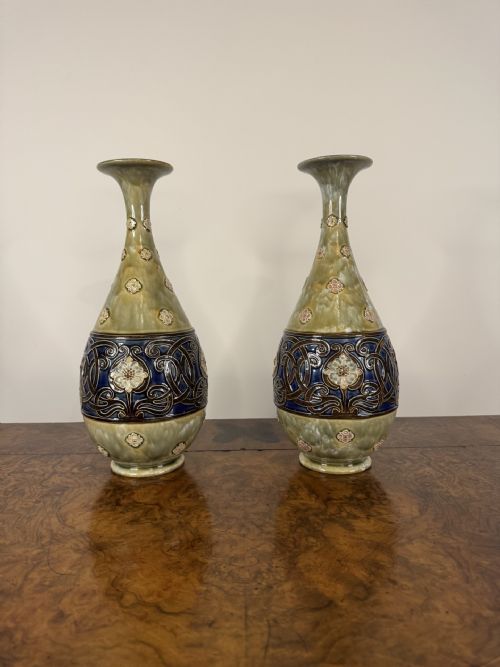
The most common forms on this page include vases, jugs, and jardinieres, alongside occasional tea sets and loving cups. These pieces reflect prevailing design movements of their time, most notably Art Nouveau, Arts and Crafts, and Aesthetic styles.
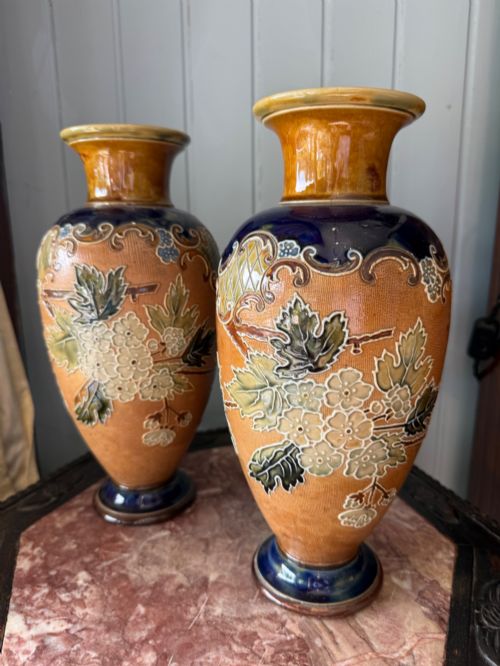
Makers and artists working within the Lambeth studios produced distinct decorative variations, ranging from patterned stoneware to floral enamel decor and specialised surface treatments like Slater's Patent.
Materials and Technique
Potters utilised stoneware and ceramic bodies as the primary foundation for these pieces, applying specialised glazes to create textured and durable surfaces. Salt-glazing techniques imparted a characteristic orange-peel texture to many of the early vessels.
Surface ornamentation involved intricate hand-tooling, incised patterns, and applied enamel details, sometimes complemented by gilt or gold leaf touches. The integration of lace or fabric impressions into moist clay created the textured backgrounds seen in Slater's Patent wares.
Current listings feature stoneware and glazed ceramic forms spanning the Victorian era through the 1920s.
Assessing Quality and Artistry
Quality in these ceramics often rests upon the ambition of the design and the reputation of the individual artist responsible for the piece. Studio assistants and named artists decorated vessels under the Doulton banner, with signed pieces demonstrating superior artistic execution.
The crispness of the incised ornament, the depth of the glaze, and the balance of the form separate standard production items from exceptional studio works. Matched pairs and complex baluster or handled forms require a higher degree of technical skill during the throwing and firing stages.
Louisa Wakely·Emily Stormer·Ethel Beard
The Royal Doulton Lambeth Pottery Glossary
- Stoneware
- A hard, vitreous ceramic pottery fired at high temperatures until impervious to liquids. It forms the durable body of most Lambeth vessels.
- Salt glaze
- A glossy, slightly textured finish achieved by throwing common salt into the kiln during high-temperature firing. This chemical reaction creates the signature pitted surface texture.
- Slater's patent
- A decorative technique involving the pressing of lace, matting, or fabrics into damp clay to create textured backgrounds. These areas were often highlighted with coloured enamels and gold.
- Baluster
- An architectural term describing a vase shape with a rounded lower body tapering to a narrow neck. This form provides stability and a balanced silhouette for floral decoration.
- Jardardiniere
- A large ornamental pot or stand designed to hold potted plants or flowers. They frequently feature wide rims and robust bodies suitable for interior display.
Royal Doulton Lambeth Pottery: Frequently Asked Questions
What is Doulton Lambeth pottery?
Doulton Lambeth pottery refers to ceramics produced at the Doulton company's Lambeth studios in London, known for artistic stoneware and decorative wares.
These pieces emerged from a prolific studio pottery movement involving numerous named artists and specialised techniques during the late nineteenth and early twentieth centuries.
How do I identify Art Nouveau pieces?
Art Nouveau examples typically feature flowing, organic lines, stylized floral motifs, and asymmetrical plant forms inspired by nature.
These designs often utilise soft autumnal colour palettes and elongated botanical patterns across vases and jugs from the early nineteen hundreds.
What is Slater's Patent?
Slater's Patent is a distinctive decorative method where textiles or lace are pressed directly into the wet clay body.
This process leaves a textured surface that artisans then enhanced with hand-painted enamel colours and gilt detailing.
How were these items used?
Many of these vessels served practical domestic functions as water jugs, harvest jugs, or containers for tea and other beverages.
Others were strictly decorative, intended as ornamental vases, loving cups, or jardinieres to display plants within Victorian and Edwardian interiors.