
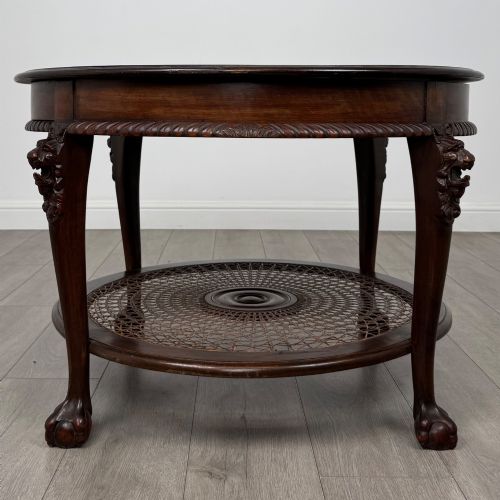
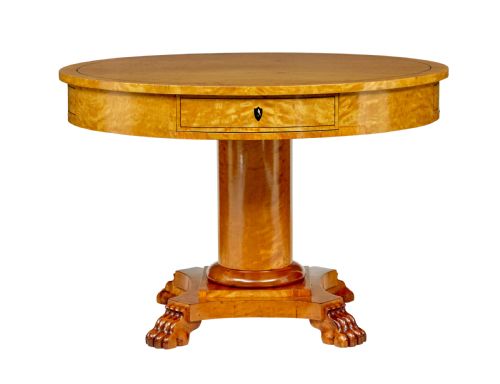
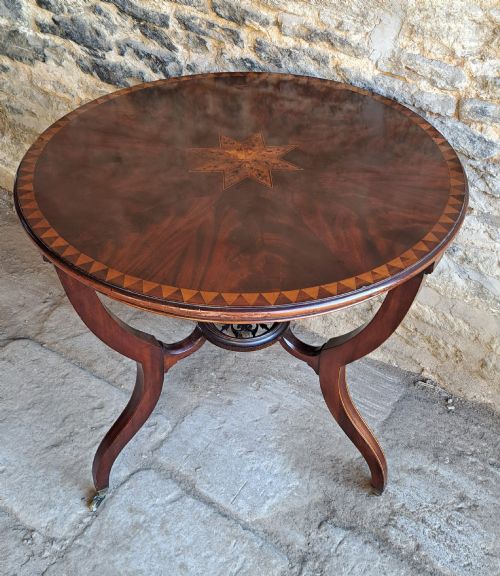
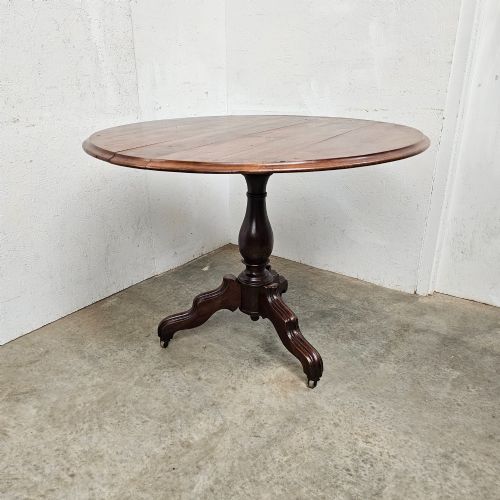


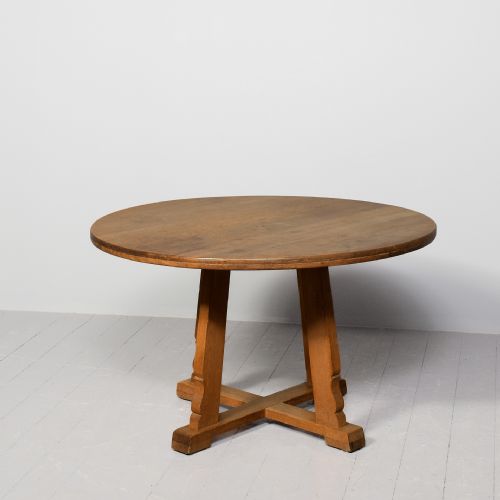


Edwardian Round Centre Table
An edwardian round centre table brings proportion and freestanding grace to a room, offering a circular surface rooted in traditional cabinetmaking.
Edwardian Round Centre Table
An edwardian round centre table is designed to stand free in a room rather than against a wall, presenting a circular top accessible from all sides. These pieces range from compact occasional and coffee tables to larger breakfast and dining formats.
The materials and styles seen across these pieces span Edwardian examples alongside Victorian, Regency, and early twentieth-century revivals. Mahogany, walnut, and satinwood appear frequently, often elevated by crossbanding, marquetry, or inlaid decoration.
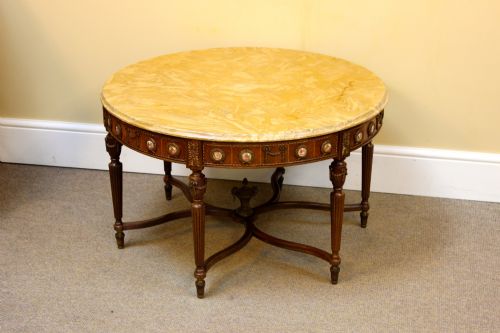
Buyers will encounter various forms, including drum tables, tripod bases, and marble-topped variants. Each piece reflects the domestic requirements of its period, balancing decorative presence with everyday utility.
How they were made
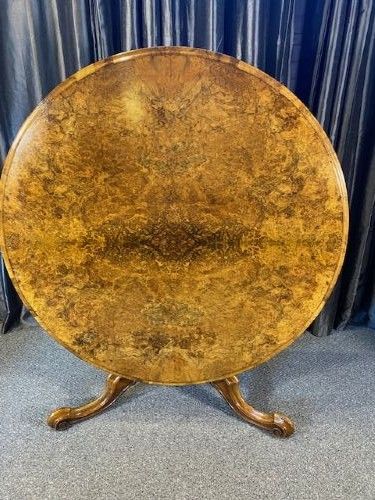
Cabinetmakers utilised dense hardwoods such as mahogany and walnut, frequently applying figured veneers like burr walnut or satinwood to the circular tops. Crossbanded borders and delicate stringing define the edges of many examples.
Inlaid decoration and marquetry panels are integrated directly into the timber surfaces using precision cutting techniques. Ormolu mounts, brass details, and hand-carved elements appear on specific revival and continental pieces.
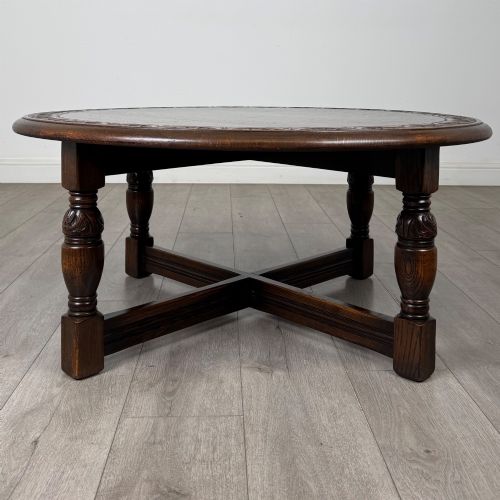
Listings feature woods including mahogany, walnut, satinwood, rosewood, and oak, alongside marble-topped and ormolu-mounted examples.
What varies in quality
The selection of timber grain and the precision of the veneer work dictate the visual impact of the top. Finely figured burr walnut, rich mahogany, and intricate satinwood inlay represent the upper tier of execution.
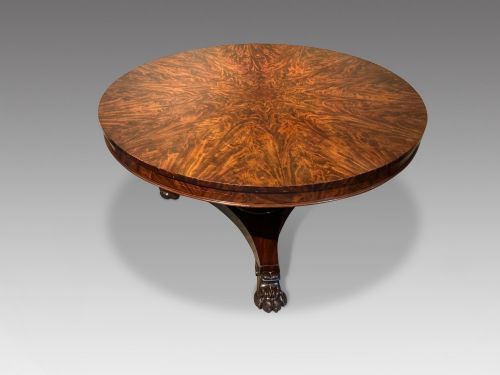
Construction methods, from the stability of the tripod or pillar base to the crispness of carved details and inlaid borders, separate standard production from superior craftsmanship.
François Linke·Sir Robert Stoddart Lorimer
The Edwardian Round Centre Table Glossary
- Crossbanding
- A border of veneer laid around the edge of a table top with the grain running perpendicular to the centre.
- Marquetry
- Decorative patterns formed by fitting together small pieces of coloured wood veneer onto a structural surface.
- Drum table
- A circular table with a deep frieze fitted with drawers, resembling the shape of a drum.
- Tripod table
- A small freestanding table supported by a pillar above three spreading legs.
- Ormolu
- Gilded bronze mounts applied to furniture for decorative enrichment during the nineteenth century.
Edwardian Round Centre Table: Frequently Asked Questions
What is an edwardian round centre table?
An edwardian round centre table is a freestanding circular piece intended to sit in the middle of a room rather than flush against a wall.
These tables function as decorative centrepieces, occasional surfaces, or intimate dining tables depending on their scale and height.
How do I style a round centre table?
Place the table where it can be approached from multiple directions to showcase its circular top and detailed timber grain.
Keep items on the surface minimal so the inlaid borders and polished wood remain visible.
What woods are used in these tables?
Makers relied on durable timbers like mahogany and walnut for the structural frames and primary surfaces.
Exotic woods such as satinwood, rosewood, and coromandel appear alongside burr walnut veneers for decorative contrast.
How do I tell different periods apart?
Victorian and Edwardian pieces often incorporate rich mahogany or inlaid satinwood with revival styling inspired by Sheraton or Chippendale.
Nineteenth-century examples may display heavier carved elements, while twentieth-century pieces often lean towards simplified forms or distinct regional variations.