


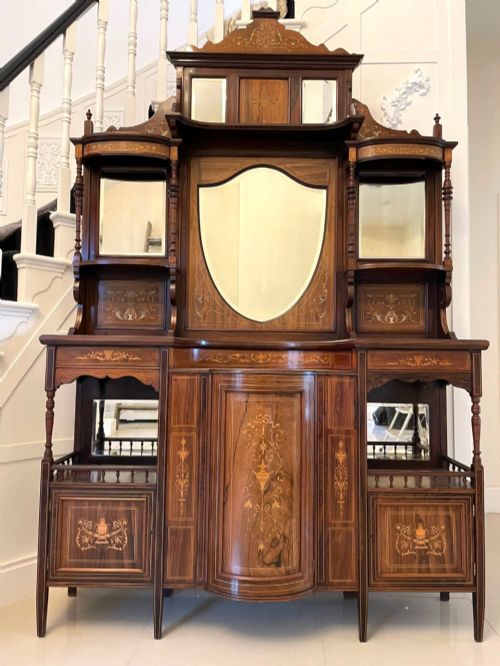
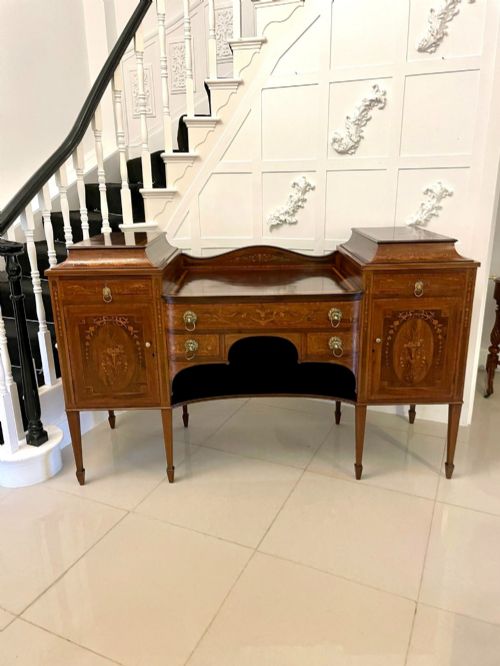
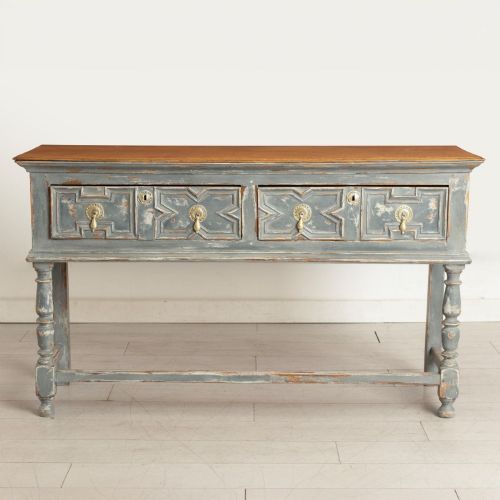
Edwardian Revival Sideboard
These edwardian revival sideboard pieces bring classical proportion and polished marquetry into contemporary dining rooms.
Edwardian Revival Sideboard
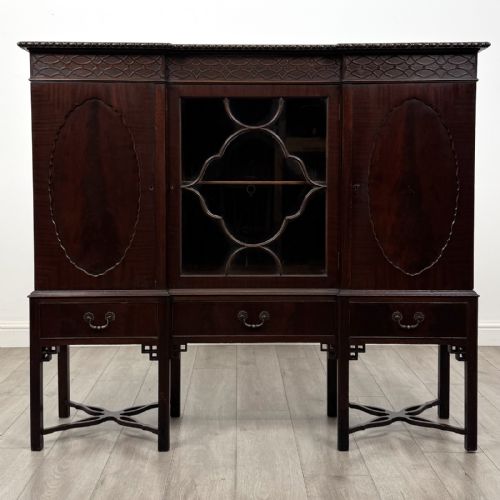
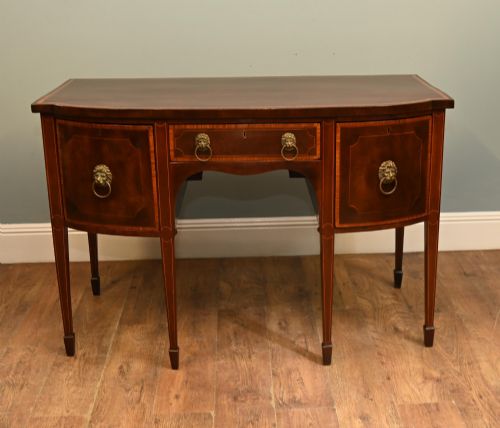
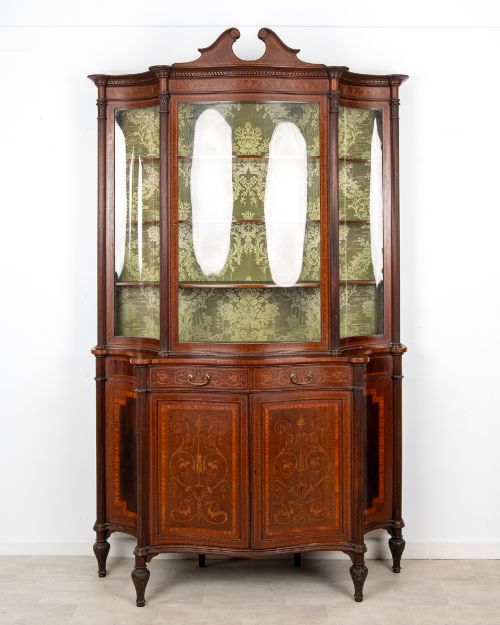
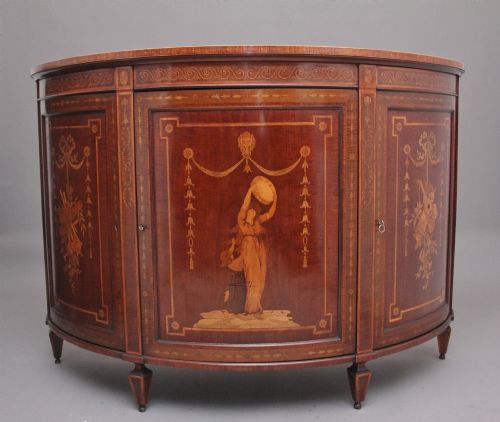
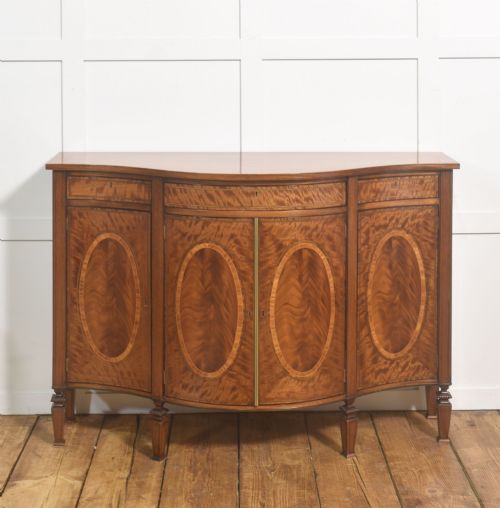
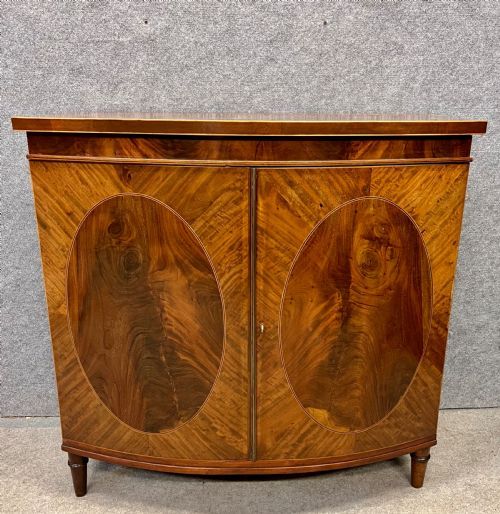
An edwardian revival sideboard bridges late nineteenth-century historicism and early twentieth-century dining room storage, drawing directly on eighteenth-century design vocabulary. These pieces emerge in forms such as serpentine servers, bow-front cabinets, and demi-lune commodes originating from the Edwardian period and the wider span of the nineteenth century.
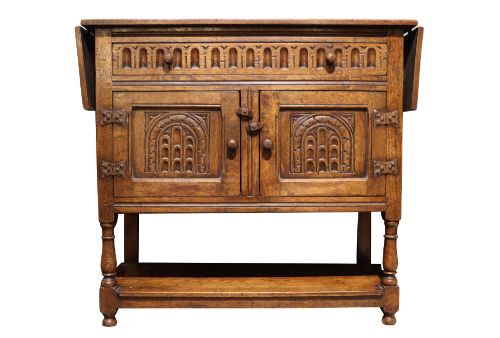
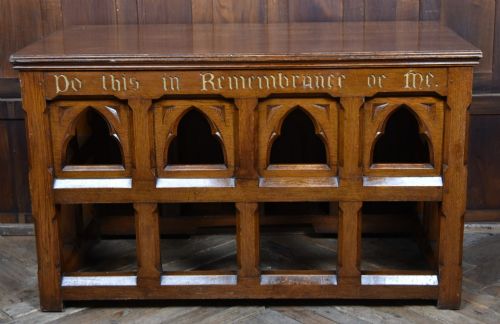
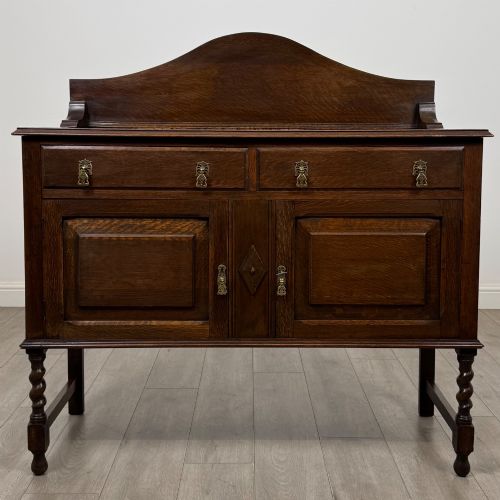
Makers working within this idiom adopt styles ranging from Sheraton and Chippendale revivals to Jacobean, Gothic, and Arts and Crafts interpretations. Walnut, rosewood, and oak appear alongside lighter timbers, often organised around servers, side cabinets, and pot board dresser bases designed for domestic service.
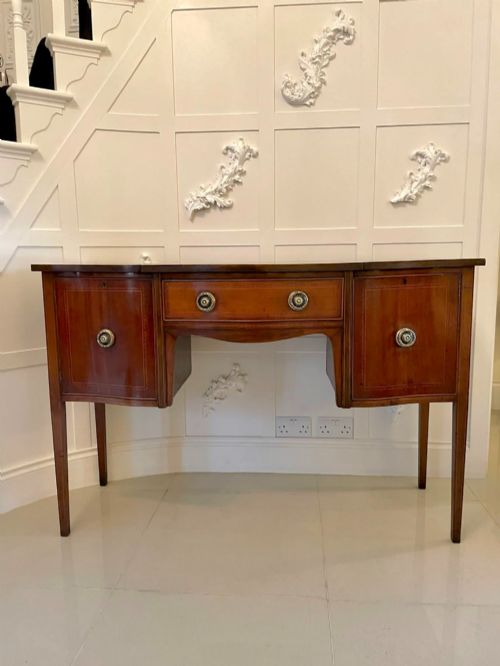
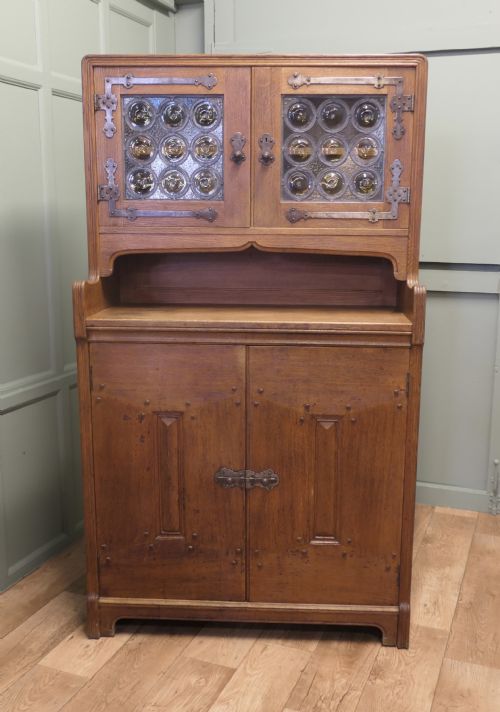
Buyers encounter mahogany and satinwood structures carrying classical stringing and marquetry, deployed alongside carved oak frameworks fitted with brass handles and glass doors. These items serve as functional storage units that also anchor the decorative scheme of a room.
What varies in quality
The standard of an edwardian revival sideboard rests on the precision of its timber selection and the execution of its inlay work. Finer examples display continuous grain matching across serpentine and bow-front drawers, with crisp boxwood stringing that remains flush to the primary mahogany or satinwood surface.
Structural integrity reveals itself in the weight of the timber, the snugness of mortise and tenon joints in oak bases, and the original quality of brass handles and mounts. Workshops of note demonstrate superior hand-carving in relief panels and greater depth in marquetry pictorial details.
Edwardian Revival Sideboard Retail Price Guide 2026
Typical asking prices for edwardian revival sideboard among the pieces listed under this phrase on Sellingantiques today, from the lower quarter to the upper quarter. They describe what is for sale here now, not the wider market.
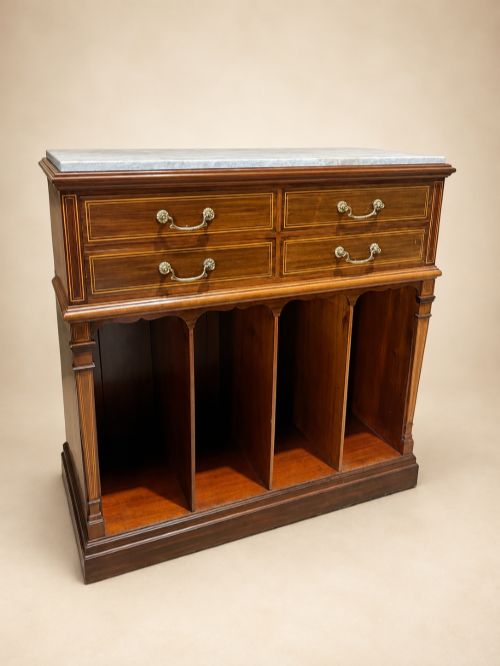
Several pieces include dedicated bottle racks hidden behind panelled oak doors, ready for Edwardian cellarette storage.
Maple and Co·Liberty·Hewetsons London·James Hicks·Leonard Wyburd
The Edwardian Revival Sideboard Glossary
- Marquetry
- Decorative patterns formed by fitting together small pieces of veneer into timber surfaces. This technique creates complex floral or geometric designs across cabinet doors and drawer fronts.
- Serpentine
- A curved line that undulates inwards and outwards in a continuous sweep, typical of higher-end sideboard fronts. This shape requires skilled carpentry to bend and veneer timber accurately.
- Demi-Lune
- A half-moon shape used for commodes and cabinets designed to fit flat against a wall. These pieces frequently feature painted satinwood finishes and delicate inlay.
- Pot Board
- An open lower shelf built into a dresser base or sideboard. Historically, this platform held large pots and ceramic dishes.
- Stringing
- Thin lines of contrasting wood inlaid into the surface of a piece to create geometric borders. It defines the edges of drawers and cabinet tops on revival furniture.
Edwardian Revival Sideboard: Frequently Asked Questions
What is an edwardian revival sideboard?
An edwardian revival sideboard is a dining room storage piece produced around the turn of the twentieth century that imitates earlier eighteenth-century furniture styles like Sheraton and Chippendale.
These items combine period forms with the construction methods and timber preferences of the Edwardian era, often featuring mahogany, satinwood, and detailed marquetry inlay.
How do I date these pieces?
Dating relies on examining the secondary timbers, construction methods, and stylistic cues present in the piece. Edwardian revival examples typically date from around eighteen-eighty to nineteen-twenty.
Makers often incorporated specific revival motifs, such as neoclassical urns and bellflowers, executed with machinery and adhesives characteristic of the late nineteenth and early twentieth centuries.
Where were these sideboards used?
These sideboards served primarily in formal dining rooms to store silverware, linen, and glassware, while providing a flat surface for serving food.
In modern homes, they function as credenzas, media consoles, or hallway storage cabinets due to their considerable surface area and internal capacity.
What styles are common?
Sheraton and Chippendale revivals dominate the lighter mahogany and satinwood items, featuring bow-fronts and delicate stringing. Jacobean, Gothic, and Arts and Crafts revivals appear among the darker oak pieces, showing carved panels and sturdy frames.
Makers mixed these historical vocabularies freely during the Edwardian period to suit contemporary domestic tastes.