
Edwardian Refectory Table
An Edwardian refectory table brings sturdy timber and generous proportions to the modern dining room.
Edwardian Refectory Table
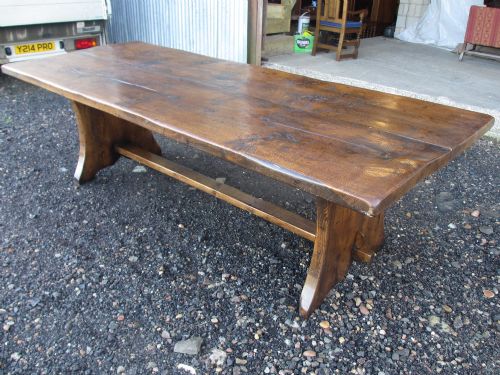
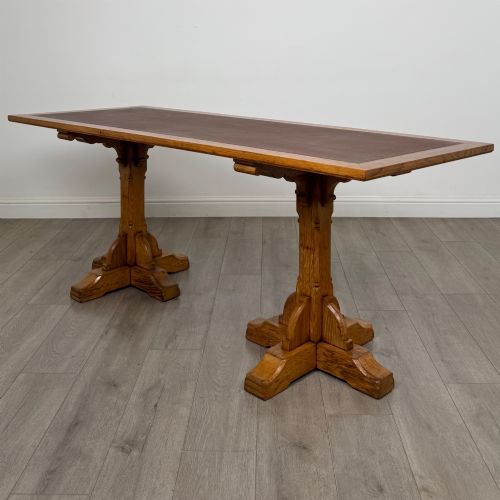
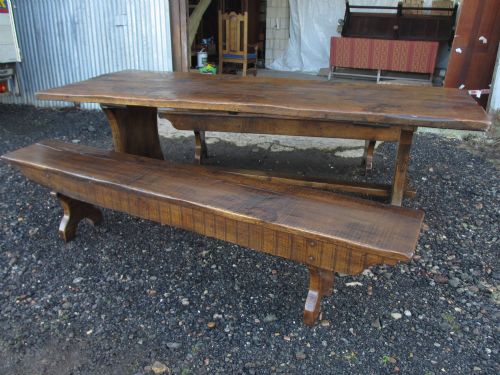
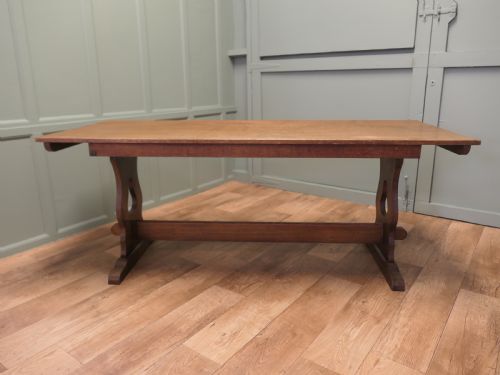
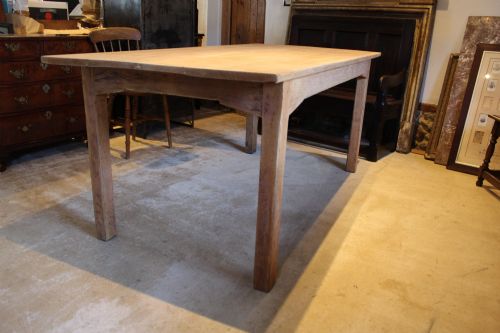
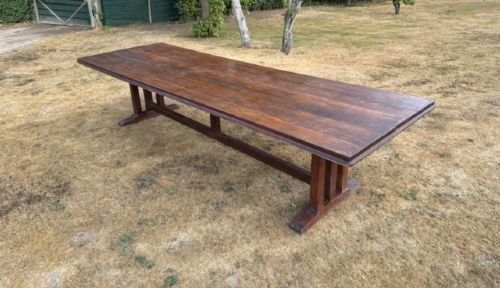
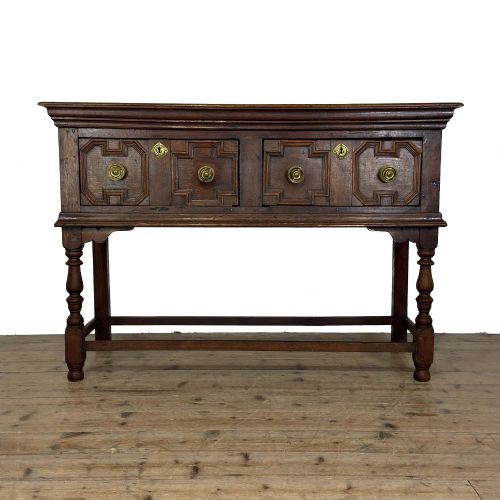
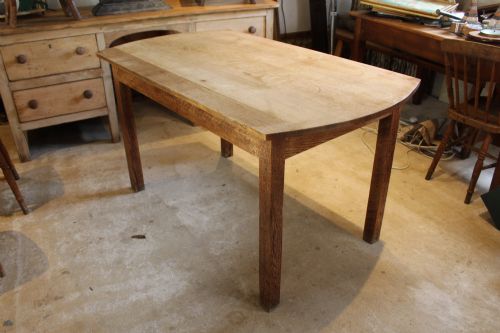
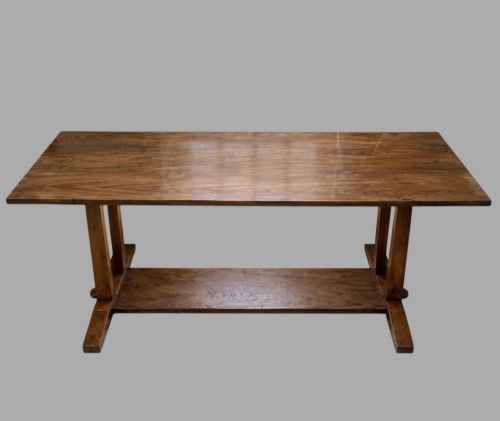
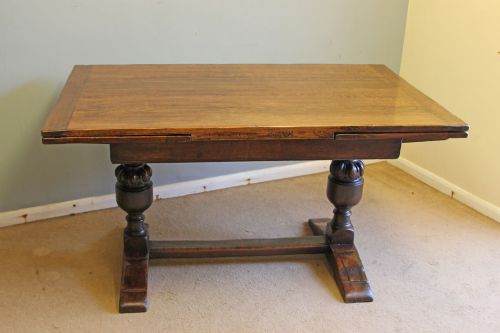
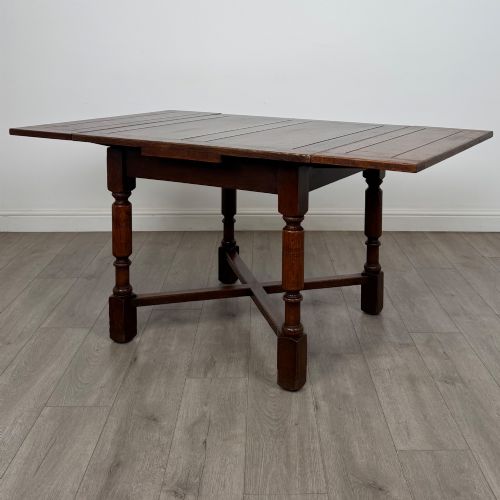
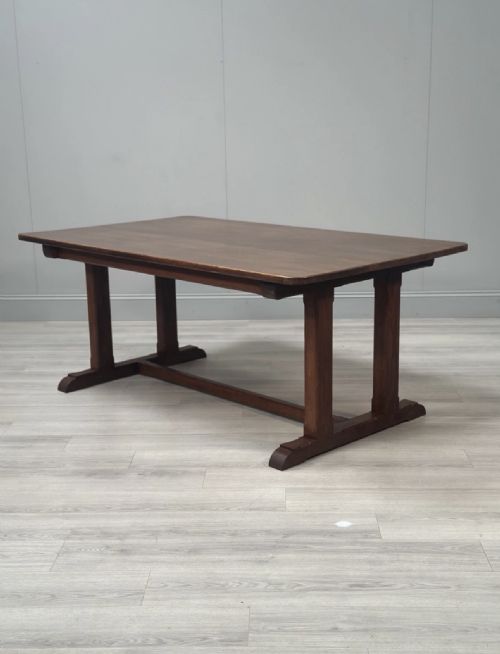
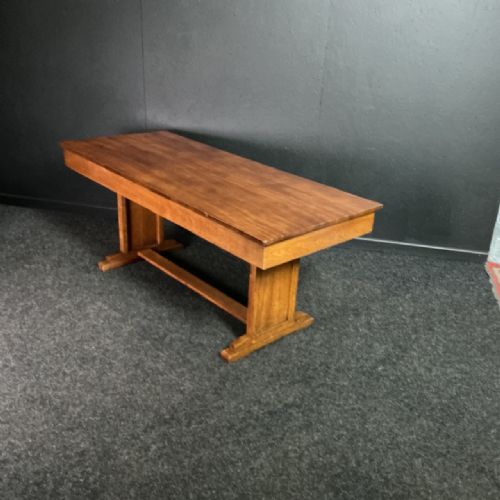
An Edwardian refectory table typically presents a long, rectangular timber top supported by trestle ends, slab supports, or four solid legs.
Many examples draw influence from earlier Jacobean and Arts and Crafts styles, reflecting the period's interest in traditional English vernacular forms.
Buyers frequently encounter these boards configured for kitchen dining, school use, or boardroom gatherings, accommodating substantial numbers of guests.
How they were made
Makers relied heavily on solid oak, quarter-sawn oak, and occasionally pine or scrubbed deal for the top boards and underframes.
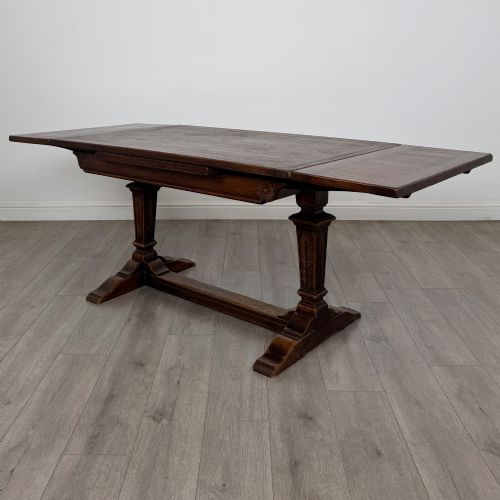
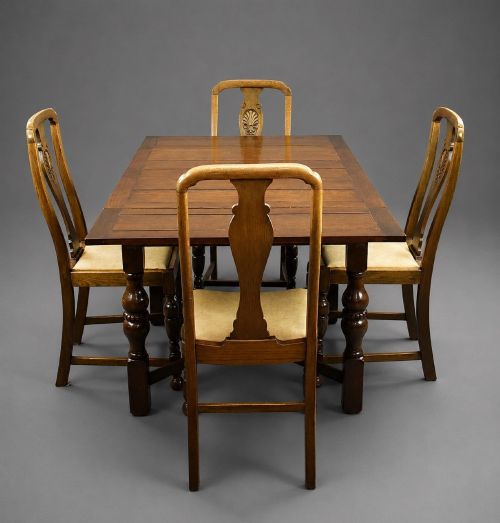
Construction methods prioritised durability, utilising draw-leaf mechanisms, trestle bracing, and pegged joints to handle heavy daily use.
Edwardian Refectory Table Retail Price Guide 2026
Typical asking prices for edwardian refectory table among the pieces listed under this phrase on Sellingantiques today, from the lower quarter to the upper quarter. They describe what is for sale here now, not the wider market.
Listings demonstrate that oak remains the dominant material, complemented by pine, elm, and walnut across various provincial and metropolitan workshops.
What varies in quality
The choice of timber significantly alters the character of a piece, with quarter-sawn oak displaying prominent medullary rays that signal careful selection.
Underframe complexity ranges from plain square-section supports to intricately shaped trestle ends and carved architectural detailing.
Attribution to notable makers or retailers, alongside documented provenance from schools or public institutions, elevates certain examples above standard utility pieces.
Heals of London·Maple and Co·Sir Robert Lorimer
The Edwardian Refectory Table Glossary
- Refectory table
- A long dining table traditionally used in monastic refectories, adapted during the Edwardian era for domestic and institutional dining rooms.
- Draw leaf
- An extension system where two leaves pull out from beneath the main top, allowing the table surface to lengthen easily.
- Quarter-sawn oak
- Timber cut radially to the growth rings, producing a distinct and durable grain pattern often seen in Arts and Crafts furniture.
- Trestle ends
- Upright supports placed at either end of a long table, connected by a central stretcher bar for stability.
- Scrub top
- A plain wooden tabletop left unfinished or scrubbed clean, commonly found on farmhouse and kitchen tables.
Edwardian Refectory Table: Frequently Asked Questions
How many people do they seat?
Most standard examples comfortably seat six to eight diners, while larger institutional or school boardroom versions easily accommodate ten or more.
Buyers should check the distance between the trestle ends or legs to ensure chairs slide underneath properly.
Are they suitable for daily family use?
Built from solid hardwoods like oak, these pieces handle the demands of busy kitchens and family dining rooms with ease.
Their robust construction and practical timber surfaces tolerate regular cleaning and everyday wear.
How do I spot an Arts and Crafts influence?
Look for honest construction methods, visible pegged joints, and quarter-sawn oak that highlights the natural grain of the timber.
These designs avoid excessive ornamentation in favour of solid proportions and straightforward utility.
What is the difference between a refectory and a farmhouse table?
Refectory tables traditionally rely on trestle or slab ends connected by a central stretcher, whereas farmhouse tables more often use four corner legs.
Both types share a sturdy, utilitarian construction designed for communal dining.