



Edwardian Purple Stone Necklace
These delicate pieces of jewellery bring together rich purple quartz and fine gold or silver settings, offering a glimpse into early twentieth-century design.
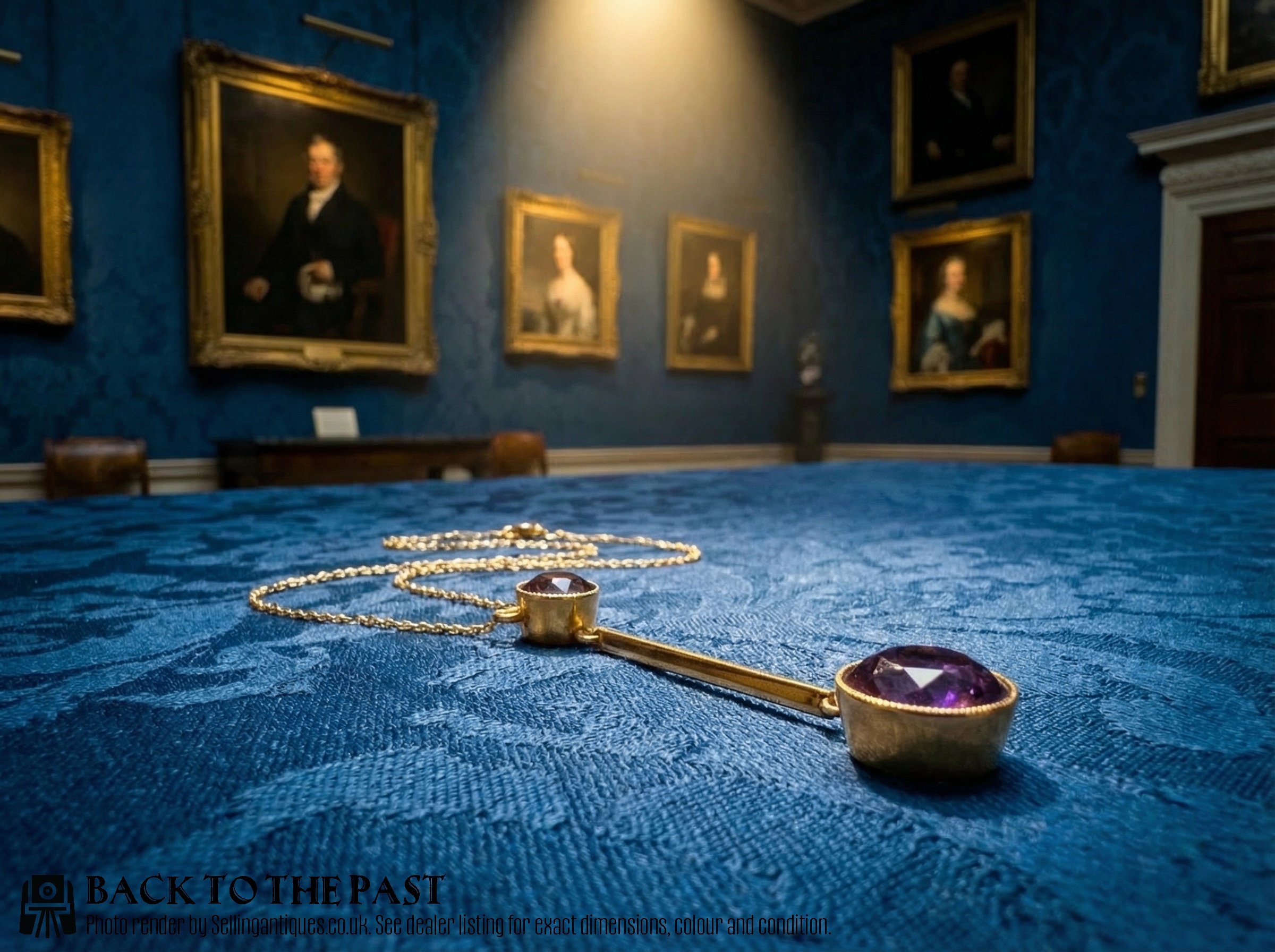
Edwardian Purple Stone Necklace
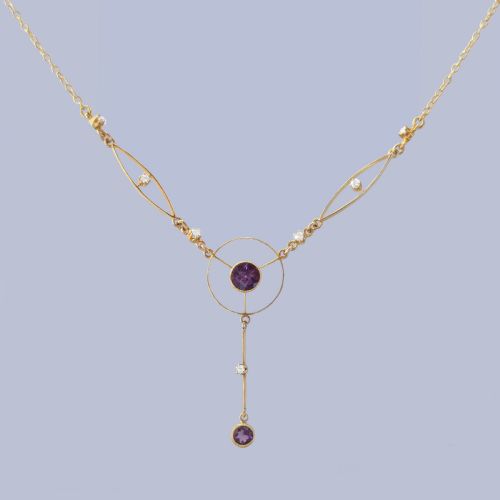
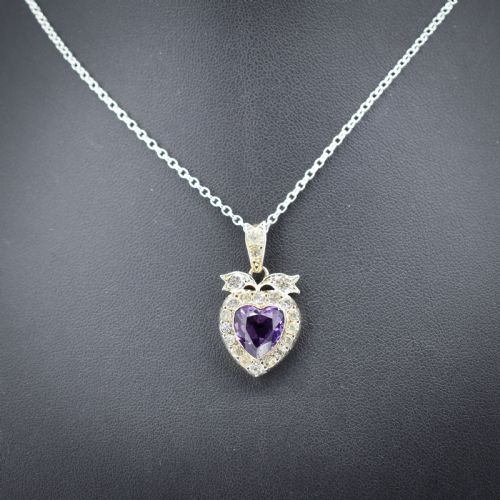
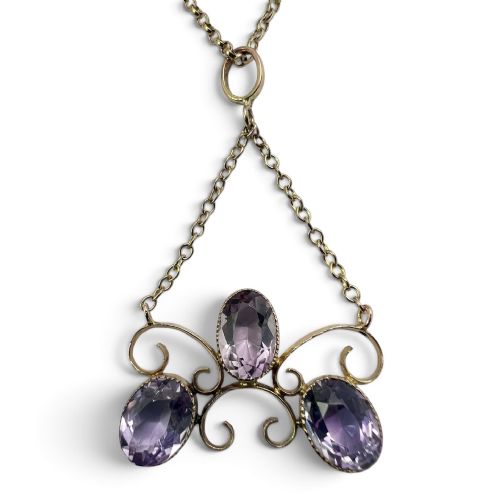
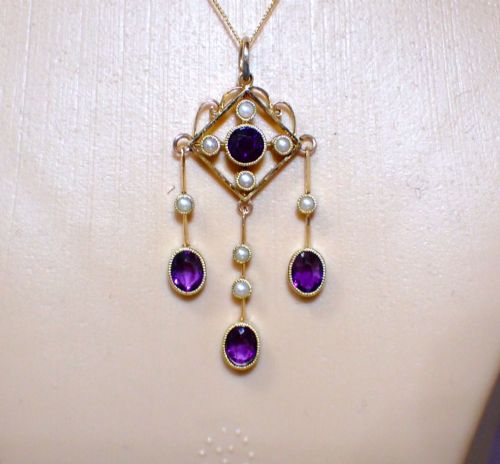
The versions most commonly met on this page span the late Victorian era through the 1920s, with a strong representation of Edwardian and Arts and Crafts aesthetics. Pendant necklaces and drop forms dominate the selection, suspended from fine metal chains.
Makers and workshops of the time utilised both 9ct and 15ct gold alongside silver, creating pendants that range from simple bezel-set stones to elaborate multi-stone compositions. The overarching aesthetic prioritises grace, symmetry, and vibrant purple hues.
Materials and technique
Craftsmen built these necklaces using precious metals such as 9ct gold, 15ct gold, and silver to house the central amethysts and supporting gems. Metalwork techniques included delicate wirework and casting to achieve the characteristic flowing lines of the period.
Seed pearls and old-cut diamonds frequently accent the purple stones, secured via fine claw settings or delicate bezel mounts. The integration of gold and silver provided a durable yet refined structure for daily wear.
Edwardian Purple Stone Necklace Retail Price Guide 2026
Typical asking prices for edwardian purple stone necklace among the pieces listed under this phrase on Sellingantiques today, from the lower quarter to the upper quarter. They describe what is for sale here now, not the wider market.
Listings feature amethysts paired with seed pearls, diamonds, 9ct gold, 15ct gold, and silver across Edwardian, Victorian, and Arts and Crafts styles.
Quality variations
The purity of the metal and the presence of higher-carat gold, such as 15ct, distinguish finer examples from standard 9ct or silver pieces. Masterful lapidary work on the amethyst and the careful selection of matching seed pearls or diamonds elevate the overall standard.
Design complexity and structural integrity also divide the range, where fluid Art Nouveau motifs and maker attribution signal superior craftsmanship. Pieces displaying thoughtful proportion and well-preserved settings occupy the upper tier.
S. Blanckensee & Son
The Edwardian Purple Stone Necklace Glossary
- Lavalier
- A pendant necklace featuring a central drop stone suspended below a smaller gemstone or decorative connector. This style gained immense popularity during the Edwardian period.
- Seed pearl
- A very small, naturally occurring or cultured pearl often drilled and used in clusters or borders around larger stones. They add a luminous contrast to deep purple amethysts.
- Old-cut diamond
- A diamond cut in the early styles predating modern brilliant cuts, characterised by a smaller table and higher crown. These stones appear frequently in period pendant settings.
- Foliate
- A design motif inspired by leaves and foliage, heavily utilised in Arts and Crafts and Art Nouveau jewellery. It gives the metalwork a natural, organic flow.
Edwardian Purple Stone Necklace: Frequently Asked Questions
What periods do these necklaces come from?
The listings span from the late Victorian era through the Edwardian period and into the 1920s, encompassing Arts and Crafts and Art Nouveau movements.
Most pieces cluster around the turn of the twentieth century, reflecting the prevailing jewellery designs of that time.
How are amethysts set in these necklaces?
Stones are typically held in place with delicate metal claws or enclosed within a secure bezel mount, depending on the design.
Surrounding elements like seed pearls and diamonds are similarly integrated to complement the central purple gemstone.
What metals were used?
Jewellery from this era commonly utilises 9ct gold, 15ct gold, and silver as the primary structural materials for chains and pendants.
Higher carat golds and silver provide distinct tonal backdrops for the amethysts and white accent stones.
How should I care for an antique amethyst necklace?
Store the necklace flat in a lined jewellery box to prevent the fine chain from tangling and to protect the soft seed pearls.
Clean gently with a soft cloth and avoid harsh chemical dips, particularly due to the presence of pearls and older metal settings.