
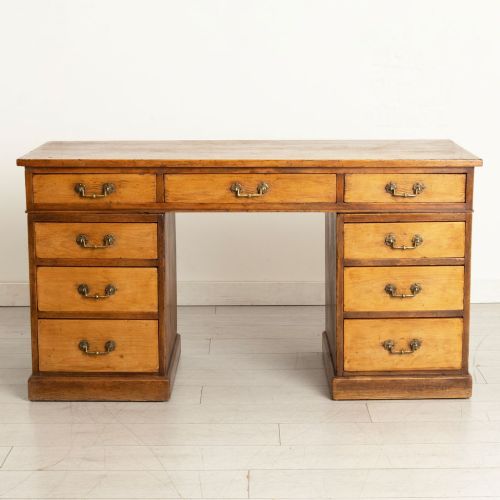
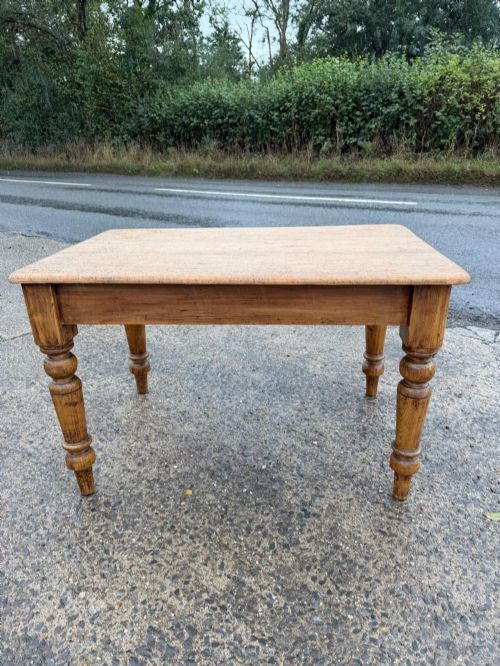
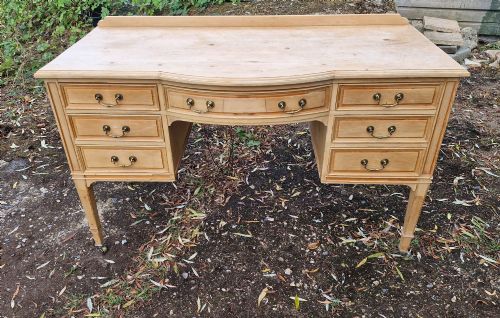
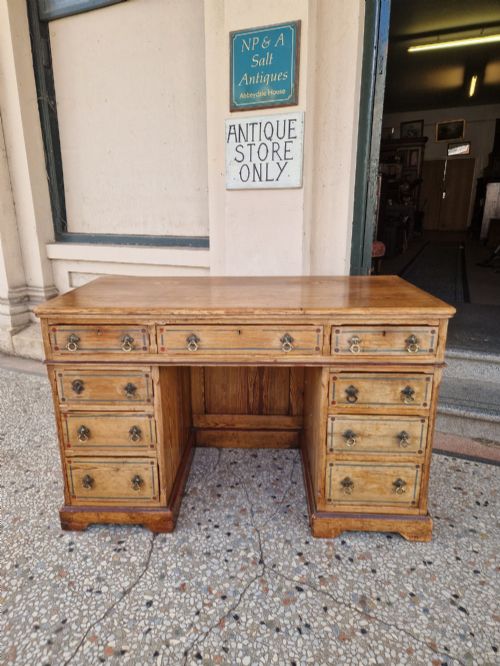





Edwardian Pine Writing Desk
These pieces known as an edwardian pine writing desk bring working surfaces of solid timber into any study with straightforward utility.
Edwardian Pine Writing Desk
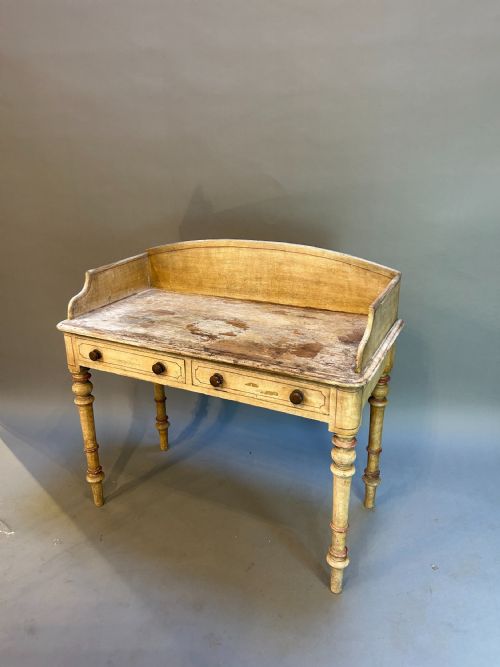
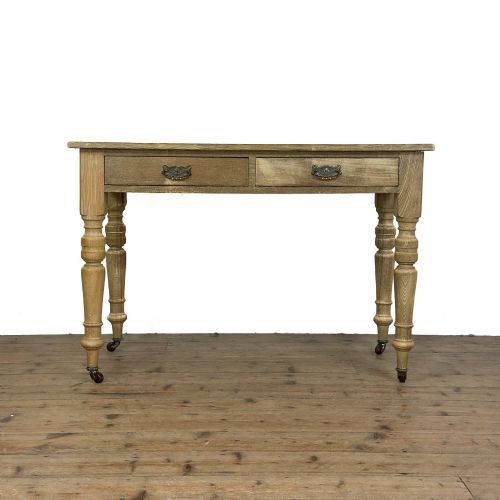
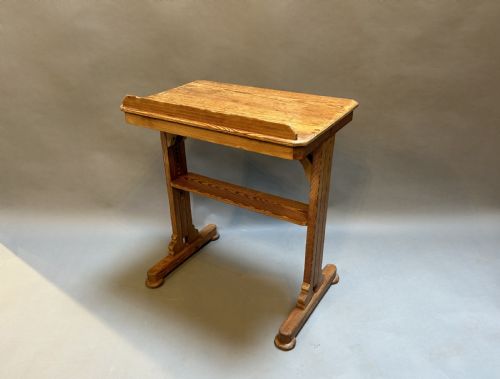
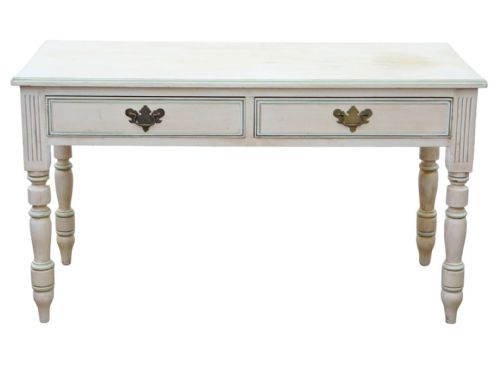
An edwardian pine writing desk spans domestic and institutional forms, appearing as simple kneehole writing tables, painted kitchen tables with drawers, and ecclesiastical pitch pine lecterns. The pieces range from straightforward Victorian country tables to Edwardian utility and Arts and Crafts examples.
The primary forms on this page include kneehole writing desks with pedestal drawers, side tables adapted for writing, and pitch pine writing tables dating across the late nineteenth and early twentieth centuries. Buyers frequently encounter both stripped natural timber finishes and painted surfaces.
Origins stretch across English country workshops, ecclesiastical settings, and provincial domestic interiors. Pitch pine appears alongside standard pine, showing the varied domestic and institutional demands of the period.
How they were made
Construction relies on solid pine and pitch pine timbers, joined with simple framing and panel techniques suited to heavy daily use. Drawers feature in the front frieze or pedestal arrangements to hold writing materials.
Hardware incorporates brass and iron handles, alongside metal fittings fixed to drawers and lecterns. Paint finishes apply directly to wood surfaces on specific painted examples, while other pieces retain stripped timber with visible grain.
Pitch pine contains enough natural resin to occasionally surprise a restorer with its unexpected weight and stubbornness against sandpaper.
What varies in quality
Quality rests on the selection of timber, distinguishing dense pitch pine from standard soft pine boards. Construction detail in the drawer joints and the retention of original brass or iron hardware elevate certain examples.
Surface treatment defines the character of each piece, separating original painted finishes from later stripped surfaces. The integrity of structural joints and the balance of proportions between legs and top determine the overall success of the form.
The Edwardian Pine Writing Desk Glossary
- Pitch pine
- A dense, resinous softwood timber used for durable furniture and ecclesiastical pieces. It shows prominent growth rings and withstands heavy wear.
- Kneehole
- A desk or table configuration featuring a central recess for the user's legs, flanked by pedestals of drawers.
- Frieze
- The horizontal band running directly beneath the top surface of a table or desk, often housing one or more drawers.
- Lectern
- A slanted reading or writing stand designed for standing or seated use, seen in ecclesiastical and institutional contexts.
- Pedestal
- A supporting column or cupboard structure beneath a desk top, providing structural stability and enclosed storage.
Edwardian Pine Writing Desk: Frequently Asked Questions
What is a pitch pine desk?
A pitch pine desk utilises dense, resinous softwood known for durability and prominent grain patterns. These pieces often originate from institutional or heavier domestic settings.
Such timber resists knocks better than standard softwoods, making it well suited to daily writing and work tasks.
How do I date an antique desk?
Dating relies on construction methods, timber selection, and hardware styles found across the piece. Comparing proportions and stylistic details against known periods helps narrow the decade of manufacture.
Changes in nail types, drawer construction, and finish types provide further chronological markers for evaluation.
Where were these desks used?
These desks served in domestic studies, country kitchens, schoolrooms, and ecclesiastical chapels. Their varied forms reflect the specific functional needs of each interior.
Simpler tables functioned as dual-purpose work surfaces, while pedestal desks provided dedicated storage for correspondence.
Are painted finishes original?
Painted finishes on these pieces can be original or applied during subsequent domestic updates. Examining the paint layers and wear patterns reveals whether the surface dates to the period of manufacture.
Stripped pine surfaces often result from mid-twentieth-century preferences for bare wood over painted decoration.