



Edwardian Pine Armoire
These edwardian pine armoire pieces offer practical bedroom storage with straightforward timber construction, suiting modern homes requiring honest timber furniture.
Edwardian Pine Armoire
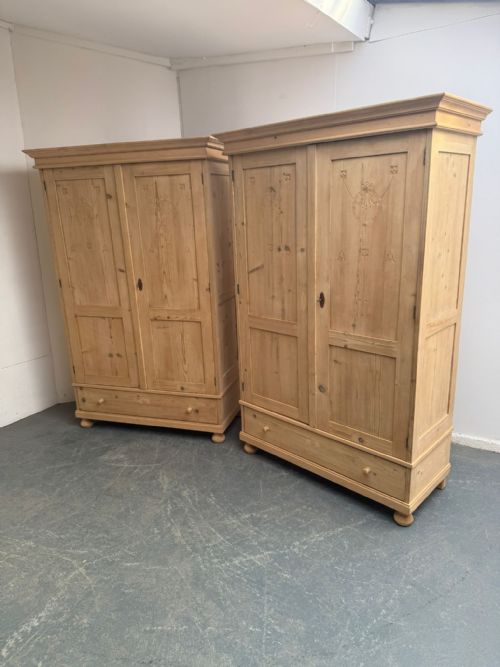
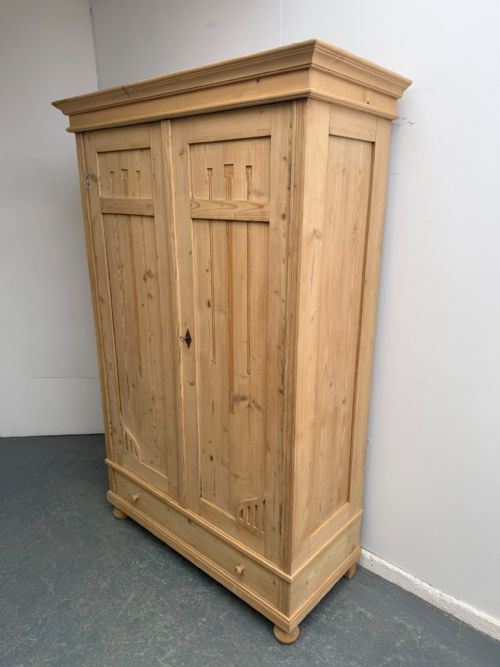
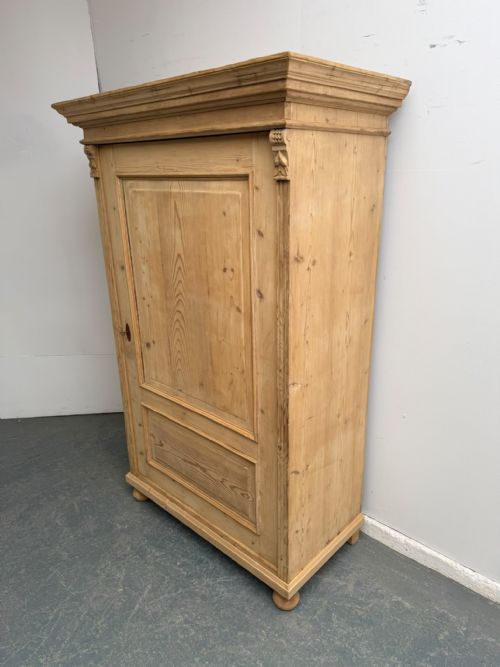
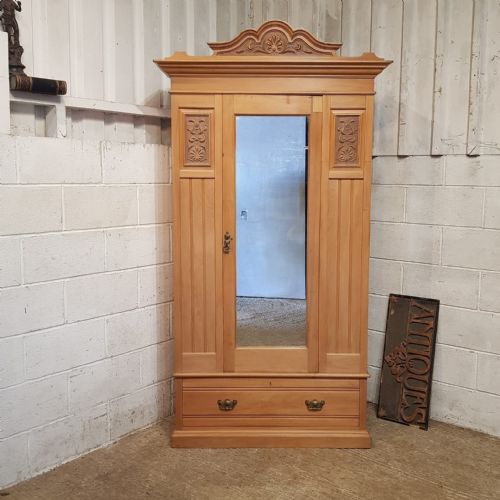
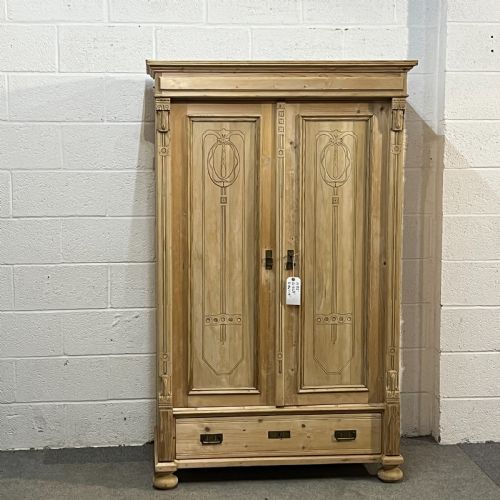
When you search for an edwardian pine armoire, you encounter substantial timber storage furniture spanning single door warding cabinets to larger multi-door wardrobes. These pieces originate primarily from the Edwardian period and the broader Victorian era, alongside examples dated around nineteen ten and nineteen twenty.
The forms vary considerably, encompassing simple panelled cupboards with bottom drawers, gentleman's wardrobes fitted with lead light panels, and knockdown versions designed for easy transport. Certain items display specific regional or stylistic influences such as Arts and Crafts, Art Nouveau, and Gothic details.
How they were made
Makers utilised solid pine and pitch pine for the primary carcases, employing sturdy construction methods like panelled doors and fielded storage fronts. Iron and brass hardware, including hinges and drawer pulls, secure the functional elements of each wardrobe.
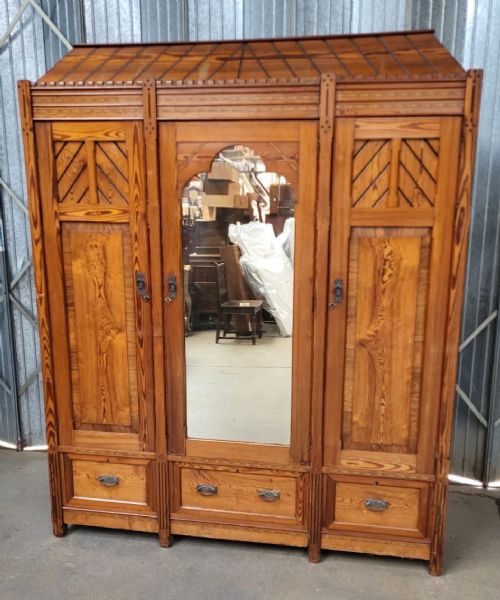
Detailing often incorporates lead light glass panels and inlaid decorative motifs, reflecting Arts and Crafts or Art Nouveau tendencies. Many larger carcases incorporate knockdown construction or partial dismantling capabilities to facilitate movement between rooms.
Listings feature pine and pitch pine materials, with periods spanning Victorian through to nineteen twenty alongside specific Arts and Crafts and Gothic styles.
What varies in quality
Quality in these wardrobes rests upon the selection of timber and the sophistication of the joinery rather than mere scale. Superior examples feature well-figured pitch pine, integrated bottom drawers, and refined hardware.
The presence of distinctive stylistic elements, such as lead light panels or subtle inlay work, separates standard utility cupboards from more considered cabinet maker production.
Maple and Co
The Edwardian Pine Armoire Glossary
- Armoire
- A tall cupboard or wardrobe used primarily for hanging clothes. Traditionally originating in continental Europe, the term now applies broadly to large freestanding wardrobes.
- Knockdown
- A piece of furniture constructed to dismantle into flat sections for transport. This method proved particularly useful for large wardrobes moving up narrow staircases.
- Lead light
- Glass panels held together with lead caming, frequently forming geometric or stylistic patterns in doors. This technique appears on finer Edwardian and Arts and Crafts storage pieces.
- Fielded
- A panel with bevelled edges recessed towards the centre, giving a framed appearance. This method adds depth to wardrobe and cupboard doors.
- Pitch pine
- A durable resinous softwood prized for its distinct grain pattern and strength. It forms the primary structure of many heavier Victorian and Edwardian wardrobes.
Edwardian Pine Armoire: Frequently Asked Questions
How do I assemble a knockdown wardrobe?
Knockdown wardrobes dismantle into distinct sections such as cornices, sides, and base units. Reassembly typically involves securing internal bolts or slotting panels together.
Ensure the carcase is squared on an even floor before tightening any fittings to maintain door alignment.
Can I paint a waxed pine armoire?
Many pine wardrobes are finished with traditional wax or supplied bare for custom treatment. Applying modern paint finishes requires removing existing wax layers thoroughly with a suitable solvent.
Applying a proper primer prevents residual oils from bleeding through the new paint surface.
What is a gentleman's wardrobe?
A gentleman's wardrobe traditionally combines hanging space with compartmentalised storage such as internal drawers and sliding trays. These units provided dedicated space for folded shirts and accessories.
They frequently feature a more compact or compartmentalised interior layout than standard single door wardrobes.
How do I care for antique pine furniture?
Antique pine benefits from regular dusting with a dry cloth and occasional applications of beeswax to nourish the timber. Avoid placing these pieces in areas with fluctuating humidity or direct sunlight.
Maintaining stable environmental conditions prevents the timber from warping or splitting over time.