

Edwardian Pearl Gold Jewellery
Edwardian pearl gold jewellery brings together delicate seed pearls, glowing gemstones and rich yellow or rose gold in forms made to catch the light.
Edwardian Pearl Gold Jewellery
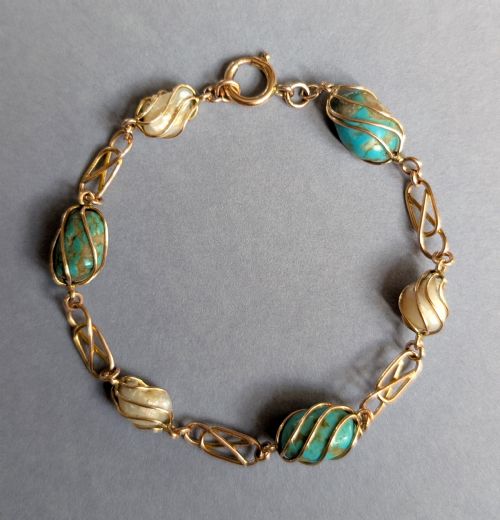
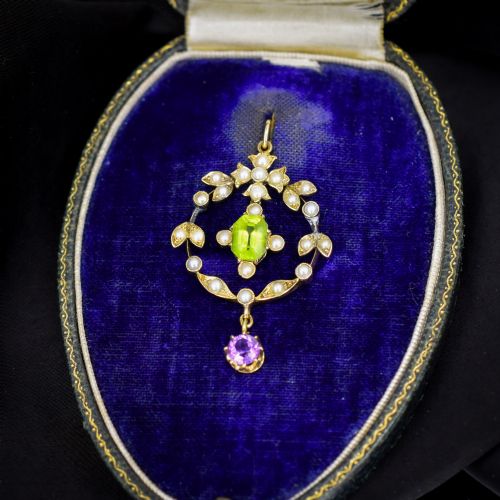
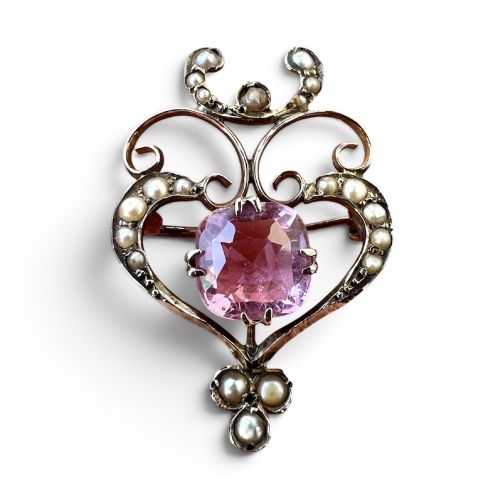
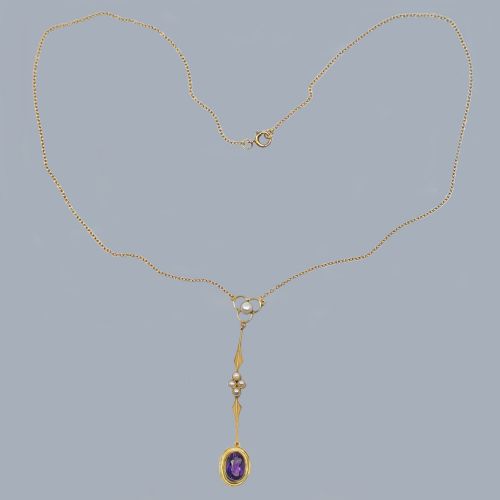
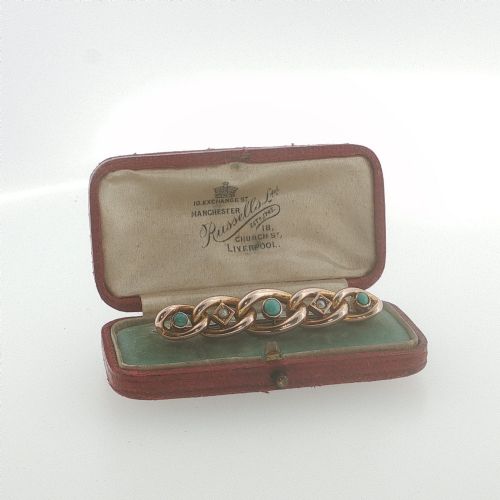
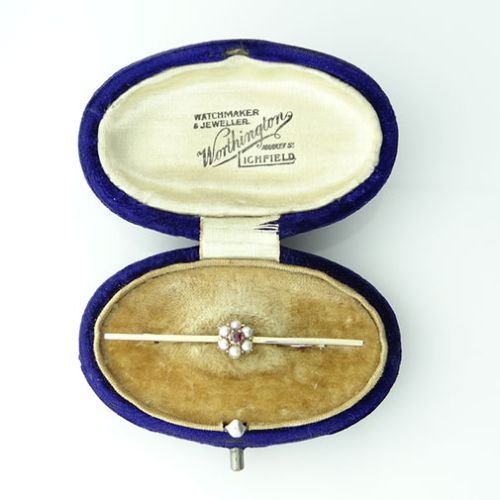
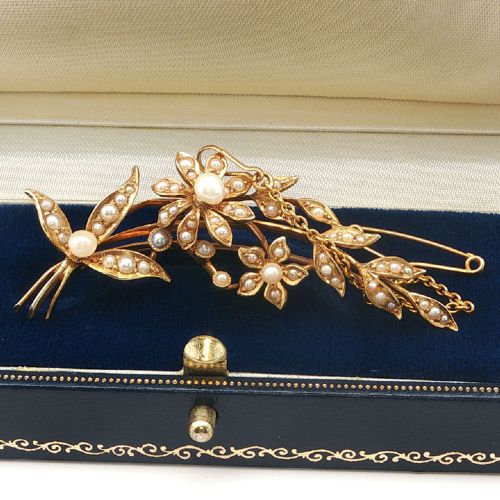
Edwardian pearl gold jewellery encompasses rings, brooches, pendants, necklaces and bracelets shaped during the early twentieth century alongside adjacent Victorian and Art Deco pieces. You encounter intricate pendants and lavalier necklaces set with amethysts, peridots and turquoises alongside floral brooches and band rings.
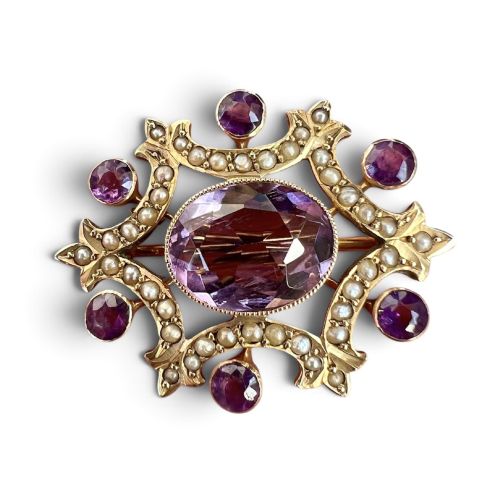
The aesthetic leans towards lightness and grace, frequently incorporating seed pearls alongside coloured gemstones like aquamarine, garnet and opal. While the core of the selection bears hallmarks from the Edwardian period and circa 1900, pieces also stretch into the nineteenth and mid-century eras.
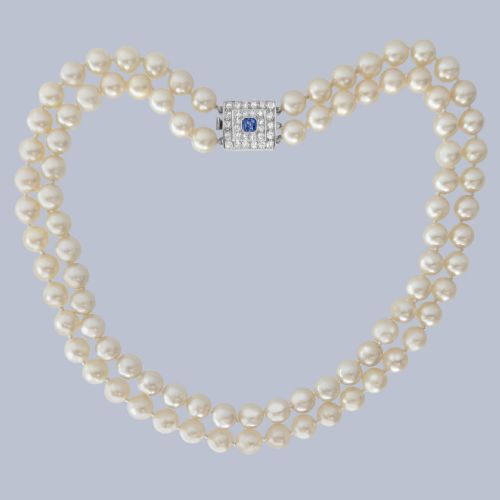
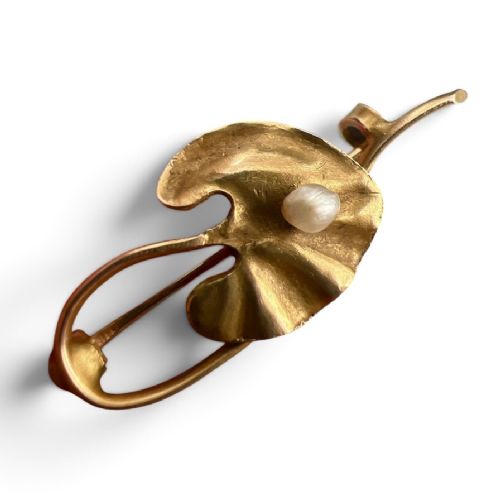
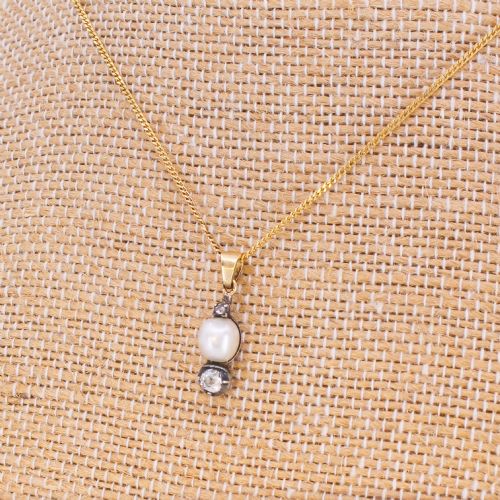
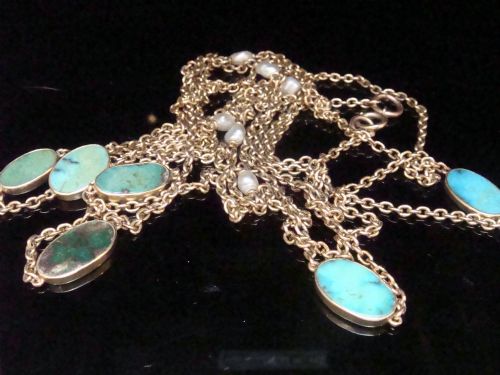
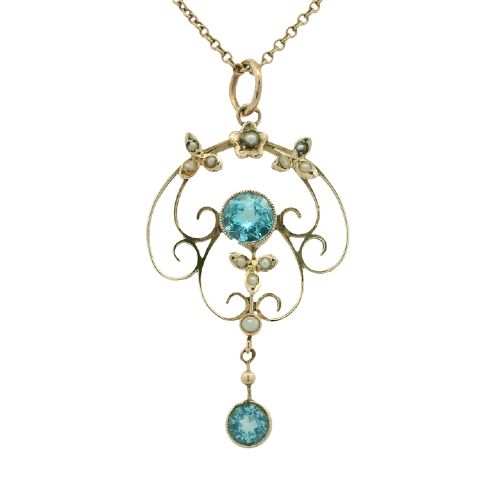
Pendants and brooches dominate the forms available, often combining pearl work with coloured stones in symmetrical clusters or flowing Art Nouveau lines. Chains such as longuards and double strand pearl necklaces round out the selection alongside detailed gold bangles and cluster rings.
How they were made
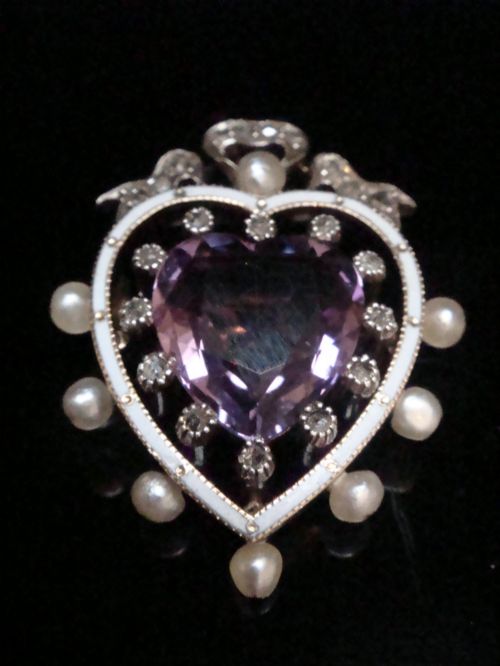
Goldsmiths worked primarily in 9ct and 15ct yellow and rose gold, occasionally utilising 18ct gold or white gold for specific mounts and clasps. Metalwork techniques involved delicate wire twisting, granulation and guilloche enamel work to frame the central stones.
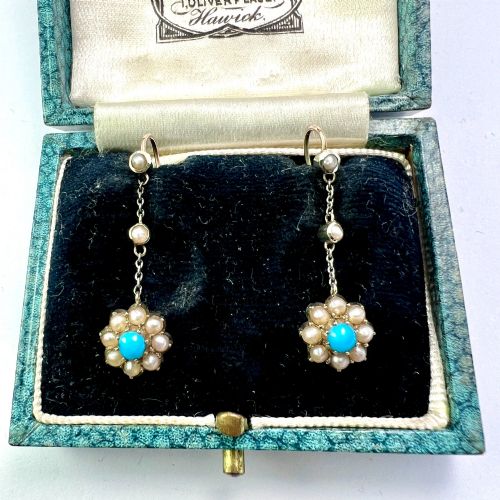
Pearls and seed pearls were painstakingly drilled and set alongside diamonds, sapphires and tourmalines into structured floral sprays, insects and geometric clusters. Master jewellers balanced structural security with extreme fineness, ensuring the gold settings held pearls and fragile gems securely without overwhelming them.
Tiny gold insects and winged creatures made their way onto lapels as delicate pearl-studded spider and fly charms.
What varies in quality
Quality rests upon the proportion and purity of the gold, with 15ct pieces generally offering a richer hue and heavier weight than standard 9ct alternatives. The uniformity and lustre of the natural pearls or seed pearls dictate much of the overall refinement.
The precision of the gem-setting and the complexity of the design elevate certain examples, particularly where stones like amethysts, peridots or aquamarines are matched with meticulous enamel or openwork gold frames.
The Edwardian Pearl Gold Jewellery Glossary
- Seed Pearl
- Very small natural pearls, often half-drilled and glued or pegged onto gold settings, widely used in delicate Edwardian clusters.
- Lavalier
- A pendant necklace featuring a central stone or drop suspended below a smaller motif, popular during the early twentieth century.
- Longuard Chain
- An exceptionally long gold chain designed to be doubled around the neck or suspended with a watch or pendant.
- Guilloche Enamel
- Decorative metalwork covered in translucent enamel over an engine-turned or engraved metallic pattern.
- Suffragette Jewellery
- Pieces incorporating amethyst, peridot and pearl or green, white and violet stones to signal support for women's suffrage.
Edwardian Pearl Gold Jewellery: Frequently Asked Questions
How do I care for antique pearl jewellery?
Pearls are organic gems that require gentle handling, so keep them away from harsh chemicals, perfumes and ultrasonic cleaners.
Wipe them softly with a damp cloth after wearing and store them separately to prevent scratching from harder metals or diamonds.
Are seed pearls natural?
Many seed pearls found in Edwardian settings are natural saltwater or freshwater pearls formed organically without human intervention.
Their tiny size and irregular, organic lustre distinguish them from modern cultured pearls.
What is a lavalier necklace?
A lavalier is a drop pendant style suspended from a fine chain, often featuring swinging gemstone elements.
This form gained immense popularity during the Edwardian era and frequently incorporates pearls alongside coloured stones.
How can I tell Edwardian gold from later gold?
Edwardian items frequently utilise 15ct gold alongside 9ct and 18ct, a specific gold standard that changed in later decades.
Hallmarks, maker's marks and stylistic cues like openwork filigree and millegrain edges also help date the piece accurately.