

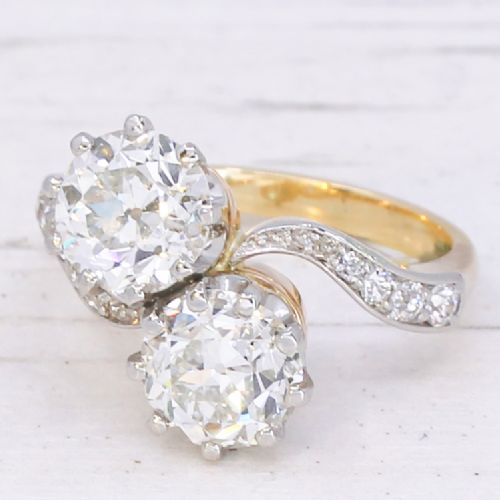


Vintage Gold Bypass Ring
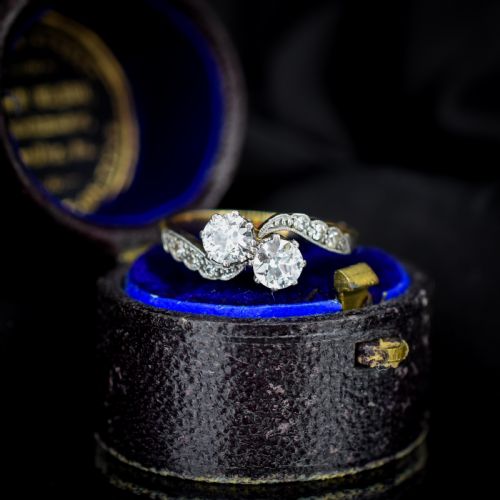
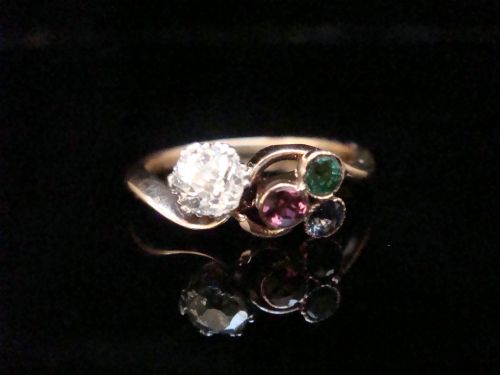
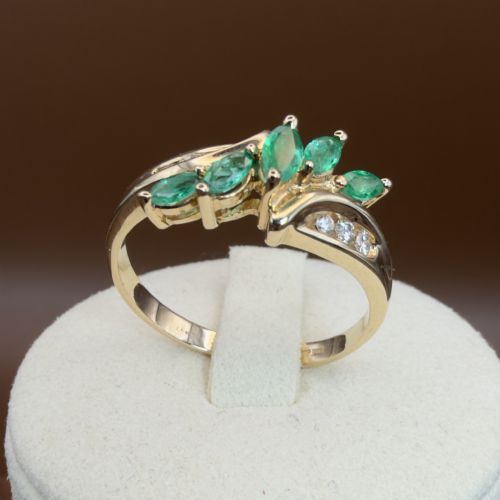
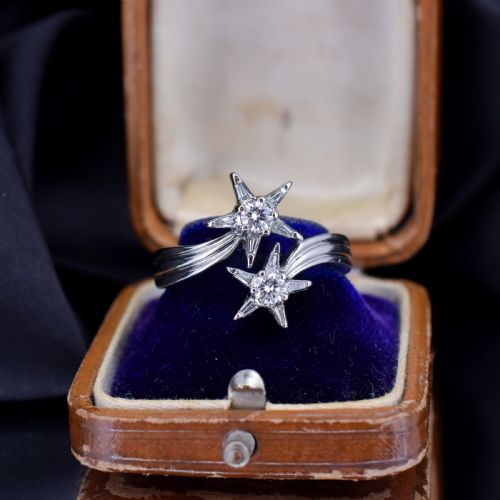
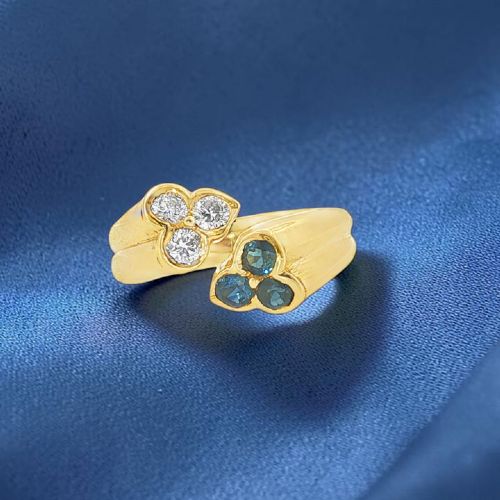
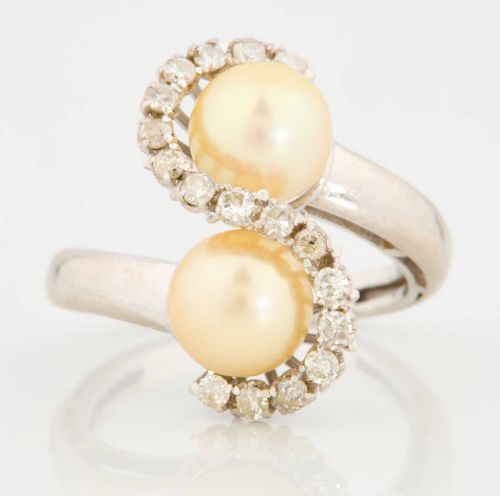
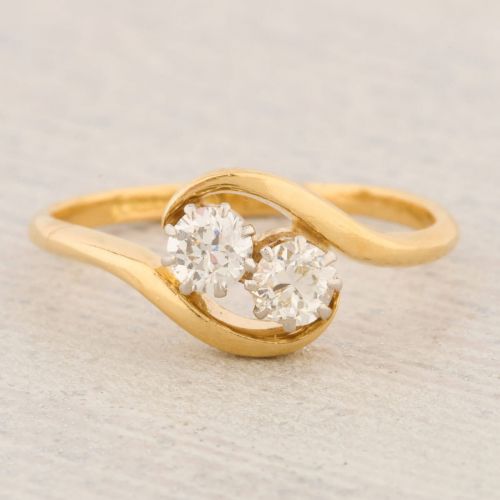
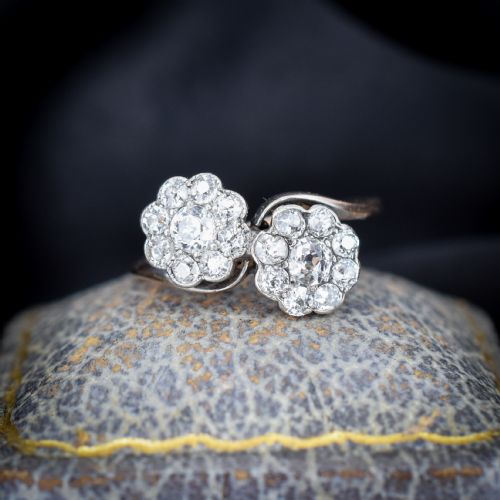
A vintage gold bypass ring wraps the finger with overlapping gemstone terminals, bringing together periods from Edwardian to mid-century.
Vintage Gold Bypass Ring
A vintage gold bypass ring uses a shank that sweeps around the finger and crosses over rather than meeting in a complete circle. This design creates a continuous movement around the hand, often framing central stones in a dynamic layout.
The selections available span from Edwardian and Art Nouveau origins through Art Deco and 1950s examples. These pieces frequently employ paired gemstones, twist motifs, and crossover bands.
The materials recorded in these pieces combine 18ct yellow gold, white gold, and platinum with diamonds, sapphires, pearls, and emeralds. Each era brings distinct proportions and stone cuts to the basic bypass architecture.
Materials and Construction
Metals such as 18ct gold, 9ct gold, and platinum form the structural bands and settings. Jewellers utilised yellow and white gold variations to contrast the metal tone against the mounted gems.
Gemstones including old cut diamonds, sapphires, rubies, and cultured pearls are secured using claw, bezel, or cluster settings. The crossover and twist sections require precise metal manipulation to maintain tension and balance along the finger.
Quality and Execution
The standard of a bypass ring rests in the weight of the gold and the structural integrity of the crossover shoulders. Heavier gauge metal prevents the band from bending under daily pressure.
Stone selection and matching determine the visual impact of the piece, particularly in two-stone configurations where proportion matters. Clean metalwork around the terminals separates finer workshops from standard production.
Kutchinsky
The Vintage Gold Bypass Ring Glossary
- Bypass ring
- A ring design where the two ends of the shank pass each other without meeting. This creates a flexible, wrap-around silhouette on the hand.
- Toi et moi
- French for you and me, describing a ring featuring two main gemstones set side by side or overlapping. It remains a classic configuration for twist and crossover bands.
- Old European cut
- An early form of brilliant cut diamond with a small table, high crown, and large open culet. These stones appear frequently in Edwardian and Art Deco pieces.
- Crossover
- A style where the band crosses over itself at the centre of the setting. It shares similarities with the bypass form in its overlapping lines.
Vintage Gold Bypass Ring: Frequently Asked Questions
What is a bypass ring?
A bypass ring is a design where the shank does not meet in a closed circle, instead overlapping at the front of the hand.
This overlapping construction gives the piece a flexible, wrapping appearance that often incorporates two distinct stones.
How do I date a gold bypass ring?
Dating relies on the stone cuts, metal combinations, and overall stylistic markers present in the work. Edwardian and Art Nouveau examples show delicate openwork, while 1950s pieces use bolder lines.
Examining the hallmark stamps, where present, provides specific confirmation of the year and assay office of creation.
Are these rings suitable for daily wear?
Most antique and vintage gold rings handle daily wear well provided the band thickness remains substantial. Checking the security of the stone settings ensures the gems stay firmly anchored.
Removing the jewellery during heavy manual tasks protects the gold and prevents unnecessary wear on the claws.
What stones are common in these rings?
Diamonds and sapphires appear frequently across the periods recorded in these pieces. Pearls, emeralds, and rubies also feature prominently as central stones or accent gems.
Combinations of diamonds with coloured stones highlight the overlapping terminals of the crossover form.