
Edwardian Pearl Drop Pendant
When you search for an edwardian pearl drop pendant, you enter a delicate world of gold work and swinging drops.
Edwardian Pearl Drop Pendant
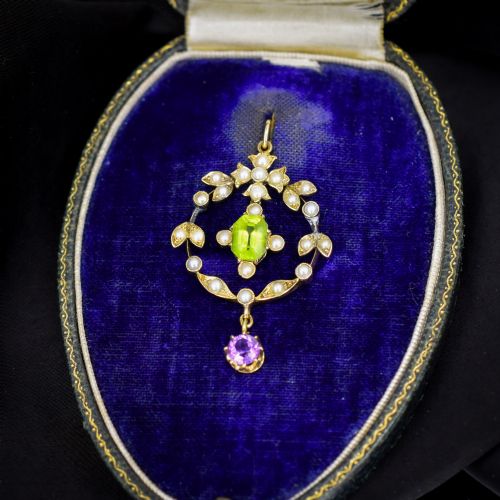
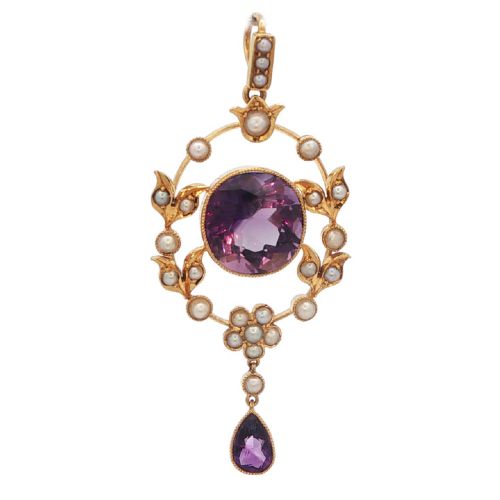
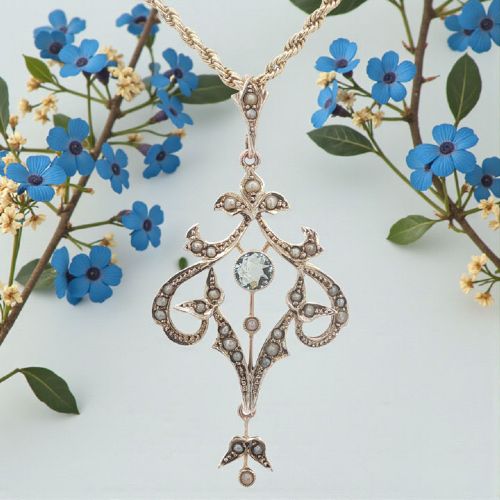
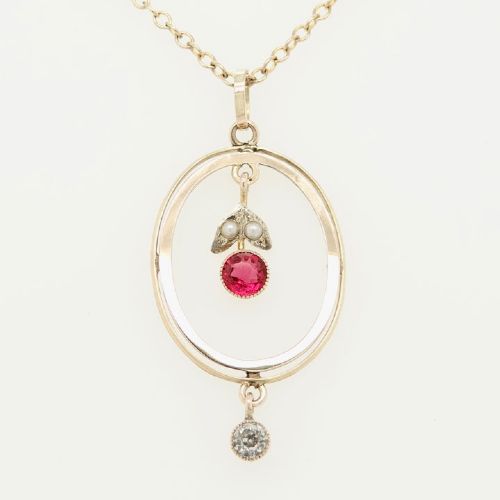
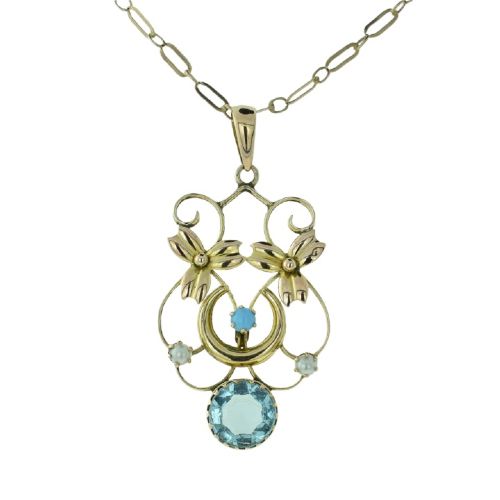
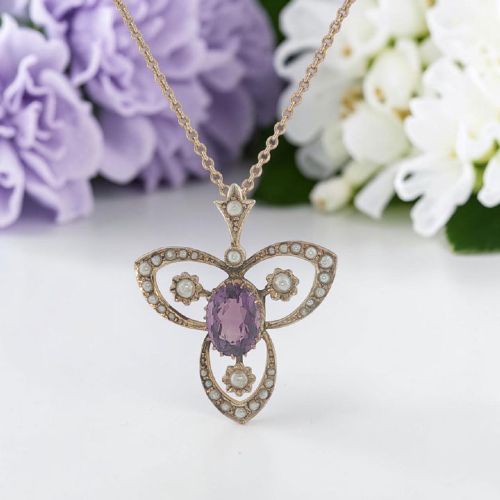
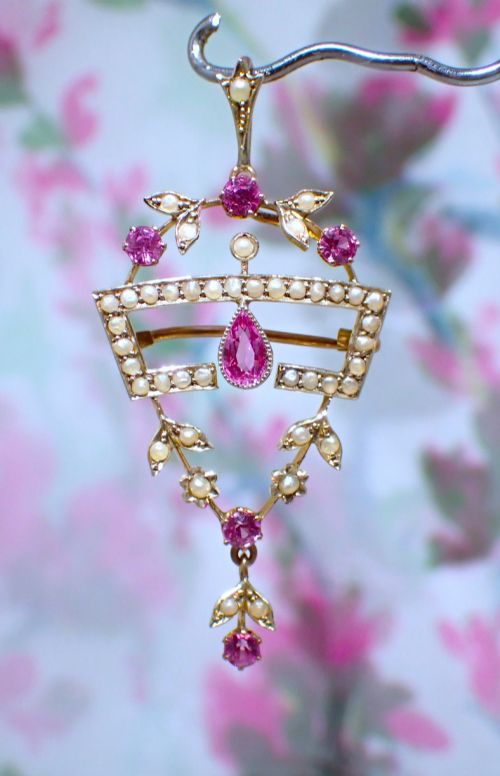
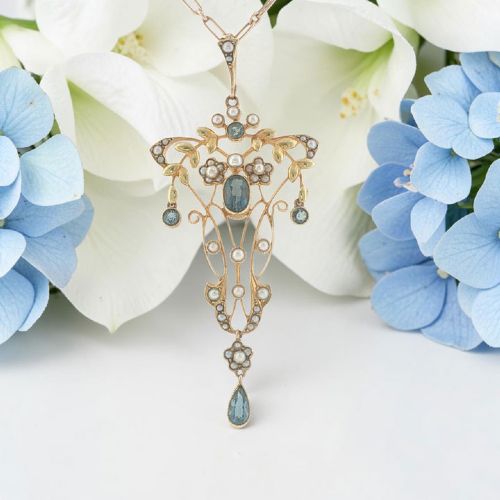
An edwardian pearl drop pendant combines fine precious metals with lustrous pearls and suspended stones, often hanging from delicate chains or lavalier mounts. These pieces span the early twentieth century, drawing on decorative traditions from the Edwardian era, Art Nouveau, and Arts and Crafts movements.
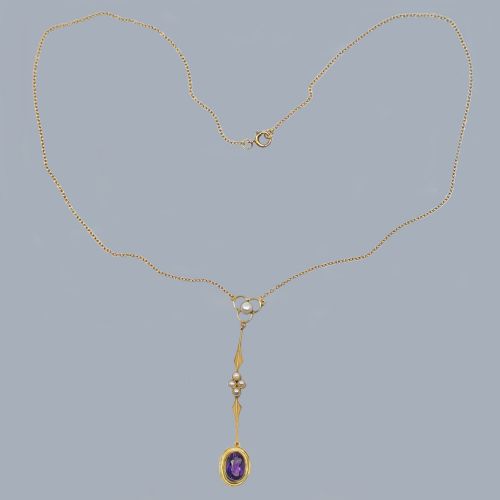
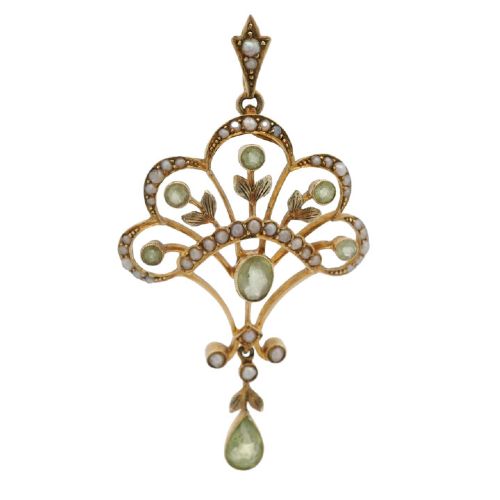
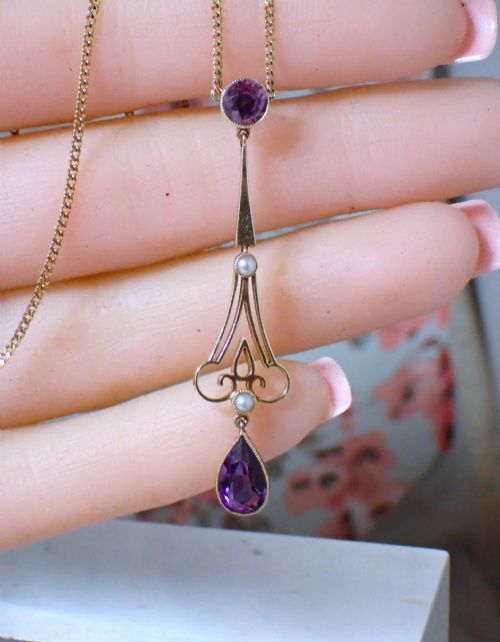
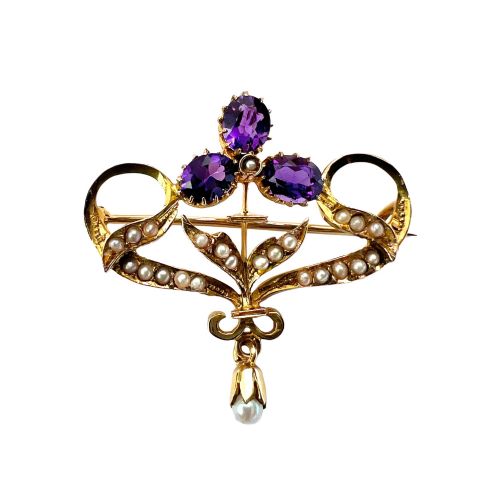
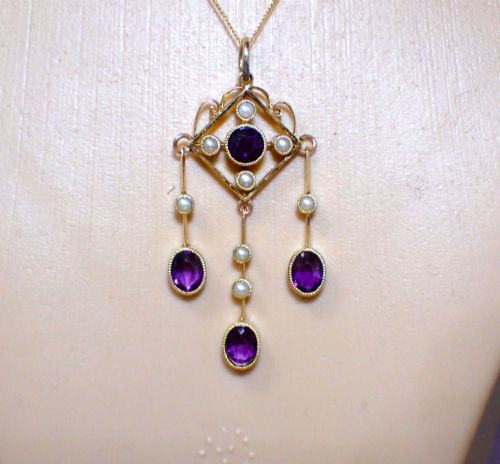
The version most commonly met on this page is the gold lavalier or floral drop necklace, frequently pairing seed pearls with purple amethysts or green peridots. Makers utilised both nine-carat and fifteen-carat yellow and rose gold, alongside silver and platinum mounts, creating swinging, light-catching silhouettes.
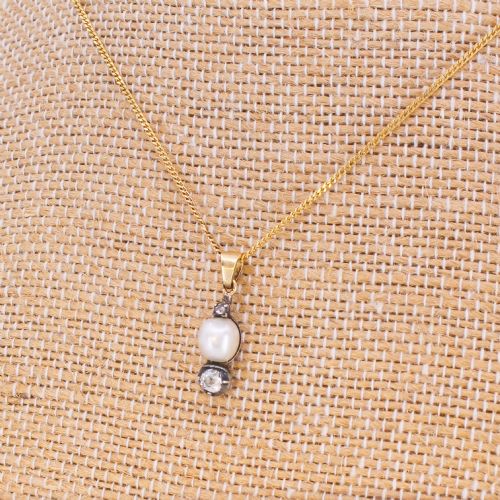
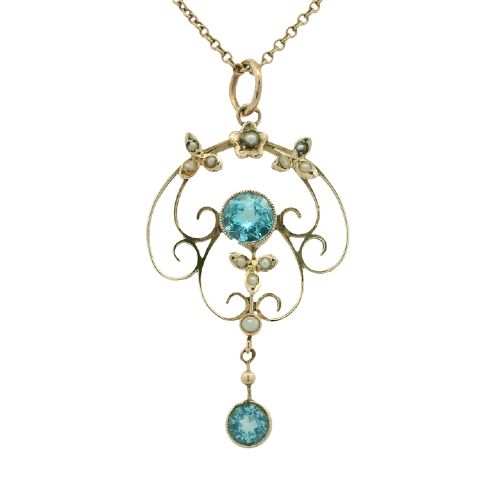
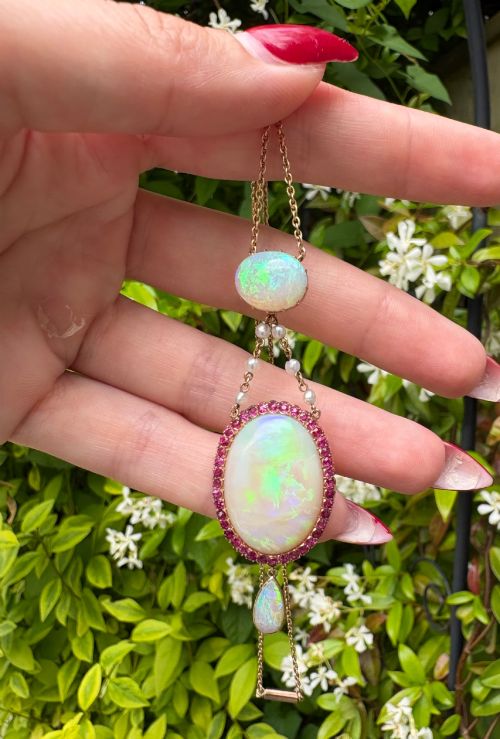
Beyond purely Edwardian examples, the selection reaches back into late Victorian designs and forward into the nineteen-twenties and thirties. Collectors encounter everything from simple pearl and diamond clusters to elaborate multi-stone fringes incorporating aquamarines, sapphires, and tourmalines.
Materials and Technique
Goldsmiths worked primarily in nine-carat and fifteen-carat gold, mounting pearls using fine wire or peg settings that allowed the seed pearls to accent the central gemstones securely. In Arts and Crafts and Art Nouveau examples, silver and plique-à-jour enamel frames were constructed by hand, showing visible craftsmanship in the metal settings.
Pendant drops relied on articulated joints and delicate jump rings to create movement, ensuring the central pearl or gemstone swung freely below the main body. Master jewellers set diamonds, amethysts, and peridots in claw or bezel collets, frequently combining platinum with gold to highlight white stones.
Listings demonstrate a strong preference for amethyst and peridot paired with seed pearls in fifteen-carat gold mounts.
Assessing Quality
The distinction between ordinary and exceptional pieces rests upon the crispness of the metalwork and the matching of the pearls. Superior examples display meticulous claw work, balanced proportions in the drop, and pearls with consistent lustre and skin.
Design complexity also separates standard workshop output from premier creations, particularly where hand-enameled details, certified gemstones, or maker signatures are present. Well-preserved original boxes and intact, undamaged plique-à-jour enamel elevate an item considerably.
Archibald Knox·Liberty and Co·Murrle Bennett·S Blanckensee and Son·Hamilton and Co
The Edwardian Pearl Drop Pendant Glossary
- Seed pearl
- A very small, naturally formed or cultured pearl, typically measuring under two millimetres. These tiny pearls were drilled and threaded or pegged closely together to form delicate borders and floral clusters.
- Lavalier
- A pendant featuring a swinging drop suspended from a central motif or directly from the chain. This style gained immense popularity during the Edwardian period for its graceful movement.
- Plique-à-jour
- An enamelling technique where enamel is applied to open cells without a backing, allowing light to shine through transparent colours like stained glass. It is characteristic of fine Art Nouveau and Arts and Crafts jewellery.
- Collet
- A band of metal that holds a gemstone in place by encircling its girdle. This setting style secures the stone while framing it neatly against the surrounding gold or silver.
- Fringe necklace
- A necklace design featuring multiple hanging drops suspended at intervals along the lower edge of the chain. These pieces often incorporate mixed gemstone drops alongside pearls.
Edwardian Pearl Drop Pendant: Frequently Asked Questions
How do I care for my pendant?
Pearls are organic gems that require gentle handling, avoiding harsh chemicals, ultrasonic cleaners, and perfumes. Wipe them softly with a damp cloth after wearing and store them separately to prevent scratching.
Gold and gemstone sections can be cleaned with warm soapy water and a soft brush, provided the pearls are not submerged for extended periods. Regular inspection of the settings ensures the tiny seed pearls and swinging drops remain secure.
Are these pieces made with real gold?
Yes, the listings prominently feature nine-carat and fifteen-carat gold, alongside silver, platinum, and eighteen-carat gold examples. Hallmarks and professional metal testing help confirm the purity of the precious metals used.
Makers of this era frequently stamped their work with standard assay marks or maker's marks, providing clear evidence of the metal content and workshop origin.
What is an Edwardian lavalier?
An Edwardian lavalier is a specific pendant style characterised by a central decorative motif with one or more dangling drops that sway with movement. They became a defining fashion of the early twentieth century.
These necklaces often suspend amethysts, peridots, or aquamarines framed by seed pearls from delicate gold chains, embodying the romantic aesthetic of the period.
How can I tell the period?
Dating relies on stylistic cues, such as the flowing organic lines of Art Nouveau, the geometric rigour of Art Deco, or the handcrafted motifs of the Arts and Crafts movement. Material choices, such as platinum use after nineteen hundred, also aid chronological placement.
Examining the construction methods, pin fittings on convertible brooch-pendants, and any accompanying hallmarks or original boxes provides further confirmation of the era.