
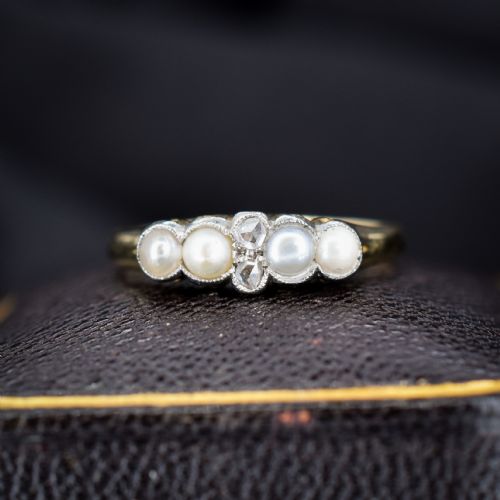


Edwardian Pearl Cluster Ring
An edwardian pearl cluster ring brings together soft lustre and sharp antique facets in a low-profile setting designed to sit close to the finger.

Edwardian Pearl Cluster Ring
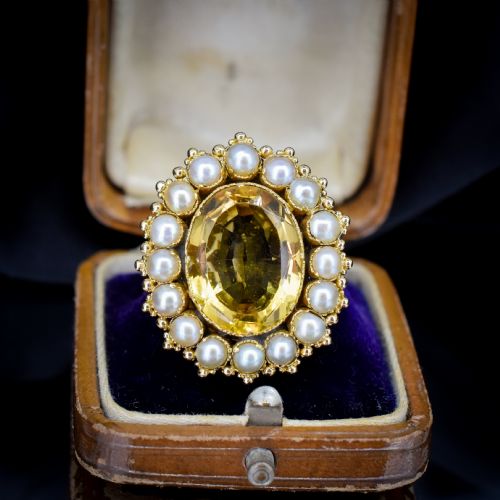
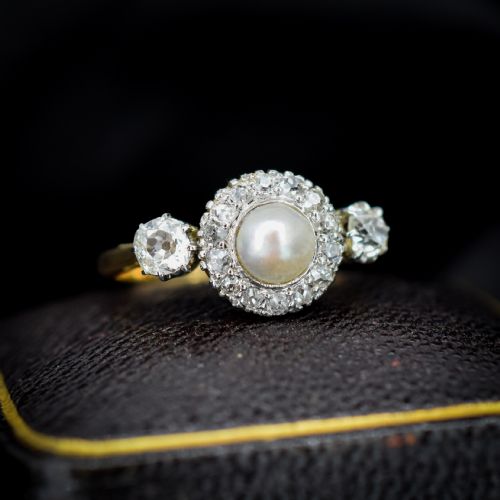
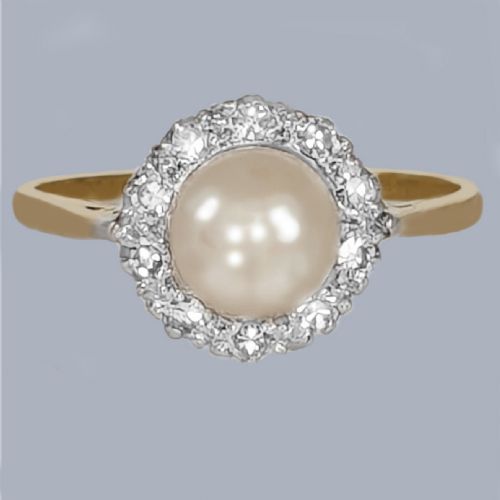
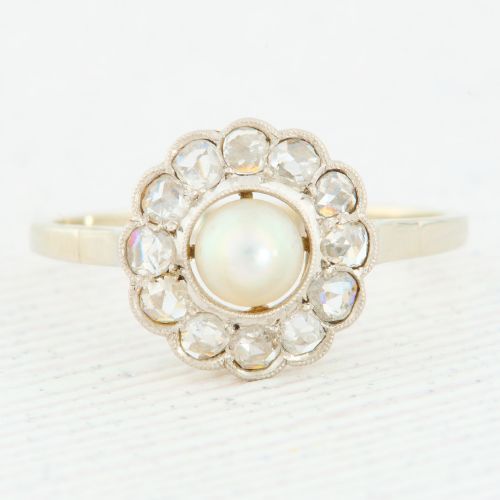
An edwardian pearl cluster ring typically centres on a luminous pearl surrounded by a tight halo of old-cut diamonds, garnets, amethysts, turquoises, or rubies. These pieces span the Edwardian period and Belle Epoque, carrying the characteristic lightness and floral symmetry of the early twentieth century.
While most examples date from the Edwardian era, the listings also include Victorian precursors and later mid-century reinterpretations that keep the central cluster formation intact. The primary metal carrier shifts between 18ct yellow gold, rose gold, and the newly fashionable platinum of the early 1900s.
Materials and Construction
Goldsmiths of the period employed 18ct yellow or rose gold for the shanks and under-bezels, often backing the top face in platinum to securely hold diamonds in delicate claw or millegrain settings. This technical shift allowed metalwork to appear finer and whiter without losing structural integrity.
Stones are predominantly hand-cut old mine or rose-cut diamonds paired with natural or cultured pearls, occasionally accented by coloured gemstones like almandine garnets, peridots, or turquoise. Seed pearls appear in smaller concentric rings or floral motifs, secured firmly onto pin posts within the cluster.
Listings feature 18ct yellow gold, rose gold, and platinum, paired with pearls, diamonds, amethysts, garnets, peridots, and turquoise across Edwardian, Victorian, and mid-century periods.
Markers of Distinction
The distinction between standard and exceptional pieces rests on the symmetry of the cluster and the matching of the surrounding stones. Natural pearls with strong orient and unblemished skin elevate an example far above those set with uneven cultured varieties.
The crispness of the millegrain edge work and the absence of thinning to the gold shank indicate how heavily a ring was worn and how carefully it was made. Pierced under-galleries that allow light to pass through the cluster demonstrate a higher tier of goldsmithing.
The Edwardian Pearl Cluster Ring Glossary
- Cluster ring
- A ring featuring a central stone encircled by a border of smaller gems. This configuration maximises visual presence on the hand.
- Millegrain
- A decorative technique involving a row of tiny raised metal beads along the edge of a setting. It provides a soft, textural border typical of Edwardian jewellery.
- Old-cut diamond
- A diamond cut by hand before modern machinery, possessing a smaller table and larger culet. These stones catch candlelight with a distinct chunky gleam.
- Seed pearl
- A very small natural or cultured pearl, often un-drilled or half-drilled. They are frequently used in tight pavé or clustered floral arrangements.
- Belle Epoque
- A period of decorative arts spanning the late nineteenth century to the start of the First World War. It is characterised by Garland style lightness and platinum mounts.
Edwardian Pearl Cluster Ring: Frequently Asked Questions
How do I care for pearls?
Pearls are organic gems that require gentle handling, as household chemicals and cosmetics can dull their natural lustre over time. Wipe them clean with a soft cloth after wearing and store them separately to avoid scratching.
Because pearls are glued onto peg settings in many antique rings, avoid submerging the entire piece in water or ultrasonic cleaners. Professional inspection of the settings ensures the pearls remain secure.
Are these pearls natural?
Many Edwardian pieces feature natural saltwater pearls formed without human intervention, whilst others utilise early cultured pearls. Gemmological testing can distinguish between the two by examining the internal core structures.
Listings specify natural pearls where documented, reflecting the transition in the early twentieth century toward cultured pearl harvesting. Both varieties display the soft iridescence characteristic of the period.
Can I resize an antique ring?
Most gold and platinum cluster rings can be resized by a skilled jeweller who understands antique construction. The process involves adjusting the solid shank while protecting the delicate cluster top from heat.
Take the ring to a specialist accustomed to handling Edwardian or Victorian mountings to preserve the original hallmarks and gallery work.
What is platinum-topped gold?
Platinum-topped gold is a transitional technique where a thin sheet of platinum is soldered onto the yellow gold face of a ring. This allowed makers to use white metal for a brighter diamond setting while retaining warm gold underneath.
This method appears frequently in Edwardian and Belle Epoque pieces before solid platinum mountings became standard practice.