
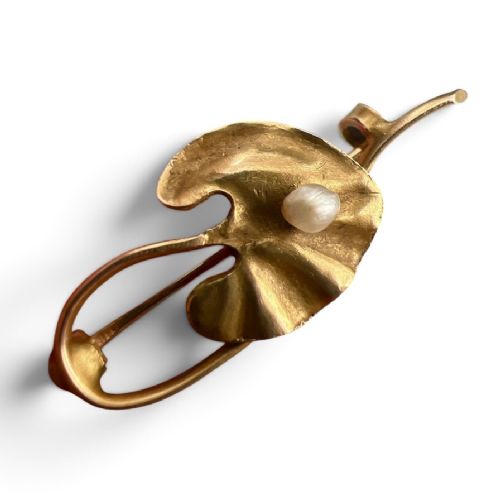
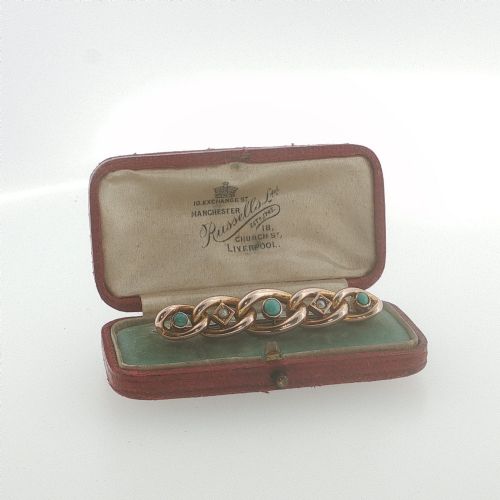
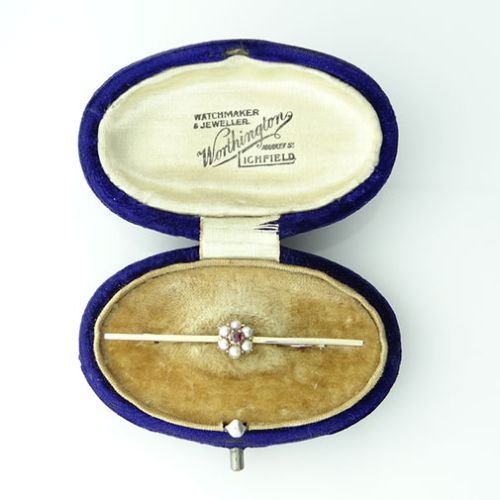
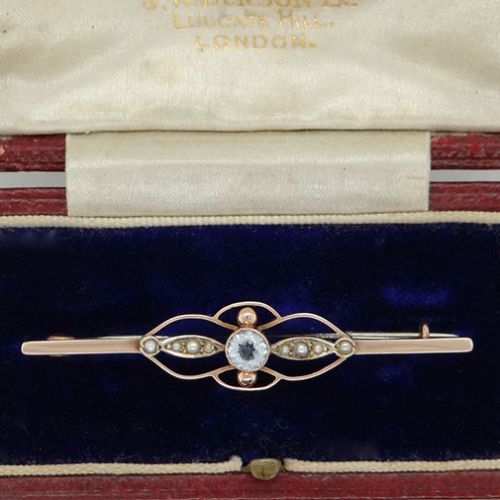


Edwardian Pearl Bar Pin
An edwardian pearl bar pin brings together delicate goldwork and luminous natural pearls to fasten a lapel with understated period grace.
Edwardian Pearl Bar Pin
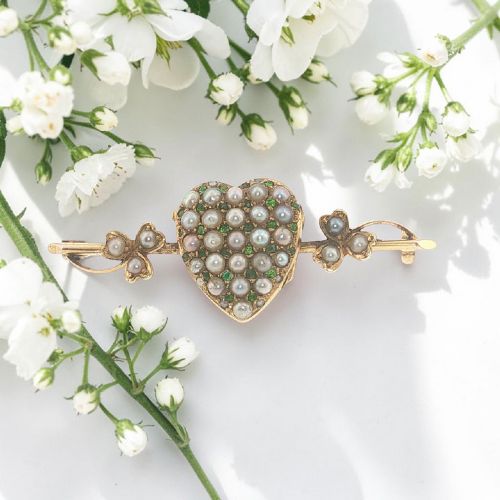
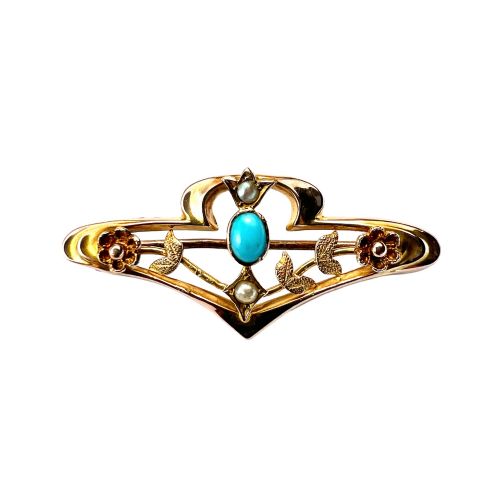
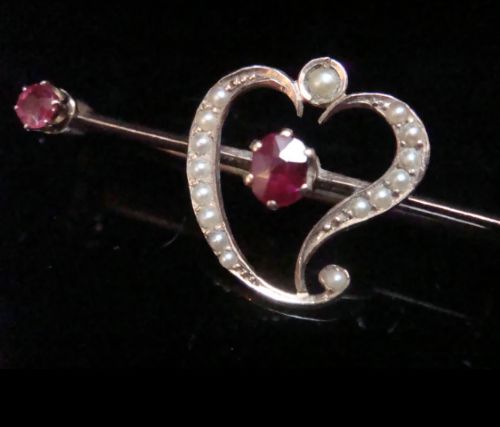
An edwardian pearl bar pin is a slender brooch designed to secure a cravat, collar or lapel with a horizontal shaft of precious metal set with pearls. These pieces appear alongside closely related forms including crescent, heart, floral, insect and swallow brooches.
The objects span periods from the Victorian era through the Edwardian years into the 1920s and 1930s, reflecting changing tastes in decorative jewellery. Most examples date from the Edwardian period itself or the surrounding decades of the early twentieth century.
Materials range from nine-carat and fifteen-carat yellow and rose gold to platinum, silver-topped gold, and rolled gold. Pearls are paired with diamonds, rubies, sapphires, turquoises, peridots, garnets, aquamarines and enamel.
Materials and construction
Goldsmiths shaped nine-carat and fifteen-carat gold, along with eighteen-carat gold and platinum, into slender bars and intricate mounts for stones. Silver was frequently layered over gold in Edwardian pieces to provide a bright, white setting for diamonds that contrasted with the warmer gold pin behind.
Pearls and seed pearls were hand-selected for size and lustre, then mounted alongside rose-cut or brilliant-cut diamonds and coloured gem stones such as ruby, sapphire, turquoise and peridot. Enamel work and delicate wire twisting added detail to floral, winged and crescent motifs.
Several pieces feature tiny winged hearts and swallows carrying pearls, proving that Edwardian jewellers took romance very seriously indeed.
Distinctions in craftsmanship
Quality rests upon the precision of the metalwork and the matching of the pearls, where uniform lustre and careful bead-setting elevate a piece above simpler constructions. Finer examples integrate precious stones like diamonds and sapphires with secure claw or bezel settings that hold each gem flush.
The choice of base material marks a clear tier in the range, moving from rolled gold up to nine-carat, fifteen-carat and eighteen-carat gold, often combined with platinum. The presence of documented hallmarks or boxed presentation sets further separates standard production items from finer workshop output.
The Edwardian Pearl Bar Pin Glossary
- Seed pearl
- A tiny, naturally formed pearl, typically under two millimetres in diameter, used in clusters or rows to form delicate floral and geometric patterns.
- Bar pin
- A narrow, horizontal brooch featuring a pin mechanism spanning the back of a slender metal shaft.
- Rose-cut diamond
- An antique diamond cut featuring a flat base and a domed crown faceted with triangular planes, common in Edwardian and Victorian settings.
- Rolled gold
- A durable material made by mechanical bonding a thin sheet of gold to a base metal core, offering the appearance of solid gold.
Edwardian Pearl Bar Pin: Frequently Asked Questions
How do I wear an edwardian pearl bar pin?
These pieces fasten neatly onto the lapel of a jacket, the front of a blouse, or the fabric of a scarf. They add a subtle touch of period detail to everyday wear.
Ensure the safety catch or C-clasp is secure before fastening it through heavier woven fabrics to protect the vintage pin.
Were pearls cultured or natural in this era?
Jewellery from the Edwardian period primarily used natural saltwater and freshwater pearls before cultured pearls became widely available in the nineteen-twenties.
Seed pearls and wild pearls were carefully sorted by hand to match the proportions of each delicate gold or platinum mount.
How do I tell an Edwardian pin from a Victorian one?
Edwardian pieces often feature lighter, airier platinum and yellow gold settings with diamonds, swallows, and floral motifs. Victorian examples tend to be heavier, incorporating rich rose gold, garnet, turquoise, and horseshoe designs.
Overlap in styles occurs because workshops continued producing certain traditional motifs across the turn of the twentieth century.
What metals were commonly used?
Jewellers worked extensively in nine-carat and fifteen-carat yellow and rose gold, alongside eighteen-carat gold. Platinum emerged strongly during the Edwardian era for its bright, durable strength.
Silver-topped gold was also utilised to showcase diamonds against a white metal surface while retaining a warm gold reverse.