

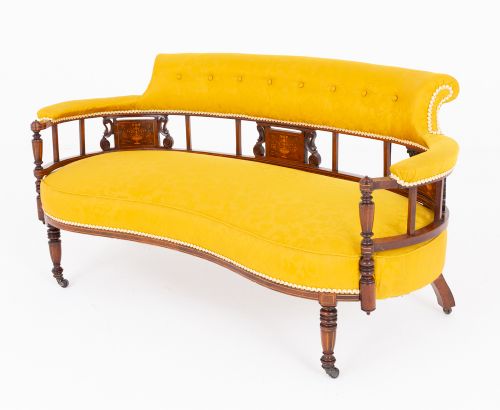


Edwardian Parlour Settee
An Edwardian parlour settee brings refined seating into a drawing room through slender timbers and delicate inlaid motifs.
Edwardian Parlour Settee
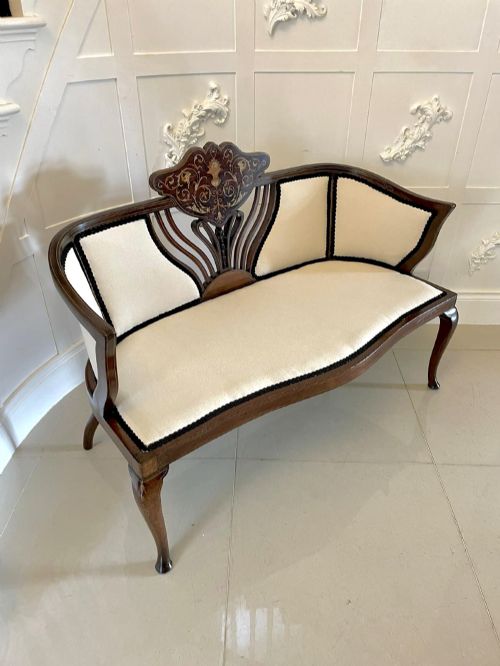
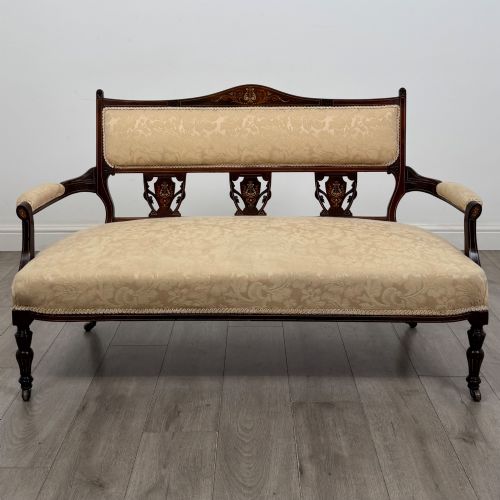
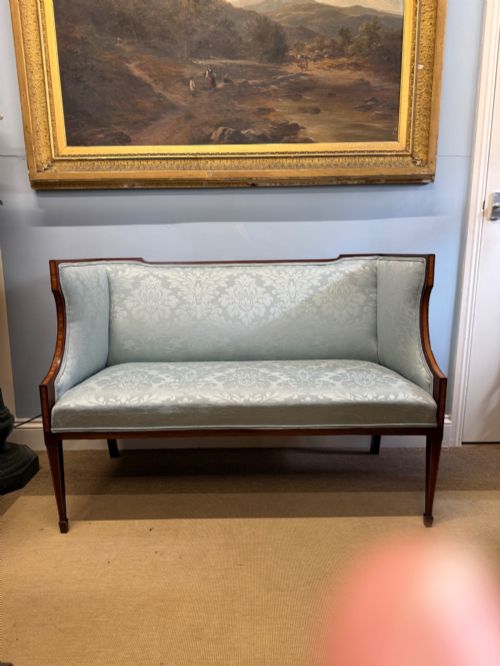
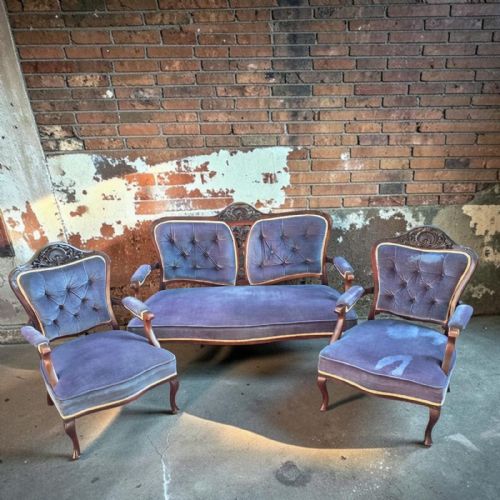
An edwardian parlour settee is a light, elegant form of seating designed principally for reception rooms and formal spaces rather than heavy daily lounging. These pieces typically present as two-seater sofas or salon settees, sometimes appearing alongside matching chairs as part of a larger suite.
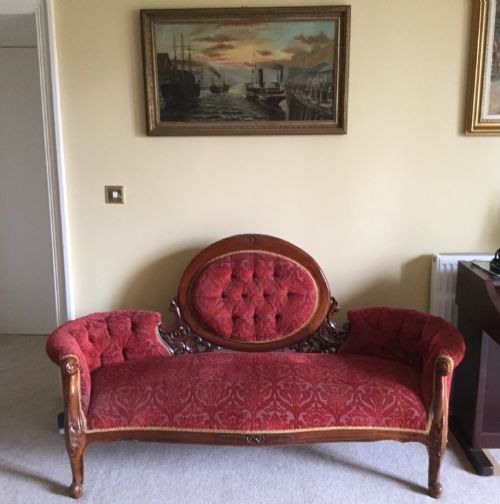
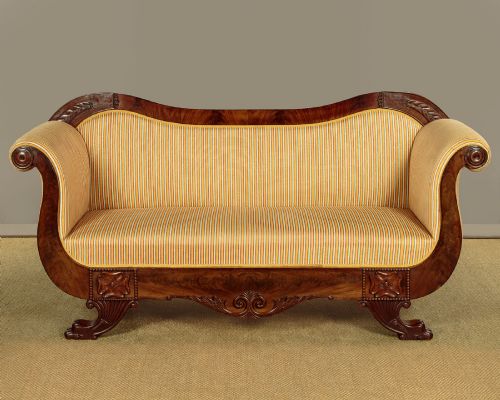
While the material evidence spans periods from the nineteenth century into the early twentieth, the defining examples belonging to this search phrase centre firmly on the Edwardian era and late Victorian times. Alongside proper settees, buyers frequently encounter salon sofas, double-ended couches, and twin-seat bedroom settles.
The prevailing shapes rely on slender proportions, upright backs, and exposed timber frames rather than deep, bulky upholstery. Many sit upon delicate tapered legs, occasionally linked by stretchers, maintaining an airy visual footprint within a room.
What varies in quality
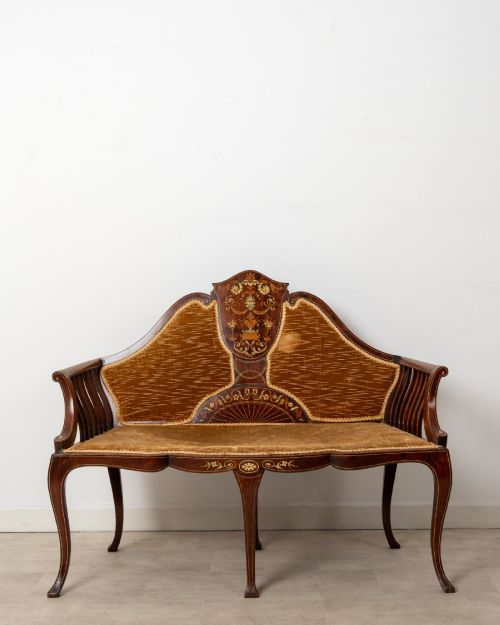
The refinement of the timber and the crispness of the inlay distinguish standard examples from superior work. Crisp satinwood and boxwood stringing set into dense mahogany indicates a higher level of cabinetmaking than painted imitations or plain frames.
Structural integrity and the retention of original show-wood carving shape the standing of a piece. Pieces that preserve balanced proportions without heavy restoration command greater appreciation among collectors.
Listings for this phrase combine mahogany and rosewood frames with decorative satinwood and boxwood inlay across the Edwardian and Victorian periods.
C. Hindley and Sons·Maple and Co
The Edwardian Parlour Settee Glossary
- Settee
- A medium-length upholstered seat for two or more people. It differs from a heavy sofa by maintaining a lighter frame and more upright posture.
- Inlay
- A decorative technique where contrasting materials such as satinwood, boxwood, or bone are inserted into shallow recesses in the primary timber. This creates flush surface patterns.
- Salon Suite
- A matched set of seating furniture, typically comprising a settee and several armchairs. These were manufactured together to furnish a formal parlour.
- Show-wood
- Exposed polished timber on a piece of upholstered furniture. It highlights the quality of the cabinet work framing the fabric.
- Spindle back
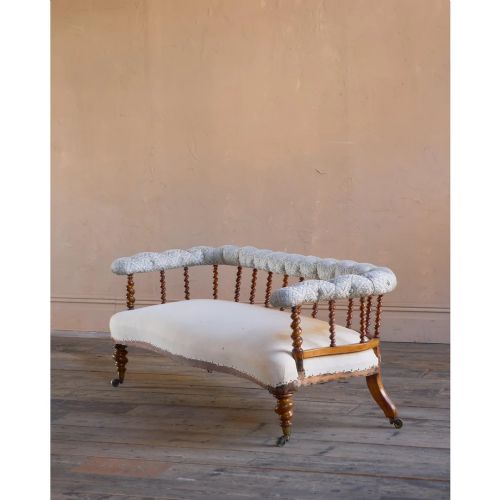
- A chair or settee back constructed from a series of slender, turned wooden rods. It imparts visual lightness to the piece.
Edwardian Parlour Settee: Frequently Asked Questions
Where were parlour settees placed?
These pieces sat principally in formal reception rooms, drawing rooms, and ladies' boudoirs where guests were received. Their light construction suited spaces dedicated to conversation rather than heavy reclining.
Because they were built for entertaining rather than daily family lounging, they prioritised elegant silhouettes and decorative presence over deep cushioning.
How do I identify an Edwardian piece?
Edwardian seating generally exhibits lighter proportions, brighter mahogany timbers, and refined satinwood inlay compared to earlier Victorian furniture. The designs favour Sheraton revival influences and slender tapered legs.
Makers of this period often combined classical stringing with delicate upholstered panels, producing a cleaner and less cluttered aesthetic than mid-nineteenth-century equivalents.
Can I reupholster a salon settee?
Many surviving pieces retain older fabric or are offered specifically for re-upholstery to match modern interiors. Traditional sprung bases and webbed frames can be recovered by skilled restorers.
Choosing a suitable brocade, velvet, or damask allows the settee to function practically while preserving the integrity of the antique frame.
What is the difference between a sofa and a settee?
In historical terminology, a settee typically denotes a lighter, more upright wooden-framed seat designed for formal rooms. A sofa historically implied a heavier, more fully upholstered piece intended for lounging.
Over time, the terms became largely interchangeable in listings, though Edwardian examples generally retain the slender proportions associated with settees.