


Carved Mahogany Two Seater
These carved mahogany two seater pieces are solid timber frames built for drawing rooms, appearing across Georgian, Victorian, and Edwardian periods.
Carved Mahogany Two Seater
A carved mahogany two seater sits within a tradition of domestic seating that includes settees, sofas, and salons couches. The form spans multiple eras, taking shape through Georgian origins, Victorian revivals, and Edwardian refinements.
Most examples found here date from the nineteenth and early twentieth centuries, reflecting the enduring popularity of dark timber frames. These pieces function as principal drawing room seating, often upholstered in fabric or leather.
How they were made
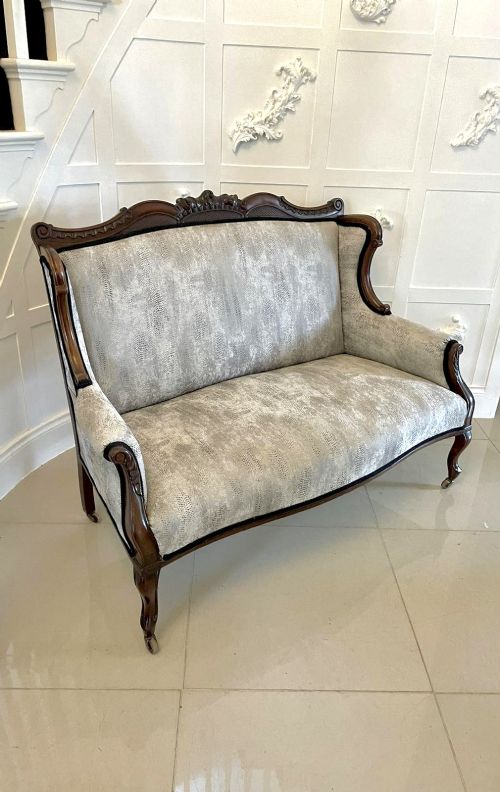
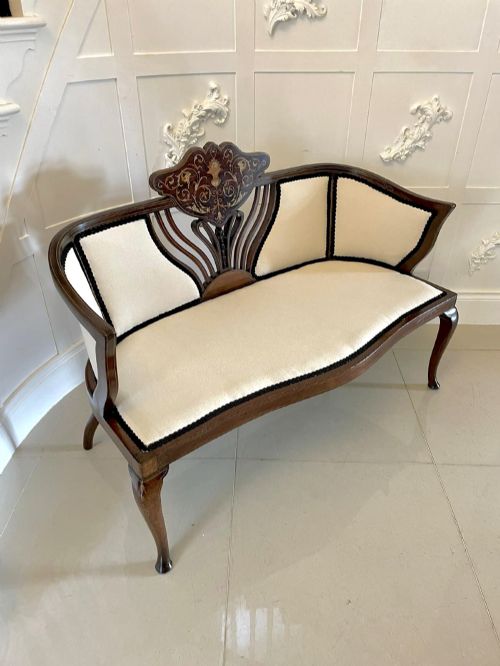
Makers shaped structural frames from solid mahogany, sometimes incorporating satinwood or boxwood inlay to contrast against the dark timber. Joinery relied on traditional framing techniques to support both show-wood carvings and upholstered seats.
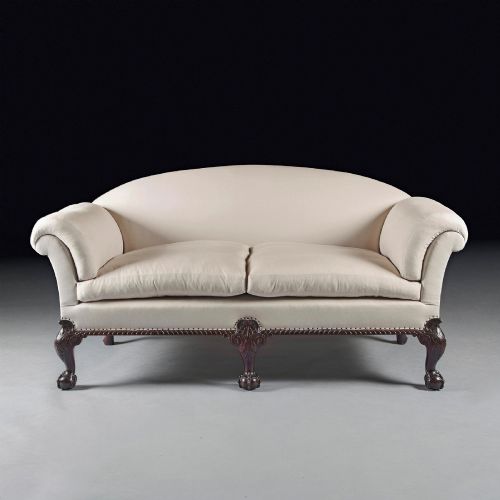
Upholstery materials evolved from early horsehair stuffing and cotton calico foundations to finished coverings of fabric and brown leather. Brass castors frequently fitted the feet, while decorative details ranged from plain show frames to ball and claw feet.
Listings span several eras, recording Victorian, Edwardian, Georgian, and 1930s examples alongside nineteenth-century production.
What varies in quality
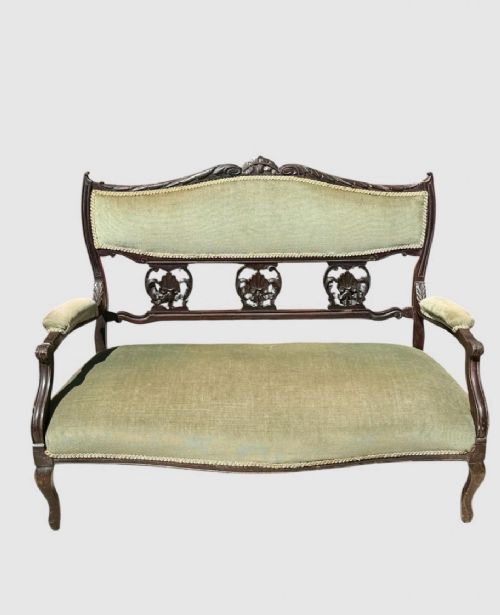
The crispness of the timber carving distinguishes finer examples from simpler workshops, especially on ball and claw feet or pierced splats. Timber selection matters, as figured mahogany with rich grain patterns carries more visual weight than plain stock.
Construction integrity dictates longevity, with tight joints and well-executed revival styles holding greater regard than later utility pieces. The presence of delicate inlay work also signals a more ambitious commission.
Howard and Sons·Butlers of Dublin
The Carved Mahogany Two Seater Glossary
- Settee
- A medium-length upholstered seat with a back and arms, designed for two or more occupants. This form serves as the primary descriptor for many mid-sized salon seating options.
- Show Frame
- A wooden structural framework left exposed around the upholstered elements of a sofa or settee. This design showcases the carved mahogany woodwork.
- Chippendale Revival
- A decorative style reinterpreting eighteenth-century cabinet maker designs during the Victorian and Edwardian eras. Pieces often incorporate ball and claw feet and elaborate splats.
- Satinwood Inlay
- Contrasting light timber veneer inserted into recesses within the darker mahogany surface. This technique creates geometric or floral decorative borders.
- Calico
- A plain-woven cotton fabric used historically as an interior lining or under-upholstery layer. It frequently forms the base upon which top covers are secured.
Carved Mahogany Two Seater: Frequently Asked Questions
What periods do these settees come from?
The selection spans from Georgian origins through Victorian revivals up to Edwardian and later twentieth-century examples. Construction methods and stylistic flourishes shift across these decades.
Early pieces show classical restraint, while later Edwardian variants lean towards lighter inlaid decoration.
How do I care for leather upholstery?
Leather surfaces require regular dusting and occasional conditioning to prevent the hide from drying out over time. Keeping timber frames away from direct heat sources protects the mahogany.
Gentle maintenance preserves both the finish of the wood and the integrity of the natural hide.
Are these sofas suitable for daily use?
Solid timber construction provides sturdy seating, though antique frames benefit from mindful placement and sensible weight distribution. Many survive in robust condition after more than a century.
Re-upholstered examples often feature modern internal webbing while retaining their historic show frames.
What is the difference between a settee and a sofa?
Historically, terms overlap significantly within nineteenth-century cabinet making records and sale titles. Both describe double-seating furniture intended for formal reception rooms.
Settee often implies a more upright wooden framework, whereas sofa suggests deeper padded comfort.