




Edwardian Carved Bench Sofa
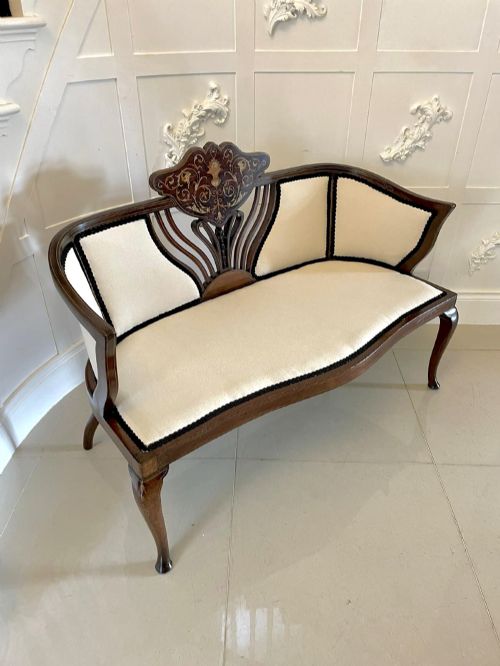
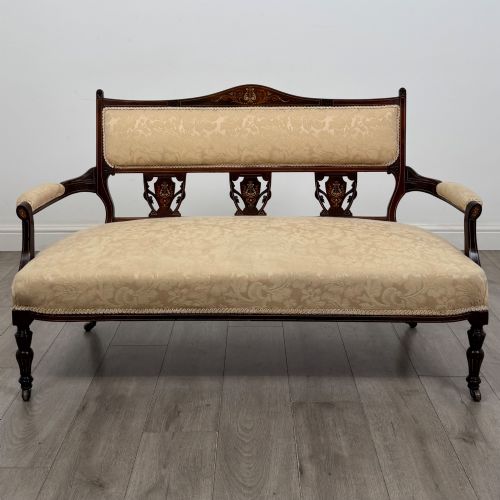
An edwardian carved bench sofa brings together slender proportions and delicate woodwork, offering an elegant seat for a hallway or drawing room.
Edwardian Carved Bench Sofa
When you search for an edwardian carved bench sofa, you encounter seating forms that span the late nineteenth century through to the nineteen-twenties, with Edwardian examples appearing most frequently alongside Victorian and later interpretations.
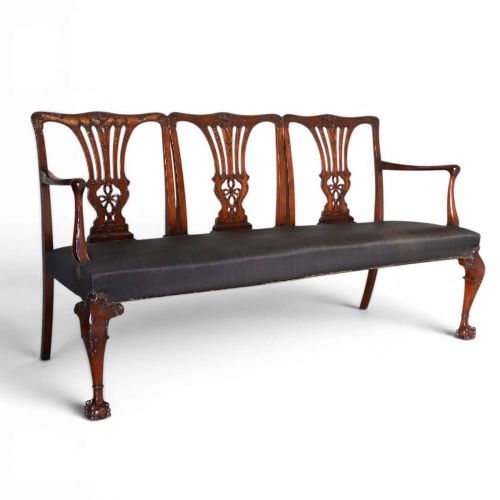
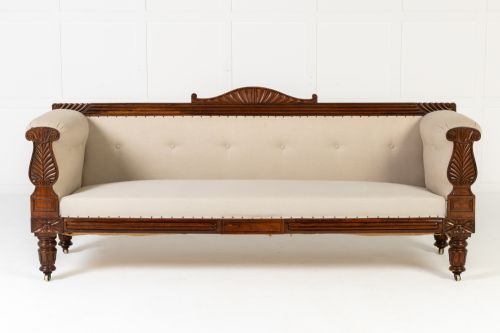
The pieces on this page take various forms including settees, window seats, banquettes, and salon sofas, often reflecting revival styles such as Chippendale, Queen Anne, and Louis XVI.
Makers of the period utilised woods like mahogany, walnut, and satinwood, frequently finishing frames with inlaid details and carved backs designed for lighter interiors.
Evaluating Quality
Quality rests upon the crispness of the woodwork and the integrity of the frame construction, where deeply defined carving and tight joinery distinguish superior pieces from simpler utilitarian seating.
The choice of primary timber and the precision of any satinwood inlay indicate the ambition of the original workshop.
Original upholstery survivals or sympathetic re-upholstery utilising period-appropriate materials maintain the historical character of the piece.
Listings feature mahogany, walnut, oak, and satinwood alongside fabrics including velvet and leather across the Edwardian and Victorian periods.
The Edwardian Carved Bench Sofa Glossary
- Settee
- A long upholstered seat with a back and arms, designed for multiple occupants. These forms often served formal reception rooms and parlours.
- Inlay
- A technique where pieces of contrasting wood, such as satinwood, are inserted into depressions in the primary timber to create decorative patterns.
- Bergere
- An enclosed upholstered armchair or sofa with wooden frames and cane panelling on the sides or back. Originating in France, these pieces gained popularity in British drawing rooms.
- Banquette
- A long upholstered bench or sofa, frequently utilised in hallways, window recesses, or along walls.
- Chippendale Style
- A design vocabulary characterised by carved ribbon backs, cabriole legs, and ornate detailing inspired by the eighteenth-century cabinetmaker Thomas Chippendale.
Edwardian Carved Bench Sofa: Frequently Asked Questions
Where did people place these sofas?
These pieces suited drawing rooms, parlours, and large hallways where residents welcomed visitors or relaxed near windows.
Their lighter proportions compared to heavy Victorian furniture allowed for easier movement around reception spaces.
How do I identify an Edwardian piece?
Edwardian seating generally displays lighter frames, brighter mahogany or satinwood timbers, and refined inlay work.
Makers frequently drew inspiration from earlier eighteenth-century designs while scaling down dimensions for smaller urban rooms.
Are these sofas comfortable for daily use?
Many Edwardian and Victorian settees feature sprung seats and padded backs designed for upright sitting rather than lounging.
Comfort depends heavily on the quality and firmness of the internal webbing and modern upholstery padding.
What woods were commonly used?
Makers relied heavily on mahogany and walnut as primary framing timbers, often embellished with satinwood stringing or floral motifs.
Some examples also incorporate rosewood or oak depending on the specific revival style and period of manufacture.