



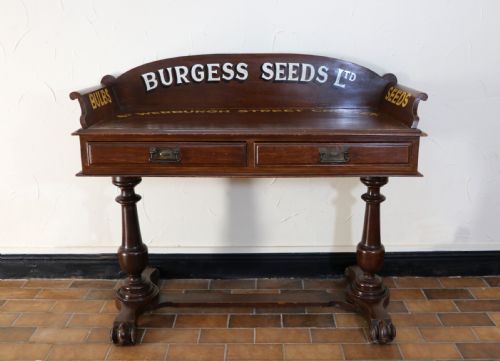


Edwardian Painted Writing Table
An Edwardian painted writing table brings delicate surface decoration and refined proportions to a room, offering a functional workspace with decorative charm.
Edwardian Painted Writing Table
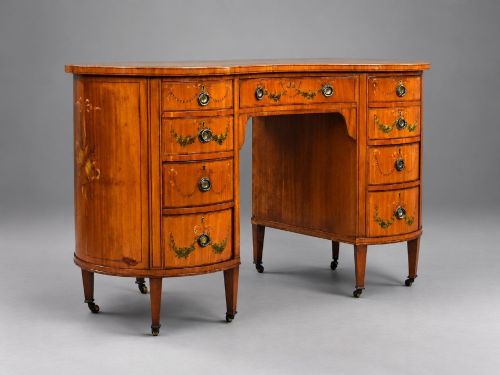
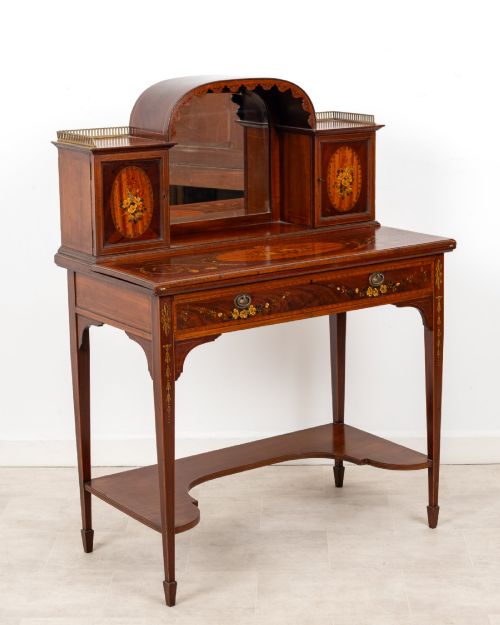
An edwardian painted writing table combines the lighter forms of the late nineteenth and early twentieth centuries with hand-painted surface decoration, satinwood veneers, and occasional mahogany structures. You will find pieces ranging from compact ladies writing desks to larger Carlton House desks and dressing tables.
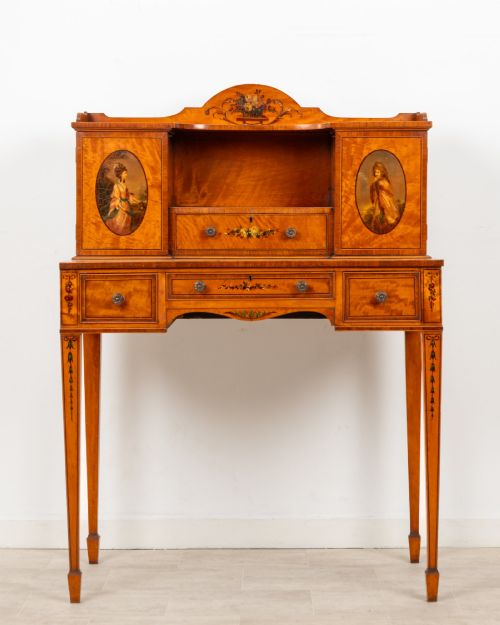
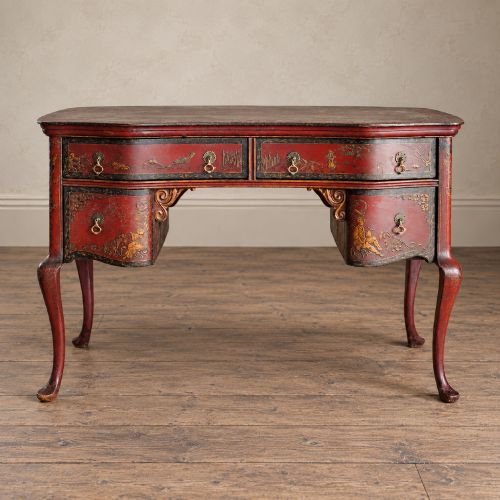
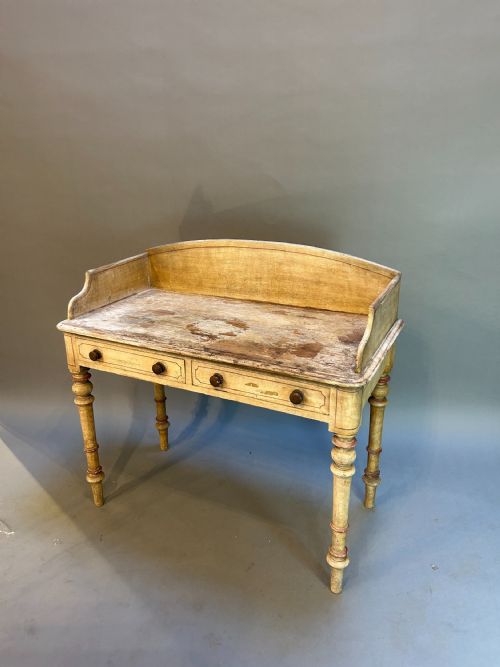
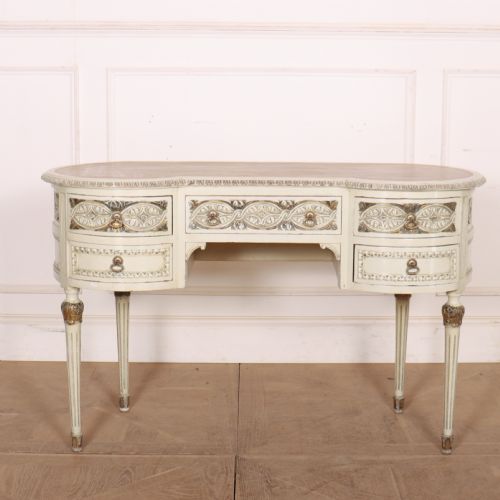
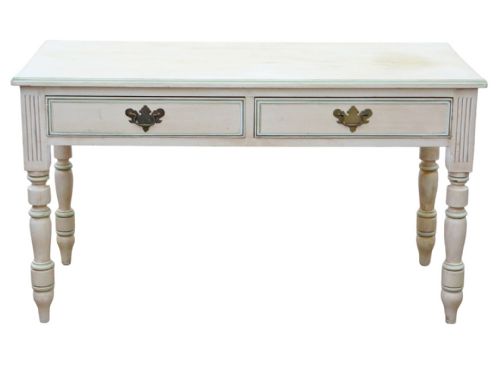
The selection here draws primarily upon Edwardian and late Victorian periods, alongside earlier Victorian examples and occasional pieces from around nineteen twenty. Forms extend from kidney-shaped desks and bonheur du jour tables to simpler side tables and lamp tables.
Most examples rely on satinwood or painted wood as a base for floral motifs and classical details, reflecting Sheraton Revival and neoclassical influences rather than heavy Victorian timber. These tables served domestic writing rooms and boudoirs, built for elegance as much as daily correspondence.
How they were made
Makers constructed these tables using mahogany, satinwood, and pine as foundational timbers, often applying satinwood veneers to softer woods for a smooth decorative surface. Brass hardware, inset leather writing surfaces, and glass elements appear alongside hand-applied paint.
Decoration relied on meticulous hand-painting, frequently featuring floral motifs, pastoral scenes, or neoclassical details directly onto the wood or over a prepared painted ground. Inlaid banding and contrasting timber veneers completed the refined appearance characteristic of the Sheraton Revival style.
Edwardian Painted Writing Table Retail Price Guide 2026
Typical asking prices for edwardian painted writing table among the pieces listed under this phrase on Sellingantiques today, from the lower quarter to the upper quarter. They describe what is for sale here now, not the wider market.
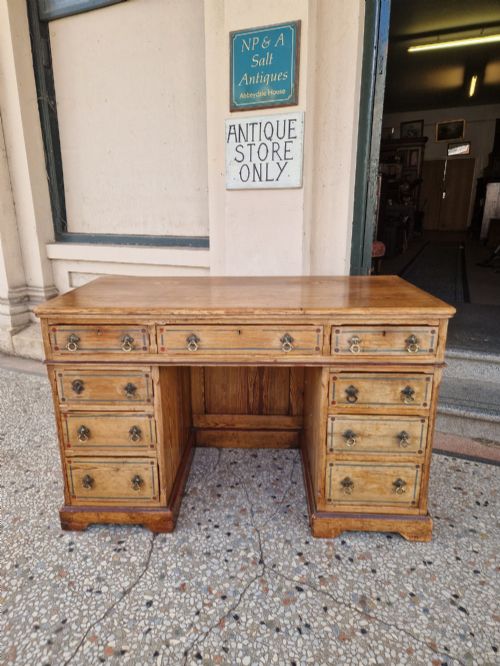
Listings here span the late Victorian and Edwardian periods up to nineteen twenty, featuring satinwood, mahogany, pine, and brass across various desk and table forms.
What varies in quality
The distinction between standard and superior pieces rests on the crispness of the hand-painted decoration and the choice of primary timbers. Satinwood panels with detailed floral work and intact original leather inserts command greater appreciation than simpler painted pine variants.
Construction details such as the presence of a mirrored superstructure, galleried edges, or fitted interior drawers distinguish elaborate ladies desks from basic writing tables. Preserved original paintwork without heavy later repainting defines the most desirable examples.
The Edwardian Painted Writing Table Glossary
- Satinwood
- A lustrous tropical timber with a fine grain and golden-yellow sheen, frequently used as a veneer on high-status Edwardian furniture. It provided an ideal pale ground for delicate hand-painted decoration.
- Carlton House desk
- A distinctive writing desk with a curved superstructure of small drawers and compartments enclosing the rear and sides of the writing surface. This form appeared in refined satinwood versions during the Edwardian period.
- Bonheur du jour
- A light lady's writing desk, often featuring a small cabinet or shelving superstructure above the writing surface. The name translates from French as happiness of the day.
- Sheraton Revival
- A late nineteenth and early twentieth-century design movement inspired by the neoclassical furniture of George Sheraton. It utilised satinwood, painted details, and slender tapered legs.
- Kidney shaped desk
- A writing table with a concave front curve designed to fit comfortably against the user. This curved form became popular during the late Victorian and Edwardian eras.
Edwardian Painted Writing Table: Frequently Asked Questions
How do I distinguish Edwardian from Victorian painted tables?
Edwardian painted writing tables generally display lighter proportions, paler satinwood timbers, and softer neoclassical or floral decoration inspired by the Sheraton Revival. Victorian predecessors tend to use heavier mahogany structures and more robust forms.
Late Victorian pieces often bridge this gap, sharing the painted surfaces of the Edwardian era with the sturdier framing of the nineteenth century.
Were these desks used for daily writing?
These tables served primarily in domestic settings such as drawing rooms, bedrooms, and private boudoirs for correspondence and letter writing. Their lighter construction suited social spaces rather than heavy administrative work.
Many incorporate integrated stationery compartments, small drawers, and inset leather writing surfaces designed specifically for this purpose.
How should I care for painted satinwood surfaces?
Painted satinwood requires gentle maintenance, avoiding direct sunlight which can fade delicate pigments and yellow the clear finishes over time. Dusting with a soft, dry cloth is sufficient for routine upkeep.
Moisture and harsh cleaning agents must be kept away from the painted areas and inset leather panels to preserve the original decorative surface.