
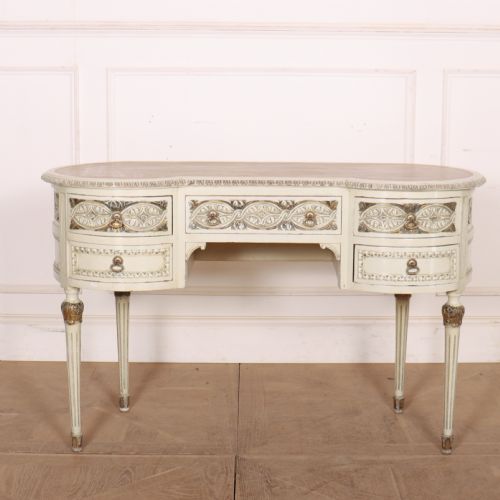
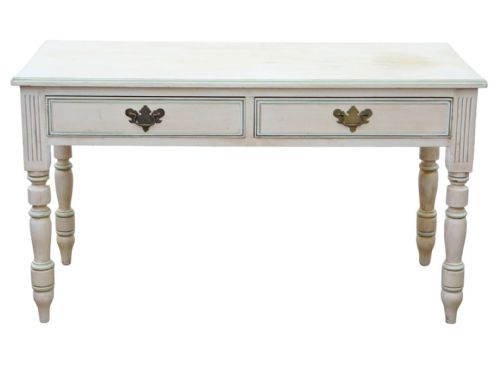


Edwardian Painted Dressing Table
These edwardian painted dressing table pieces combine delicate surface decoration with functional bedroom storage, offering a refined focal point for period interiors.
Edwardian Painted Dressing Table
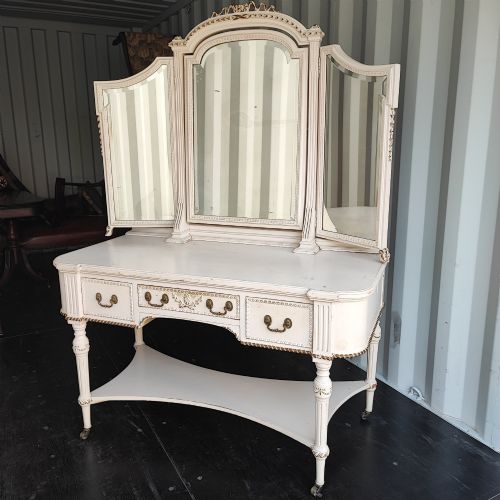
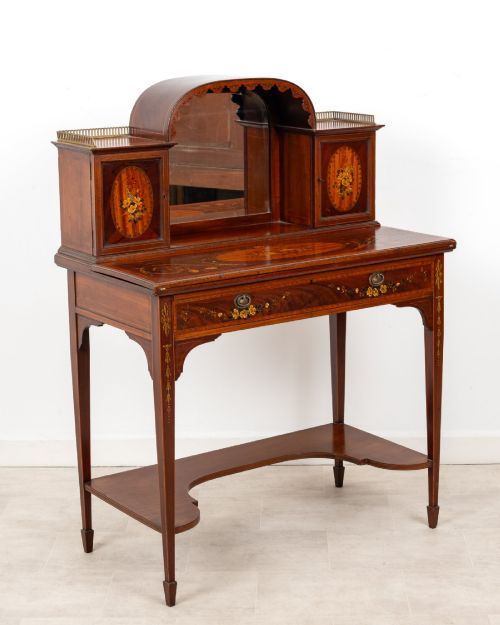
An edwardian painted dressing table usually combines lightweight timbers like satinwood and mahogany with hand-painted decorative schemes. You will frequently encounter mirrors, drawers, and writing surfaces built into these versatile bedroom pieces.
The selection ranges from compact kidney-shaped desks to larger triple-mirror dressing tables bearing neoclassical or Sheraton revival motifs. Pieces span the late Victorian period through the early twentieth century, reflecting a preference for light, painted furniture.
Makers utilised various soft and hard woods beneath the paint, including pine and mahogany, often enhanced with brass hardware or glass mirrors. The surviving examples demonstrate how decorative painting remained popular across several decades.
How they were made
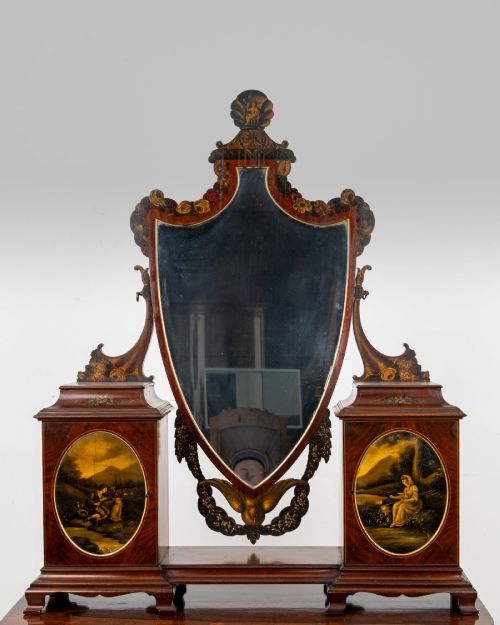
Cabinet makers constructed the carcases using traditional joinery in timbers such as mahogany, satinwood, and pine. Surfaces were then prepared to receive hand-painted decoration, ranging from simple floral borders to elaborate Chinoiserie scenes.
Mirrors were often fitted within adjustable wooden frames, sometimes supported by superstructure cabinetry containing small jewellery drawers. Brass handles and escutcheons completed the hardware scheme, fixed securely to panelled drawer fronts.
Listings feature items spanning the Victorian, Edwardian, and early twentieth century periods, constructed from satinwood, mahogany, pine, and brass.
What varies in quality
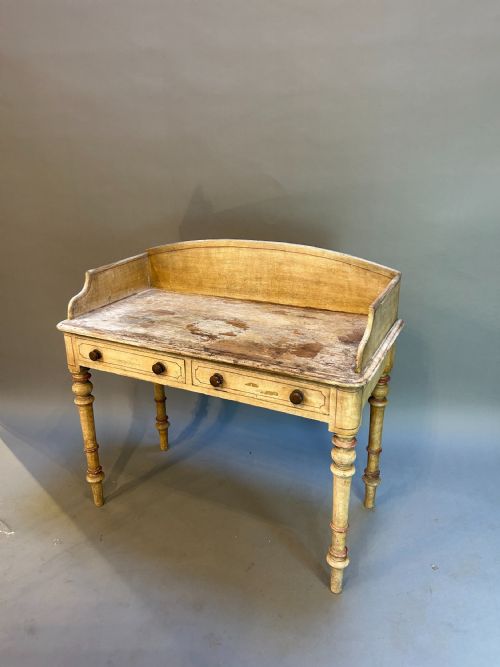
The refinement of the painted surface work dictates much of the visual distinction across examples. Finer pieces display detailed brushwork and considered colour palettes, whereas simpler items rely on scumble glaze or basic floral motifs.
Timber selection and structural joinery also define the standard of execution. Solid mahogany and satinwood frames with well-fitted drawer linings represent higher workshop standards than utilitarian pine constructions.
Whytock and Reid·Maples of London and Paris
The Edwardian Painted Dressing Table Glossary
- Satinwood
- A lustrous timber native to India and Ceylon, frequently utilised for fine cabinet work and decorative veneers during the eighteenth and nineteenth centuries.
- Chinoiserie
- European interpretations of Chinese and East Asian artistic styles, popular in painted furniture decoration.
- Scumble Glaze
- A translucent paint or glaze applied over a base coat and manipulated with tools to create decorative graining or mottled textures.
- Cheval Mirror
- A freestanding full-length mirror suspended on a frame that allows it to tilt.
- Sheraton Revival
- A late nineteenth and early twentieth century design movement that reinterpreted the neoclassical furniture forms of George Sheraton.
Edwardian Painted Dressing Table: Frequently Asked Questions
How do I date an edwardian painted dressing table?
Dating relies on examining the timber construction methods, drawer dovetails, and stylistic markers such as Sheraton revival motifs or neoclassical painted details.
Comparing the mirror plate bevelling and underlying secondary woods like pine or mahogany also helps place the piece within the late nineteenth or early twentieth century timeframe.
Were these tables used only for dressing?
Many examples served multiple functions, combining writing desks with mirrored dressing chests or incorporating small drawers for correspondence and toiletries.
Their versatile designs meant they were equally suited for bedrooms or boudoirs where space efficiency mattered.
What is satinwood and how do I care for it?
Satinwood is a dense, yellow-toned hardwood valued for its natural sheen and smooth grain, which provides an ideal canvas for painted decoration.
Keep these surfaces away from direct sunlight and moisture, maintaining them simply with a dry microfiber cloth rather than modern liquid polishes.
How do I distinguish original paint from later decoration?
Original painted surfaces show natural craquelure, integrated wear patterns around handles, and pigments that have settled uniformly into the grain of the wood.
Later overpainting often sits heavily on top of the surface without the integrated patina associated with genuine period use.