




Edwardian Painted Accent Table
An edwardian painted accent table brings a bright decorative surface to a room, finished with floral or neoclassical motifs.
Edwardian Painted Accent Table
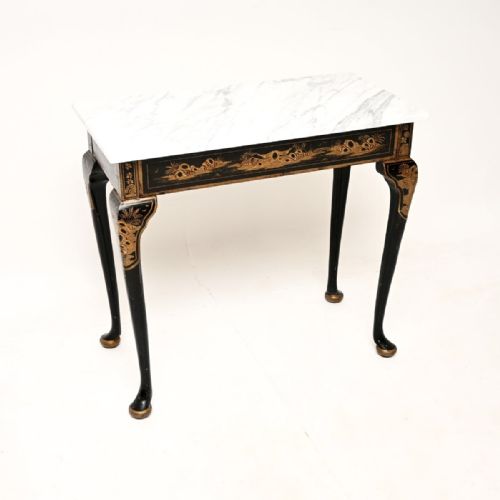
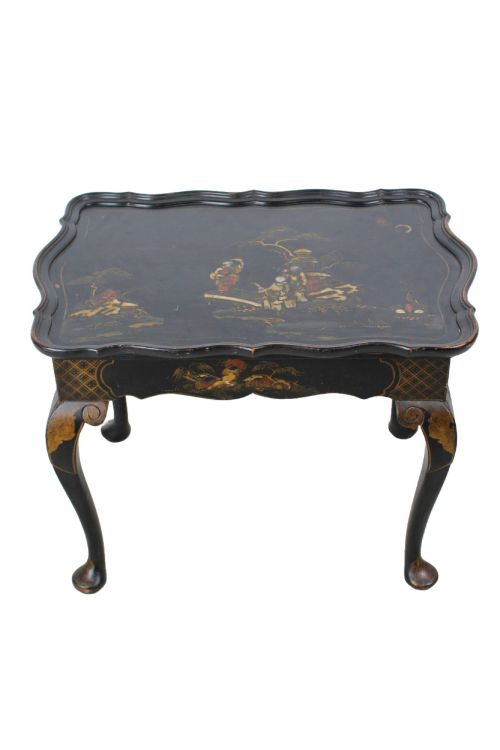
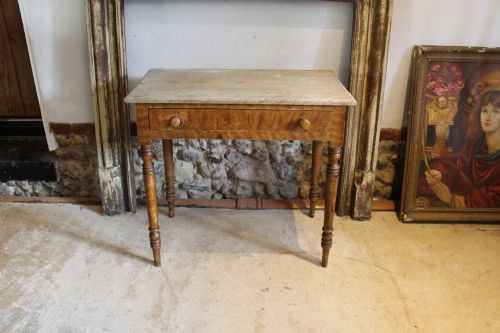
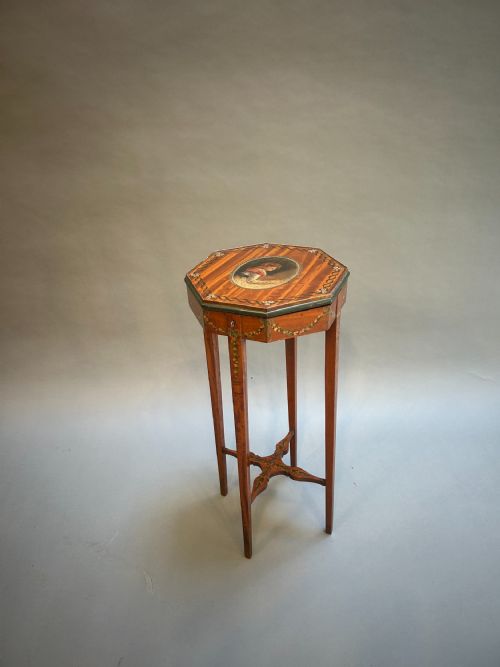
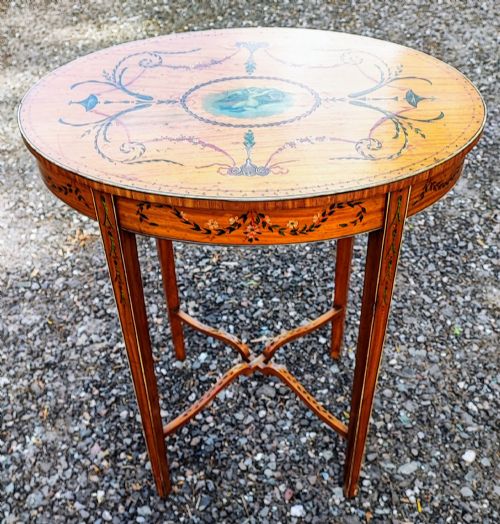
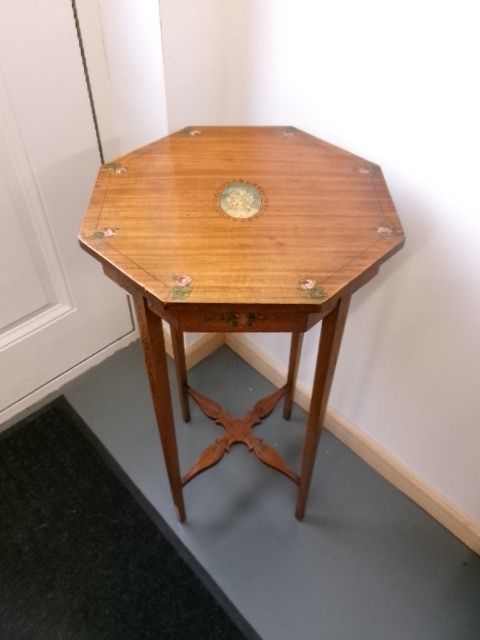
An edwardian painted accent table most commonly appears as an occasional table, side table, or pembroke table from the early twentieth century or the late nineteenth century. These pieces serve practical purposes beside seating while displaying surface decoration.
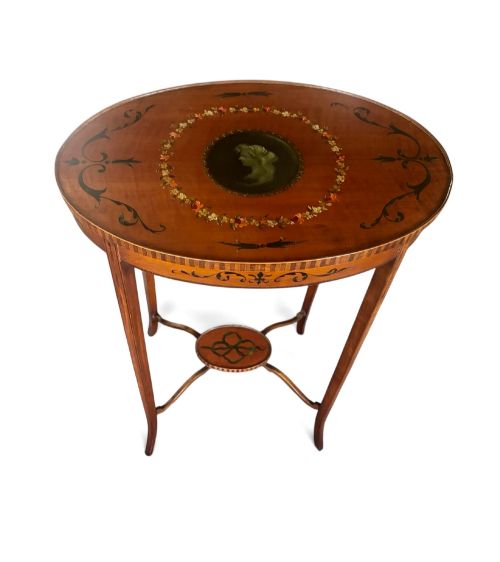
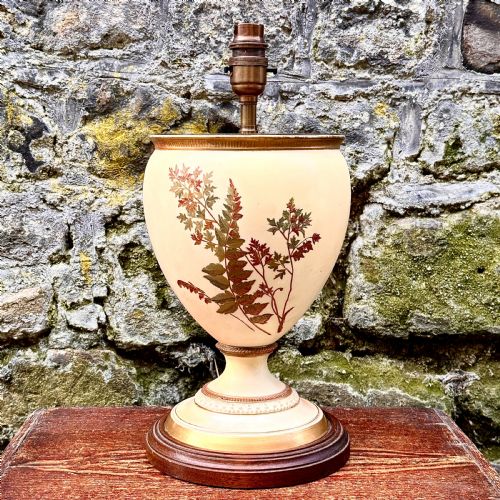
The selection includes specific forms such as nest of tables, drop-leaf tables, coffee tables, and table lamps alongside standard occasional tables. Surfaces take rectangular, oval, octagonal, or tray top shapes.
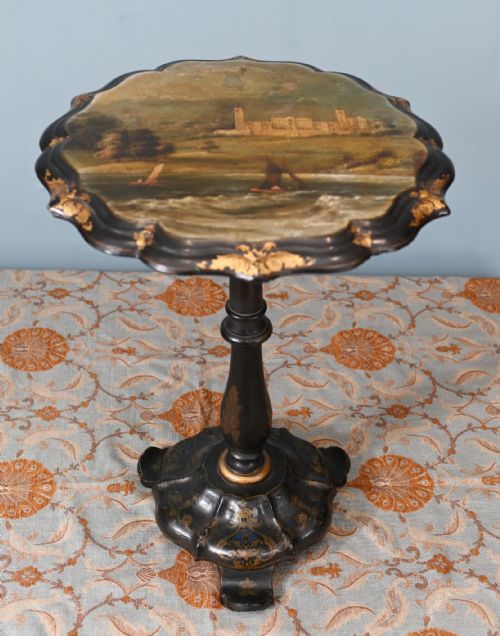
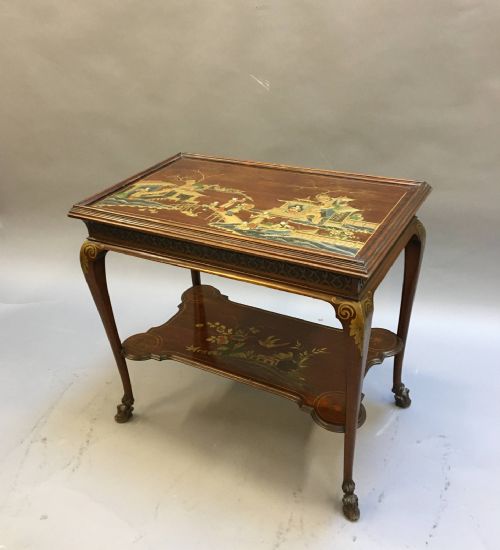
Origins span the Edwardian period and the nineteenth century, with styles drawing on Sheraton Revival, Chinoiserie, and Neoclassical influences. Pieces range from straightforward occasional furniture to elaborately decorated specimens.
Craftsmanship and decoration
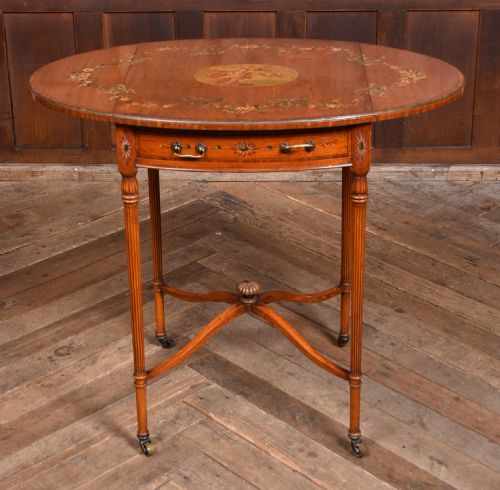
Quality rests upon the execution of the painted decoration and the selection of timber. Fine satinwood grounds and carefully rendered floral or neoclassical painted scenes distinguish superior examples from simpler production.
Structural integrity of the table base, whether a pedestal form, four-legged occasional frame, or drop-leaf mechanism, contributes to the overall standard of the piece.
Listings demonstrate styles spanning Sheraton Revival, Chinoiserie, and Neoclassical design across the Edwardian period and the nineteenth century.
The Edwardian Painted Accent Table Glossary
- Satinwood
- A light-yellow timber native to Ceylon and India used extensively for fine cabinet work. Its lustrous grain provides an ideal surface for painted decoration.
- Chinoiserie
- European decorative style reflecting Chinese artistic traditions. It employs motifs of figures, landscapes, and pavilions rendered in paint or lacquer.
- Pembroke table
- A small drop-leaf table with hinged flaps on two opposing sides. It usually stands on four legs and often includes a drawer.
- Neoclassical
- A style drawing inspiration from the classical art and architecture of ancient Greece and Rome. Painted panels frequently display symmetrical motifs and classical figures in this manner.
- Sheraton Revival
- A late nineteenth and early twentieth century design movement reviving the lighter furniture styles of the eighteenth-century designer Thomas Sheraton. These pieces often feature painted satinwood surfaces.
Edwardian Painted Accent Table: Frequently Asked Questions
Where should I place an occasional table?
These tables suit sitting rooms and halls where a compact surface is useful for lamps or small objects. Their decorative painted tops allow them to stand out in open spaces.
Consider pairing them beside armchairs or sofas where the height matches the surrounding furniture.
How do I care for painted wood?
Keep painted wooden furniture away from direct sunlight and excessive heat to protect the surface decoration. Dust gently with a dry cloth.
Avoid using liquid polishes or chemical cleaners which can damage the painted finish over time.
What is a pembroke table used for?
A pembroke table offers an adjustable surface through its drop-leaves, which raise when extra space is needed. Historically utilised for writing or light meals, it functions well as a compact side table.
The hinged flaps fold down to reduce the footprint of the table against a wall.
How do I identify Edwardian furniture?
Edwardian pieces date from the reign of King Edward VII between nineteen hundred and nineteen ten, drawing heavily on eighteenth-century revival styles. They often employ lighter timbers like satinwood and delicate painted decoration.
Construction techniques from this era combine traditional cabinet making with machine assistance for mouldings and joints.