
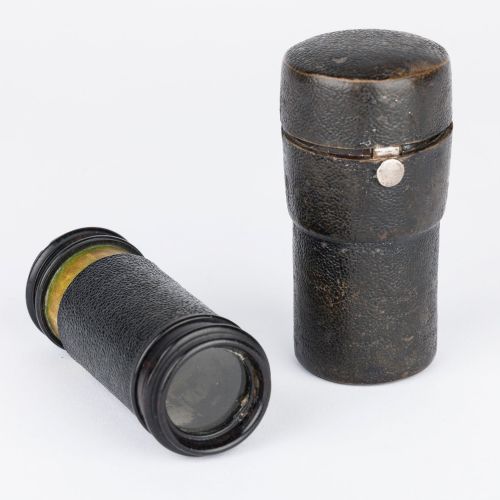


Edwardian Opera Glasses
Edwardian opera glasses are elegant theatrical companions made for the stalls and circles, offering a charming mix of optical utility and period glamour.
Edwardian Opera Glasses
Edwardian opera glasses are compact binoculars specifically designed for theatrical and musical performances. These pieces span the Edwardian period alongside examples from circa 1900, 1910, 1920, and 1930.
The form is defined by paired optical barrels held together with a central focus screw or wheel. The listings show British and French origins, encompassing English and French manufacture.
You will most frequently meet pairs fashioned with mother of pearl plates, brass framing, and enamel decoration. These items combine practical magnification with the decorative arts of the Belle Epoque and Victorian crossover eras.
How they were made
Makers utilised metal and brass to form the structural body and focusing mechanisms of these binoculars. Lacquered brass and plain brass finishes provide both durability and structural rigidity.
Optics rely on precision glass lenses housed within the metal barrels. Decorative surfaces integrate delicate materials including leather wraps, enamel panels, and shimmering mother of pearl shell inlays.
Advanced ornamentation includes guilloche enamel work applied to metal casings, creating patterned backgrounds beneath translucent coloured coatings. Signed pieces indicate specialist optical workshops in Paris and London.
Some pairs whisper of grand opening nights in Paris and London, carrying the faint essence of an era when binoculars doubled as high fashion.
What varies in quality
The level of ornamentation dictates the distinction between standard utility pairs and high-end examples. Enamelled decoration, particularly golden guilloche enamel combined with mother of pearl, represents the more elaborate end of the spectrum.
The choice of body wrapping changes the character of a piece significantly, moving from simple brass frames to textured leather coverings or luminous shell inlays. Signed makers such as Ross London or Iris Paris elevate the standing of an individual pair.
Ross London·Iris Paris
The Edwardian Opera Glasses Glossary
- Guilloche enamel
- Enamel work applied over a mechanically engraved metal background. This technique produces repeating geometric patterns that show through translucent colour.
- Mother of pearl
- The iridescent inner layer of certain mollusc shells. Cut into thin plates, it provides the classic shimmering panels found on theatrical binoculars.
- Lacquered brass
- Brass treated with a protective clear coating to maintain its metallic lustre. It prevents rapid tarnishing of the metal framework.
- Central focus
- The adjustment wheel positioned between the two optical barrels. Turning this wheel moves both lenses simultaneously to sharpen the image.
- Belle Epoque
- A period of artistic and decorative refinement spanning the late nineteenth century up to the First World War. It heavily influences the ornate style of these theatrical accessories.
Edwardian Opera Glasses: Frequently Asked Questions
How do I use them?
Adjust the central focus wheel while looking through the lenses until the distant stage comes into sharp view.
Keep both eyes open and steady the glasses slightly with your hands to maintain a stable image during a performance.
Were they only for the theatre?
These compact binoculars served audiences across various entertainment venues including opera houses, theatres, and musical halls.
Their portable size made them standard accessories for fashionable attendees occupying the upper tiers and stalls.
How do I date an Edwardian pair?
Examine the materials, style cues, and any engraved signatures or retailer markings on the metal barrels.
Pieces often align with the broader Edwardian era or carry specific dates around 1900 to 1910 based on design motifs.
Are French and English pairs different?
French makers frequently produced ornate pieces featuring extensive mother of pearl and guilloche enamel finishes.
English examples, such as those by London opticians, often leaned towards robust leather and brass construction.