



Antique Optical Glasses
These antique optical glasses are practical instruments and delicate accessories forged from brass, silver, and mother of pearl for Victorian and Edwardian daily life.
Antique Optical Glasses
When you search for antique optical glasses, you encounter a varied selection of magnifiers, opera glasses, lorgnettes, and scientific instruments spanning the eighteenth century to the interwar period. These objects served distinct purposes, from theatrical viewing and map reading to fine desk work and scientific testing.
The most common examples on this page include Victorian and Edwardian opera glasses alongside pocket and desk magnifiers framed in brass, sterling silver, or leather. You also find specialised items such as test lens kits, linen testers, and folding lorgnettes dating from the nineteenth century.
Earlier Georgian and Regency pieces appear alongside later Art Deco designs, demonstrating how optical framing evolved across stylistic movements from ornate Victorian decoration to clean geometric lines. Each piece reflects the optical technology and social habits of its specific decade of manufacture.
How they were made
Maker workshops constructed these items using durable metals like brass and sterling silver alongside organic materials such as mother of pearl, rosewood, mahogany, and leather. Lenses were ground from clear glass and mounted into pivoting frames, folding handles, or fitted desk stands.
Finishing techniques involved fine hand engraving, guilloche enamel work, and leather covering, often executed by specialist opticians and scientific instrument makers based in London, Paris, and Birmingham. Cabinets and protective cases were built from polished hardwoods and lined with velvet to safeguard the fragile glass components.
Listings feature scientific instruments and desk accessories framed in brass, sterling silver, rosewood, and mother of pearl across Victorian and Edwardian periods.
What varies in quality
Quality rests upon the optical clarity of the glass lenses, the precision of any mechanical joints or folding mechanisms, and the integrity of the surrounding materials. Pieces bearing signatures from known opticians demonstrate higher standards of workshop execution.
The choice of housing and ornamentation separates standard utility instruments from luxury personal accessories. Finer examples combine precious metals, guilloche enamel, or matched mother of pearl panels with robust internal gears and original fitted cases.
Casartelli Manchester·Thomas Rubergall·Fosters·Ross London·Iris Paris·Francis West·CW Dixey London
The Antique Optical Glasses Glossary
- Lorgnette
- A pair of spectacles or opera glasses held to the eyes by a long handle rather than fitting over the ears. These folding accessories were popular for theatrical and social use during the Victorian and Edwardian eras.
- Stanhope lens
- A microscopic optical lens that reveals a tiny micro-photograph when held up to the eye. Invented in the nineteenth century, it was frequently mounted in small souvenirs and viewing charms.
- Guilloche enamel
- A decorative technique where a precise geometric pattern is engine turned into a metal surface and then covered with translucent enamel. This finish often appears on nineteenth and twentieth century opera glass bodies.
- Linen tester
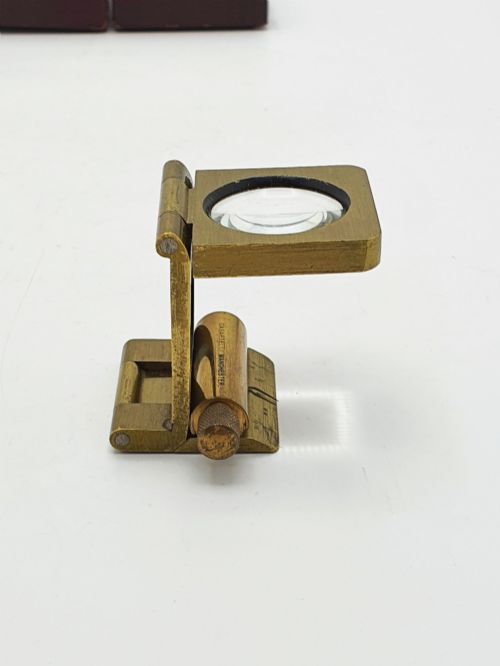
- A small folding magnifying glass used in the textile industry to count threads within a specific square of fabric. These practical scientific tools often feature calibrated measuring scales.
- Bullseye magnifying glass
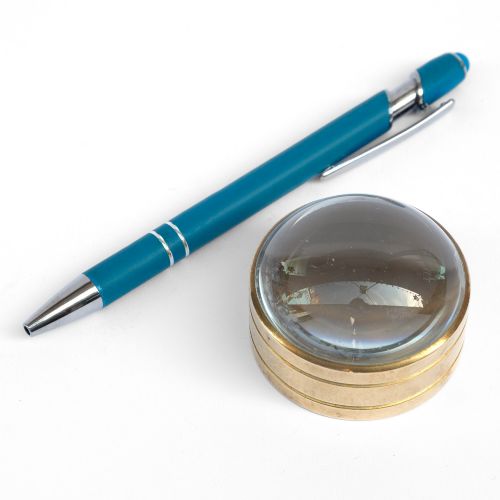
- A thick, convex lens mounted on a pivoting brass stand for desk use. The heavy mount allowed the glass to be angled precisely over books, maps, or documents.
Antique Optical Glasses: Frequently Asked Questions
How were opera glasses used?
Opera glasses allowed nineteenth and twentieth century theatregoers to bring distant stage performances into clearer view. Users adjusted the central focus wheel to accommodate their eyesight while seated in boxes or galleries.
Beyond the theatre, these compact binoculars served at sporting events and social gatherings. Their decorative finishes made them fashionable personal accessories that matched formal attire.
How do I date antique magnifiers?
Dating antique magnifiers involves examining the materials, construction methods, and any maker signatures stamped into the metal or leather housing. Georgian and early nineteenth century pieces often feature simple turned wood handles or heavy brass mounts.
Later Victorian and Edwardian examples incorporate materials like celluloid, mother of pearl, and sterling silver with Birmingham hallmarks. Patinated brass and mechanical complexity provide further clues to whether a piece originates from the nineteenth or early twentieth century.
How do I care for antique glass?
Caring for antique optical glasses requires gentle handling of both the delicate glass lenses and their original period mountings. Clean lenses carefully with a soft dry cloth, avoiding abrasive modern cleaning solutions that could damage historical glass or metal patinas.
Store these items in dry conditions away from direct sunlight to protect organic elements such as leather, velvet linings, and mother of pearl panels. Displaying them on stable desk stands or within cabinets keeps them safe from accidental knocks.