
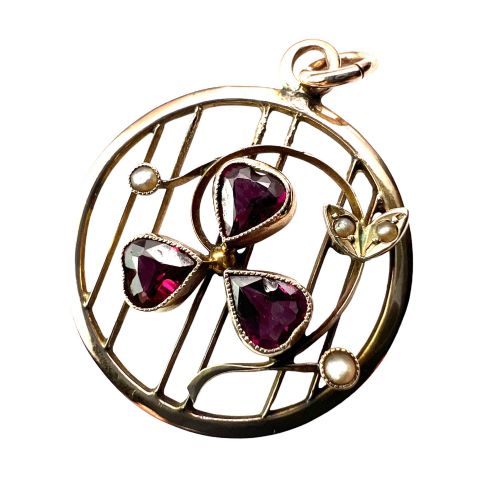


Edwardian Openwork Pendant
An edwardian openwork pendant brings together delicate wirework frames, coloured stones and pearls in pieces designed to catch the light.
Edwardian Openwork Pendant
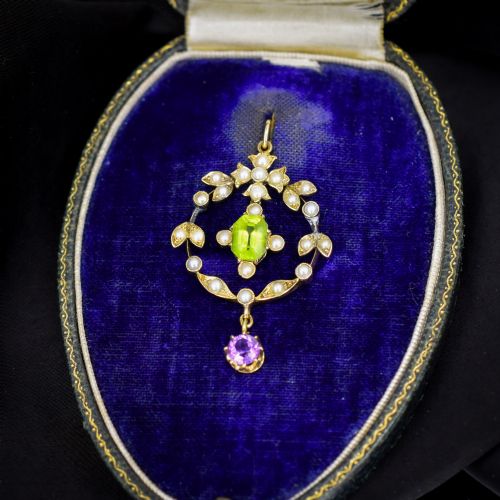
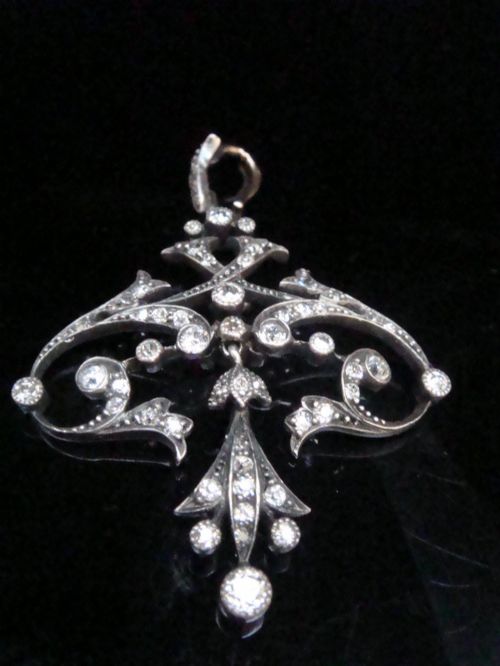
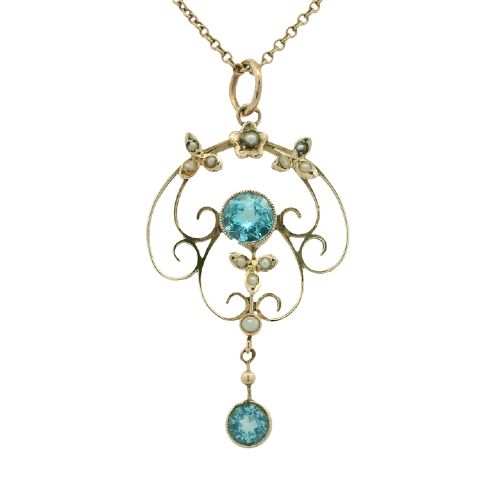
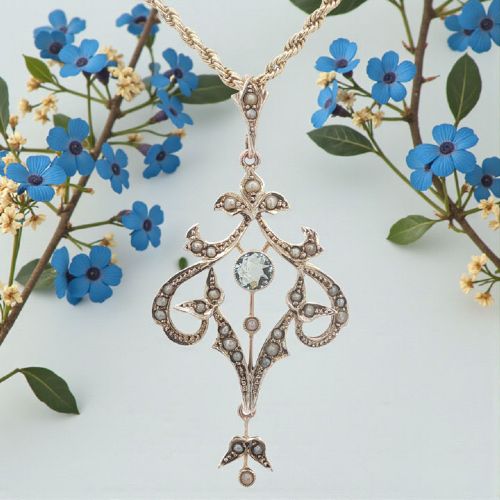
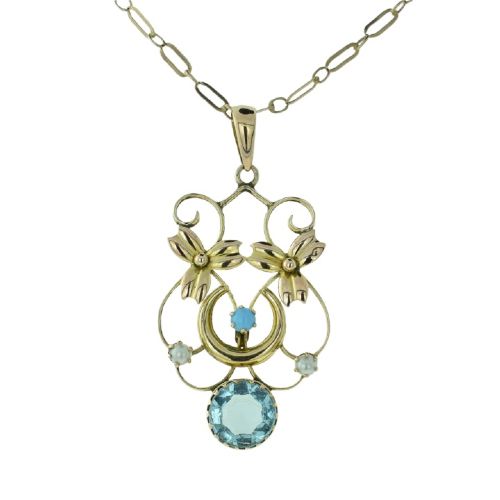
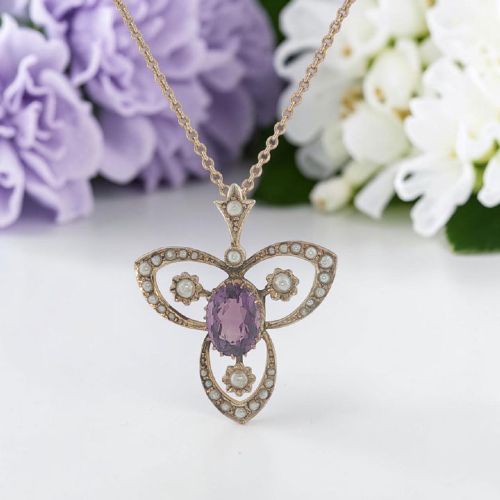
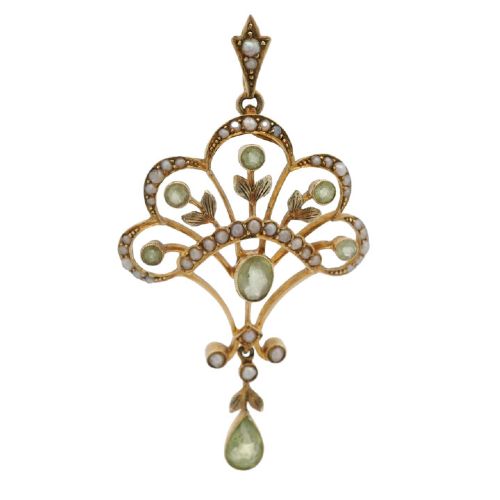
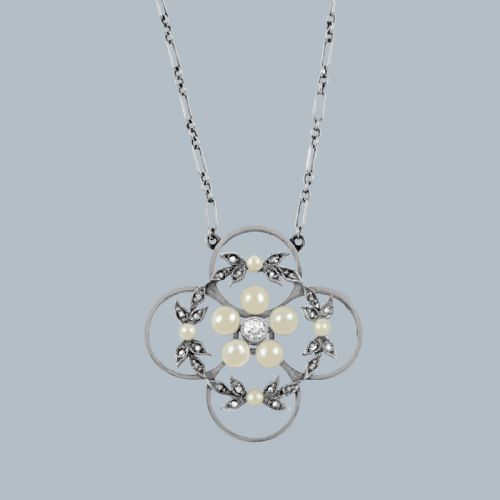
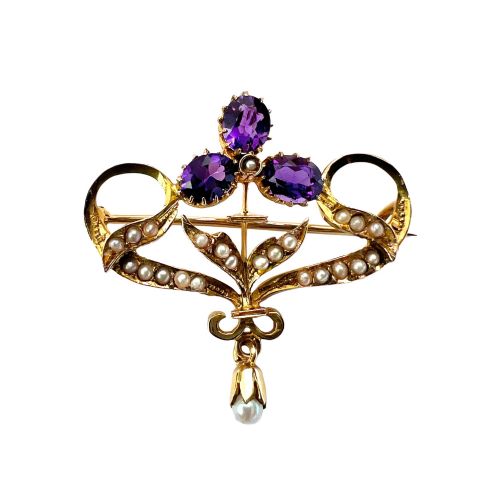
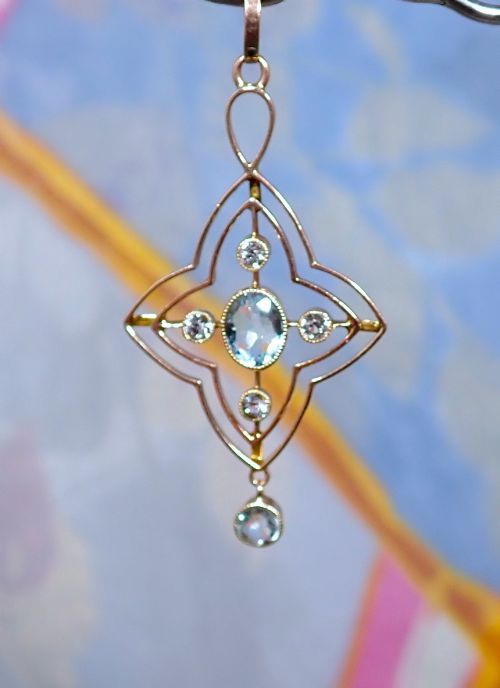
The edwardian openwork pendant appears primarily in gold and silver, framed by intricate pierced metal designs that create a light, airy effect. Most examples combine central coloured stones such as peridot, amethyst or aquamarine with seed pearls set along the scrolling or geometric metalwork.
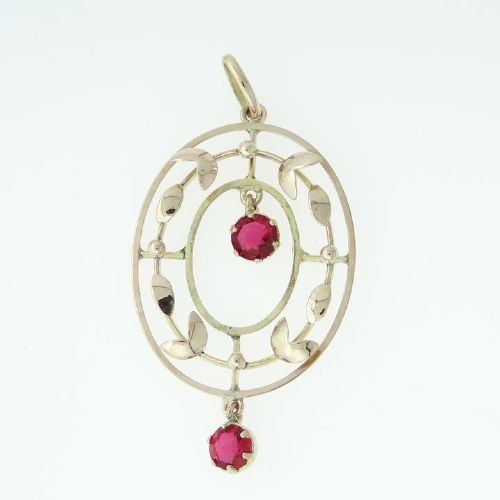
Makers working during this period drew heavily on Arts and Crafts and Art Nouveau ideals, producing floral motifs, drop lavalieres and symmetrical Garland style elements. These pieces hang from fine chains or function concurrently as brooches through the inclusion of a pin on the reverse.
Materials and Techniques
Goldsmiths utilised nine carat and fifteen carat gold, alongside silver and platinum, piercing the sheet metal by hand to form intricate openwork lattices. Seed pearls and larger gems were then collet set or claw set within the delicate frames to maintain structural balance.
Coloured gemstones including peridots, amethysts, tourmalines and aquamarines dominate the centre points, frequently accented with small diamonds or white sapphires. Soldered drops and articulated joints allow components to move independently when worn.
Edwardian Openwork Pendant Retail Price Guide 2026
Typical asking prices for edwardian openwork pendant among the pieces listed under this phrase on Sellingantiques today, from the lower quarter to the upper quarter. They describe what is for sale here now, not the wider market.
Materials recorded across the inventory include nine carat and fifteen carat gold, silver, platinum, seed pearls, peridots and amethysts.
Assessing Quality
Quality rests upon the precision of the piercing and the symmetry of the openwork wire. Superior pieces exhibit clean solder joints that remain invisible to the eye, ensuring the metalwork looks weightless yet holds its shape securely.
The choice and matching of gemstones also dictate standard, where evenly coloured peridots, clean aquamarines and well-matched seed pearls elevate a piece. Evidence of original construction, including intact pin mechanisms on convertible brooch pendants, maintains the integrity of the design.
S. Blanckensee & Son·WH Haseler·Liberty and Co
The Edwardian Openwork Pendant Glossary
- Openwork
- Metalwork pierced and cut away to form patterns that let light pass through the design. This technique defines much of the Edwardian aesthetic.
- Lavalier
- A pendant featuring a primary stone with one or more hanging drops suspended below it. These pieces swing freely from the neck chain.
- Seed Pearl
- Tiny, naturally formed pearls often utilised in clusters or borders around larger central gemstones. They add a soft lustre to the gold framework.
- Collet
- A flat-rimmed metal collar that holds a gemstone in place by folding the upper edge over the stone. It provides a clean, finished border.
- Cabochon
- A gemstone shaped and polished with a smooth, rounded convex surface rather than faceted edges. This cut is common in garnets and opals.
Edwardian Openwork Pendant: Frequently Asked Questions
How do I wear an edwardian openwork pendant?
These pendants suspend from fine gold or silver chains, sitting close to the collarbone or lower down on a longer lavalier chain. Their delicate construction pairs well with simple necklines that allow the intricate metalwork and stones to stand out.
Many examples feature a pin mechanism on the back, enabling the piece to function as a brooch on a lapel or scarf. Care should be taken with the fine wirework and seed pearls during daily wear.
How do I tell an edwardian pendant from a victorian one?
Edwardian pendants typically showcase lighter, more airy openwork designs using platinum and higher grades of gold alongside diamonds and peridots. Victorian pieces tend toward heavier, more solid gold mountings with darker stones and denser cluster arrangements.
Stylistic overlaps occur during transitional periods around nineteen hundred, where makers combined Victorian settings with emerging Art Nouveau or Edwardian motifs. Hallmark dates and gold carats often clarify the exact period of manufacture.
What stones are common in edwardian pendants?
Peridots, amethysts, aquamarines and tourmalines appear frequently as central stones, accompanied by abundant seed pearls. White sapphires and old-cut diamonds also accent the openwork frames to provide sparkle.
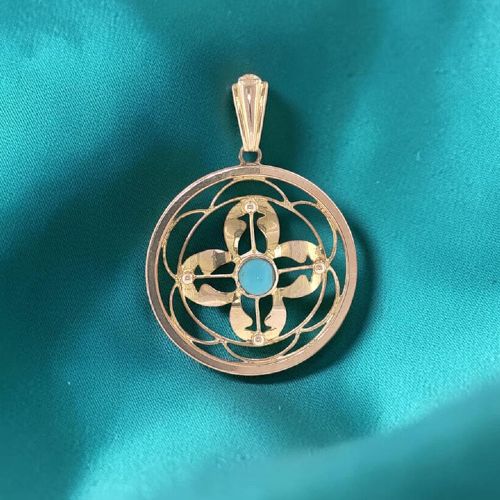
Turquoise and garnets also feature in pieces bridging the late Victorian and Edwardian eras. The stones are typically chosen for their pastel or vibrant colour contrast against the yellow and rose gold.