




Edwardian Opaline Glass Lighting
Edwardian opaline glass lighting brings a soft, diffused glow to a room through milky translucent shades paired with sturdy brass.
Edwardian Opaline Glass Lighting
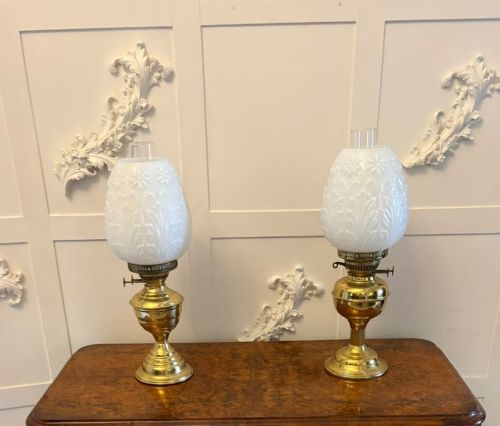
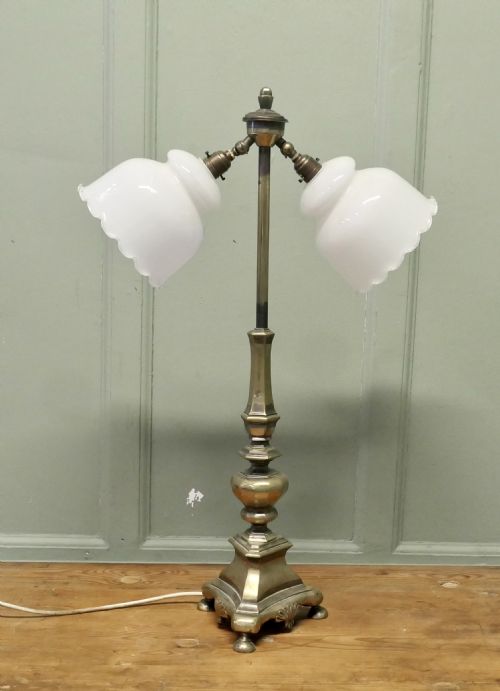
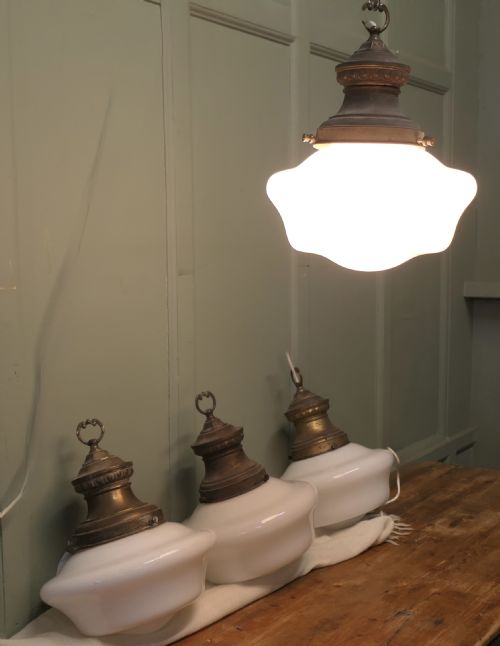
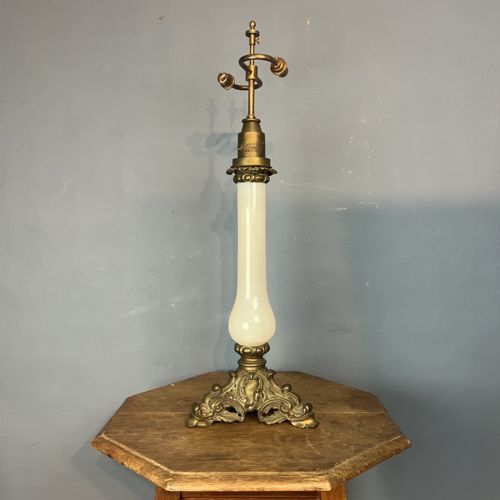
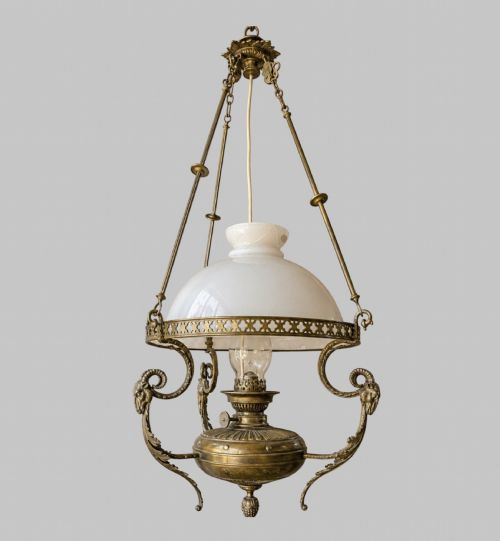
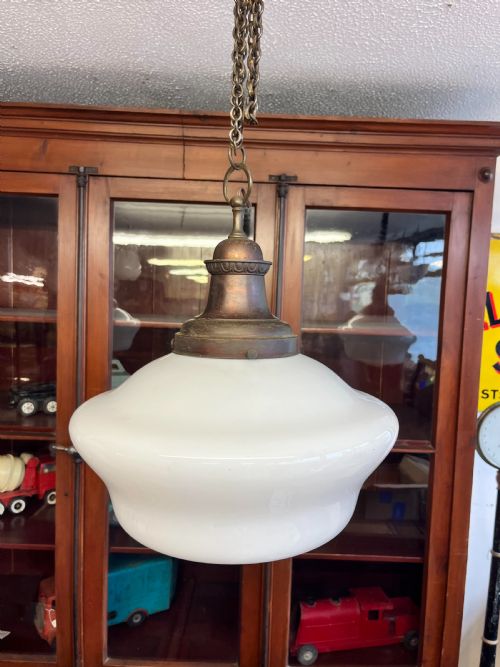
Edwardian opaline glass lighting encompasses functional fittings designed to diffuse harsh glare, yielding a warm, milky radiance suited to domestic spaces. When exploring edwardian opaline glass lighting, buyers encounter various forms ranging from ceiling pendants and wall fixtures to converted oil lamps.
The objects stem predominantly from the early twentieth century, though nineteenth-century Victorian antecedents also appear alongside later interwar pieces. Table lamps, ceiling lights, and hanging shades dominate the selection, often incorporating polished or gilt brass mountings.
How they were made
Glassmakers produced opaline glass by adding bone ash or metal oxides to the molten batch, creating an opaque or semi-translucent material that mimics the appearance of natural opal. This milky medium softens artificial illumination evenly across the surface of the shade.
Metalworkers fashioned the supporting frames and burners from brass, utilising casting and stamping techniques to secure the glass bowls and chimneys. Many pieces retain period mechanical components such as Hinks burners or patent fittings made of brass.
Listings feature brass, opaline glass, and enamel across periods spanning the mid-nineteenth century to the nineteen-thirties.
What varies in quality
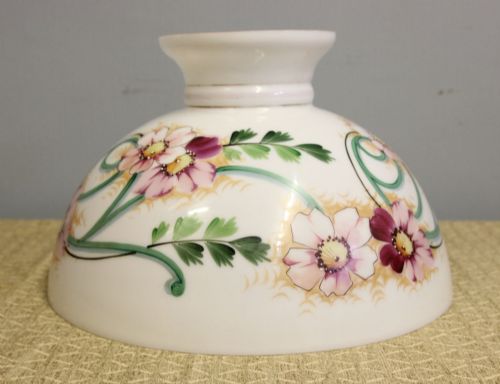
Superior examples display a heavier gauge of brass and thicker, more evenly struck glass with a consistent density throughout the shade. Finer pieces often feature subtle hand-applied enamel decoration or gilt detailing rather than plain, commercial finishes.
The integrity of the structural mounts and the presence of original maker stamps or patent marks elevate certain items above standard utility lighting. Better-preserved specimens retain their original proportions and undamaged brass galleries supporting the glass.
Mc Gary
The Edwardian Opaline Glass Lighting Glossary
- Opaline Glass
- A semi-opaque white or tinted glass developed to diffuse light gently without creating harsh shadows. It forms the primary shade material for this category of lighting.
- Pendant Light
- A hanging light fixture suspended from the ceiling by a cord, chain, or rigid brass rod. These fittings distribute illumination downward into a room.
- Burner
- The mechanical assembly mounted atop an oil lamp body that controls the wick and flame. Makers such as Hinks produced specialised versions found on period conversions.
- Plafonnier
- A ceiling-mounted bowl light or shade positioned flush or close to the plaster surface. This style directs light broadly across the ceiling and down into the space.
- Gallery
- The metal ring or collar designed to grip and secure a glass shade safely to the lamp body or pendant fitting.
Edwardian Opaline Glass Lighting: Frequently Asked Questions
What is opaline glass?
Opaline glass is a translucent or opaque white glass created by adding specific mineral agents to the molten mixture during production. This process yields a milky appearance designed to soften and diffuse light effectively.
The resulting material hides the bright bulb filament while emitting an even, gentle glow across the room, making it popular for domestic illumination.
Were these originally oil lamps?
Many surviving brass and glass fixtures began as paraffin or oil lamps before being converted to electricity during the twentieth century. These conversions retain their heavy brass reservoirs and burners.
Other examples were manufactured strictly as electrical fittings from the outset, reflecting the growing adoption of household power during the early 1900s.
How do I clean opaline glass?
Cleaning requires warm water and mild soap applied with a soft cloth to remove dust and grease without scratching the surface. Harsh abrasives should be avoided entirely.
Brass components benefit from gentle polishing appropriate for aged metal, preserving the natural patina accumulated over the decades.
Where should I hang a pendant?
Pendant lights work effectively over dining tables, in hallways, or as central illumination in rooms with moderate ceiling heights. Their downward diffusion creates a focused pool of light.
Adjusting the suspension cord or chain allows the fixture to sit at a proportioned height relative to the furniture below.