




White Opaline Table Lamp
These white opaline table lamps offer a soft, milky glow that transforms a room, combining practical lighting with classic nineteenth and twentieth century design.
White Opaline Table Lamp
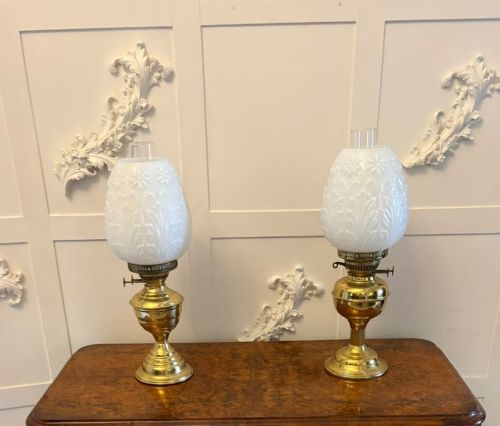
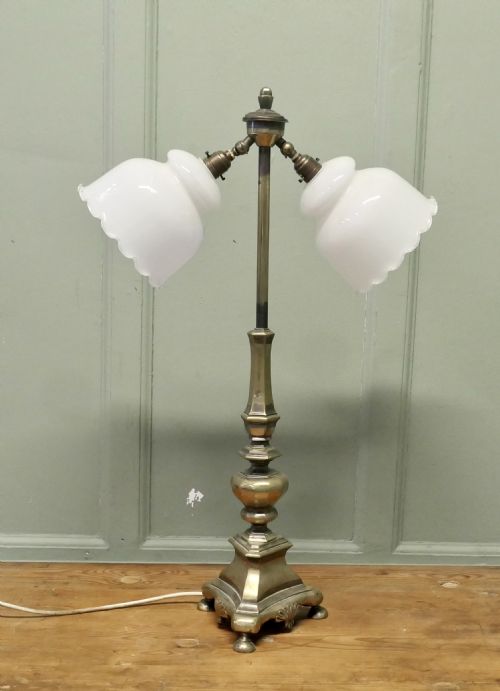
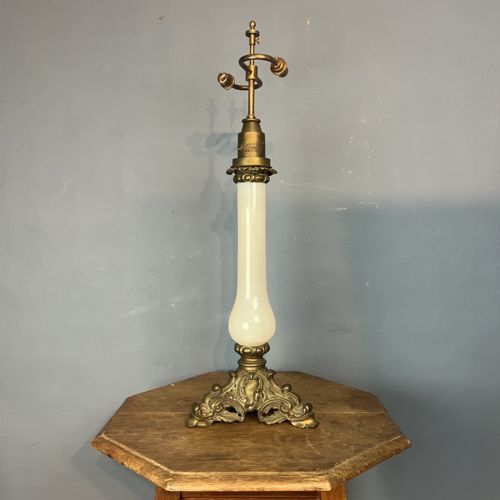
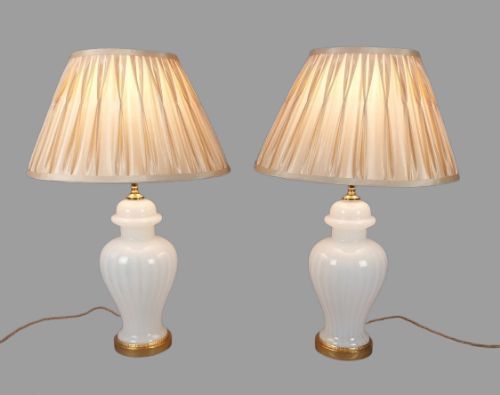
A white opaline table lamp brings together milk glass components with structural metal mounts, taking the form of traditional oil lamps, column lamps, and converted reading lamps. When you search for a white opaline table lamp, you encounter pieces spanning from the mid-nineteenth century through the Edwardian era and into the Art Deco and Modernist periods.
The most common examples on this page are Victorian and Edwardian brass-mounted oil lamps fitted with opaline shades or reservoirs, alongside later twentieth-century desk and column lamps. These items range from simple domestic lighting to imposing pairs with gilt brass or bronze mountings.
How they were made
Makers formed the characteristic milk-glass bodies using specialised opaline glass techniques, pairing the opaque white material with cast and turned brass, bronze, chrome, or ormolu mounts. Many pieces combine this glass with metal structures, sometimes incorporating cut glass elements or hand-painted surface decoration.
Lighting fixtures from the nineteenth century onward often began as oil or paraffin burners before undergoing later conversion to electricity, while others utilised dedicated electrical wiring from the Art Deco and Modernist periods.
The listings span from the 1850s Victorian era through Edwardian oil lamps to 1930s Modernist chrome desk designs.
What varies in quality
Quality rests in the weight and precision of the metal mounts, the purity and consistency of the opaline glass, and the sophistication of the overall design. Finer examples display crisp casting in their brass or bronze work and careful integration between the glass body and metal fittings.
Subtleties in proportion, the presence of maker stamps or patents, and the execution of hand-painted details distinguish standard domestic lighting from exceptional exhibition pieces.
JOSEPH HINKS·WILD & WESSEL
The White Opaline Table Lamp Glossary
- Opaline glass
- Opaque white glass developed to diffuse light gently without glare. It forms the primary shade or body of these lamps.
- Ormolu
- Gilded bronze mounts used on French and decorative table lamps to add rich metallic detail. This technique requires careful mercury gilding or modern electroplating.
- Pricket lamp
- A form of candlestick or lamp featuring a central spike to secure the candle or fitting. These examples adapt the traditional pricket format for table use.
- Conversion
- The process of adapting an older oil or paraffin lamp to accept electrical fittings. This allows period lamps to function safely in modern settings.
White Opaline Table Lamp: Frequently Asked Questions
Are these lamps safe to use today?
Most older lamps have been converted from oil to electricity, and many retain modern wiring installed during the twentieth century. Buyers should have any vintage electrical item checked by a qualified electrician before plugging it in.
Rewiring older brass and glass lamps is straightforward and preserves the historic body while ensuring daily household safety.
How do I date a white opaline table lamp?
Dating relies on stylistic clues, such as the heavy Victorian brass casting, Edwardian proportions, or sleek Art Deco chrome twist designs. Patent stamps and maker names also help pinpoint the exact decade of manufacture.
Examining the construction methods of the metal mounts and the formulation of the opaline glass provides further evidence of age.
What is the difference between an oil lamp and a desk lamp?
Victorian oil lamps feature large glass reservoirs and burners designed to burn paraffin, whereas later desk lamps are built specifically for electrical bulbs from the start. Many oil lamps have since been converted to electricity.
Desk lamps tend to have focused, angled arms or simpler columns suited for reading, while oil lamps often stand taller with decorative glass shades.
How should I clean opaline glass?
Opaline glass cleans best with warm water and a mild soap, using a soft cloth to avoid scratching the smooth surface. Harsh abrasives can damage hand-painted details or gilt brass mounts.
Metal parts require separate care depending on whether they are polished brass, bronze, or ormolu, avoiding chemical dips that strip historic patination.