
Edwardian Office Desk Drawers
Edwardian office desk drawers bring functional workspace and traditional timber craftsmanship together for practical daily use.
Edwardian Office Desk Drawers
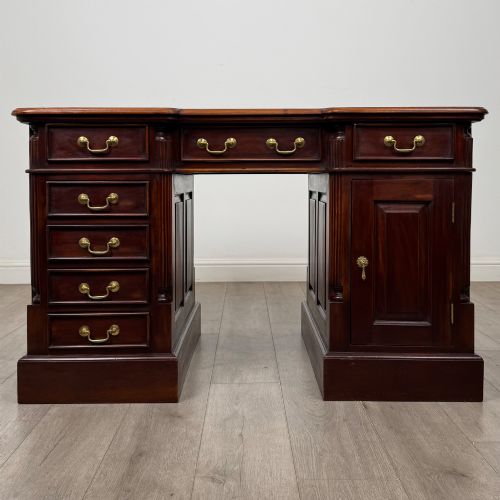
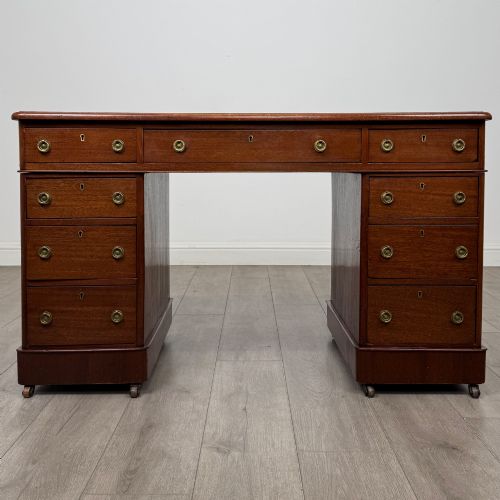
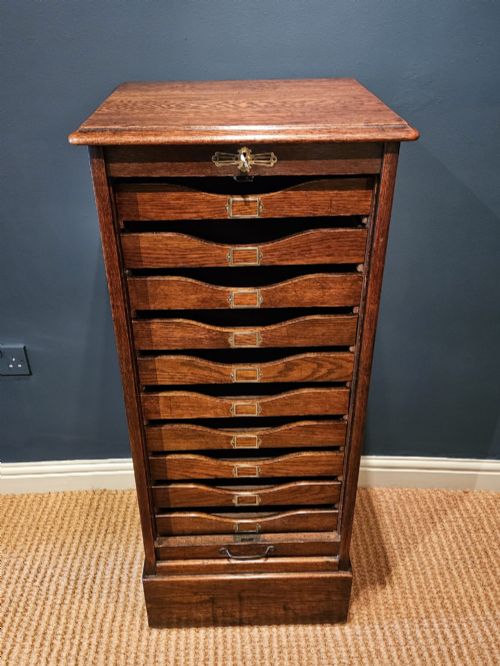
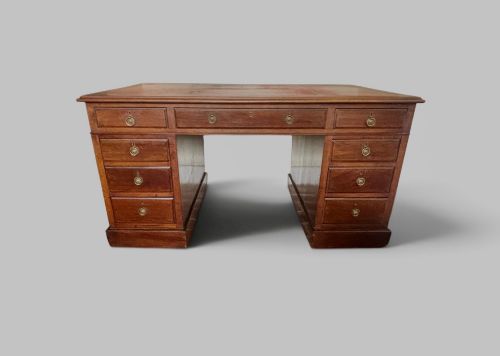
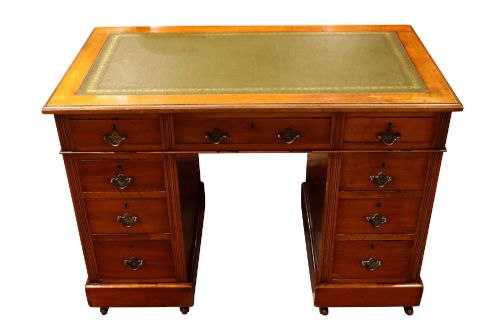
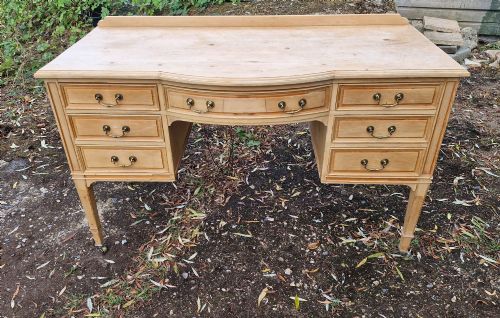
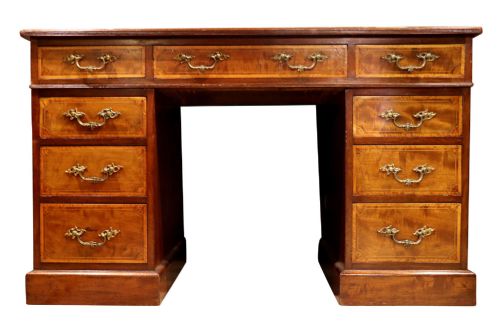
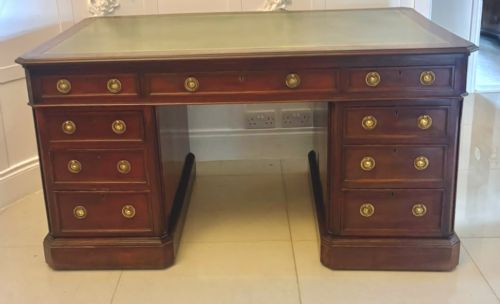
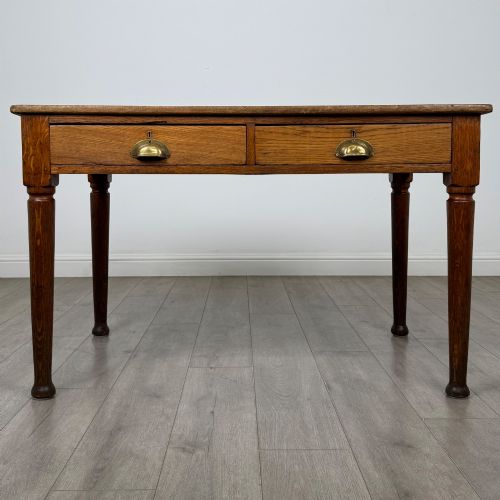
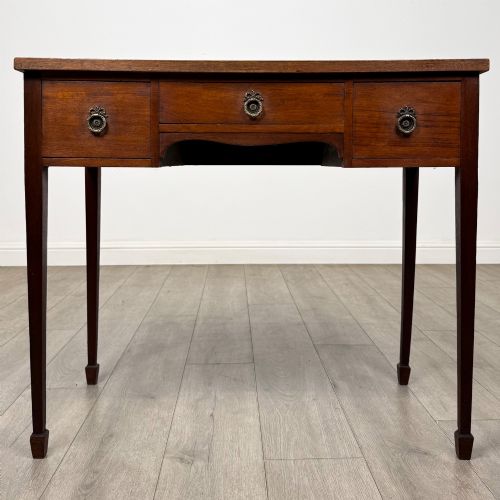
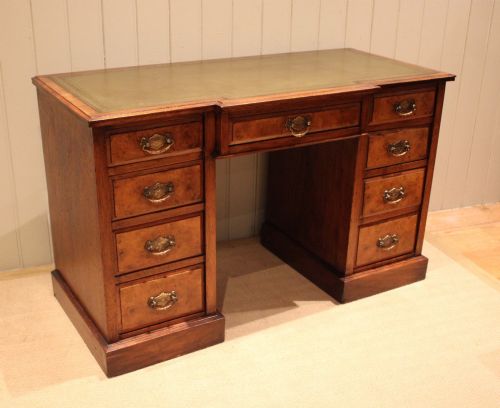
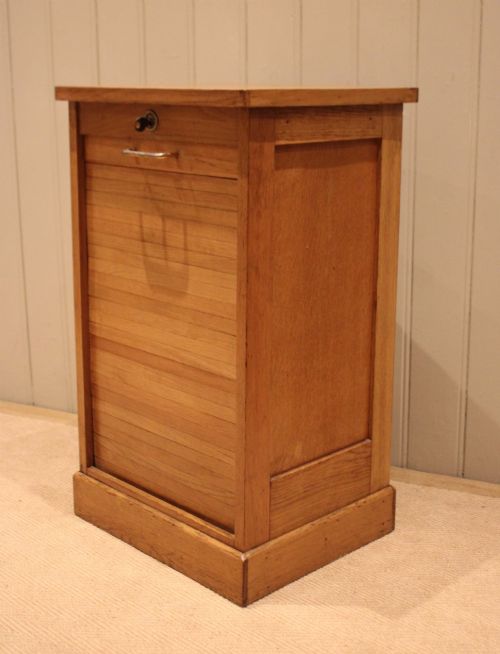
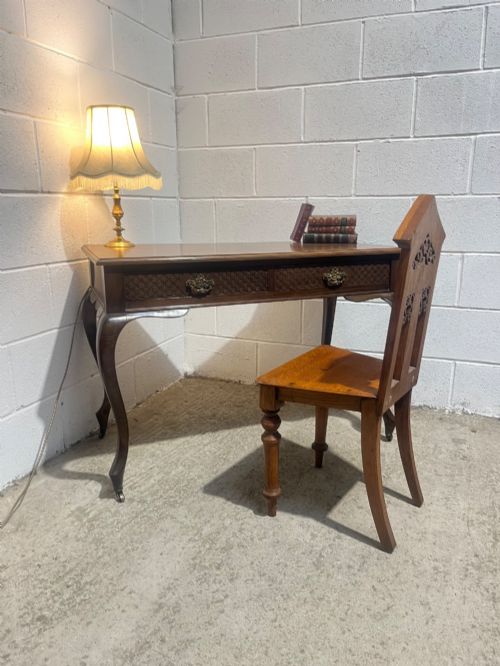
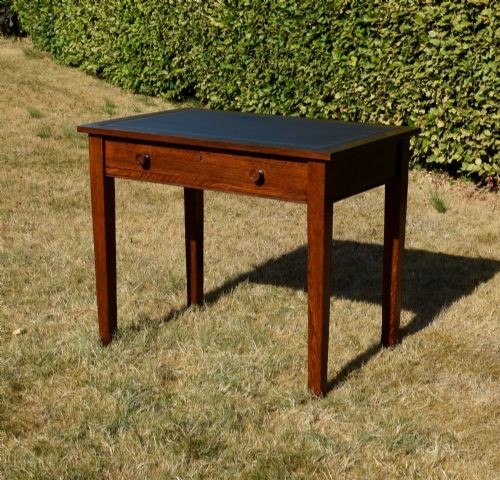
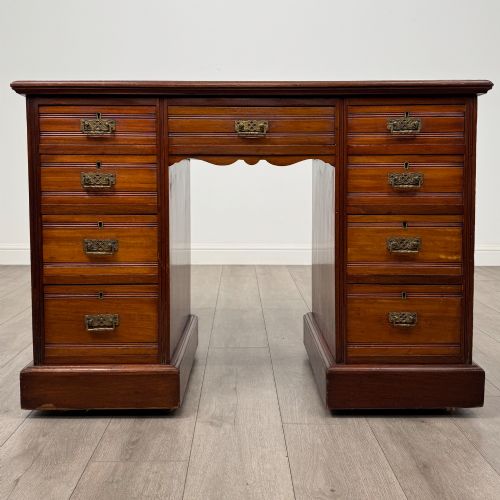
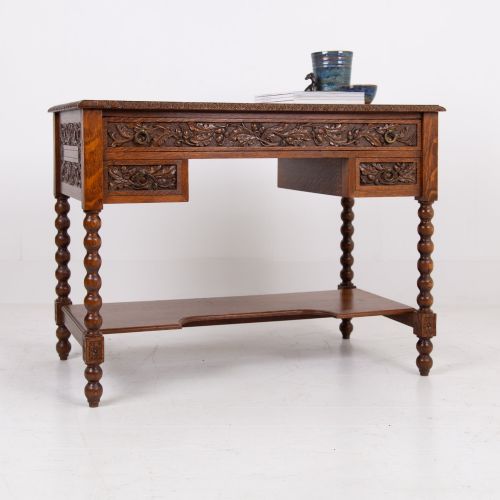
Edwardian office desk drawers encompass functional pedestal desks, kneehole writing tables, and vertical filing cabinets designed for workspace organisation. These pieces range from compact pine writing tables to substantial mahogany and oak pedestal units with multiple drawers.
The Edwardian pieces on this page share space with related Victorian and early twentieth-century examples spanning oak, mahogany, and walnut timbers. Buyers encounter freestanding desks alongside tambour front filing cabinets and satinwood writing tables.
The selection reflects both formal office furniture and domestic writing furniture from the period, utilising traditional timber construction methods. Each piece offers specific drawer configurations suited to writing, filing, and stationery storage.
Materials and construction
Cabinet makers utilised solid timbers including mahogany, oak, walnut, burr walnut, and pine, frequently pairing them with inset leather writing surfaces and brass handles. Inlaid satinwood and decorative crossbanding appear on finer writing tables.
Construction relies on traditional joinery methods to build robust pedestal frames, kneehole writing tables, and tambour front cabinets. Original brass hardware and fitted stationery drawers survive on many examples from the period.
An Anglo-Indian teak filing cabinet shares catalogued floor space with Scottish oak tables and tambour front units.
Quality and proportion
Quality separates standard utilitarian office pieces from finer cabinet work through timber selection, such as figured burr walnut or rich mahogany, and the crispness of inlaid detail. Cabinet construction, drawer linings, and the presence of original brass handles distinguish superior examples.
Proportion and scale dictate the visual weight of a desk within a room, ranging from small kneehole writing tables to large breakfront pedestals. The integrity of original leather writing surfaces and working drawer mechanisms influences the standing of each piece.
Edwards & Roberts·Jenners
The Edwardian Office Desk Drawers Glossary
- Pedestal desk
- A freestanding desk consisting of two independent pedestals of drawers supporting a single desktop. These units often feature central kneehole spaces and multiple graduated drawers.
- Kneehole desk
- A compact desk featuring a central recess for the user's legs, flanked by banks of smaller drawers. This form allows for comfortable seated writing while maintaining storage capacity.
- Tambour front
- A flexible sliding shutter formed of narrow slats of wood glued to canvas, allowing vertical filing cabinets to conceal their contents. This mechanism provides secure and compact access to office documents.
- Writing table
- A table designed primarily for correspondence, typically featuring one or more shallow drawers beneath the top. Unlike heavy pedestal desks, these tables maintain an open underframe.
- Bureaux
- A writing cabinet featuring a sloping fall-front that opens to reveal internal pigeonholes and small drawers. These pieces combine enclosed desktop storage with lower drawer capacity.
Edwardian Office Desk Drawers: Frequently Asked Questions
What is a pedestal desk?
A pedestal desk is a heavy freestanding writing table built with two separate columns of drawers that support the top surface. These desks provide substantial storage alongside a central kneehole space.
Such pieces served as primary workstations in studies and offices during the nineteenth and early twentieth centuries.
How do I identify an Edwardian desk?
Edwardian desks are typically characterised by lighter proportions, straightforward lines, and often incorporate Sheraton revival influences such as satinwood inlay. They date from the reign of King Edward VII between nineteen hundred and nineteen ten.
Makers of this era frequently paired traditional timbers like mahogany and oak with original brass hardware.
What are tambour front cabinets?
Tambour front cabinets utilise a flexible door made from vertical strips of wood attached to a fabric backing. This shutter slides smoothly along tracks to enclose the shelving or filing space.
This clever mechanism was popular in Edwardian offices for saving floor space.
Are writing tables different from desks?
Writing tables generally feature an open frame with shallow drawers beneath the writing surface rather than heavy pedestals. They offer a lighter visual presence suitable for lighter administrative tasks.
Pedestal desks provide significantly more internal storage through banks of deep drawers.