



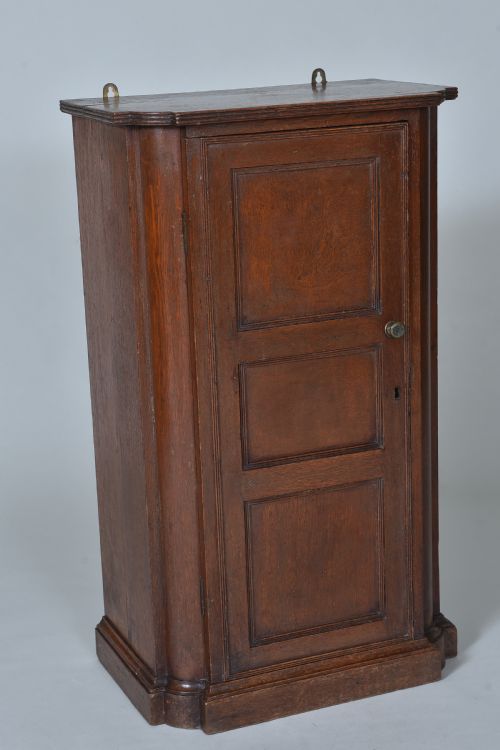
Edwardian Oak Wall Cupboard
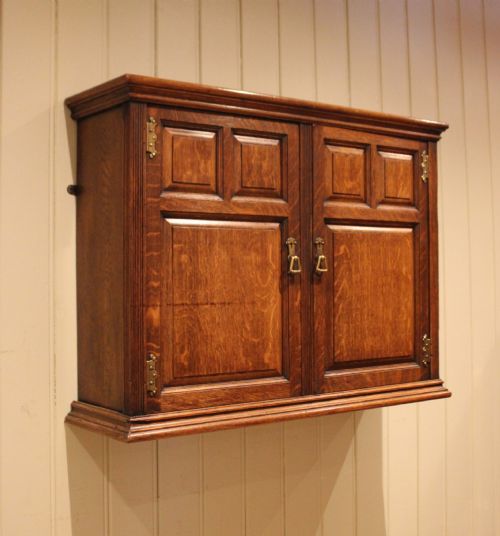
An edwardian oak wall cupboard provides compact hanging storage in timber, spanning styles from Arts and Crafts to Chippendale Revival.
Edwardian Oak Wall Cupboard
An edwardian oak wall cupboard combines timber construction with wall-mounted storage forms such as corner cabinets, key cabinets, and glazed display cabinets.
The pieces appearing on this page originate from periods including the Victorian era, the Edwardian period, and the late nineteenth century through to the early twentieth century.
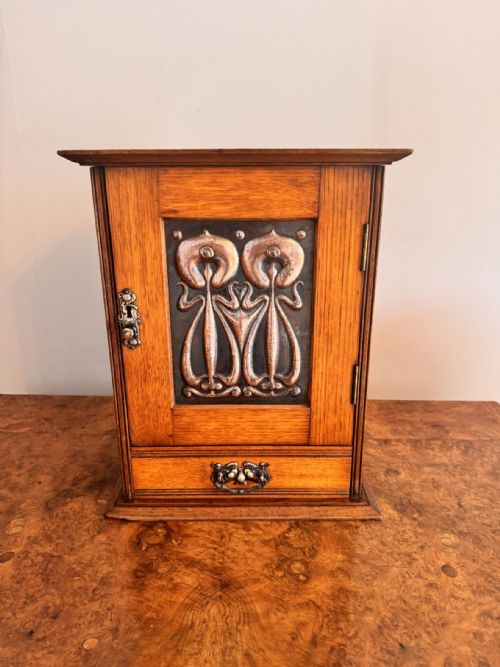
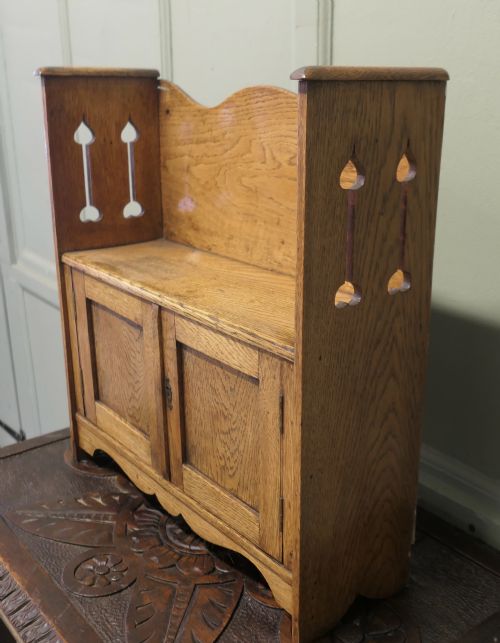
Stylistic influences range from Arts and Crafts and Art Nouveau to Aesthetic Movement and Chippendale Revival, creating distinct variations in surface decoration.
How they were made
Makers utilise solid oak as the primary timber, occasionally pairing it with amboyna, alongside brass, iron, copper, fabric, ceramic, and glass elements.
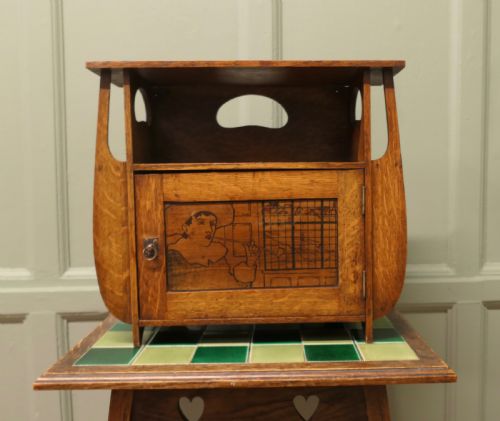
Surface techniques include carving, pokerwork, and glazing to ornament the doors and panels of these wall-mounted and corner cupboards.
The listings combine solid oak with brass, copper, glass, and ceramic elements across Victorian and Edwardian periods.
What varies in quality
The refinement of the carving and the execution of specialist decoration, such as pokerwork or applied brass hardware, distinguish individual cabinets.
Construction methods range from estate-made joinery to marked pieces by notable designers like John Moyr Smith, altering the character of the piece.
John Moyr Smith
The Edwardian Oak Wall Cupboard Glossary
- Arts and Crafts
- A design movement valuing handcraft and natural materials. This style appears frequently across the oak cupboards listed.
- Pokerwork
- The technique of decorating wood by burning designs with a heated point. Examples show this ornament on wall-mounted cupboards.
- Aesthetic Movement
- A late nineteenth-century style focusing on artistic visual qualities. Pieces from this movement utilise oak alongside decorative hardware.
- Chippendale Revival
- A later interpretation of eighteenth-century furniture designs. This style brings classical motifs to Edwardian oak cabinets.
Edwardian Oak Wall Cupboard: Frequently Asked Questions
Where do I hang an oak wall cupboard?
These cupboards require sturdy wall fixings to support the weight of solid oak timber and glass doors. Kitchens, hallways, and studies suit their compact proportions.
Ensure the wall construction can bear the load before mounting any cabinet at eye level or above furniture.
How do I clean an antique oak cabinet?
Dust the timber regularly with a dry, soft cloth to prevent particulate buildup on carved or flat surfaces. Avoid modern liquid polishes that contain silicones.
Apply traditional beeswax occasionally to nourish the oak and maintain the natural lustre of the wood.
What is the difference between an Edwardian and a Victorian oak cupboard?
Victorian pieces often display heavier ornamentation and darker finishes, rooted in nineteenth-century revival styles. Edwardian examples tend towards lighter oak tones and simplified Arts and Crafts lines.
Both periods utilise solid timber construction, though hardware details and glazing patterns shift between the decades.
Can I use a corner cupboard in a flat wall space?
Corner cupboards feature angled backs specifically designed to fit into ninety-degree room junctions. Placing them on a flat wall leaves gaps behind the rear panels.
Flat-backed wall cabinets and display cabinets suit straight walls, while corner cabinets utilise unused room angles.