


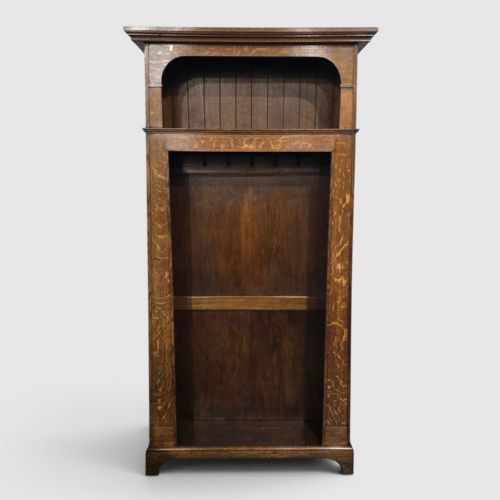
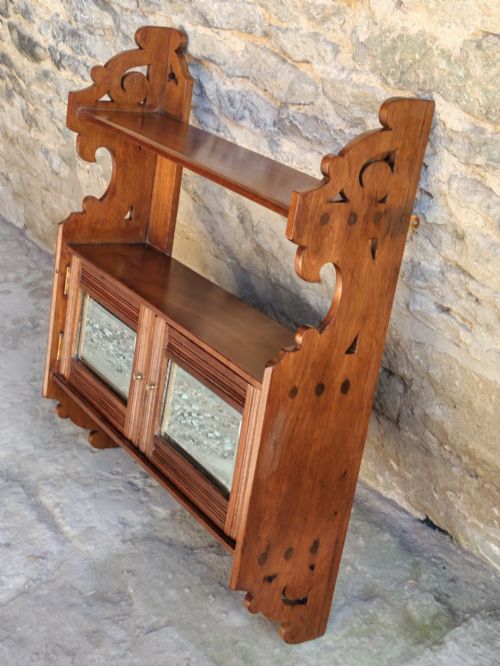


Arts and Crafts Hanging Cupboard
An arts and crafts hanging cupboard is a wall-mounted piece designed to store small household items while bringing honest woodwork into everyday rooms.
Arts and Crafts Hanging Cupboard
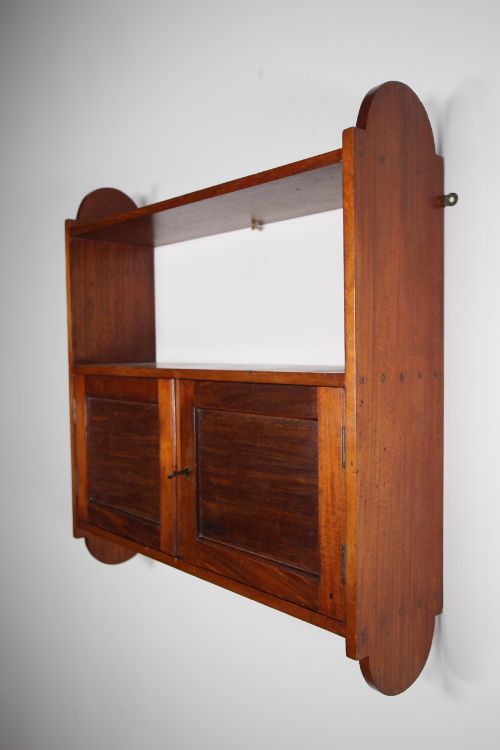
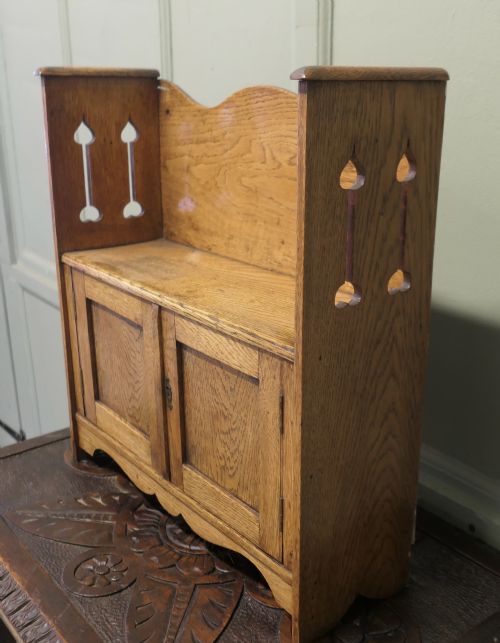
An arts and crafts hanging cupboard is a wall-mounted storage unit designed to save floor space while displaying thoughtful handiwork in hallways, kitchens, or living spaces. These pieces take forms such as small key cabinets, corner cupboards, and wall-mounted display shelves, with oak serving as the predominant wood alongside mahogany, walnut, and pitch pine.
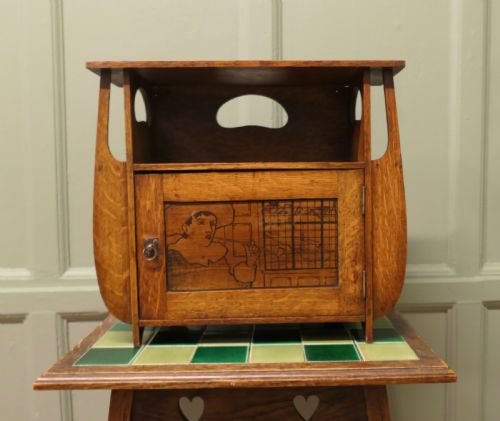
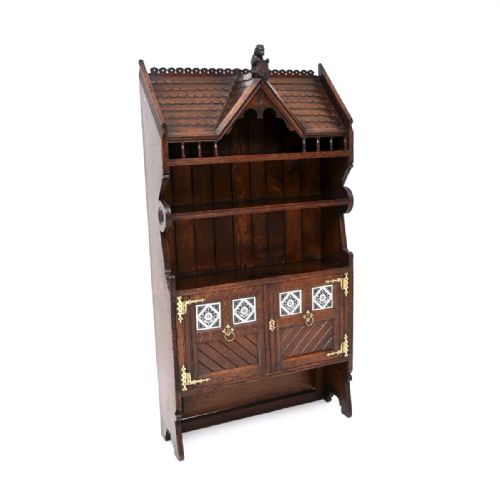
The objects span periods from the late nineteenth century through to the 1930s, connecting Victorian Gothic Revival roots with later Cotswold School and Art Nouveau influences. Buyers encounter everything from plain timber wall cabinets to elaborate pieces featuring carved details, glazed doors, and pokerwork.
Most examples mount directly to the wall to hold domestic necessities, functioning as practical storage that doubles as a decorative focal point. The range includes simple utility cupboards as well as refined studio pieces bearing distinctive regional or maker traits.
How they were made
Makers constructed these cupboards primarily using solid oak, mahogany, and walnut, often pairing the timber with exposed joinery rather than hiding structural connections. The surfaces show the physical hand of the maker through carved panels, pokerwork decoration, and inlaid details.
Hardware played a structural and decorative role, with brass hinges, latches, and strapwork secured directly to the wooden doors and frames. Iron fixtures and ceramic accents also appear on specific pieces, while glass panels feature in corner display cabinets.
Workshop methods prioritised durable construction techniques suited to wall-hanging furniture, ensuring the joints supported the weight of the timber and stored contents. Beech and pitch pine also appear in secondary roles or specific regional constructions.
Arts and Crafts Hanging Cupboard Retail Price Guide 2026
Typical asking prices for arts and crafts hanging cupboard among the pieces listed under this phrase on Sellingantiques today, from the lower quarter to the upper quarter. They describe what is for sale here now, not the wider market.
Listings feature woods spanning oak, mahogany, walnut, pitch pine, and beech, alongside brass, iron, glass, and ceramic elements.
What varies in quality
The distinction between standard utility cupboards and top-tier pieces lies in the ambition of the design and the refinement of the surface work. Superior examples demonstrate deliberate planning in their proportions, integrating carved elements or inlaid motifs that complement the grain of the wood.
Hardware selection marks another boundary of quality, where hand-beaten brass hinges and bespoke latches elevate the piece far beyond factory-standard ironmongery. The choice of timber grain and the crispness of execution in details like pokerwork or glazed framing determine the standing of each cabinet within the range.
John Moyr Smith·Arthur Simpson·Shapland and Petter
The Arts and Crafts Hanging Cupboard Glossary
- Pokerwork
- A decorative technique using a heated tool to burn designs into the surface of wood. This method creates dark, textured patterns popular in period ornamentation.
- Astra Glazed
- A specific method of leaded or wooden-barred glass framing used in cabinet doors. It allows for clear display while maintaining structural support.
- Pitch Pine
- A resinous softwood utilised for its durability and prominent grain patterns. Makers selected this material for both structural integrity and visual character.
- Cotswold School
- A regional design movement associated with handcrafted furniture and vernacular traditions. Pieces from this tradition emphasise honest construction and simple forms.
Arts and Crafts Hanging Cupboard: Frequently Asked Questions
How do I hang a heavy oak cupboard safely?
These wall-mounted cabinets require secure fixing into solid masonry or direct attachment to wall studs using appropriate brackets.
Because the timber and stored contents carry substantial weight, professional installation ensures the hanging mechanism bears the load without pulling from the wall.
Where were these cupboards typically used in the home?
Period homes utilised these units in hallways for keeping keys and letters, or in living rooms and kitchens for displaying ceramics.
Their compact wall-mounted footprint provided accessible storage without occupying valuable floor space in smaller rooms.
How can I tell an 1880 piece from a 1930 piece?
Earlier pieces from the late nineteenth century often lean toward Victorian Gothic Revival or Aesthetic Movement details with heavier carved ornament.
Later examples from the 1920s and 1930s tend to reflect Cotswold School simplicity, favouring clean oak surfaces and unadorned structural honesty.
Are brass and iron fittings original to these cabinets?
Original hardware typically matches the period style, utilising hammered brass strapwork, hinges, and latches common to the movement.
Replacements do occur over time, so examining the patina and screw types helps confirm whether the metalwork has remained with the piece since its creation.