




Edwardian Miniature Furniture
Edwardian miniature furniture brings together exquisitely small-scale armchairs, chests of drawers, and display cabinets created to charm and display fine craftsmanship.
Edwardian Miniature Furniture
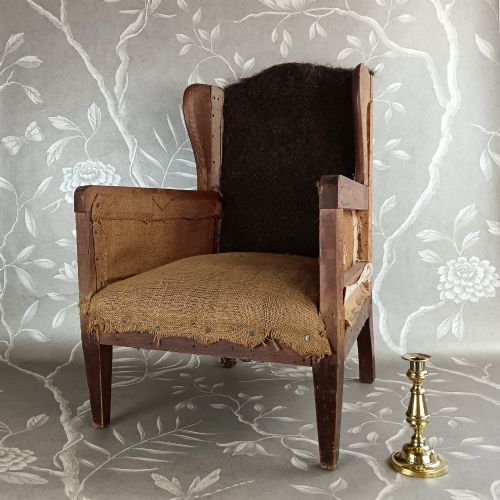
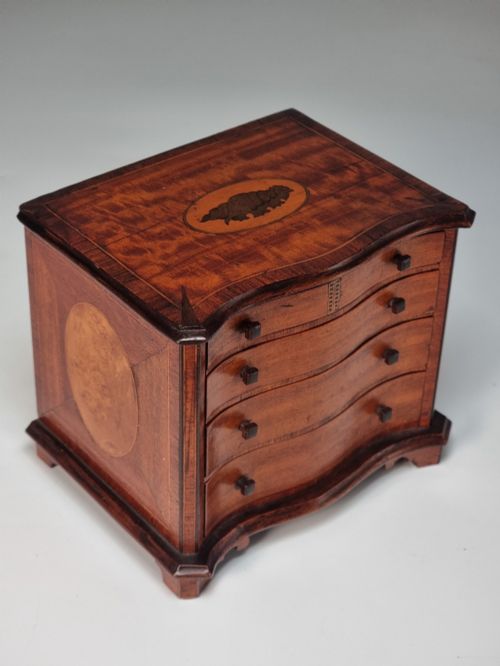
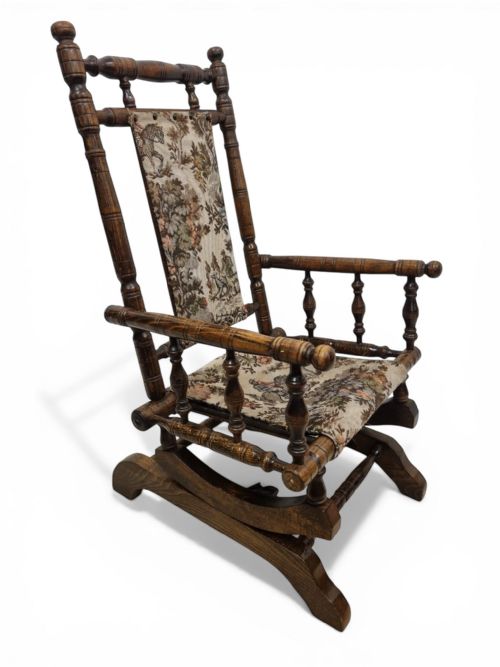
Edwardian miniature furniture encompasses diminutive representations of full-sized domestic furnishings, including child's armchairs, rocking chairs, wardrobes, and chests of drawers. These pieces reflect the broader stylistic revivals of the period, drawing on Georgian Revival, Arts and Crafts, Edwardian Jacobean Revival, and Edwardian Rococo Revival designs.
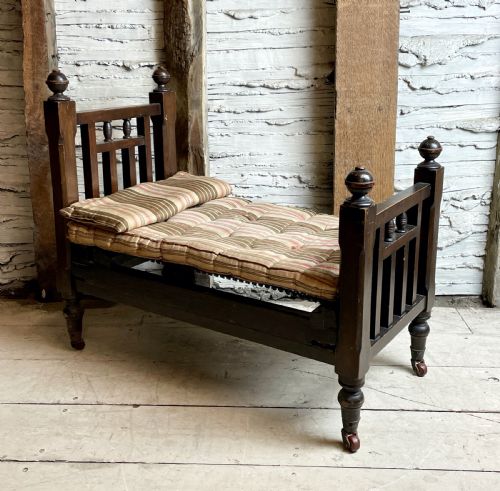
The objects span varied scales and forms, ranging from practical apprentice pieces like small decorative shelf tables and window seats to novelty sterling silver furniture suites and display cabinets. While the primary concentration sits firmly within the Edwardian period and the early twentieth century, examples stretch back through the nineteenth century into earlier styles.
How they were made
Cabinetmakers utilised traditional timbers such as mahogany, oak, satinwood, and yew wood, often embellishing surfaces with delicate inlay work, mother of pearl, or carved details. Miniature seating forms typically feature textile upholstery, including tapestry fabrics.
Silvermsmiths also contributed to the genre by fashioning novelty miniature furniture, photo frames, chocolate pot sets, and dressing table jewellery boxes entirely in sterling silver.
The listings span mahogany, oak, satinwood, yew wood, brass, glass, fabric, and sterling silver across multiple periods.
What varies in quality
Quality rests in the fidelity of the proportions and the precision of the scaling, distinguishing master craftsman work or apprentice pieces from simpler novelty items. The choice of materials dictates the upper tier, where figured mahogany, satinwood veneers, and detailed inlay elevate a piece beyond standard construction.
The complexity of the form further separates examples, with multi-drawer chests, glazed display cabinets, and fitted interiors requiring far greater joinery skill than single-piece carved shelves or basic rocking chairs.
A. F. Lloyd, Bideford
The Edwardian Miniature Furniture Glossary
- Apprentice piece
- A small-scale item created by a trainee craftsman to demonstrate mastery of joinery and woodworking techniques before full qualification.
- Kneehole desk
- A compact desk featuring a central recess for the legs flanked by pedestals of small drawers.
- Novelty silver
- Small decorative items fashioned in sterling silver to represent everyday domestic objects or furniture forms with whimsical detail.
- Serpentine chest
- A chest of drawers characterised by a gently undulating front profile that curves outward at the centre and inward at the sides.
Edwardian Miniature Furniture: Frequently Asked Questions
What is miniature furniture used for?
These pieces served multiple purposes historically, acting as salesman samples, apprentice demonstrations of skill, dollhouse furnishings, or decorative mantel ornaments for wealthy homes.
Today, collectors display them within cabinets or on tabletops to appreciate fine woodworking and silver smithing on an intimate scale.
How do I identify Edwardian pieces?
Look for characteristic stylistic cues from the period, including light satinwood stringing, Sheraton or Regency revivals, and refined proportions typical of the early twentieth century.
Matching the materials and construction techniques to the recorded dates helps confirm whether a piece belongs to the Edwardian era or an earlier nineteenth-century revival.
What woods were commonly used?
Makers relied on durable cabinet timbers including mahogany, oak, yew wood, and decorative satinwood veneers for cabinetry and desks.
Solid wood construction also appears frequently in smaller seating forms like child's rocking chairs and window seats.