
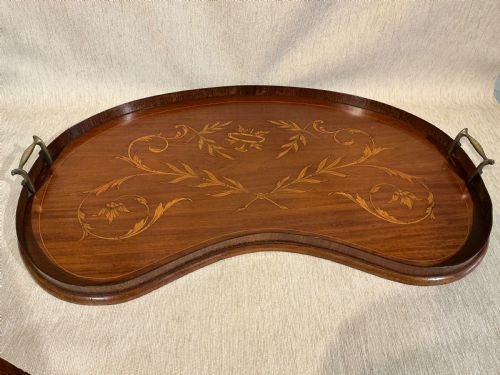


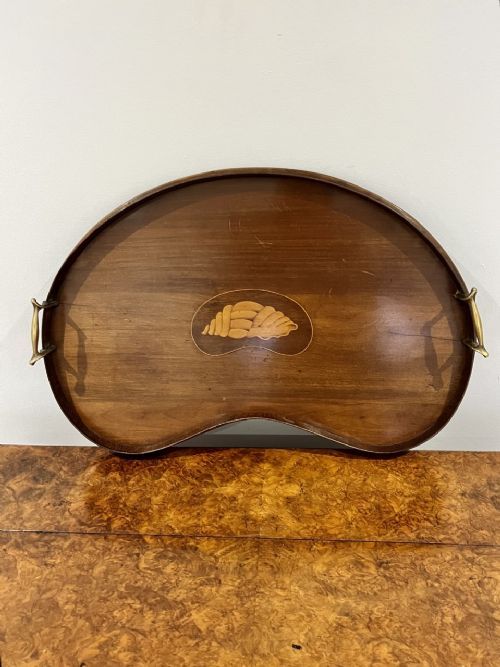


Edwardian Marquetry Serving Tray
An edwardian marquetry serving tray brings domestic service into the drawing room with figured veneers and crisp floral inlays.
Edwardian Marquetry Serving Tray
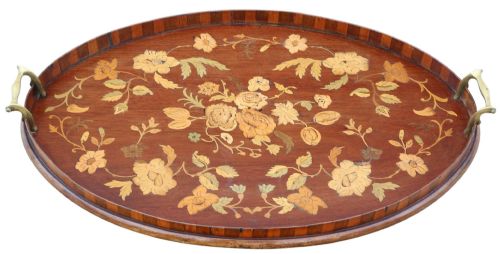
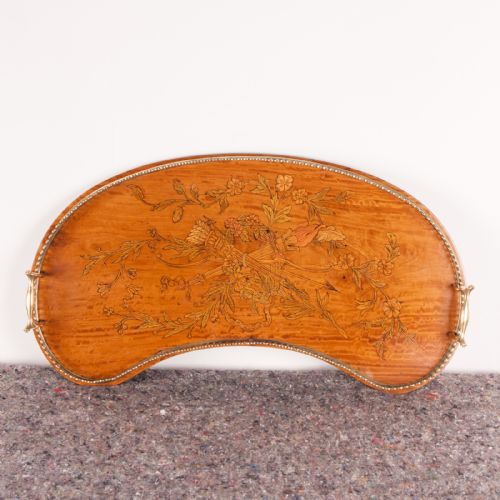
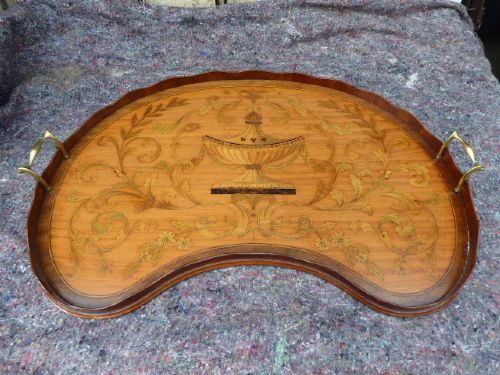
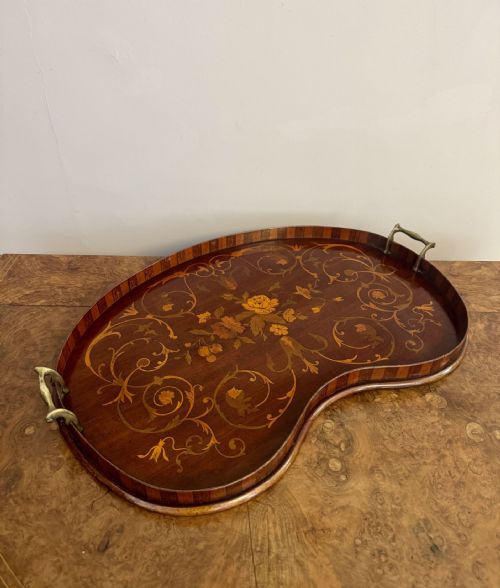
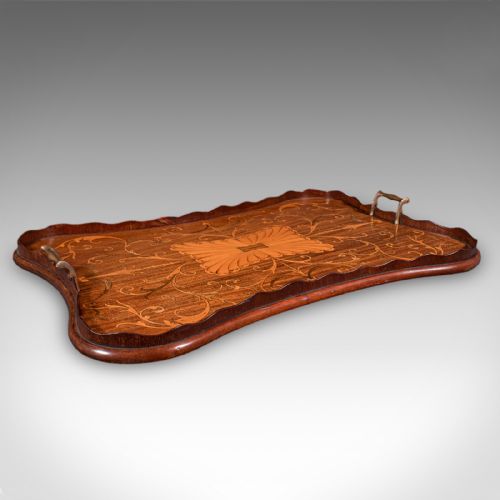
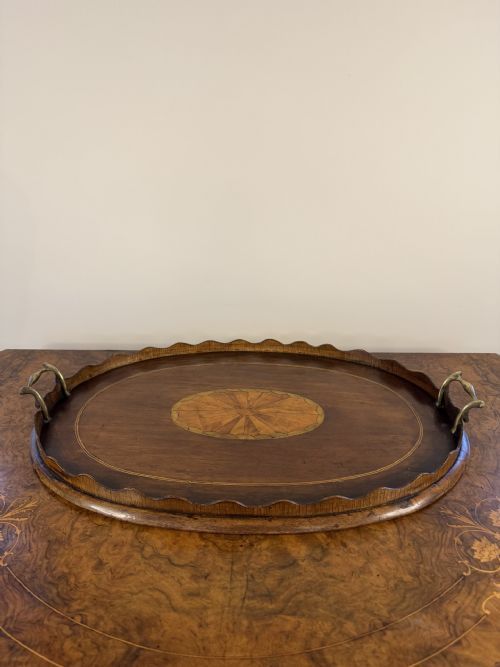
An edwardian marquetry serving tray combines practical service with decorative display, appearing in forms such as butler trays, afternoon tea platters, and kidney-shaped servers. These pieces span the Edwardian era and the nineteenth century, often reflecting Sheraton revival or neoclassical taste.
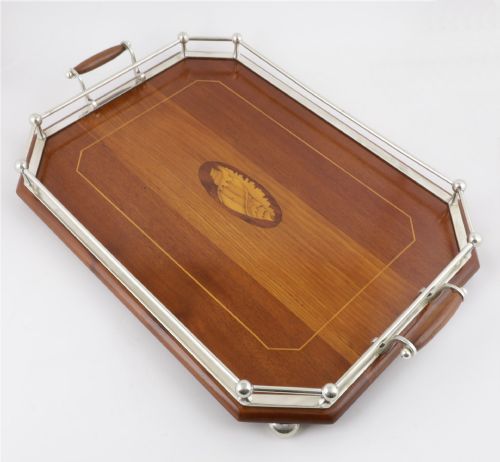
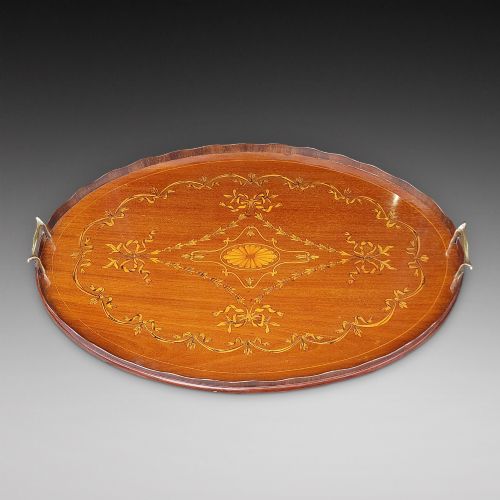
Makers shaped these surfaces in mahogany, satinwood, burr yew, and rosewood, frequently mounting them with brass handles or pierced galleries. Oval, octagonal, and rectangular shapes predominate, occasionally resting on dedicated stands or taking the form of drinks trays.
How They Were Made
Craftsmen applied wood veneer over a stable secondary timber base, using marquetry inlay to create pictorial or geometric designs in contrasting woods. Satinwood and mahogany form the primary canvas for these decorative schemes.
Metal elements such as brass galleries and silver-plated mounts were securely fitted to contain glassware and porcelain during transport. Finished pieces relied on careful polishing to accentuate the natural grain of the timber.
What Varies in Quality
The precision and complexity of the marquetry inlay define the upper tier of pieces, where floral and ribbon motifs show fine shading and tight joints. Simpler geometric banding or plain veneered surfaces sit lower in the scale.
The choice of secondary woods and the weight of the brass mounts also signal distinction, alongside balanced proportions in complex outlines like kidney shapes and octagonal galleries.
Edwards and Roberts
The Edwardian Marquetry Serving Tray Glossary
- Marquetry inlay
- Decorative patterns formed by fitting together contrasting pieces of wood veneer. This technique allows for complex pictorial designs across the tray surface.
- Gallery
- A raised rim or border around the edge of a tray, frequently pierced or made of brass. It prevents items from sliding off during service.
- Kidney shaped
- A curved, asymmetrical outline resembling a bean. This form appears frequently in decorative Edwardian serving pieces.
- Satinwood
- A pale, lustrous hardwood used extensively for cabinet-making and inlay work. It provides a bright background for darker contrasting veneers.
- Sheraton revival
- A late nineteenth and early twentieth century design movement inspired by late eighteenth century neoclassical furniture forms. It emphasises light proportions and classical ornamentation.
Edwardian Marquetry Serving Tray: Frequently Asked Questions
How were these trays used?
These pieces served practical roles in domestic households for carrying tea, afternoon refreshments, and drinks.
Servants and hosts used them to transport china and glassware between rooms, while their decorative surfaces also suited static display on tables.
How do I care for inlaid wood?
Maintain the timber by keeping the surface dry and away from direct sunlight or excessive heat.
Apply a light application of appropriate wax polish periodically to nourish the veneer and protect the polished finish.
What defines the Edwardian style?
Edwardian design draws heavily on lighter eighteenth century aesthetics, favouring graceful proportions and bright satinwood.
Pieces from this period often incorporate delicate neoclassical revival motifs and refined brass mountings.
Can these trays be used daily?
Daily use is possible with careful handling, though many collectors prefer to display them to protect the delicate antique veneer.
Avoid exposing the timber to moisture or heavy loads to preserve the integrity of the marquetry work.