

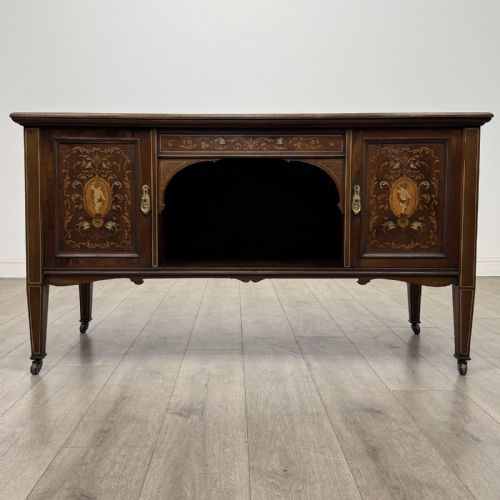
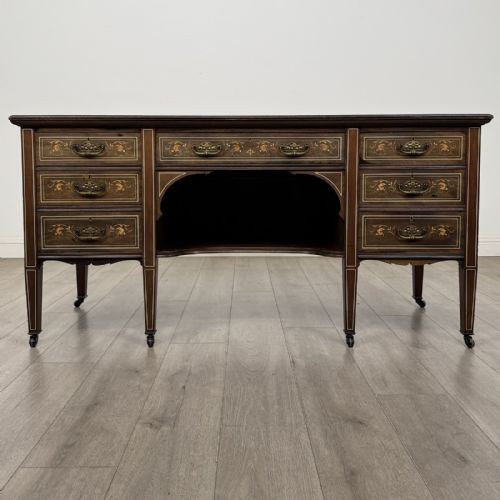
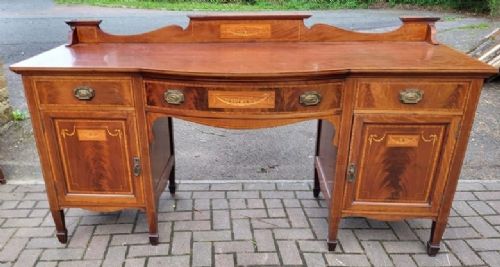
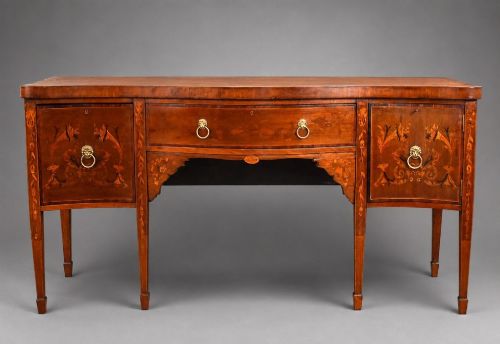




Edwardian Marquetry Buffet
These edwardian marquetry buffet pieces are sophisticated dining room servers combining detailed wood inlay with classic period timbers, selected for elegance and practical storage.
Edwardian Marquetry Buffet
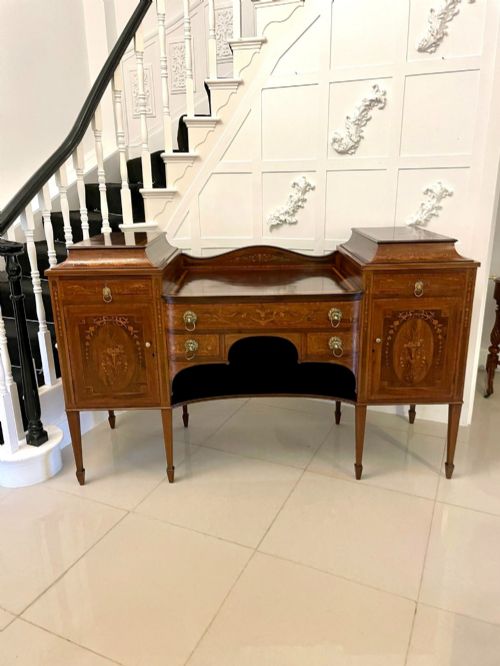
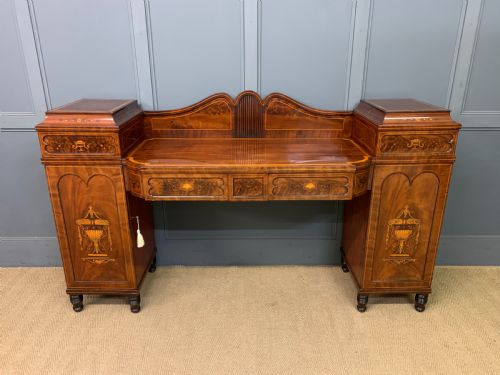
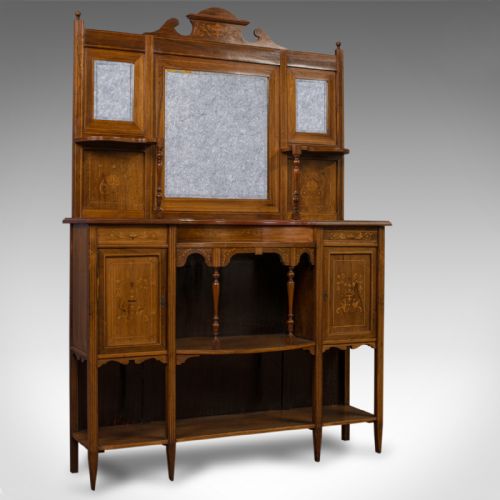
When you search for an edwardian marquetry buffet, you encounter large dining room storage pieces that function as sideboards, side cabinets, and credenzas. These items are designed to display serving dishes and store silverware while introducing intricate decorative surfaces to a room.
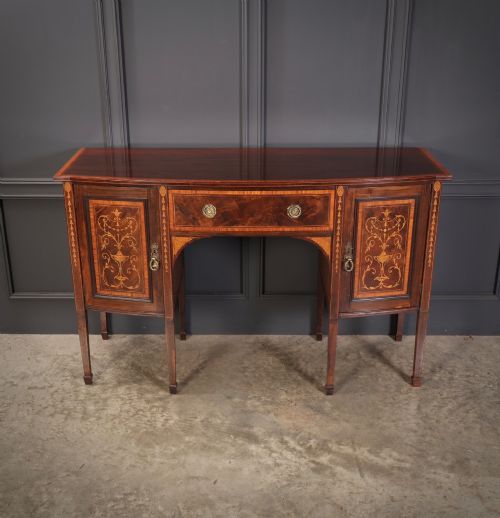
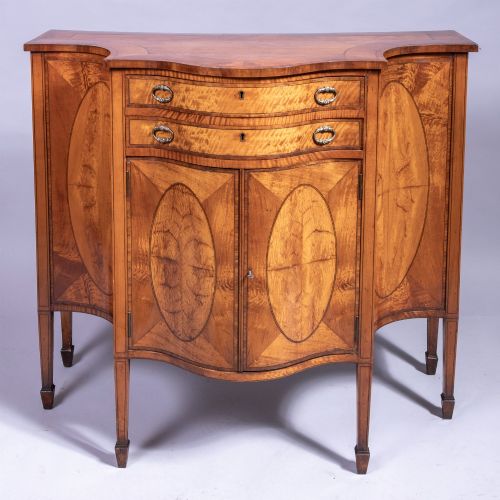
The versions most common on this page date from the Edwardian era and the broader nineteenth century, often reflecting revival styles such as Sheraton Revival and George III. They utilise foundational forms like bow fronts, serpentine shapes, and pedestal configurations.
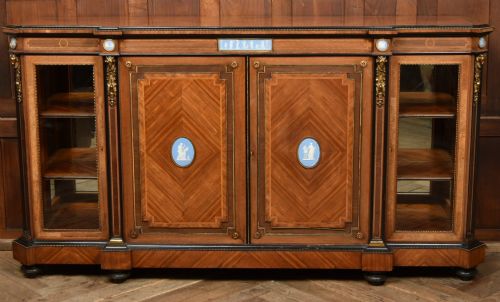
Makers integrated cupboards and drawers beneath long top surfaces, sometimes pairing the timber structures with glass panels or mirror backs. Buyers choose these pieces to anchor a formal dining space with period character and craftsmanship.
How they were made
Cabinetmakers constructed the foundational carcases using dense timbers such as mahogany, satinwood, burr walnut, rosewood, and oak. These woods provided stable surfaces capable of supporting the weight of formal dinner service items.
The decorative surfaces rely on precise marquetry inlay utilising contrasting materials like boxwood and brass. Craftsmen cut intricate floral and geometric motifs into the primary wood and fitted the lighter veneers flush into the surface.
Metal mounts in ormolu and brass details frequently accented the doors, handles, and key escutcheons. The combination of figured grain timbers and fine stringing created the polished aesthetic characteristic of the period.
Edwardian Marquetry Buffet Retail Price Guide 2026
Typical asking prices for edwardian marquetry buffet among the pieces listed under this phrase on Sellingantiques today, from the lower quarter to the upper quarter. They describe what is for sale here now, not the wider market.
Listings feature woods like satinwood, burr walnut, and rosewood, paired with boxwood and brass inlay.
What varies in quality
The standard of an edwardian marquetry buffet depends heavily on the complexity and crispness of the wood inlay. Superior examples display meticulously fitted marquetry with fine shading in the veneers, whereas lesser pieces rely on simpler, stamped, or painted motifs.
The choice of primary timber and secondary framing woods also dictates the grade of the piece. Workshops using heavily figured burr walnut, rich satinwood, or finely grained mahogany achieved a depth of colour and surface texture that basic commercial output lacked.
The reputation of the maker plays a significant role in distinction, as documented workshops employed master cabinetmakers whose joinery remained robust over generations. Well-executed secondary elements like solid drawer linings and original hardware elevate the standing of a piece.
Hewetsons London·Shapland and Petter·Edwards and Roberts·Howard And Sons·Gillows
The Edwardian Marquetry Buffet Glossary
- Marquetry
- Decorative veneer work forming pictures or patterns by using thin slices of wood. This technique allows cabinetmakers to create elaborate floral and scrolling designs across large cupboard doors.
- Credenza
- A dining room sideboard or side cabinet originally designed for displaying plates and dishes. These items often feature glass doors or mirrored backs intended to reflect light in a formal interior.
- Satinwood
- A durable hardwood yielding a yellowish timber with a lustrous satin-like sheen. It served as a prime canvas for contrasting inlay in high-end Edwardian and revival furniture.
- Serpentine
- A furniture front curved with a convex centre flanked by concave ends. This undulating shape requires precise carpentry and adds visual movement to the piece.
- Stringing
- Thin inlay lines of contrasting wood or light material used to outline panels and drawers. It provides a crisp border that frames the primary wood grain.
Edwardian Marquetry Buffet: Frequently Asked Questions
What is an edwardian marquetry buffet used for?
These pieces served primarily in dining rooms to store silverware, linens, and heavy serving dishes. The wide top surface provided a convenient station for carving meats or arranging dishes during formal meals.
Today, they function similarly in modern homes as statement sideboards in dining rooms, living spaces, or hallways. Their interior shelving offers practical storage while the decorative exterior enhances the room's aesthetic.
How do I tell an Edwardian piece from a Victorian one?
Edwardian furniture generally exhibits a lighter, more refined touch with satinwood and Sheraton Revival influences dominating the designs. The woods often appear brighter and the overall proportions leaner compared to earlier decades.
Victorian pieces lean toward darker, heavier timbers like rosewood and burr walnut with denser ornamentation. Credenzas and mirror-backed sideboards from the mid to late nineteenth century display a more robust and substantial presence.
What is the difference between a buffet and a sideboard?
Historically, sideboards often included pedestals or deep cupboards designed specifically for dining room service and storage. Buffets tended to be slightly lower furniture pieces with simpler undercarriage configurations.
Over time, the terms merged in the marketplace as cabinetmakers blended the forms. Most examples combine enclosed cabinet space with drawer storage regardless of the specific historical label.
How do I care for marquetry surfaces?
Maintain the timber and veneer by keeping the furniture away from direct sunlight and strong heat sources. Excessive temperature changes can cause the thin veneers to lift or crack over time.
Apply a quality furniture wax periodically to nourish the wood and protect the inlaid details. Avoid using silicone-based polishes or excessive moisture during routine cleaning.