


Edwardian Maritime Artwork
Edwardian maritime artwork brings home the salt and surge of the early twentieth century through oil and watercolour.
Edwardian Maritime Artwork
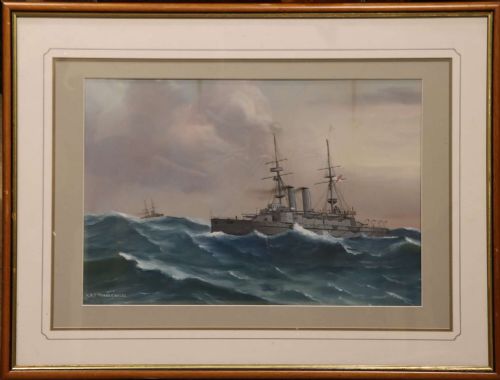
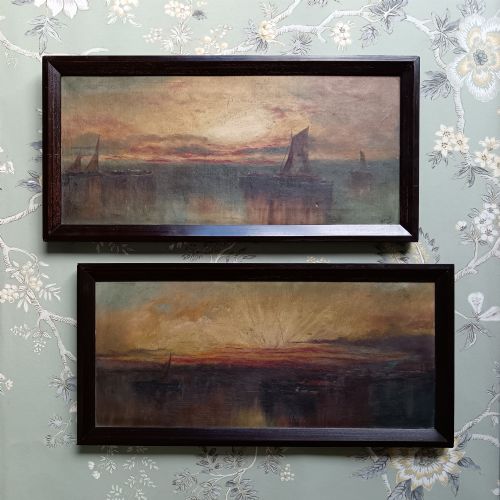
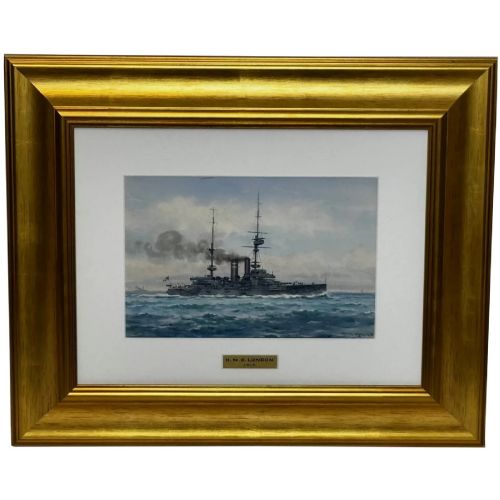
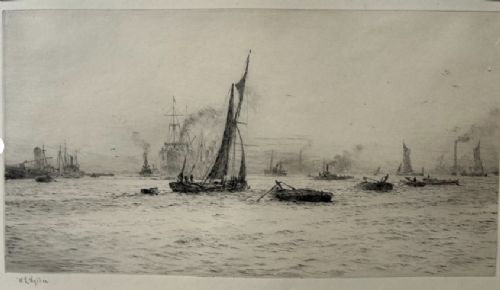
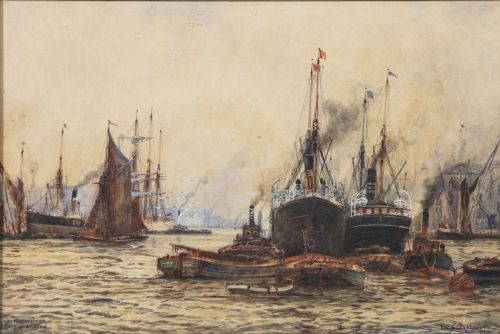
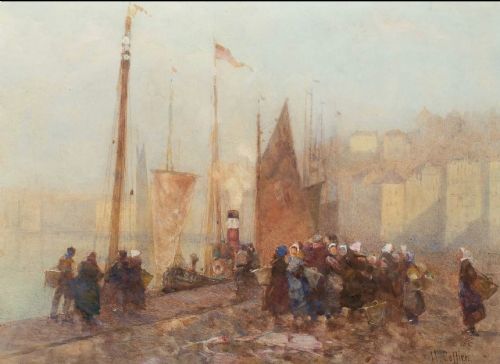
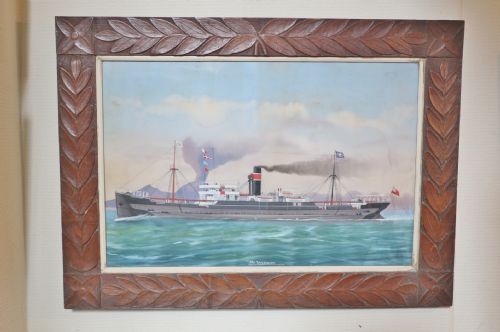
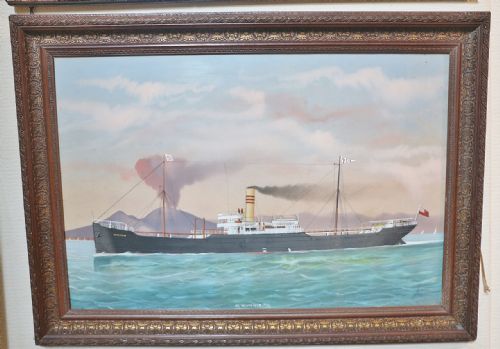
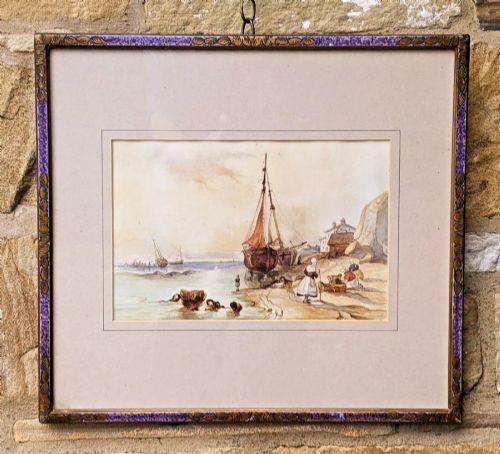
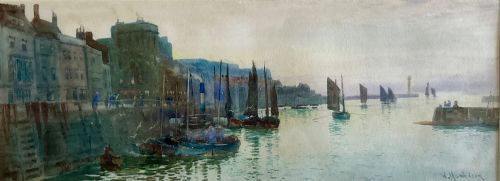
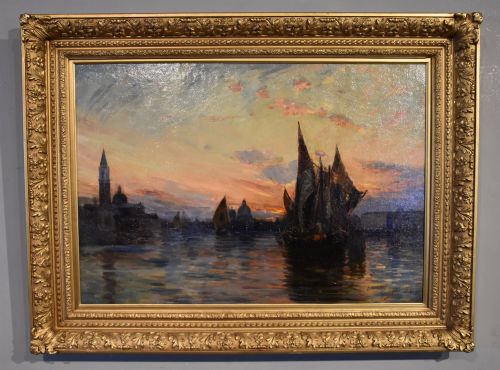
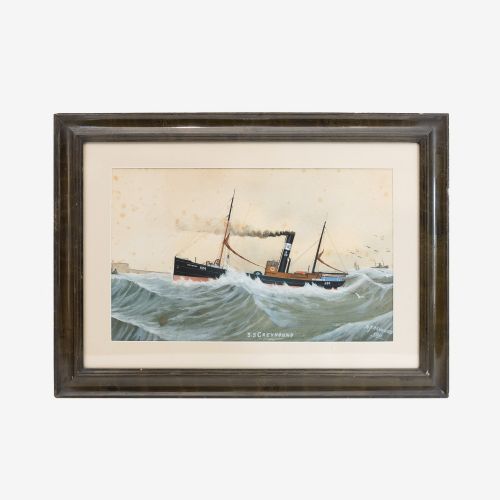
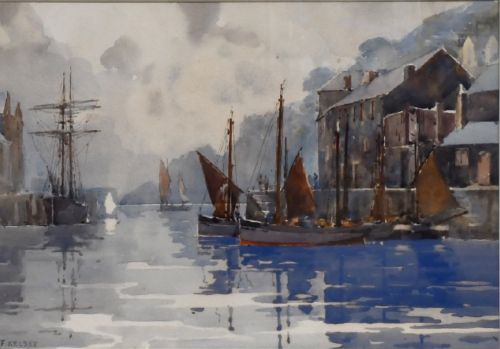
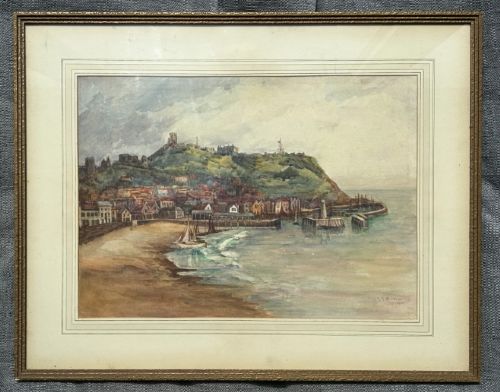
Edwardian maritime artwork captures the sea, rivers, and harbours through paintings, watercolours, gouache, and etchings produced around the turn of the twentieth century. The selection leans heavily towards original watercolours and oil paintings depicting named steamships, working fishing vessels, and coastal ports.
Most pieces date from the Edwardian era proper and the surrounding decades, running from the late nineteenth century through to the interwar period. Common subjects include bustling Yorkshire harbours like Whitby, West Country luggers, and naval vessels captured by contemporary artists.
Buyers will encounter framed artworks ranging from delicate pencil-signed etchings to robust oil paintings on canvas and board. The works reflect a period of intense maritime commerce and naval power, documented by artists who specialised in coastal and marine scenes.
Materials and methods in marine pieces
Artists relied primarily on watercolour pigment on paper and oil paint on canvas or board to capture shifting light on water. Gouache was frequently added to watercolours for opaque highlights on cresting waves, steam, and rigging.
Supports varied between stretched canvas, wooden panels, and heavy paper, often housed beneath glass in period frames. Etchings utilised inked plates pressed onto paper to produce fine, linear details of shipping on the Thames.
Sailors occasionally painted their own vessels in gouache as a sentimental tribute to shipmates before shore leave ended.
Distinctions in standard and execution
Quality rests on the artist's command of marine anatomy, from the correct rigging of a tall ship to the weight of a hull in choppy seas. Skilled hands render water with transparency and movement, whereas lesser works treat the sea as a flat, opaque plane.
Provenance and documentation elevate certain pieces, particularly those bearing legible signatures, dates, or specific vessel names tied to historical records. The handling of atmospheric light, such as the glow of a sunset or the damp haze of a port, separates routine topographical sketches from accomplished marine art.
William Lionel Wyllie·Frank Watson Wood·Charles Napier Hemy·Daniel Sherrin·James Webb
The Edwardian Maritime Artwork Glossary
- Gouache
- An opaque water-based paint that provides solid, matte highlights. It is frequently combined with watercolour in marine works to render white foam and clouds.
- Etchings
- Prints produced by scratching a design into an acid-resistant ground on a metal plate, which is then bitten by acid and inked. This technique allows for exceptionally fine lines in architectural and maritime subjects.
- Lugger
- A traditional two-masted fishing vessel carrying lug sails. These boats appear frequently in West Country and Yorkshire coastal scenes from the period.
- Board
- A rigid flat substrate used instead of canvas for oil or gouache paintings. Wood and millboard were common supports for smaller plein air maritime studies.
Edwardian Maritime Artwork: Frequently Asked Questions
How do I identify a genuine period maritime painting?
Examine the materials, framing techniques, and the specific vessel types depicted against known historical records of the era. Pigments, paper types, and stretcher construction often point directly to the manufacturing standards of the early twentieth century.
Signatures and contemporary inscriptions on the reverse also help anchor a piece to its stated period. Comparing the artistic style to known works by the same hand provides further confirmation.
What subjects are most common in these artworks?
Working vessels such as fishing luggers, steamships, and cargo junks dominate the visual record of this period. Coastal towns, particularly Whitby, St Ives, and various London river reaches, appear repeatedly in the available watercolours and oils.
Naval warships and royal yachts also feature, reflecting contemporary interest in maritime defence and pageantry. Artists focused heavily on the daily life of working ports rather than purely romanticised seascapes.
How should I care for antique watercolours?
Keep watercolours away from direct sunlight to prevent the fugitive pigments from fading over time. Acidic mount boards and backing materials should be replaced by a professional framer using conservation-grade alternatives.
Maintain stable humidity levels in the room to protect the paper from foxing and mould growth. Glazing with UV-filtering glass offers an extra layer of defence against environmental degradation.
What is the difference between gouache and watercolour?
Watercolour is transparent, allowing the white of the paper to shine through the washes to create light and luminosity. Gouache includes an added inert white pigment, such as chalk, which makes the paint opaque and flat.
Artists often used both mediums together in marine scenes, laying down transparent watercolour washes for the sea and sky, then applying opaque gouache for sharp highlights on waves and sails.