


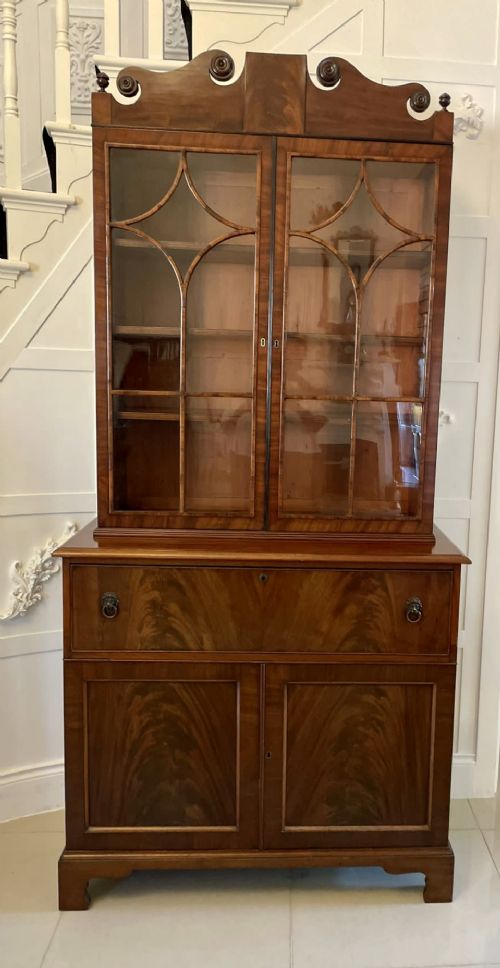
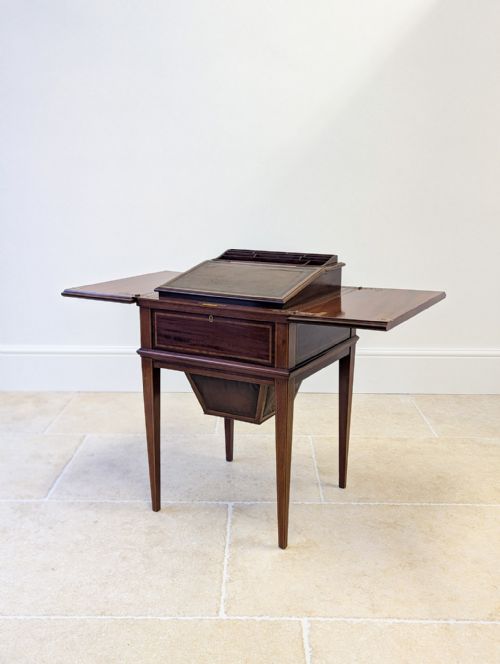
Edwardian Mahogany Writing Desk
An edwardian mahogany writing desk brings refined proportion and rich timber into a room, serving as both a practical workspace and a decorative centrepiece.
Edwardian Mahogany Writing Desk
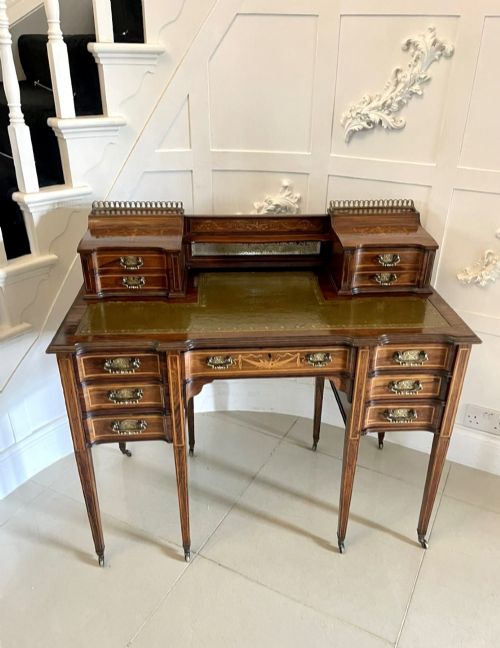
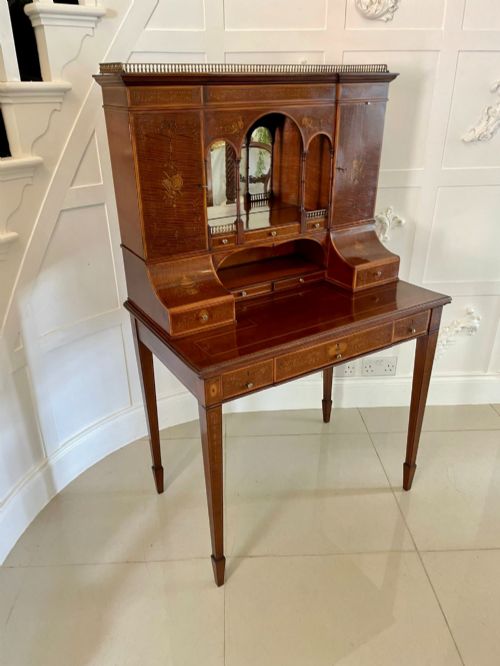
An edwardian mahogany writing desk is a domestic surface designed for correspondence, reading, and administrative tasks, dating principally from the early twentieth century. These pieces combine compact proportions with functional drawers, writing slides, and fitted compartments.
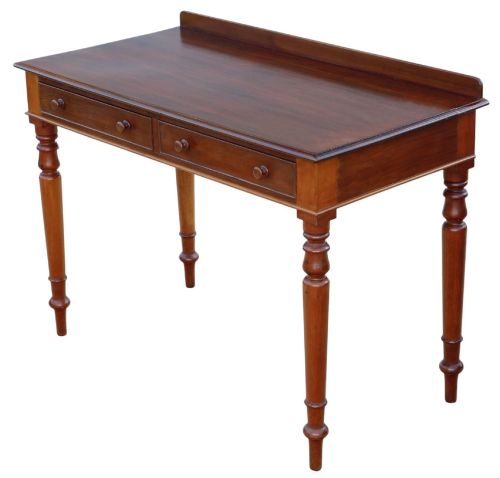
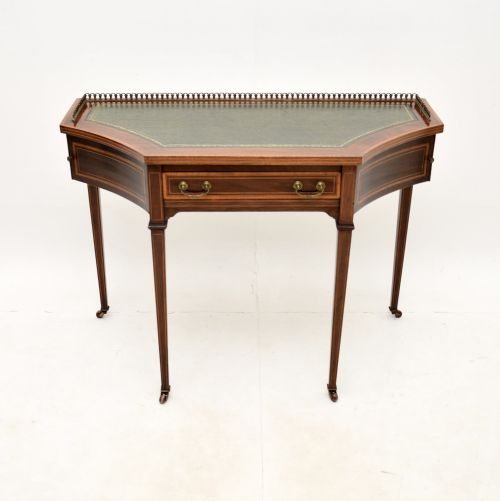
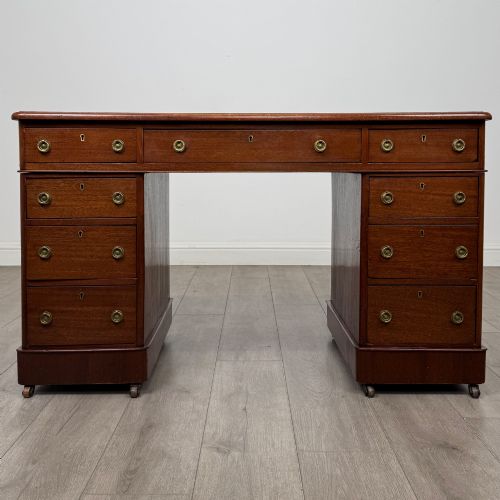
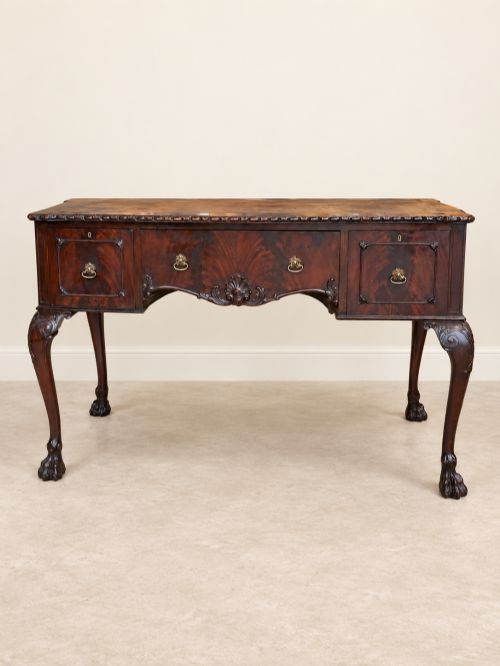
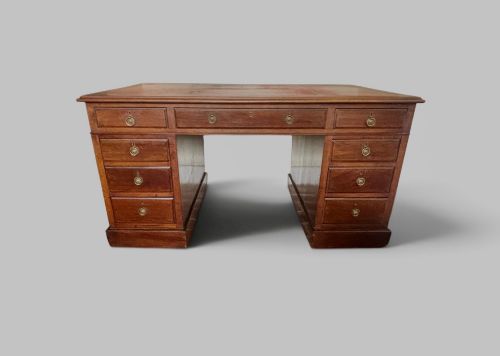
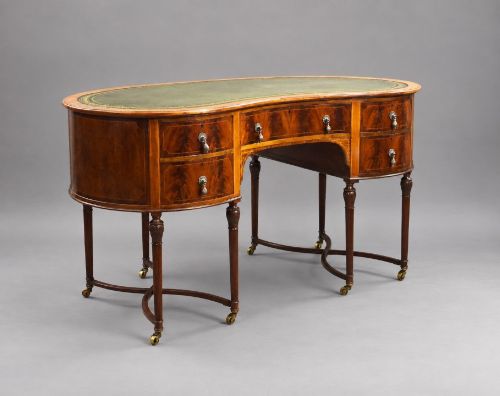
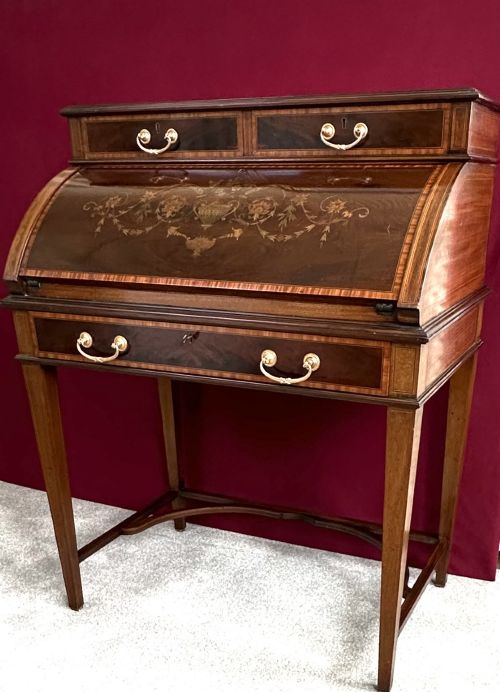
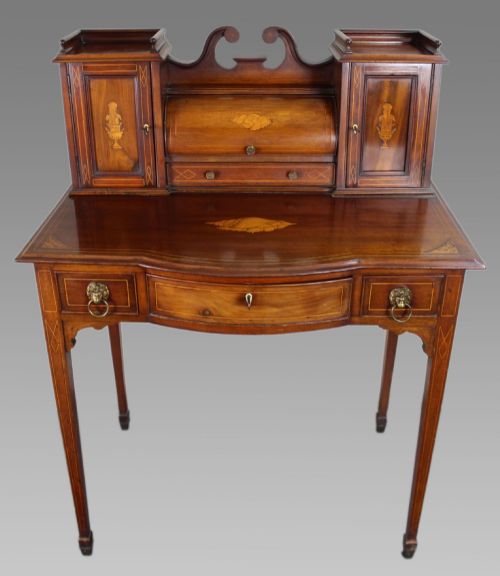
The selections span freestanding pedestal formats, ladies writing desks, kidney-shaped tables, and fall-front bureau variants. Most examples reflect the Edwardian period or late nineteenth-century revival styles inspired by Sheraton and Chippendale designs.
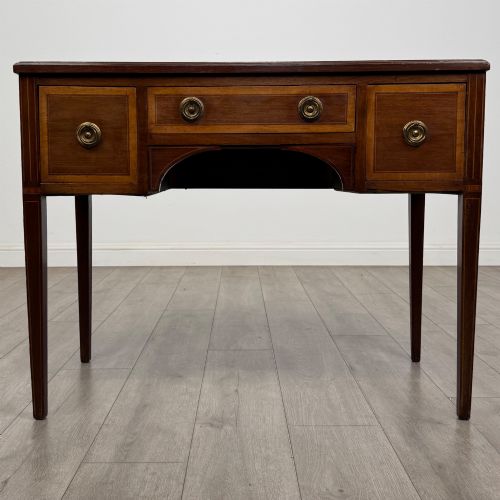
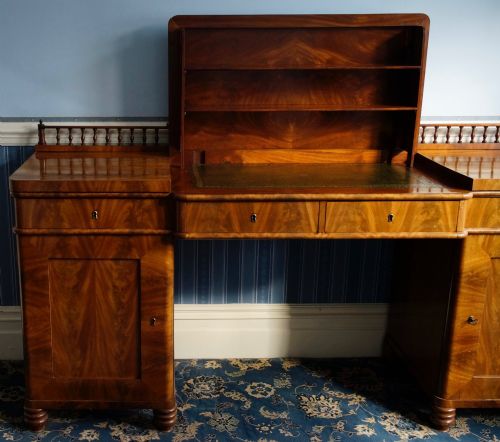
Buyers encounter everything from simple single-drawer tables to substantial kneehole pedestal desks featuring inlaid satinwood and leather writing surfaces. Each variant offers a distinct architectural response to domestic study and writing habits of the era.
How they were made
Makers utilised solid mahogany and flame mahogany veneers over secondary timbers, often framing the primary surfaces with delicate boxwood and satinwood stringing or marquetry inlay. Brass hardware, including original handles and casters, completes the structural assembly.
Writing surfaces are typically inset with dyed and tooled leather panels, while interiors feature dovetailed drawers, stationery compartments, and occasional concealed storage sections. The joinery relies on traditional techniques designed to ensure rigidity and long-term durability.
Edwardian Mahogany Writing Desk Retail Price Guide 2026
Typical asking prices for edwardian mahogany writing desk among the pieces listed under this phrase on Sellingantiques today, from the lower quarter to the upper quarter. They describe what is for sale here now, not the wider market.
Listings feature mahogany, satinwood, and boxwood construction paired with brass hardware and leather inserts across various revival styles.
What varies in quality
The degree of hand-finishing and the selection of timber dictate the standing of an individual piece, with figured and flame mahogany veneers showing superior grain movement. Delicately executed marquetry inlay and well-chosen contrasting woods indicate a higher tier of workshop production.
Originality of components, such as brass handles, leather inserts, and locking mechanisms, heavily influences the integrity of the desk. Pieces bearing traceable maker signatures or documented workshop origins hold a distinct position within the archive.
Heal and Son·Trollope and Sons·Edwards and Roberts·Maple and Co·Gillows
The Edwardian Mahogany Writing Desk Glossary
- Pedestal desk
- A freestanding desk comprising two supporting pedestals of drawers with a central connecting section. This form provides substantial storage beneath the main writing surface.
- Satinwood
- A durable, yellowish timber native to India and Sri Lanka, frequently used for contrasting stringing and banding on mahogany furniture. Its bright grain provides visual definition to drawer fronts and borders.
- Kneehole
- A recessed space beneath the desktop designed to accommodate the user's legs while seated. Smaller versions often feature a single central drawer positioned above this opening.
- Marquetry
- Decorative veneer patterns formed by fitting together small pieces of various woods and other materials. This technique creates pictorial or geometric motifs across tabletops and drawer fronts.
- Writing slide
- A pull-out board located just beneath the desktop to extend the available working area. These slides often feature inset leather surfaces matching the main desk.
Edwardian Mahogany Writing Desk: Frequently Asked Questions
How do I care for the leather top?
Clean the leather gently using a dry or slightly damp cloth, avoiding harsh chemical cleaners that can strip the natural dye. Apply a neutral leather wax periodically to maintain suppleness and prevent cracking.
Keep the desk away from direct sunlight and heat sources to protect the leather from fading and shrinkage. Using blotters during writing helps preserve the vintage surface texture.
Can I use an edwardian desk for daily work?
These desks accommodate laptops and modern writing materials comfortably, provided the working height matches your seating requirements. The compact proportions suit contemporary home studies and living spaces.
Care should be taken with heavy electronic equipment to protect the antique veneer surfaces. Utilising separate stands or mats helps prevent surface scratching.
How do I distinguish Edwardian from Victorian desks?
Edwardian pieces generally feature lighter framing, brighter inlay work, and more restrained neoclassical revival motifs inspired by Sheraton and Hepplewhite designs. The overall aesthetic prioritises airiness and delicate proportions.
Victorian counterparts tend to be heavier in mass, employing darker finishes, robust pedestals, and more assertive architectural carving. The construction emphasises structural solidity over slender elegance.