
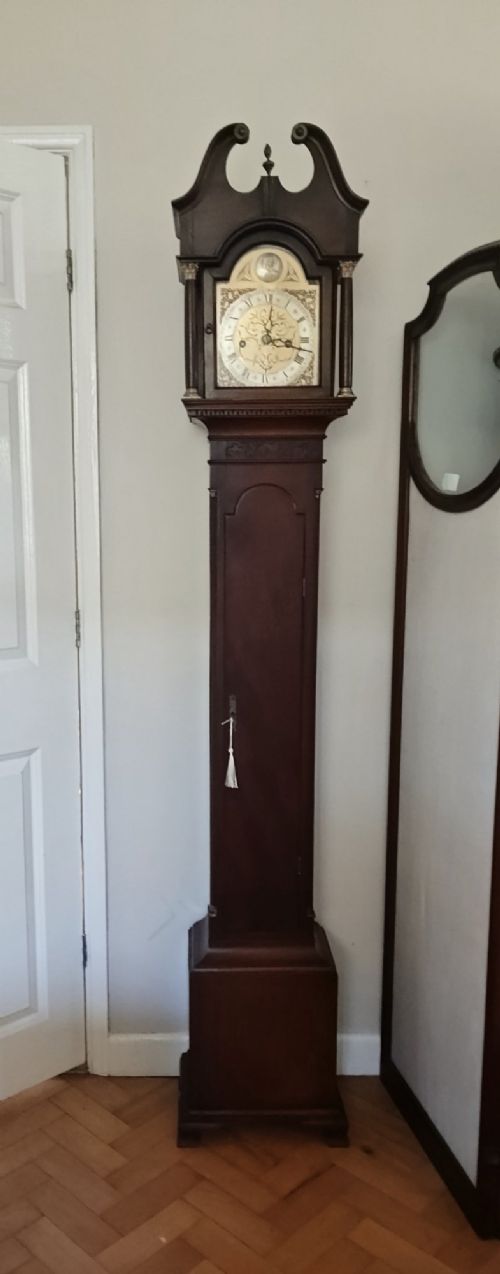
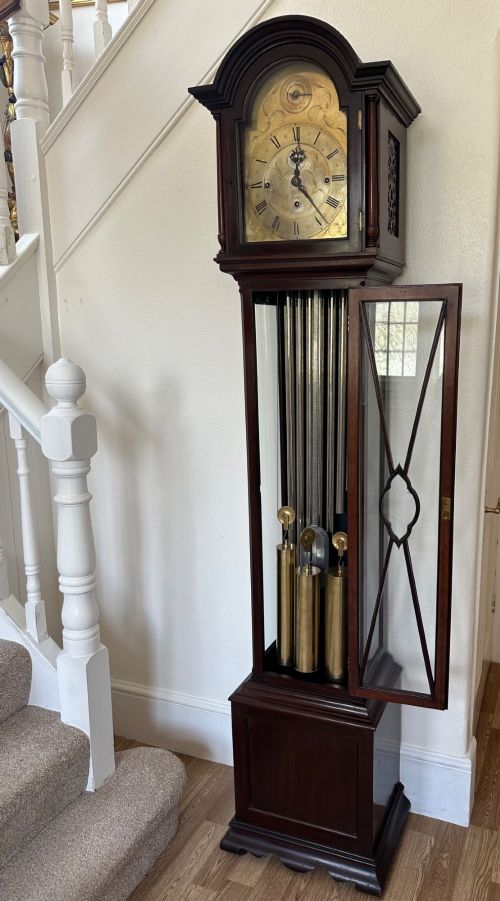


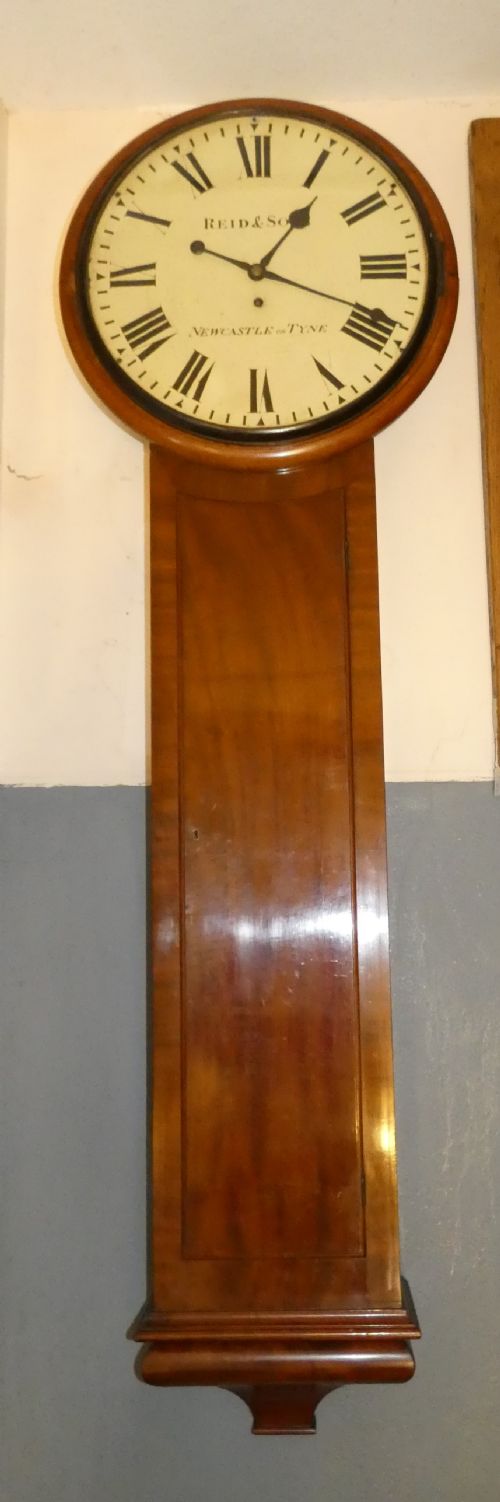


Edwardian Mahogany Grandfather Clock
An edwardian mahogany grandfather clock brings architectural presence and mechanical precision into a room through rich timber and chiming movements.

Edwardian Mahogany Grandfather Clock
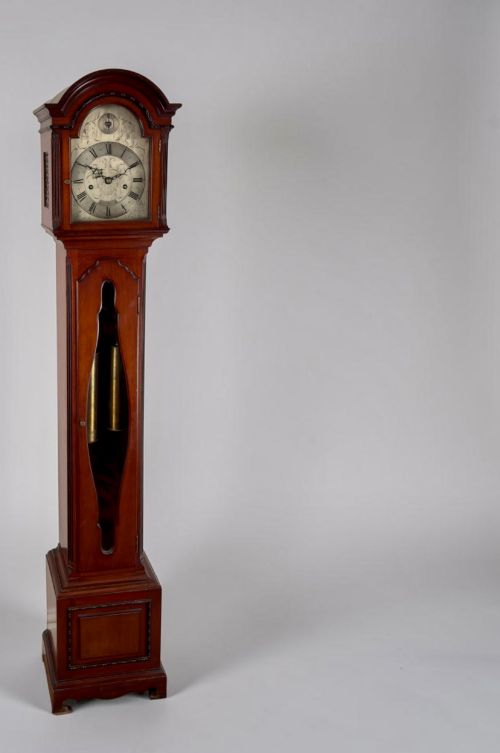
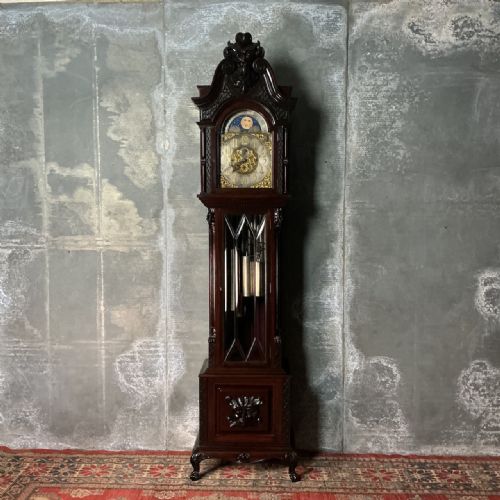
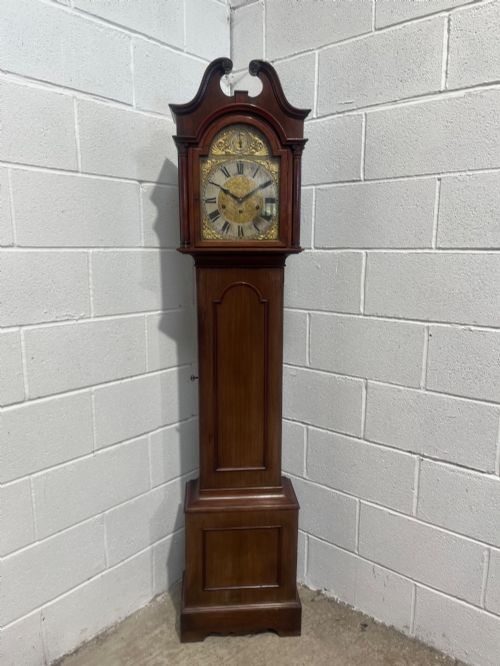
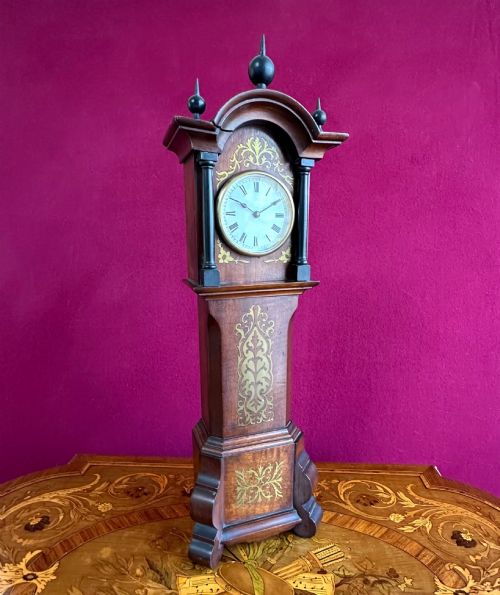
When searching for an edwardian mahogany grandfather clock, buyers encounter tall floor-standing timepieces spanning full-sized cases to more compact grandmother and miniature formats. The selection combines genuine Edwardian period examples with pieces influenced by Georgian and Chippendale revival styles.
Most entries showcase solid or veneered mahogany cases, frequently enhanced by satinwood inlay, marquetry, or string banding around glass-fronted doors. Brass dials, silvered chapter rings, and visible pendulums appear regularly alongside movement types ranging from simple time-only setups to complex musical mechanisms.
These floor clocks originate primarily from the early twentieth century, though the broader category draws upon nineteenth-century traditions and earlier design revivals. Buyers find both monumental chiming towers and slim, restrained proportions suited to domestic interiors.
Materials and Mechanics
Cabinetmakers utilised rich mahogany timbers, sometimes selecting burr or figured grains for the trunk doors and hoods, complemented by contrasting satinwood inlay and stringing. Glass panels protect the dial face while offering a view of the swinging pendulum and weighted or spring-driven mechanisms within.
Horologists fitted these tall cases with intricate brass dials, steel hands, and specialised mechanical movements capable of quarter striking, tubular bell chiming, or playing multiple tunes. Heavier architectural examples rely on triple-weight or three-train gear trains to drive the musical complications.
Some miniature models shrink the grand floor-standing tradition down to tabletop proportions, proving that stately timekeeping takes up remarkably little floor space.
Distinctions in Quality
The standard of a tall clock rests on the crispness of its cabinetwork, from the depth of carved architectural details to the precision of satinwood and marquetry inlay. Superior examples display balanced proportions, select timber figuring, and uncompromised structural integrity throughout the hood and trunk.
Mechanical complexity and maker reputation elevate certain pieces above standard production, particularly those housing multi-train musical movements or working tubular bells. The harmony between the original dial execution and the casework determines the overall standing of the clock.
Gillett & Johnston of Croydon·Edward Shepley of Manchester·Lister & Sons·Camerer Cuss & Co·Dent of London·Maple & Co of London·Cottell Brothers Swindon
The Edwardian Mahogany Grandfather Clock Glossary
- Longcase clock
- A tall pendulum clock enclosed in a wooden case that stands directly on the floor. This traditional term encompasses both grandfathers and smaller grandmother variants.
- Grandmother clock
- A smaller, more slender version of the standard tall case clock produced during the twentieth century. These scaled-down pieces fit easily beneath lower ceiling heights.
- Quarter chiming
- A movement mechanism that strikes the bells every fifteen minutes to mark the progression of time. Such systems often feature multiple weights or trains.
- Satinwood inlay
- A decorative technique using contrasting light-colored exotic wood to form geometric or floral patterns on darker mahogany surfaces. It defines much of the Edwardian aesthetic.
- Regulator clock
- A precision timekeeper designed for exact time measurement, often featuring a simplified dial layout with a prominent sweep seconds hand.
Edwardian Mahogany Grandfather Clock: Frequently Asked Questions
What is a grandmother clock?
A grandmother clock is a scaled-down version of the traditional longcase, built with shorter and slimmer proportions to suit smaller rooms. They maintain the mechanical movements and mahogany construction of their larger counterparts.
These compact timepieces appeared frequently during the Edwardian era, offering the presence of a tall case without dominating domestic floor space.
How do three-train movements work?
A three-train movement utilises separate gear trains for the timekeeping, the hour striking, and the musical chime melodies. Each train operates via its own dedicated weight or spring barrel.
This complex mechanical setup allows the clock to play full tunes and quarter chimes automatically in addition to marking the standard hours.
Where should I place a tall clock?
Tall clocks require a stable, level floor surface away from direct sunlight, excessive moisture, and heavy vibrations to maintain accurate timekeeping. Placing them against a secure interior wall ensures the case remains plumb.
Proper placement also protects delicate mahogany veneers and allows the acoustic resonance of the chimes to fill the room correctly.
How do I identify an Edwardian period piece?
Edwardian timepieces typically combine early twentieth-century manufacturing standards with revival aesthetics drawn from Georgian and Chippendale design traditions. Look for characteristic mahogany cases decorated with light satinwood stringing or marquetry inlay.
Checking movement signatures, dial styles, and construction techniques helps distinguish genuine period production from later reproductions.