

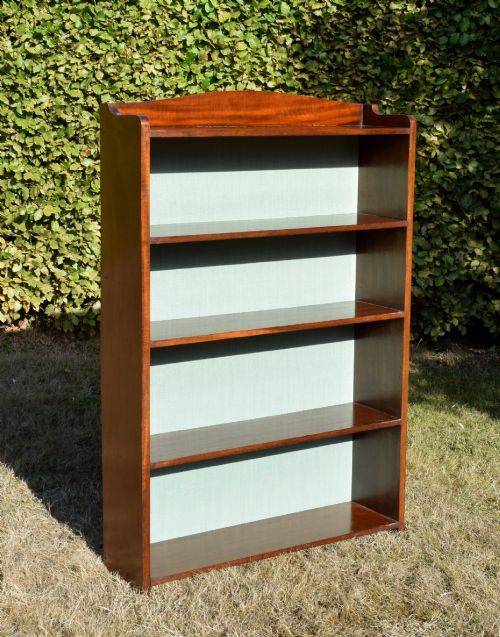
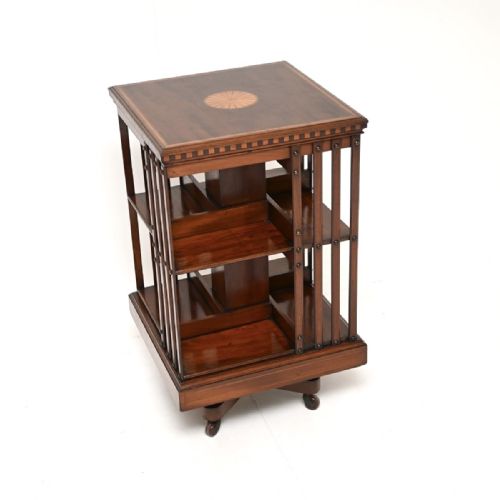
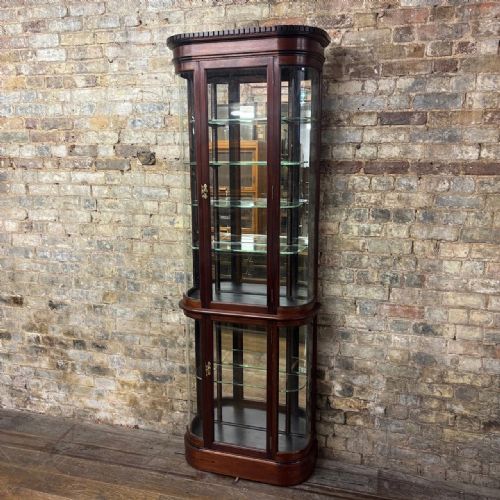
Edwardian Mahogany Display Shelves
Edwardian mahogany display shelves combine practical storage with refined timber grain, bringing structured elegance to any interior.
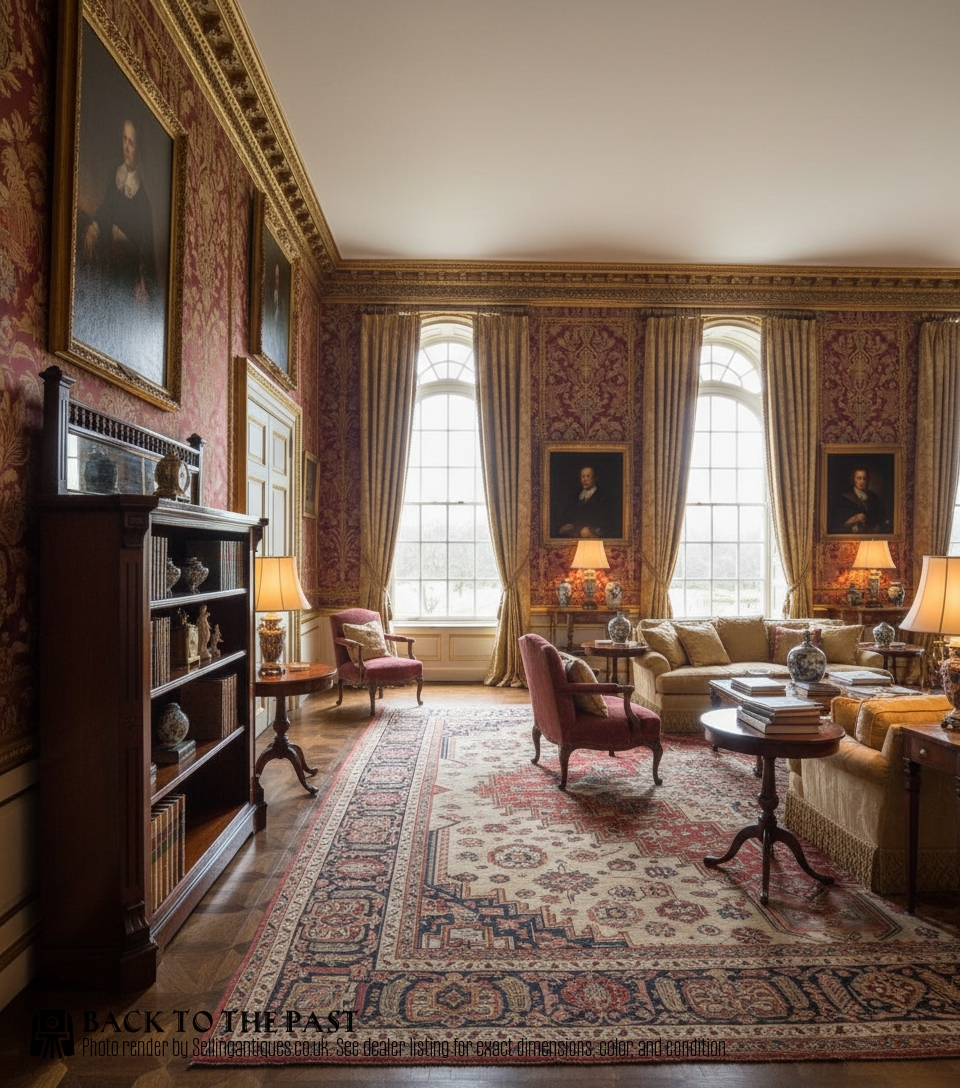
Edwardian Mahogany Display Shelves
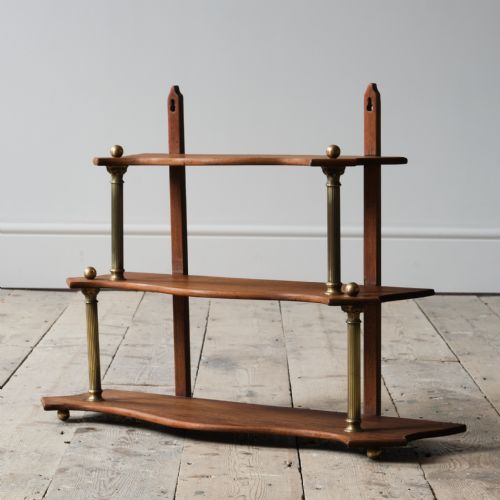
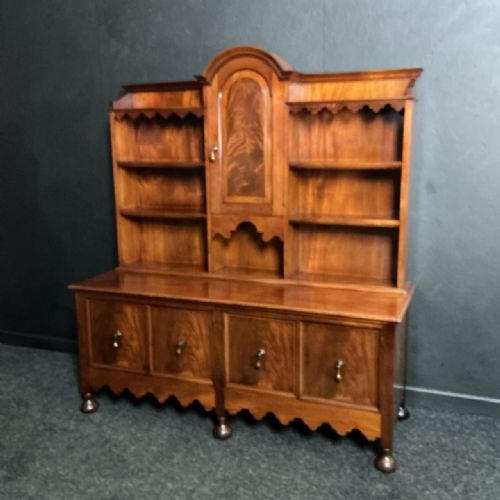
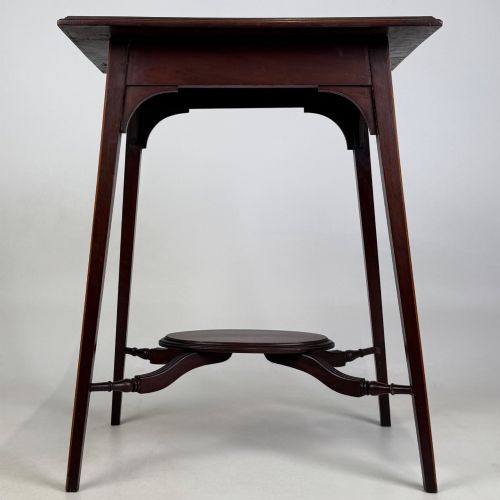
The selection ranges from compact wall-mounted shelves to large breakfront bookcases and corner cabinets. Pieces from the Edwardian period sit alongside late Victorian items and later twentieth-century interpretations.
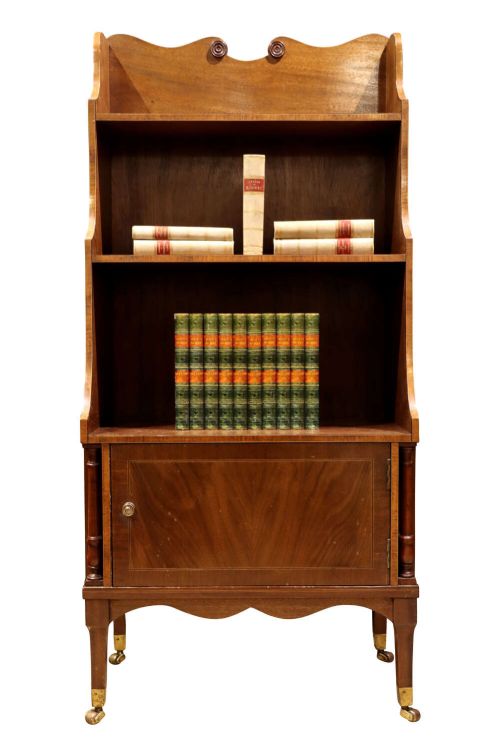
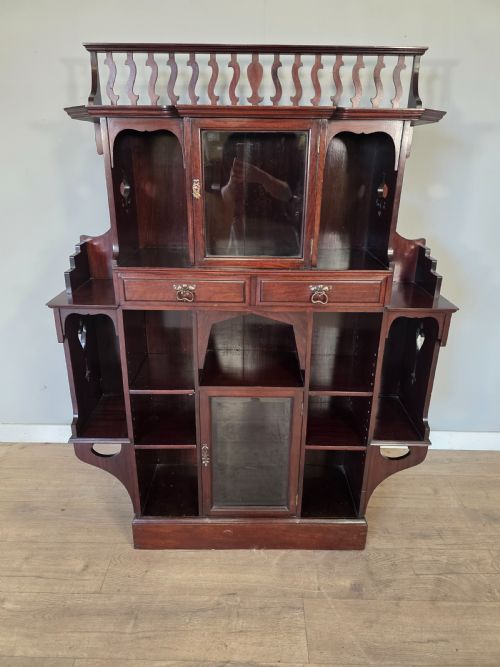
Forms vary from simple tiered wall shelves to sophisticated revolving bookcases and waterfall cabinets fitted with glass doors. The overarching design relies on clean structural lines combined with accessible display space.
Materials and Construction
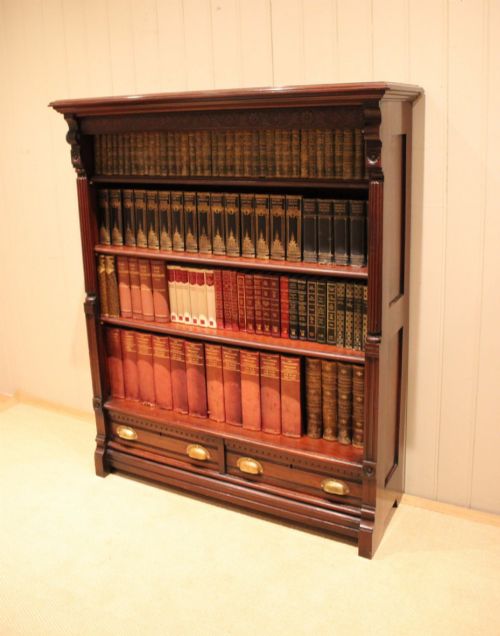
Structural methods involve sturdy timber joinery designed to support heavy volumes and display items over decades of use. Cabinets often feature adjustable shelving systems alongside panelled or upholstered backs.
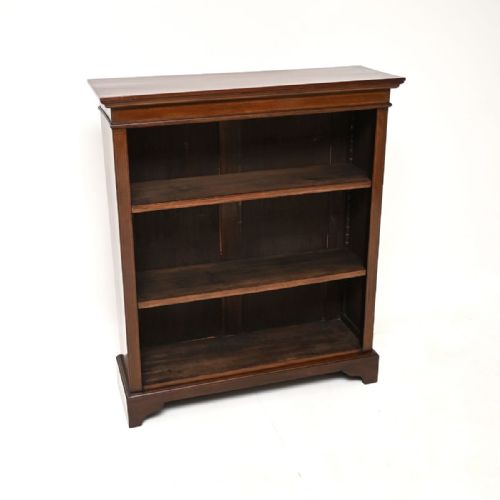
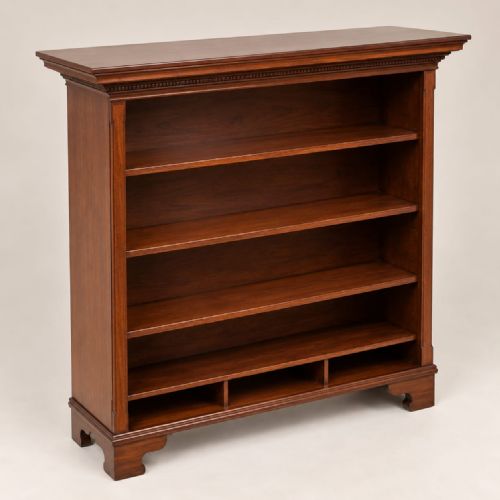
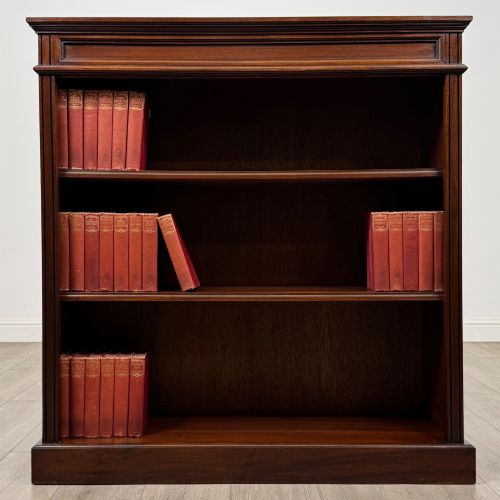
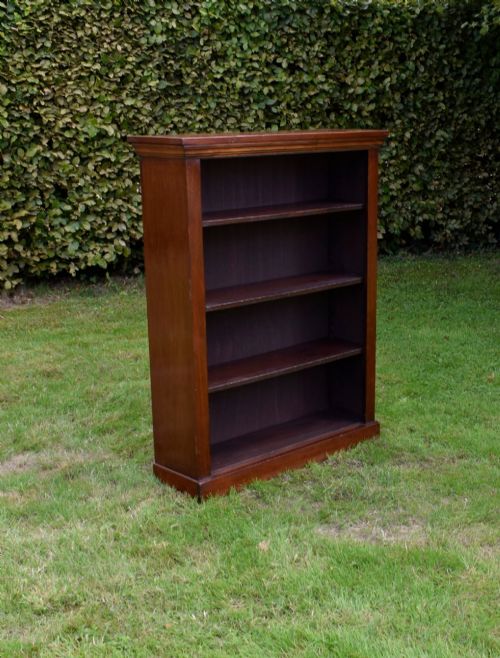
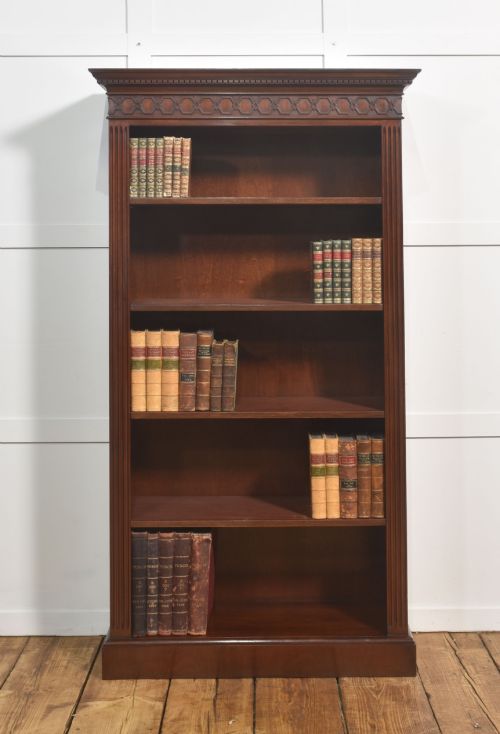
The archive shows that Edwardian open bookcases and bow-sided display cabinets are among the forms handled.
Judging Quality and Execution
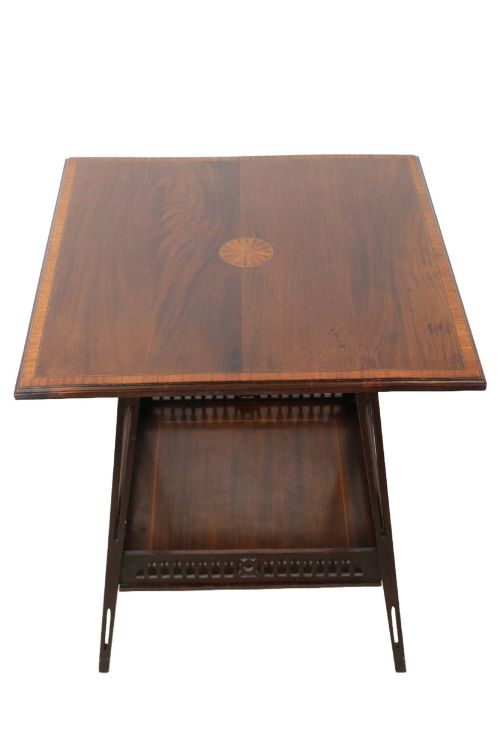
Quality reveals itself in the choice of mahogany timber and the precision of the inlaid satinwood or boxwood details. Finer examples display balanced proportions and crisp execution in architectural cornices and turned supports.
The integration of functional elements such as smooth-running drawers, adjustable shelf mechanisms, and solid brass castors distinguishes superior workshops from standard commercial production.
Trevor Page & Co·Edwards & Roberts·Globe Wernicke
The Edwardian Mahogany Display Shelves Glossary
- Edwardian
- Pertaining to the reign of King Edward VII, spanning from 1901 to 1910, though the aesthetic style often extends into the early 1920s. Furniture from this period generally exhibits lighter proportions than heavy Victorian designs.
- Mahogany
- A durable tropical hardwood prized for its rich reddish-brown colour and stable grain pattern. It serves as the primary structural and surface material for these shelves.
- Waterfall Bookcase
- A set of open shelves where each tier steps back progressively from the bottom to the top, creating a profile resembling descending water. This form appeared frequently in late nineteenth and early twentieth-century cabinets.
- Inlay
- A decorative technique where pieces of contrasting wood, such as satinwood or boxwood, are inserted into recesses flush with the mahogany surface. This method creates geometric borders or floral motifs.
- Whatnot
- A piece of freestanding furniture consisting of multiple open shelves supported by slender pillars, designed for displaying ornaments. These versatile items date back to the nineteenth century and recur in later revivals.
Edwardian Mahogany Display Shelves: Frequently Asked Questions
How do I date these shelves?
Dating relies on stylistic clues, construction methods, and materials recorded in the specific piece. Edwardian items tend to show lighter framing and subtle inlay compared to heavier Victorian counterparts.
Marks, labels, or stamps from known makers can also narrow down the manufacturing decade precisely.
Are the shelves adjustable?
Many open bookcases and display cabinets feature adjustable shelving supported by wooden ratchets or metal pins. This allows owners to alter shelf heights for varying book sizes.
Fixed shelves do appear in smaller wall-hanging units and specific antique configurations.
How should I clean mahogany?
Maintenance requires dusting with a soft, dry cloth to protect the polished timber surface. Avoid harsh chemical sprays that can degrade the traditional polish.
Applying a quality beeswax periodically helps nourish the mahogany and maintain its deep lustre.
Can wall shelves support heavy books?
Wall-hanging shelves suit lighter volumes and decorative ornaments rather than heavy folios. Secure wall fixings into solid studs or masonry are essential for safe weight support.
Heavier collections are best housed in floor-standing bookcases or sectional units.