
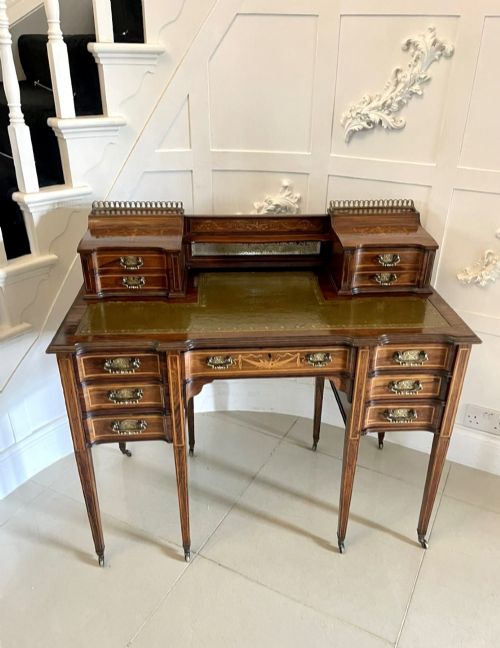
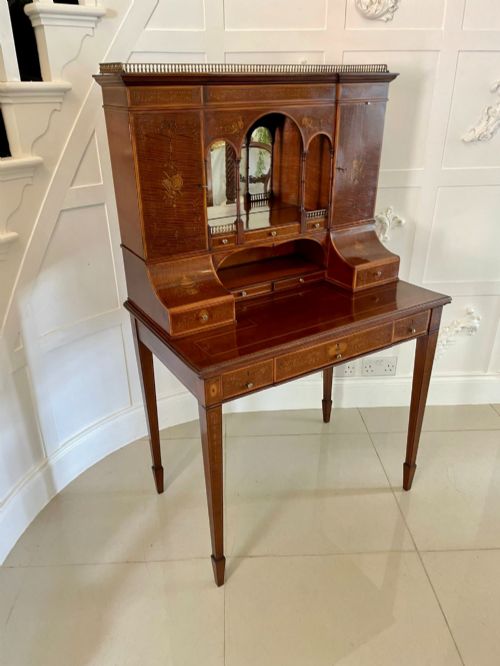
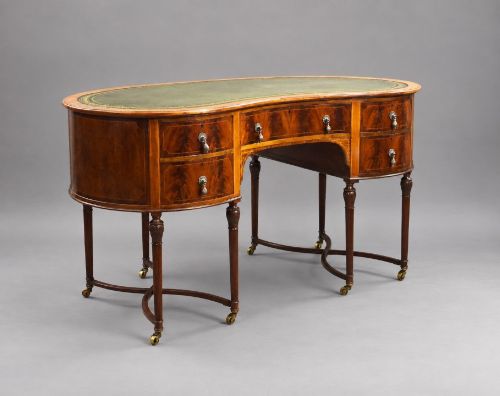
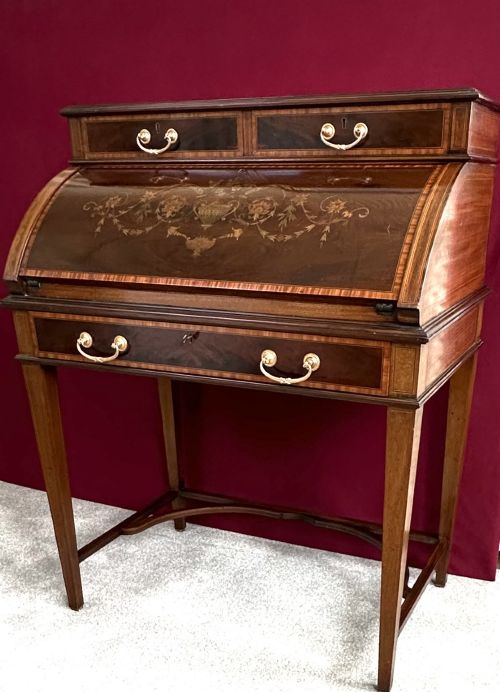

Edwardian Mahogany Desk Bureau
When you search for an edwardian mahogany desk bureau, you find fitted writing furniture that combines practical storage with refined cabinet-making.
Edwardian Mahogany Desk Bureau
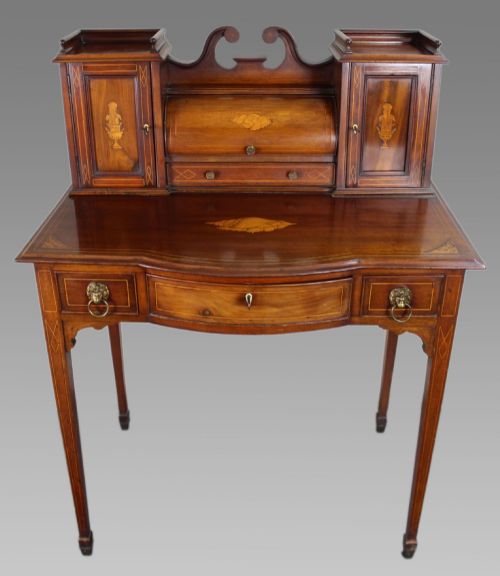
An edwardian mahogany desk bureau brings together drop-front writing compartments, internal pigeonholes, and small drawers enclosed within a compact timber frame. The versions most commonly met on this page date from the early twentieth century and adopt revival styles such as Sheraton and Chippendale alongside simpler Edwardian forms.
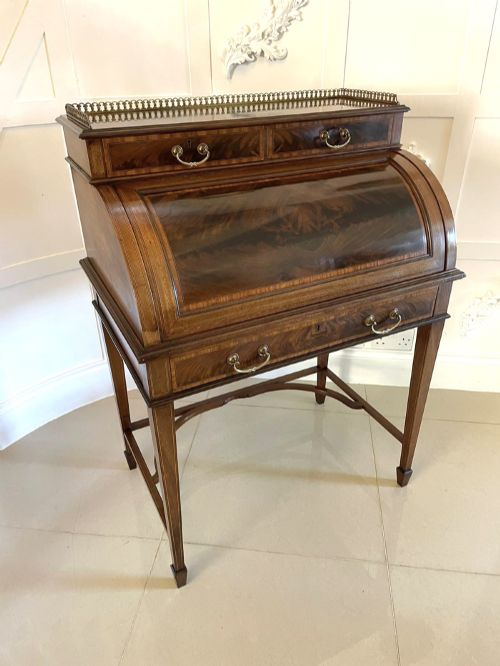
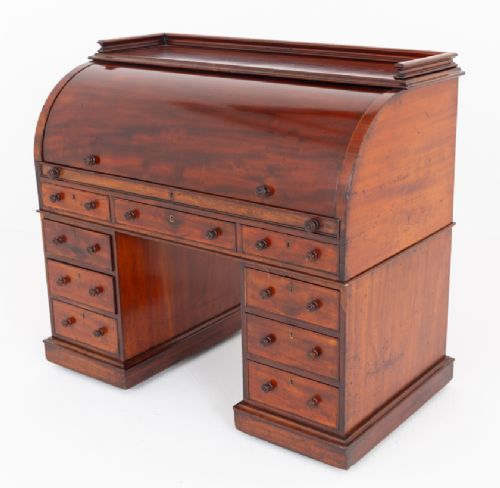
Makers of the period produced fall-front bureaux, cylinder desks, and bureau bookcases that balanced domestic utility with decorative cabinet work. These pieces served primarily for correspondence and household administration in the drawing room or study.
How They Were Made
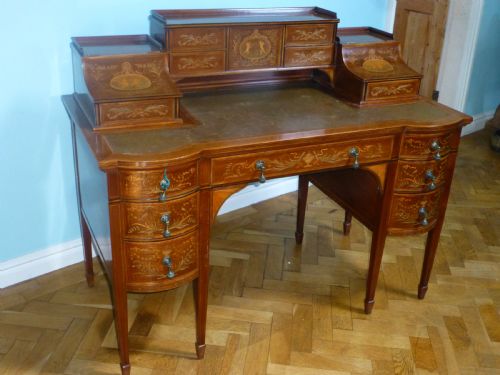
Cabinet-makers utilised solid mahogany and flame mahogany veneers laid over secondary timbers, often accentuating the surfaces with contrasting boxwood and satinwood inlay. Brass handles, escutcheons, and leather writing inserts completed the construction of these fitted desks.
Joinery techniques relied on dovetail joints for drawer construction and precise framing to house internal compartments and sliding surfaces. Marquetry and painted details frequently decorated the fall fronts and panel doors of finer examples.
Many of these small desks conceal tiny secret drawers behind pigeonholes, designed for letters that required absolute discretion.
What Varies in Quality
The standard of a bureau rests upon the selection of timber, particularly the grain figure visible in the flame mahogany veneers and the crispness of the boxwood stringing. Superior examples display meticulous attention to the internal arrangement, incorporating well-fitted secret drawers and finely turned small knobs.
Workshop origin also separates grades of production, with documented pieces from notable makers exhibiting superior structural integrity and refined proportions compared to simpler commercial output.
Maple and Co·Edwards and Roberts·Tudor and Burrey·Gillows
The Edwardian Mahogany Desk Bureau Glossary
- Bureau
- A writing desk featuring a sloping fall-front that opens to reveal a fitted interior of small drawers and pigeonholes. This form provides a concealed workspace that can be closed securely when not in use.
- Flame mahogany
- Timber cut from the fork of the mahogany tree to produce a distinctive, flickering grain pattern. Cabinet-makers used these dramatic veneers on prominent surfaces like fall fronts.
- Satinwood
- A pale, dense timber utilised for contrasting stringing, crossbanding, and decorative inlay work. It created bright geometric borders against the darker mahogany background.
- Secretaire
- A piece of furniture containing a drawer or compartment that pulls down or drops open to form a writing surface. It often masquerades as a standard chest of drawers or bookcase.
- Stringing
- Thin lines of contrasting wood inlaid into the surface of furniture to form borders and panels. This technique defined the edges of drawer fronts and desk tops.
Edwardian Mahogany Desk Bureau: Frequently Asked Questions
What is an edwardian mahogany desk bureau?
It is a compact writing cabinet featuring a sloping fall-front that conceals internal drawers and pigeonholes. These pieces were constructed around the turn of the twentieth century in mahogany.
They combine practical storage with decorative inlay, often drawing inspiration from earlier Georgian and Sheraton designs.
How do I use a bureau desk?
The sloping front drops down to form a flat writing surface supported by automatic lopers or desk arms. Inside, you find small compartments designed for stationery and letters.
When writing is finished, the surface closes up to hide papers and maintain a tidy room.
How do I date an edwardian bureau?
Edwardian pieces date from roughly 1901 to 1910, showing lighter proportions and brighter mahogany tones than heavy Victorian furniture. They frequently incorporate satinwood inlay and revival styling.
Construction details like machine-cut dovetails or specific maker stamps can also help confirm the manufacturing era.
What is the difference between a bureau and a bureau bookcase?
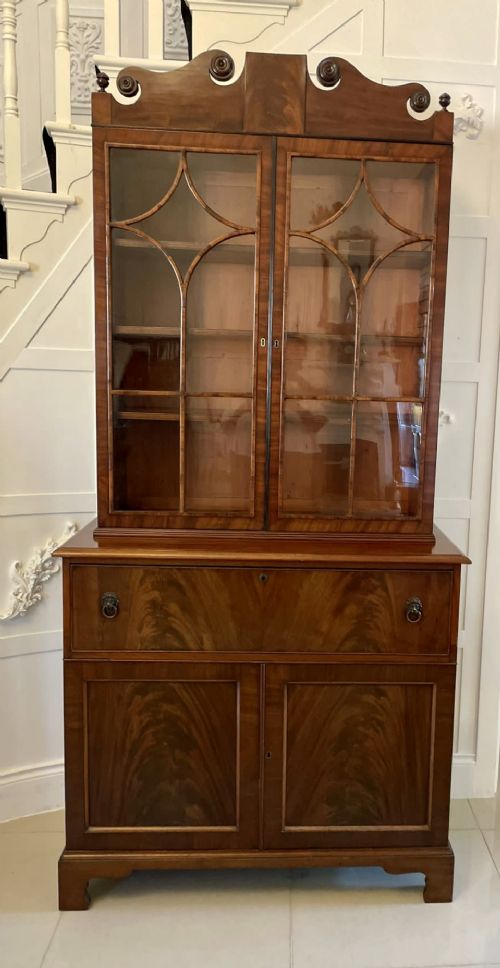
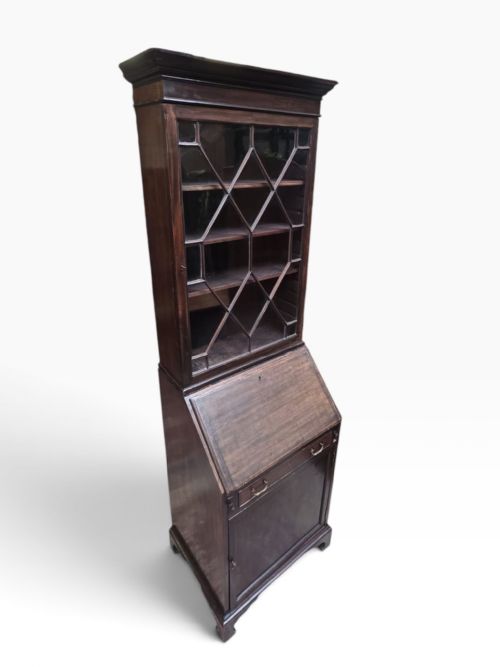
A standard bureau consists of the desk base with a fall-front writing compartment and lower drawers. A bureau bookcase adds a glazed or panelled shelving cabinet directly on top.
Both pieces use mahogany construction, but the bookcase version offers additional vertical storage for books.