
Edwardian Mahogany Bedside Table
An edwardian mahogany bedside table brings compact utility and rich timber grain to the bedside, rooted in the classic forms of the early twentieth century.
Edwardian Mahogany Bedside Table
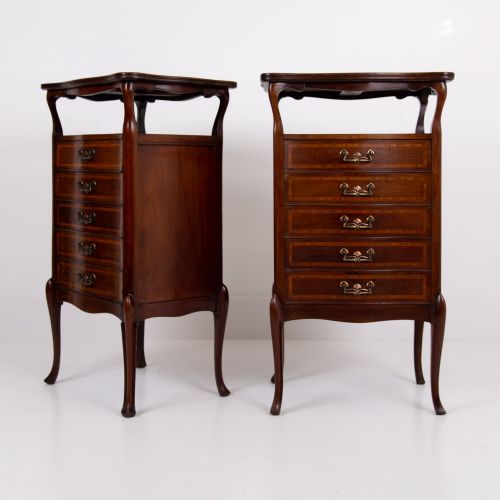
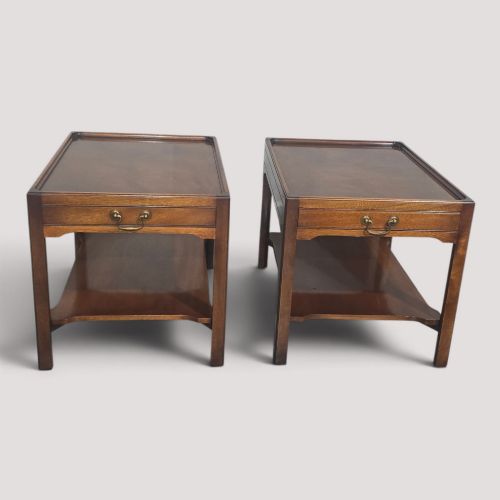
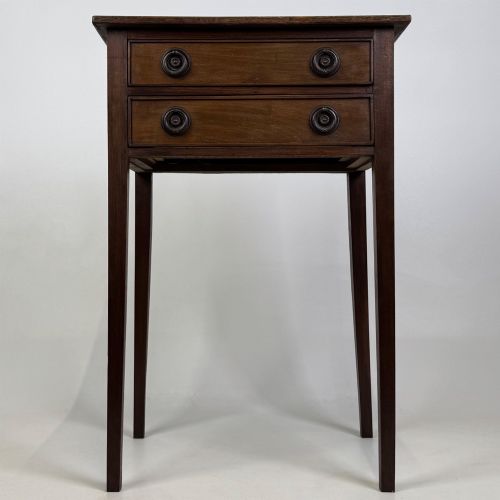
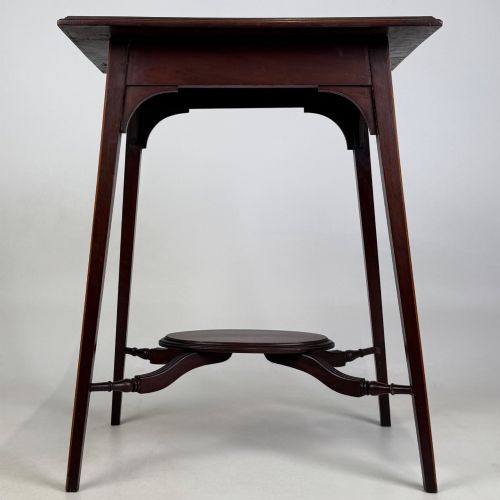
When you search for an edwardian mahogany bedside table, you encounter a selection of compact bedside furniture spanning cabinets, chests, cupboards, and open side tables. These pieces originated primarily during the Edwardian period and the early twentieth century, drawing heavily on earlier Victorian utility and Georgian proportions.
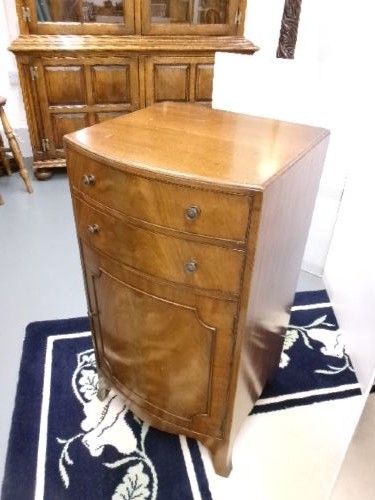
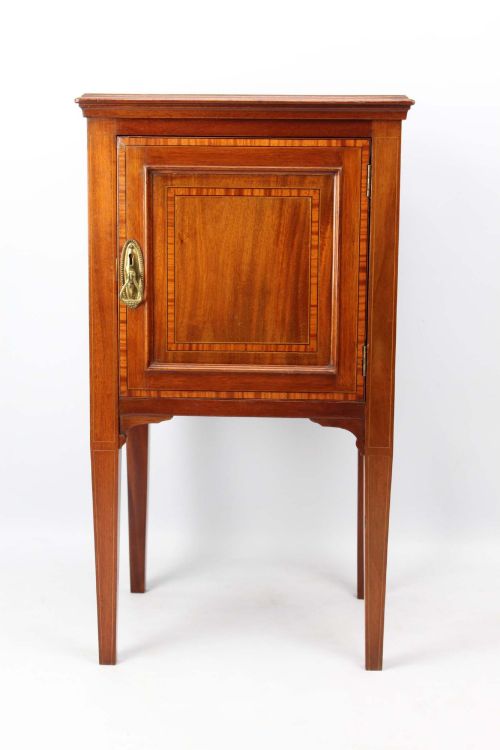
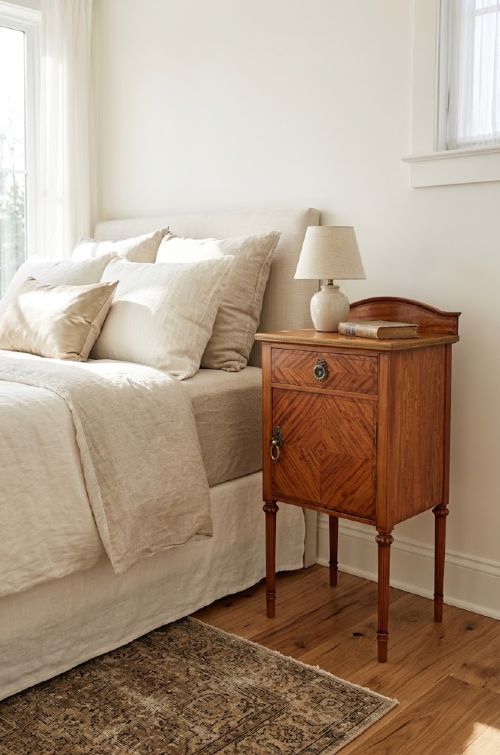
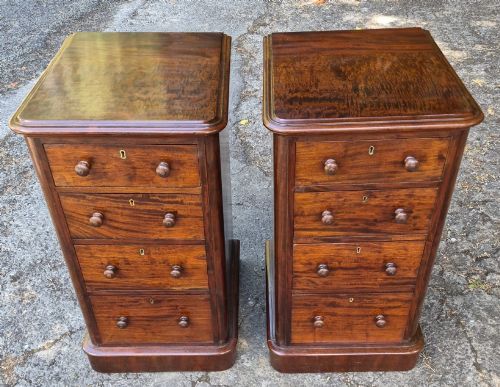
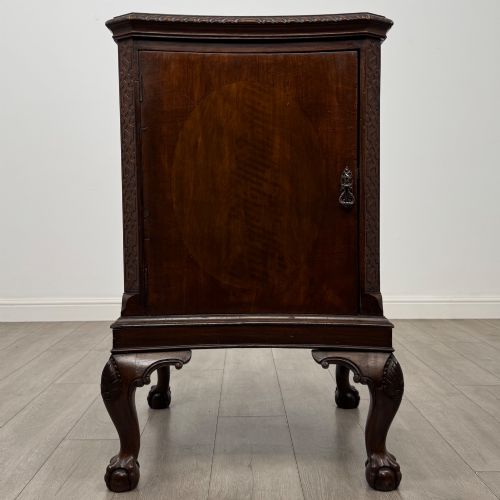
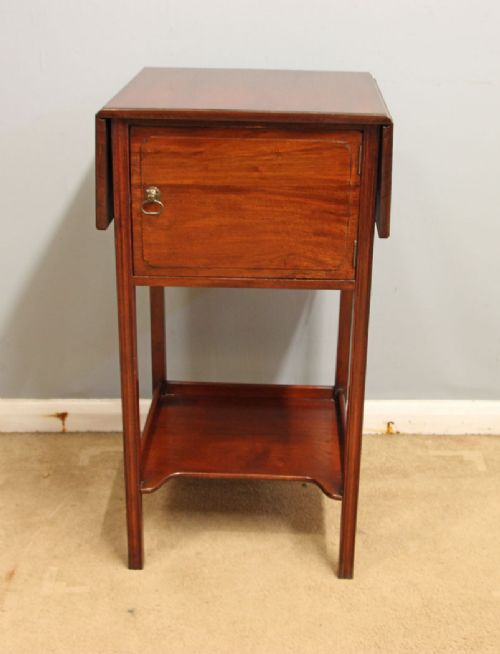
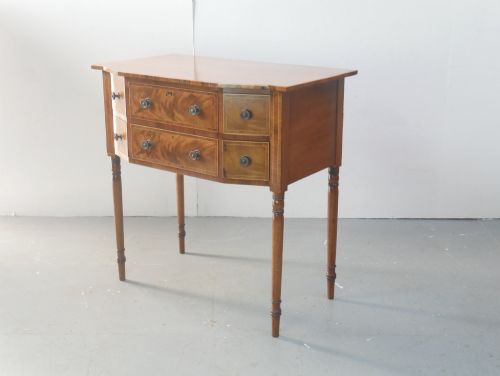
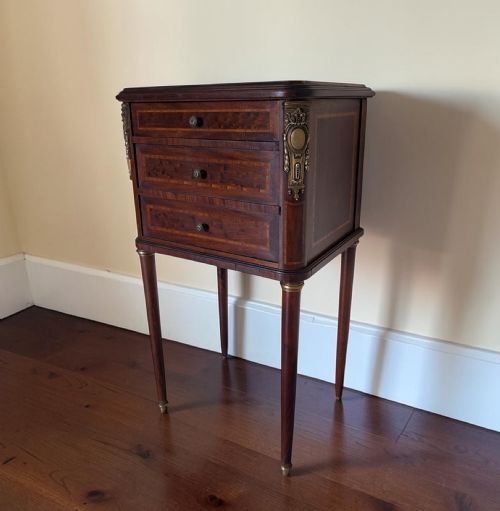
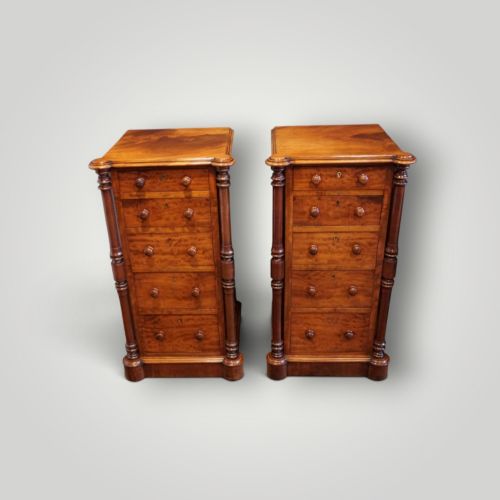
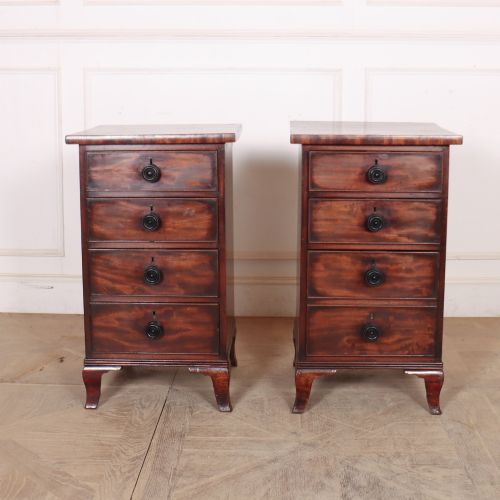
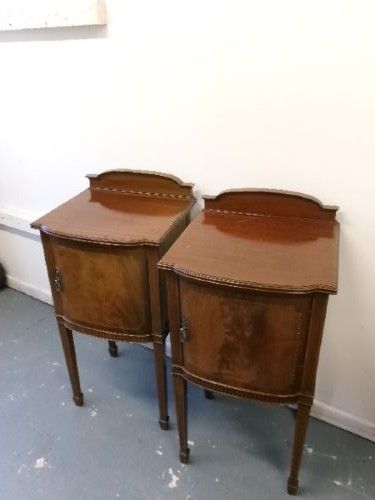
The version you are most likely to meet on this page is the enclosed bedside cabinet or pot cupboard, often featuring a single door above or beside small drawers. Many examples appear as matched pairs, incorporating drop leaves, bow fronts, or slender legs suited to smaller bedroom spaces.
What varies in quality
The hierarchy of quality rests primarily on the choice of timber and the precision of decorative inlay. Pieces displaying carefully matched flame mahogany veneers and intricate satinwood or boxwood marquetry stand apart from plain, utilitarian alternatives.
Proportion and structural integrity further divide the range, as neatly scaled cabinets with original brass hardware and well-fitted doors command greater attention than heavier, altered washstands or heavily restored pieces.
Several compact bedside cabinets trace their lineage directly to enclosed chambers once built specifically for Victorian night pots.
Warings Liverpool
The Edwardian Mahogany Bedside Table Glossary
- Flame mahogany
- A veneer cut from the fork of the mahogany tree where the branch meets the trunk, producing a distinctive flickering flame pattern. This decorative grain was favoured by makers seeking a dramatic visual impact on drawer fronts and cabinet doors.
- Inlay
- A technique where pieces of contrasting timber such as satinwood, boxwood, or rosewood are inserted into recesses cut into the mahogany ground. It creates linear borders or complex pictorial motifs typical of Sheraton Revival and Edwardian pieces.
- Pot cupboard
- A dedicated bedside cabinet originally designed to enclose a chamber pot behind a single panelled door. These compact cupboards frequently include a small internal shelf and surface gallery.
- Bow front
- A convex, outwardly curved front elevation found on selected cabinets and chests. This curved form softens the corners of bedside furniture and showcases the flexibility of mahogany veneers.
- Sheraton Revival
- A decorative style popular around nineteen hundred that reinterpreted the lighter, neoclassical designs of Thomas Sheraton. Pieces in this style utilise delicate legs, subtle stringing, and restrained classical ornamentation.
Edwardian Mahogany Bedside Table: Frequently Asked Questions
How do I tell an Edwardian table from a Victorian one?
Edwardian tables generally exhibit lighter proportions, brighter mahogany tones, and more delicate inlaid stringing in boxwood or satinwood. Victorian predecessors tend to be heavier in build, utilising denser timbers and simpler, darker surfaces.
Examining the internal drawer construction and secondary woods often helps confirm the manufacturing period.
Were bedside tables originally made in pairs?
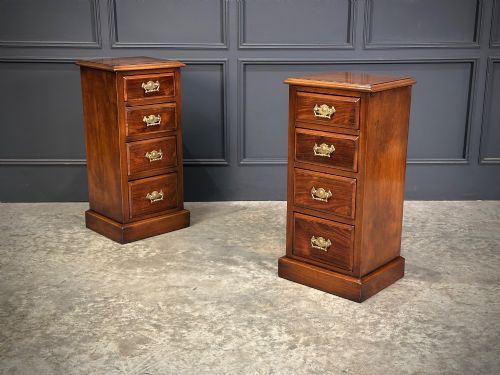
Makers produced both single bedside cabinets and matched pairs, particularly for larger Edwardian and Victorian bedrooms. Pairs often exhibit symmetrical wood grain or mirrored inlay patterns across the two doors or drawer fronts.
Finding a true matched pair remains a notable feature for symmetrical bedroom placement.
How do I care for mahogany bedside furniture?
Maintain mahogany surfaces by dusting gently with a dry, soft cloth and avoiding direct sunlight that can fade the rich timber tones. Keep the wood away from extreme heat sources to prevent veneer lifting.
Occasional application of quality beeswax helps nourish the polish and preserve the natural grain.