
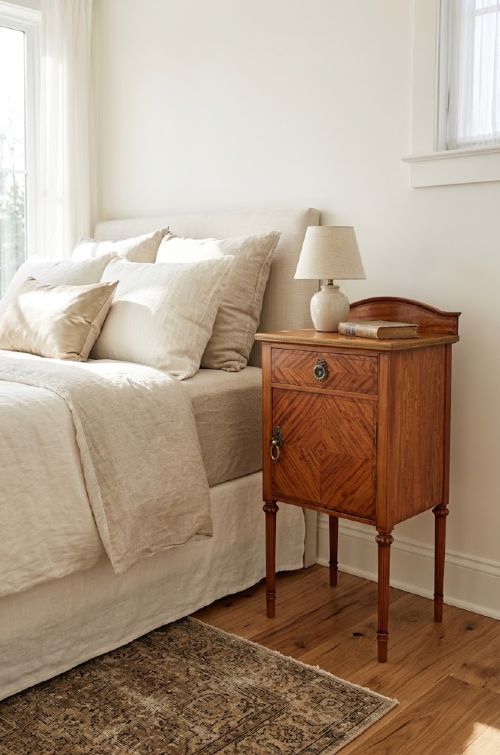
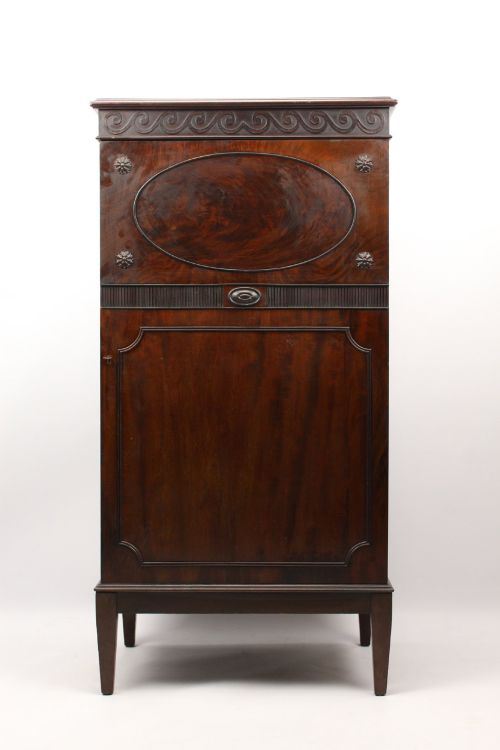
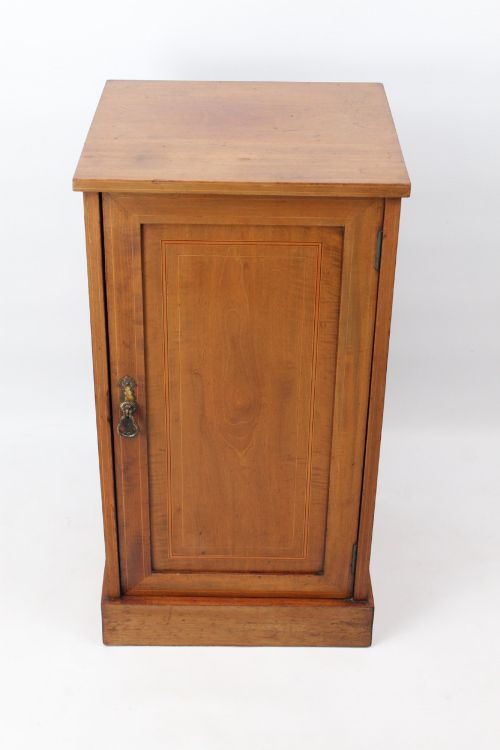
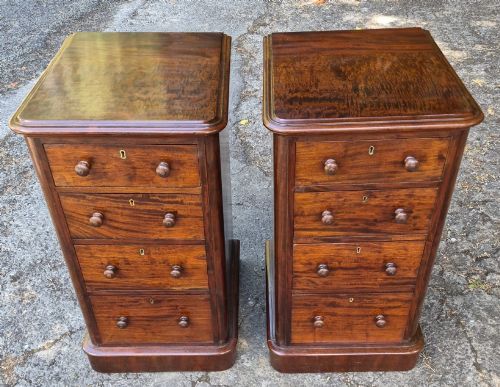

Edwardian Mahogany Bedside Cupboard
When you search for an edwardian mahogany bedside cupboard, you look for a compact timber cabinet designed to sit beside a bedroom berth.

Edwardian Mahogany Bedside Cupboard
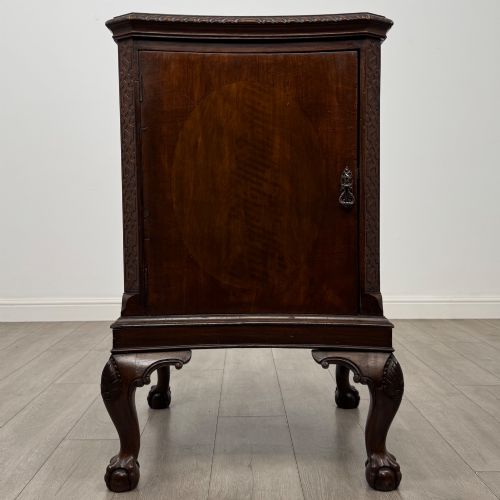
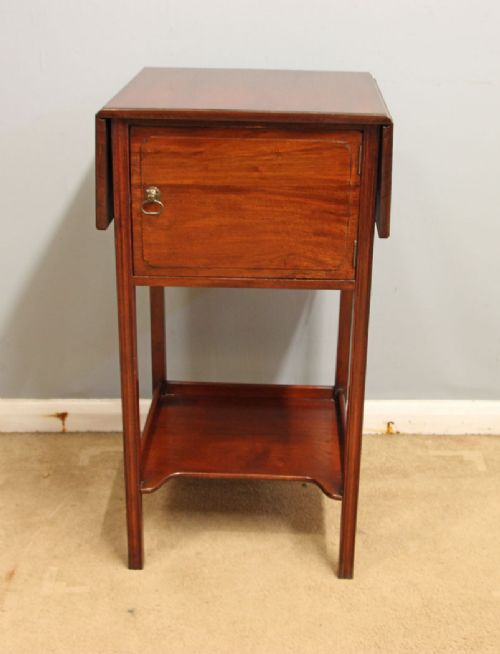
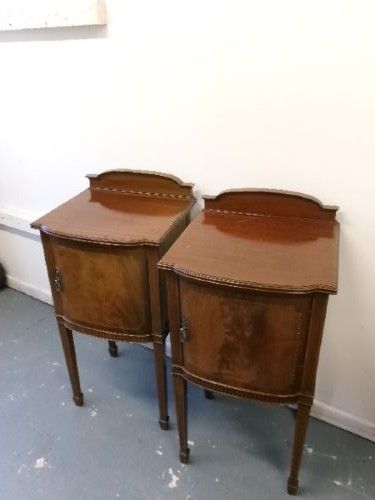
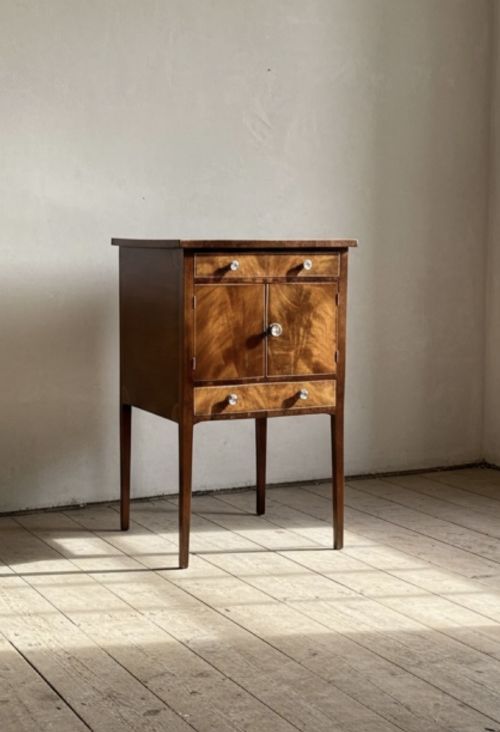
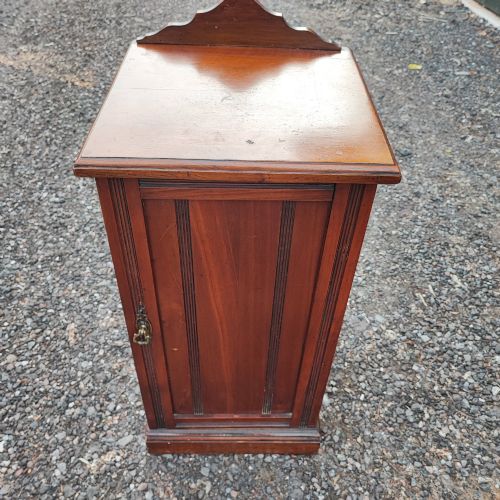
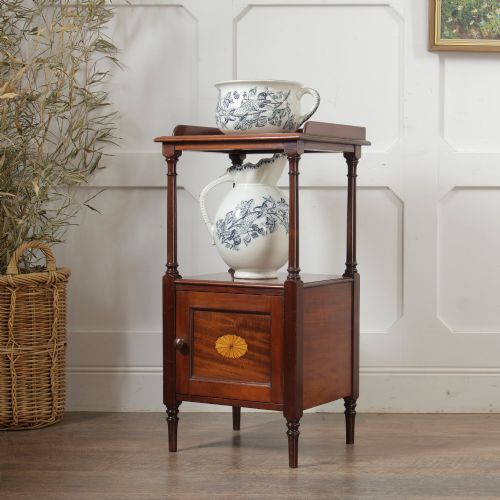
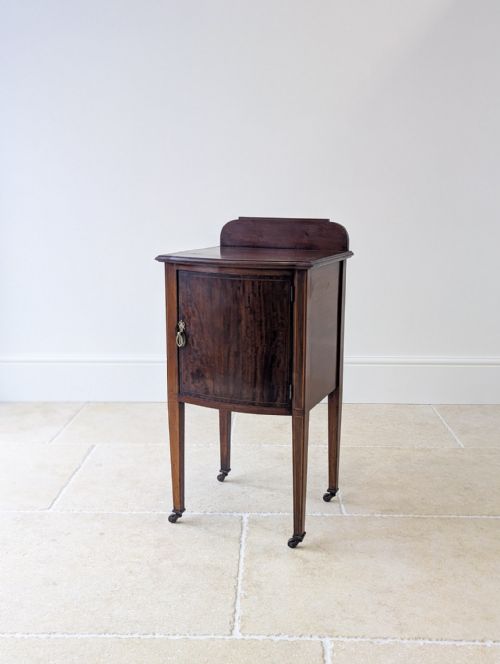
An edwardian mahogany bedside cupboard is a small enclosed storage piece typically made during the early twentieth century to hold chamber pots, night accessories, or water jugs. These pieces often feature a single panelled door opening to reveal a shelved interior, though variants with drawers or open compartments also appear.
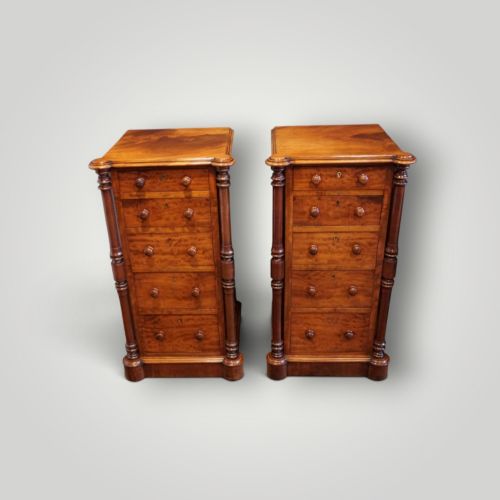
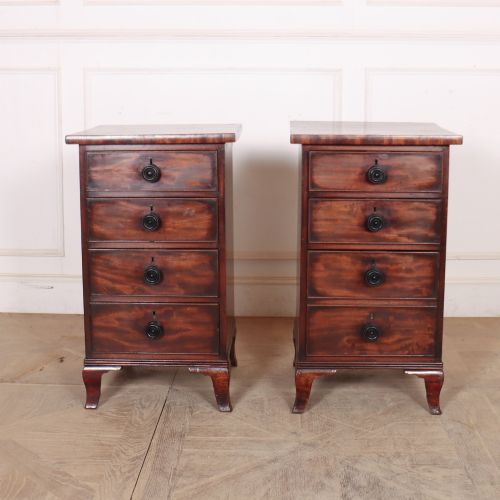
Most items you meet on this page hail from the Edwardian period or the broader nineteenth century, frequently adopting revival idioms such as Sheraton, Chippendale, or Georgian styles. Makers built them as single units or, more rarely, as balanced pairs for twin beds.
Beyond the standard enclosed cabinet form, the listings include related bedside chests, pot cupboards, and occasional side tables sharing the same timber vocabulary.
How they were made
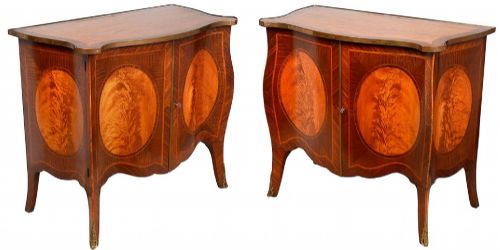
Cabinet makers relied primarily on solid mahogany and flame mahogany veneer applied to a supportive secondary wood carcass, often accentuating surfaces with contrasting satinwood or boxwood inlay and crossbanding. Brass handles, hinges, and occasional gallery rails provide metal accents to the wooden frames.
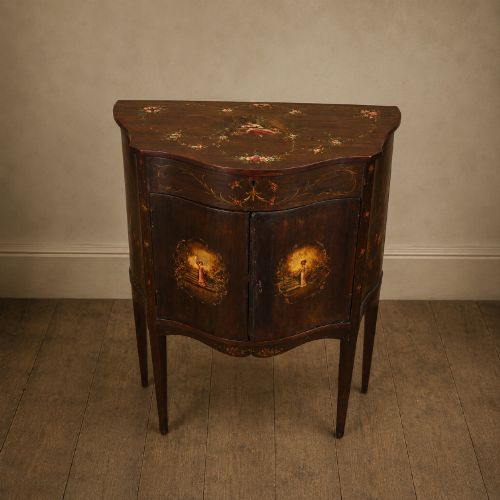
Some iterations incorporate contrasting exotic hardwoods, marble tops, or hand-painted decorative motifs on serpentine or bow-fronted drawer and door panels.
Several cupboards moonlighted as shoe cabinets before finding their permanent resting place beside modern beds.
What varies in quality
Quality reveals itself in the selection of timber figures, such as highly figured flame mahogany veneer, and the crispness of inlaid satinwood or boxwood stringing. Superior examples display refined proportions, dovetail joinery in the drawer construction, and original hardware.
Artisan execution distinguishes standard utilitarian units from pieces produced by notable retail furnishers, where hand-painted detailing and balanced matching in paired cabinets elevate the construction.
Denby and Spinks·Warings Liverpool·Waring and Gillow·Howard and Sons·Christopher Pratt of Bradford·Maple and Co
The Edwardian Mahogany Bedside Cupboard Glossary
- Pot cupboard
- A small bedside cabinet originally built to enclose a chamber pot behind a single hinged door. They often feature an enclosed interior shelf.
- Crossbanding
- A decorative border of veneer laid around the perimeter of a table top or door panel with the grain running perpendicular to the central panel. This technique frames the primary mahogany surface.
- Sheraton Revival
- A late nineteenth and early twentieth century design style drawing on the refined neoclassical furniture of Thomas Sheraton. These pieces frequently incorporate delicate inlay and tapering legs.
- Serpentine
- A furniture front or table edge curved in a wave shape, convex in the centre and concave at the ends. This contour requires precise woodworking skill.
- Satinwood
- A durable, lustrous yellow timber imported from tropical regions and utilised for contrasting stringing and inlay work. It highlights the darker red tones of mahogany.
Edwardian Mahogany Bedside Cupboard: Frequently Asked Questions
What is an edwardian mahogany bedside cupboard used for?
These cabinets served historically to house chamber pots and nighttime necessities discreetly beside the bed. Today, they function as compact bedside tables offering enclosed storage for books and personal items.
Their modest footprint makes them useful in smaller bedrooms where floor space is limited.
Are these cupboards found in pairs?
Pairs do occur among the listings, though single cabinets appear more frequently because bedrooms originally utilised only one. Finding a true matched pair requires careful comparison of timber grain and dimensions.
Many listings represent marriage sets assembled later rather than original factory pairs.
How do you distinguish Edwardian pieces from Victorian ones?
Edwardian items dating from around nineteen hundred onwards tend to exhibit lighter construction, brighter mahogany veneers, and delicate neoclassical inlay. Victorian pieces often present heavier proportions, darker finishes, and simpler panelled door designs.
Stylistic revivals overlap across both eras, making timber finish and construction details key indicators.
What timber features on these cabinets?
Mahogany forms the primary structural and surface material, often enhanced by flame mahogany veneer for visual depth. Details in satinwood, boxwood, and walnut provide contrasting inlay and border banding.
Some examples also incorporate marble tops or secondary hardwoods in the interior framing.