
Edwardian Leather Tables
Edwardian leather tables are practical writing desks and occasional pieces built for formal and domestic rooms, offering traditional surfaces suited for daily use.
Edwardian Leather Tables
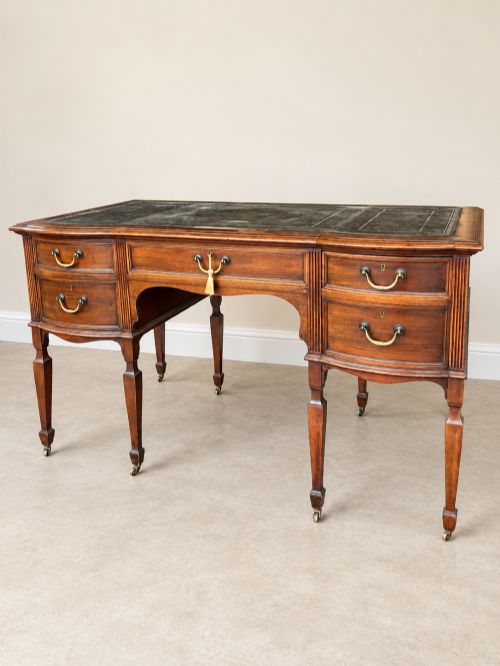
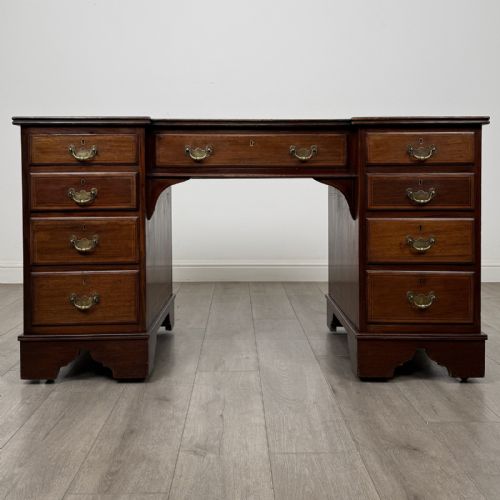
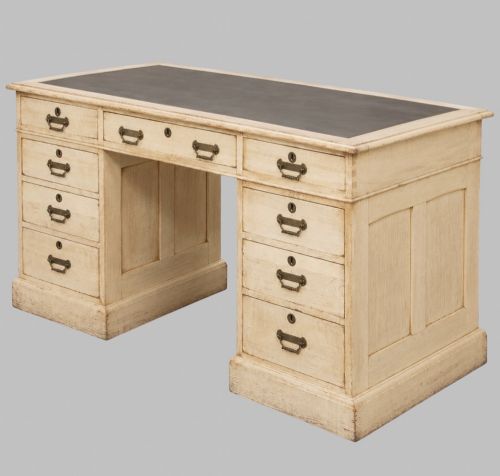
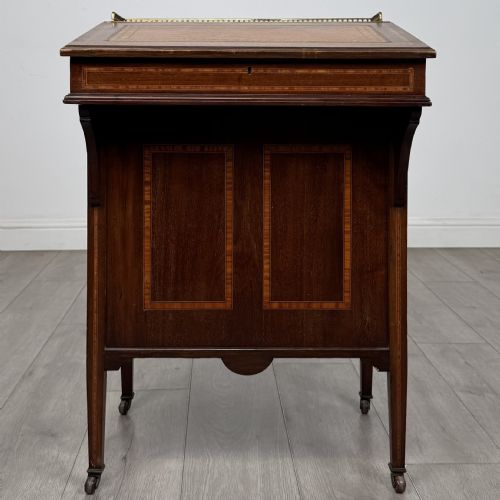
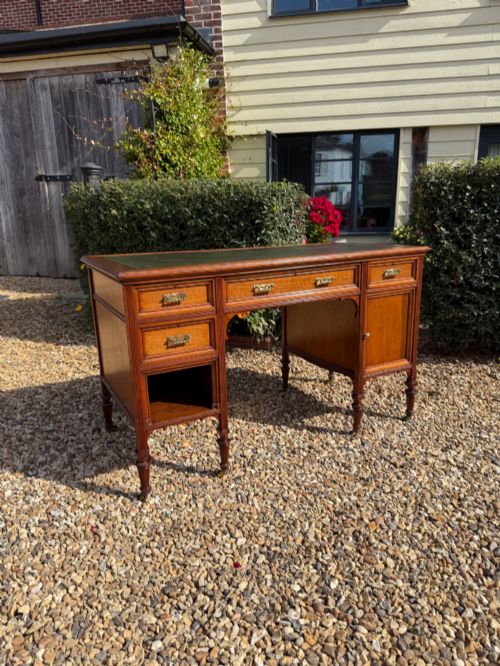
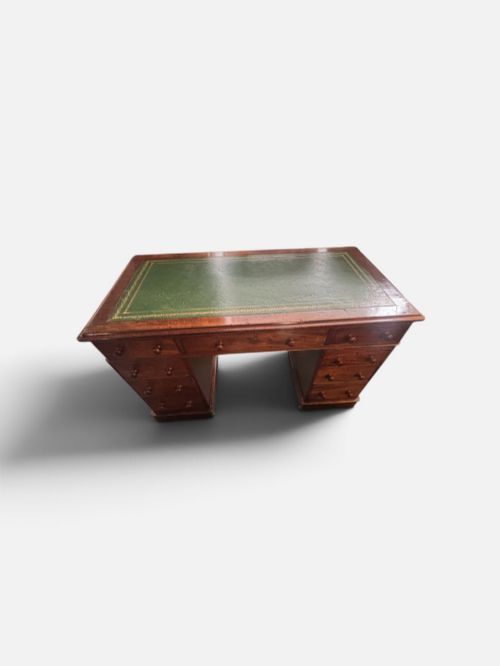
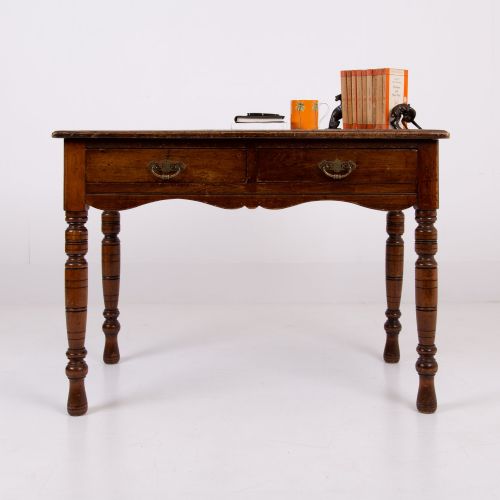
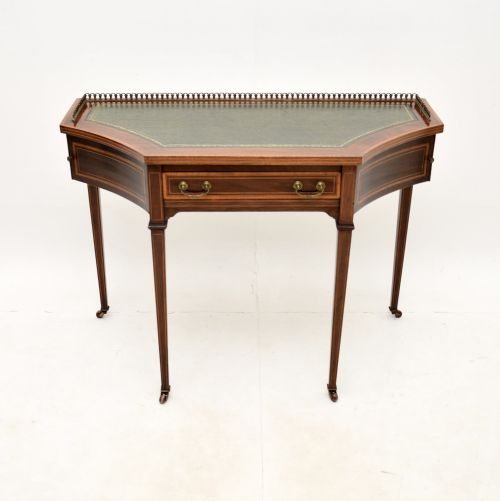
When you search for edwardian leather tables, you encounter writing desks, pedestal desks, library tables, and nests of occasional tables produced around the turn of the twentieth century. The period embraces straightforward oak library furniture and refined satinwood or mahogany writing tables.
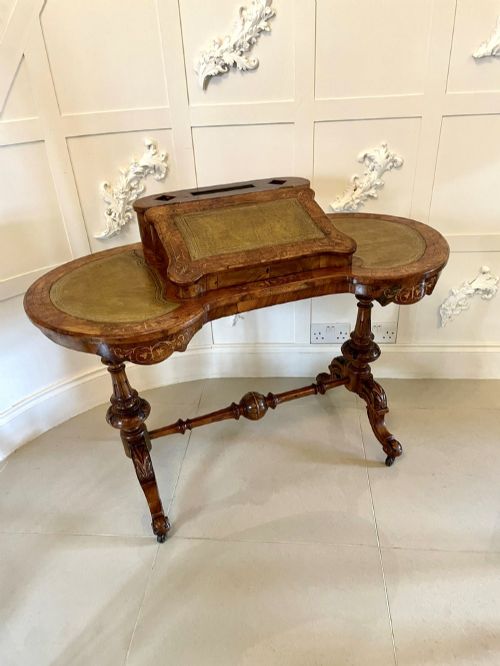
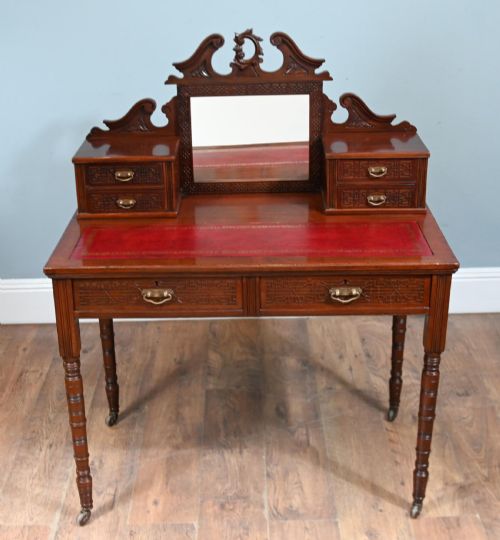
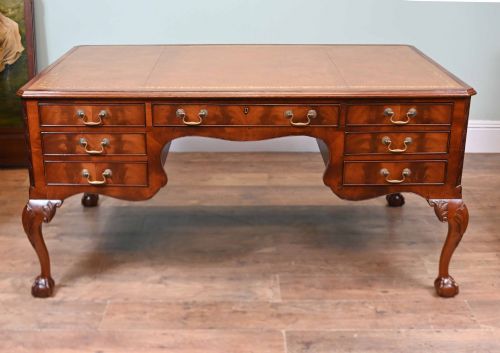
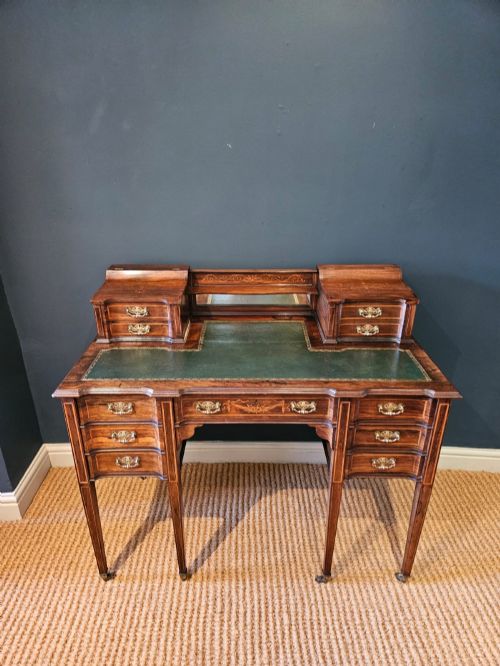
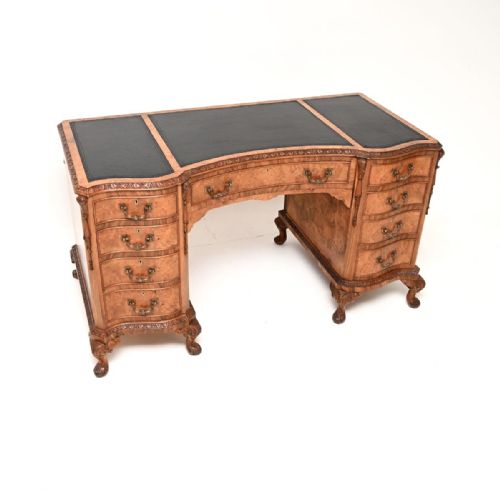
Pedestal desks and kidney-shaped writing tables dominate the selection, often fitted with drawers and inset leather writing surfaces. Alongside these, oak nests with leather uppers represent a distinct category of compact domestic furniture.
Materials and Construction
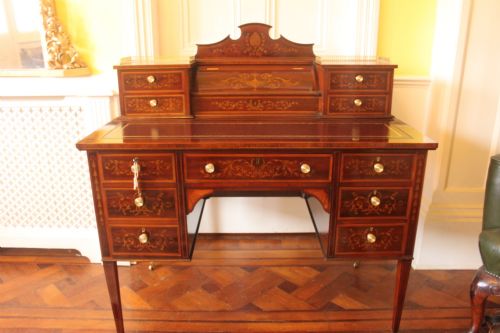
Cabinet makers utilised solid woods and veneers including mahogany, oak, walnut, burr walnut, rosewood, and satinwood, frequently enhanced with marquetry or string inlay. Writing surfaces incorporated leather inserts, sometimes framed by polished wooden borders.
Structural framing combined traditional joinery for pedestals, drawers, and friezes, while brass handles, locks, and castors provided functional details for desks and tables.
Listings feature woods such as mahogany, satinwood, oak, burr walnut, and rosewood, spanning periods from the nineteenth century into the 1930s.
Distinction in Craft
Superior examples display balanced proportions, finely figured timber veneers such as flame mahogany or burr walnut, and precise marquetry inlay. Maker attribution through stamps or labels also elevates certain pieces above standard commercial production.
The choice of secondary timbers, the crispness of brass hardware, and the execution of fitted interiors distinguish workshops of notable repute from simpler utilitarian furniture.
Maple and Co·Trollope and Sons·Wylie and Lochhead Glasgow·Edwards and Roberts·James Shoolbred and Co London
The Edwardian Leather Tables Glossary
- Pedestal Desk
- A heavy freestanding desk with two supporting columns of drawers flanking a central kneehole. This form provides substantial storage and a large writing surface.
- Library Table
- A large freestanding table designed for central room placement, often equipped with frieze drawers. These pieces served scholarly or formal domestic functions.
- Marquetry
- Decorative veneer work forming pictorial or geometric patterns using various woods. Craftsmen applied these patterns to tabletops and drawer fronts.
- Kidney Desk
- A writing table shaped with a curved front profile resembling a kidney bean. This ergonomic design allows the user to sit closer to the central drawers.
Edwardian Leather Tables: Frequently Asked Questions
What is a Carlton House desk?
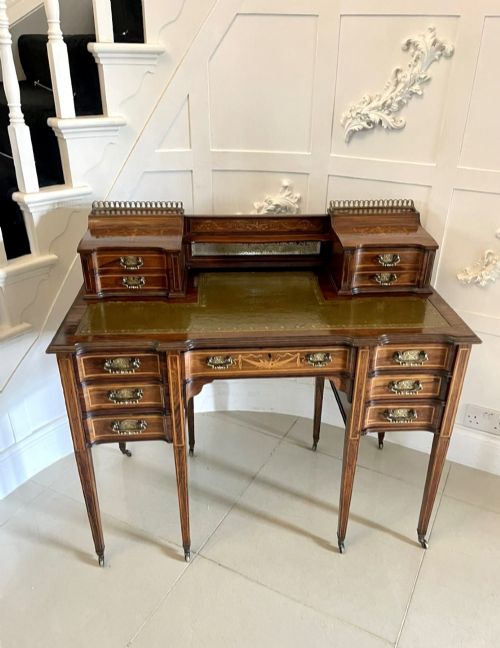
A Carlton House desk is a specialised writing table featuring an elevated bank of small drawers arranged in a curve around the back and sides. This form offers numerous compartments for correspondence and stationery.
Such desks often display fine inlay work in satinwood or mahogany and incorporate inset leather writing surfaces.
How do I identify an Edwardian desk?
Edwardian desks are identified by their characteristic revival styles, including Sheraton and Chippendale influences, combined with lighter proportions than heavy Victorian pieces. They frequently utilise satinwood, inlaid mahogany, or burr walnut.
Maker marks, registration numbers, and specific hardware styles further help confirm the period of manufacture.
Where were library tables placed?
Library tables were designed to stand freestanding in the centre of a room rather than against a wall. Their finished backs and substantial proportions suited them for central placement.
They provided stable surfaces for reading and writing in large domestic or institutional libraries.
Are nest tables practical for daily use?
Nest tables provide flexible surface space that can be expanded or stacked away depending on requirements. Versions with leather uppers offer durable tops for serving drinks or holding books.
Their compact stacking design makes them adaptable for modern living spaces.