



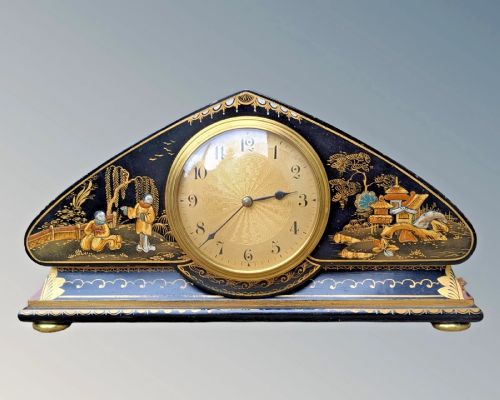
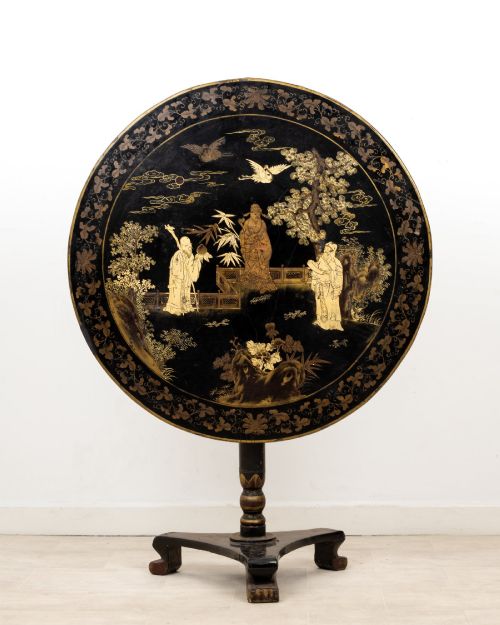
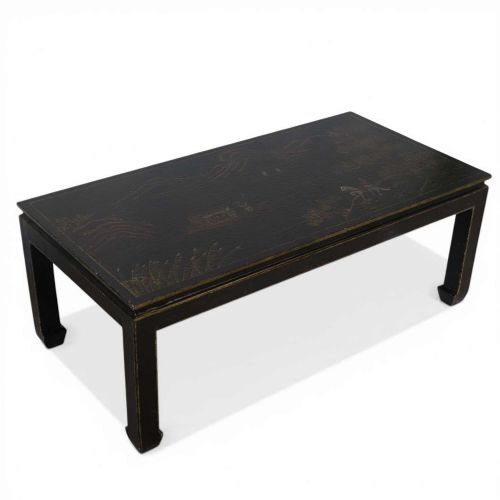
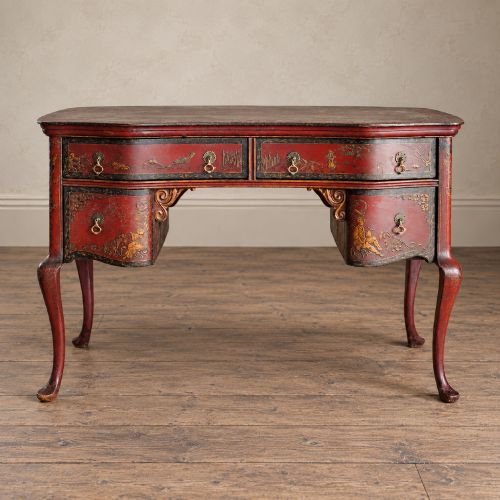


Edwardian Lacquer Table
These pieces of edwardian lacquer table bring painted narrative scenes and dark polished surfaces into a room.
Edwardian Lacquer Table
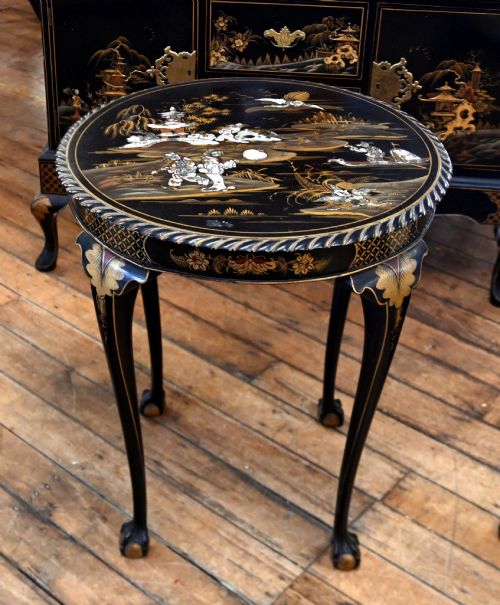
An edwardian lacquer table typically appears as a coffee table, occasional table, or small side support with painted decoration. Many examples from this selection date to the Edwardian period or the early twentieth century, though nineteenth-century precedents also appear.
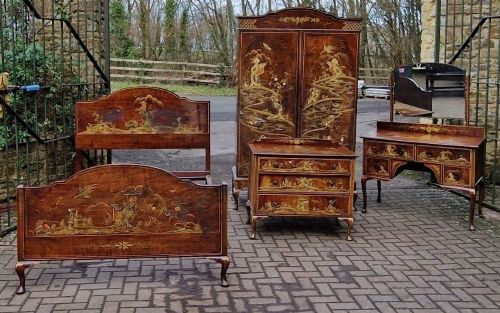
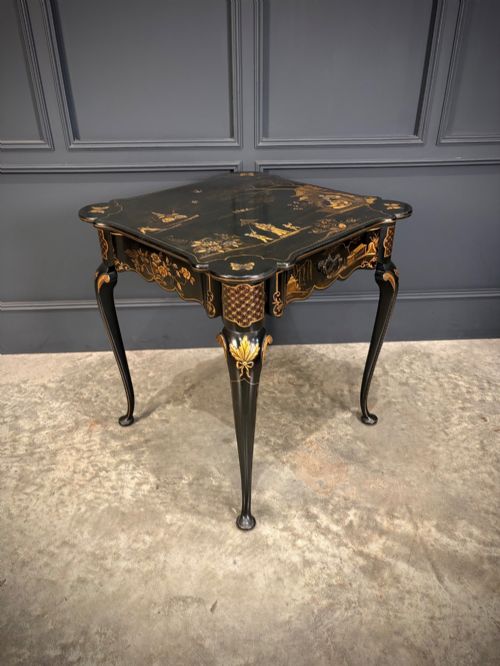
The forms range from circular tripod tables and tray top coffee tables to nested sets and bamboo-framed variants. Surfaces often display Chinoiserie motifs, placing figurative scenes and landscapes across black, green, or cream grounds.
Materials and Construction
Wood serves as the primary structural material, frequently finished with layers of black lacquer, ebonisation, or paint to create a smooth base. Details are rendered using gilt, gold leaf, and contrasting pigments to depict figures, pavilions, and floral arrangements.
Support elements incorporate turned wooden legs, bamboo framing, and occasional brass fittings, balancing lightweight portability with rigid construction. The decorative surfaces receive protective clear coats to preserve the painted scenes from daily wear.
Edwardian Lacquer Table Retail Price Guide 2026
Typical asking prices for edwardian lacquer table among the pieces listed under this phrase on Sellingantiques today, from the lower quarter to the upper quarter. They describe what is for sale here now, not the wider market.
Some tables hide extra surfaces inside nests, proving that Victorians and Edwardians loved space-saving tricks just as much as modern flat dwellers.
Craft and Detail
The distinction between tiers of quality rests on the crispness and depth of the painted decoration. Hand-rendered details with multiple layers of gilt and nuanced shading represent superior craftsmanship compared to simpler, flatter surface applications.
Structural integrity also separates examples, seen in the tight joinery of nested tables and the stability of tripod bases. The preservation of the original lacquer surface, free from excessive craquelure or clumsy restoration, determines the standing of the piece.
The Edwardian Lacquer Table Glossary
- Chinoiserie
- European decorative style reflecting Chinese artistic influences. This aesthetic relies on painted scenes of figures, pagodas, and landscapes rendered in gold and colour upon dark grounds.
- Japannan
- European imitation of Japanese and Asian lacquerwork. Craftsmen built up layers of varnish and paint on wooden substrates to replicate oriental lacquer finishes.
- Ebonised
- Wood treated with stain or pigment to imitate ebony. This dark finish provides a high-contrast background for gilt decoration.
- Tripod table
- Small occasional table supported by a central pillar and three legs. These versatile pieces appeared frequently in various period interiors.
Edwardian Lacquer Table: Frequently Asked Questions
How do I clean an edwardian lacquer table?
Dust the surface regularly with a soft, dry lint-free cloth to prevent particle buildup. Avoid liquid cleaners, alcohol, or silicone polishes, which can soften or damage the lacquer and paint layers.
For stubborn marks, use a barely damp cloth with mild soap, drying the area immediately afterwards. Gentle care preserves the delicate gold leaf and painted scenes for years to come.
Where should I place a lacquer table?
Position these pieces away from direct sunlight and heat sources to prevent the wood and lacquer from drying out or cracking. Occasional tables and nests work well beside seating areas where their decorative tops remain visible.
Using coasters or protective pads under objects placed on the surface helps prevent scratches and rings on the antique finish. Placement in moderate humidity environments protects both the wooden core and the decorative coating.
Are these tables sturdy enough for daily use?
Most occasional and coffee table forms offer adequate stability for holding books, lamps, or small decorative items. Lighter variants, such as bamboo-framed or nested designs, suit moderate placement rather than heavy weight loads.
Handling nested sets with care when separating or stacking prevents friction damage to the painted edges. Checking leg joints periodically ensures the frame remains secure during everyday placement.
How can I tell if a table is Edwardian?
Edwardian examples often feature lighter construction methods and specific revival styles that blend eighteenth-century Chinoiserie patterns with early twentieth-century manufacturing techniques. Examination of secondary woods, fixings, and wear patterns helps indicate the manufacturing era.
Comparing the lacquer application and pigment characteristics with dated examples from the same timeframe aids verification. Consulting the listed period details provides a reliable guide to the age of the piece.