


Edwardian Jacobean Revival Dresser
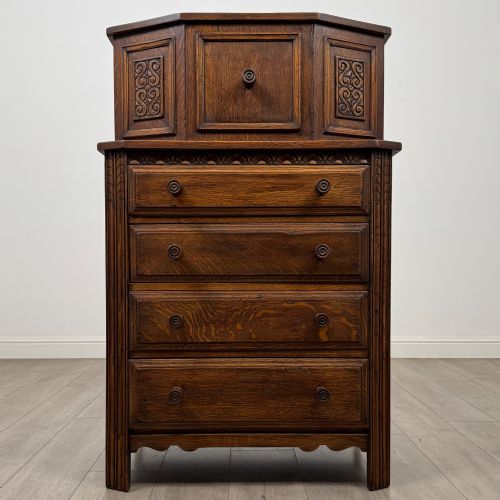
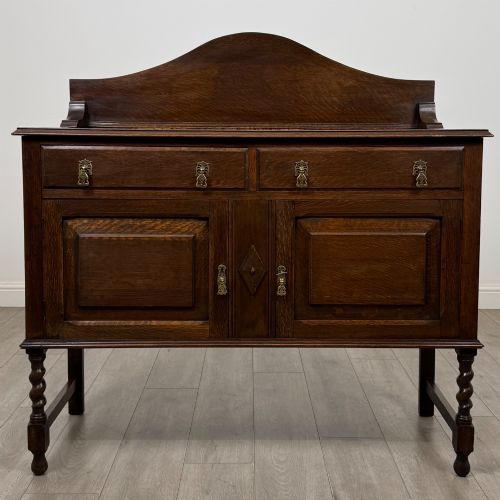
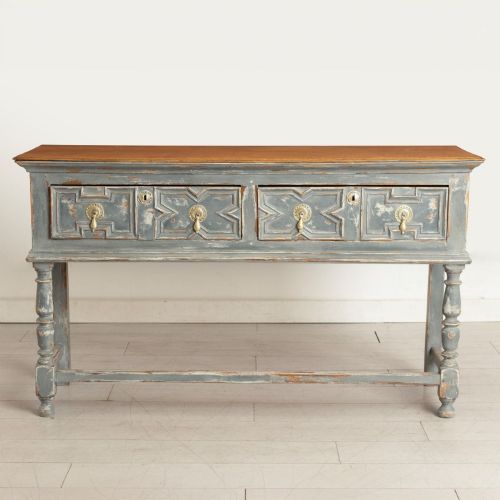
These edwardian jacobean revival dresser pieces bring sturdy timber and carved detail into a room, offering both surface space and storage.
Edwardian Jacobean Revival Dresser
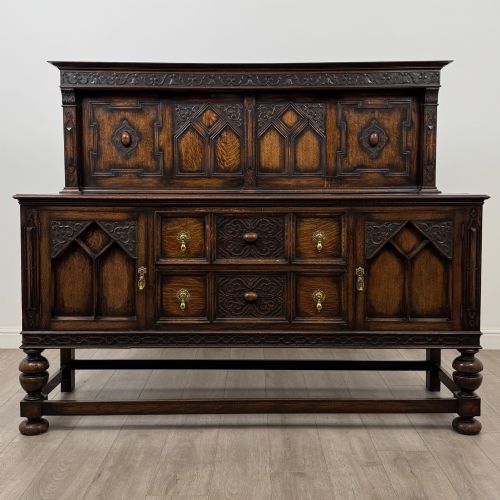
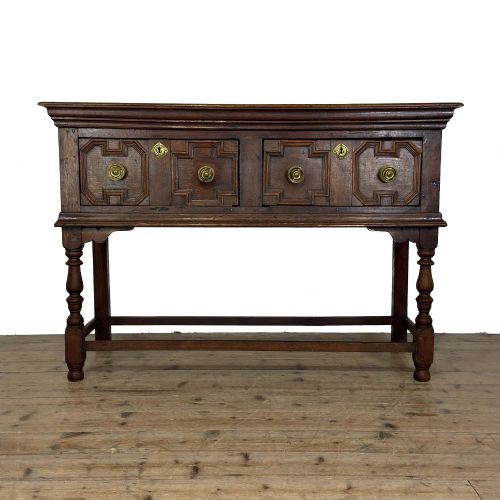
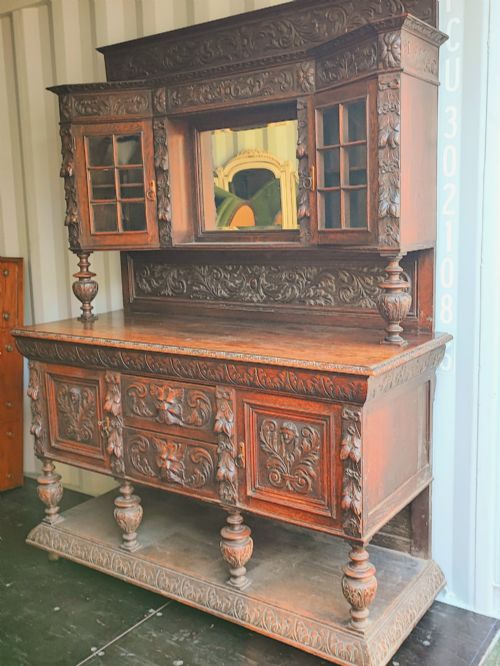
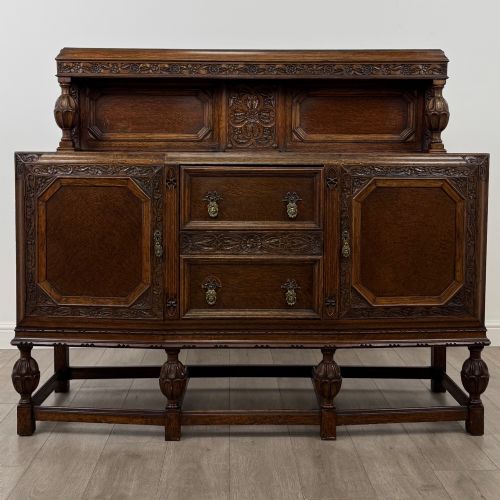
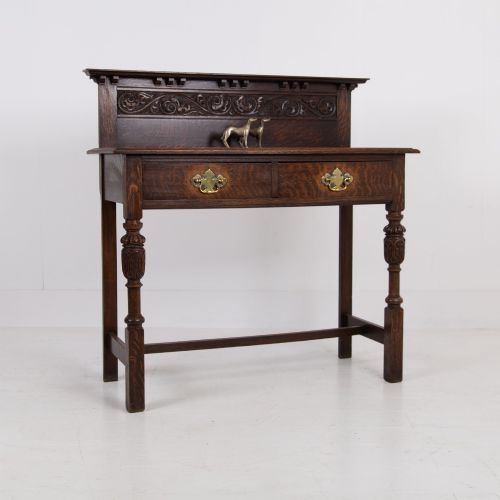
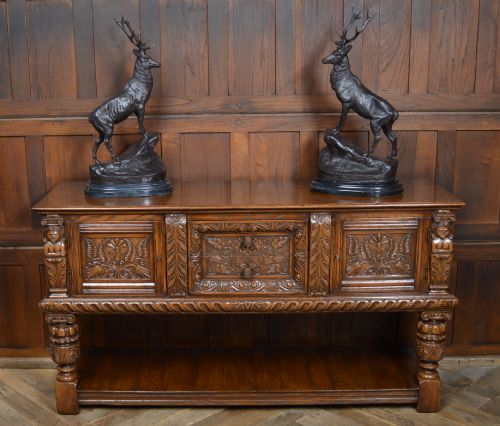
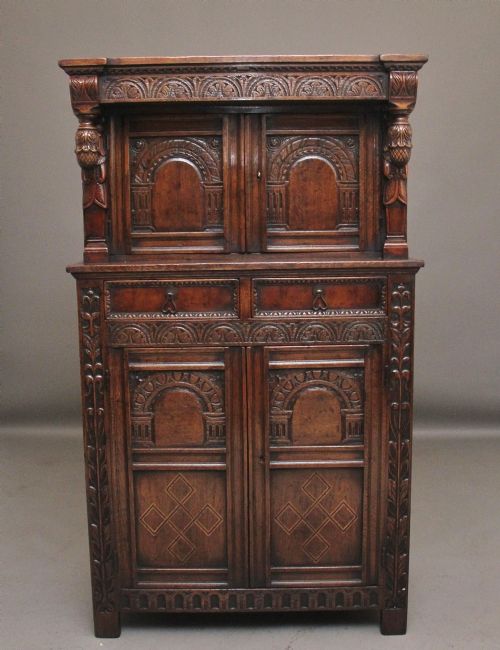
An edwardian jacobean revival dresser draws on earlier seventeenth-century forms while belonging firmly to the Edwardian era and the early twentieth century. These items take the shape of sideboard-buffets, court cupboards, and pot board dresser bases.
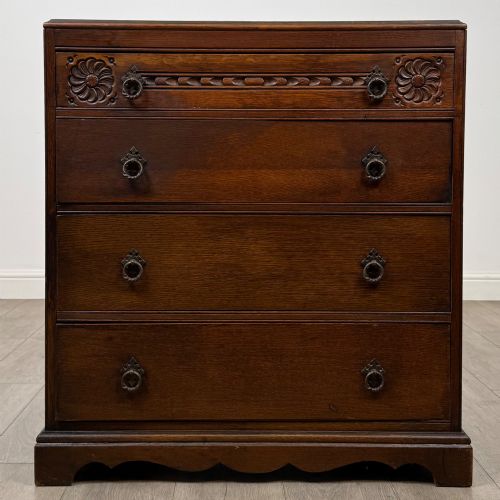
The materials and styles seen here stretch across the Edwardian period alongside nineteenth-century pieces and later 1920s and 1930s examples. Oak dominates the selection, shaped into carved cupboards, console tables, and mirrorback sideboards.
Buyers will find sideboards and dresser bases equipped with drawers and low pot boards alongside tall bookcases and cabinets with leaded glass doors. Each form serves as a heavy storage item rooted in revival aesthetics.
How they were made
Construction relies heavily on solid oak, selected for its durability and prominent grain. Woodworkers shaped this timber into heavy frames, panelled doors, and thick table tops.
Detailing involves traditional carving techniques applied directly to the oak, alongside turned woodwork such as barley twist legs and supports. Metal and brass hardware secures the doors and drawers.
Twisted timber support columns offer endless fascination for anyone who has ever wondered how a lathe operator stays dizzy.
What varies in quality
Quality rests on the depth and crispness of the carved ornamentation across the oak panels and drawer fronts. Shallower, mechanical tooling sits at one end, while deeply undercut and hand-finished carving sits at the other.
The substance of the timber and the weight of the hardware dictate the structural integrity of each sideboard or dresser base. Heavier oak construction and robust brass fittings separate substantial pieces from lighter utility builds.
The Edwardian Jacobean Revival Dresser Glossary
- Jacobean Revival
- A nineteenth and early twentieth-century style imitating the heavy, rectilinear furniture of the early seventeenth century. It typically employs dark oak and geometric moulding.
- Pot Board
- An open lower shelf beneath a dresser base or sideboard used originally for storing pots and pans. In revival pieces, it provides a display tier.
- Barley Twist
- A turned column resembling the spiral shape of barley sugar. This decorative woodworking technique appears frequently on table legs and sideboard supports.
- Court Cupboard
- An enclosed wooden storage piece featuring an upper section supported by pillars over a lower cabinet. These items provide shelved storage behind panelled doors.
Edwardian Jacobean Revival Dresser: Frequently Asked Questions
How do I identify Jacobean revival furniture?
Jacobean revival furniture is marked by heavy oak construction, straight lines, and deep geometric carvings. Elements like barley twist legs and panelled doors point directly to this seventeenth-century inspiration.
Makers working in the Edwardian period utilised these older motifs to create substantial sideboards and dressers.
Where should I place a heavy oak sideboard?
A heavy oak sideboard suits a dining room or a spacious hallway where its deep timber tones can anchor the space. Ensure the floor can support the substantial weight of the solid wood construction.
Keep these items away from direct heat sources to protect the oak panels from splitting.
What is a mirrorback sideboard?
A mirrorback sideboard incorporates an upright wooden frame holding a mirror above the main serving surface. This addition reflects light and displays decorative objects placed on the rear shelf.
Such pieces were popular in Edwardian dining rooms to brighten darker interior spaces.