


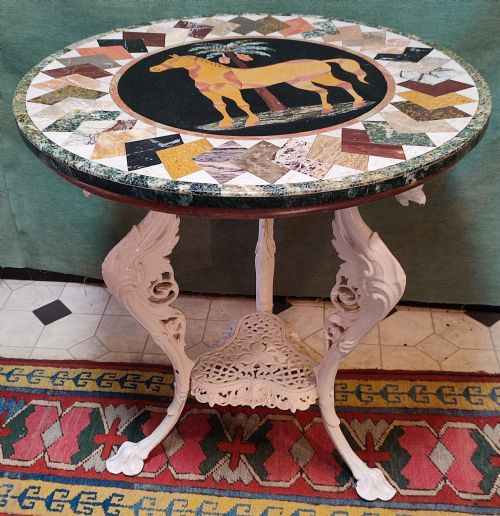


Edwardian Inlay Coffee Tables
Edwardian inlay coffee tables bring together rich mahogany and satinwood, offering practical low surfaces with refined period detail.
Edwardian Inlay Coffee Tables
Edwardian inlay coffee tables encompass low occasional pieces, nests of tables, and tray tables produced around the turn of the twentieth century. These low surfaces serve modern living rooms well while maintaining the proportions of earlier occasional furniture.
The pieces appearing under edwardian inlay coffee tables stretch from late Victorian examples to the early twentieth century. Makers drew upon Sheraton Revival styles and Neo-Classical motifs to shape these occasional tables.
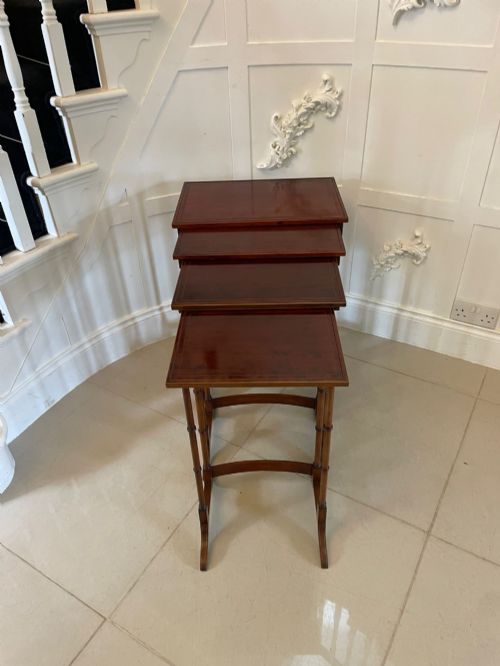
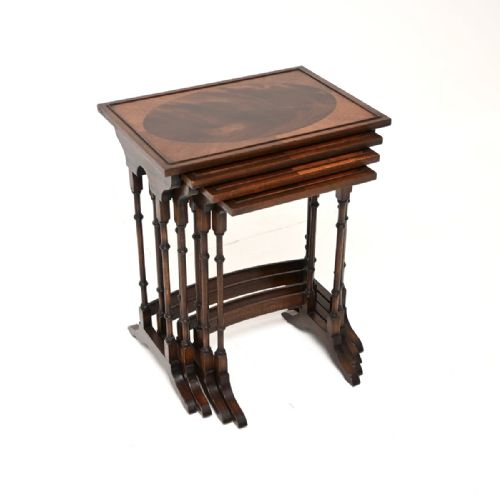
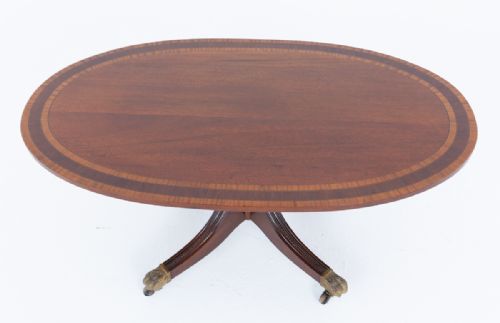
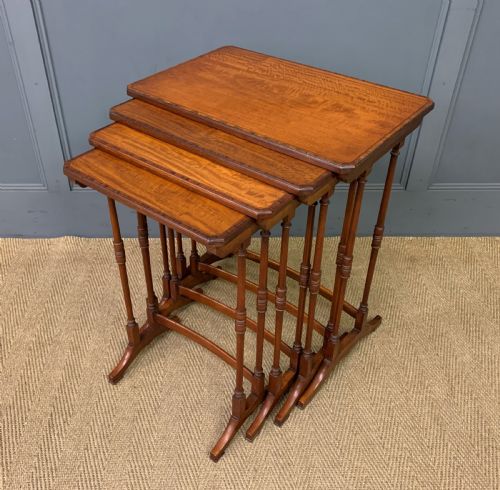
Nests of four tables, known as quartetto sets, and oval coffee tables dominate this group. Walnut, mahogany, and satinwood form the primary structures supporting intricate decorative schemes.
Materials and Construction
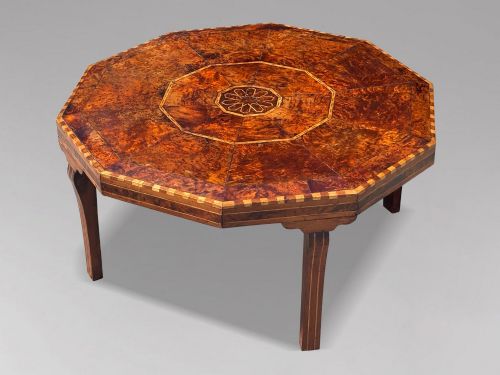
Craftsmen built these tables using solid hardwoods like mahogany and rosewood, often applying veneers of satinwood or burr walnut to tabletops. Boxwood inlay adds linear contrast, defining borders and central medallions with precise stringing.
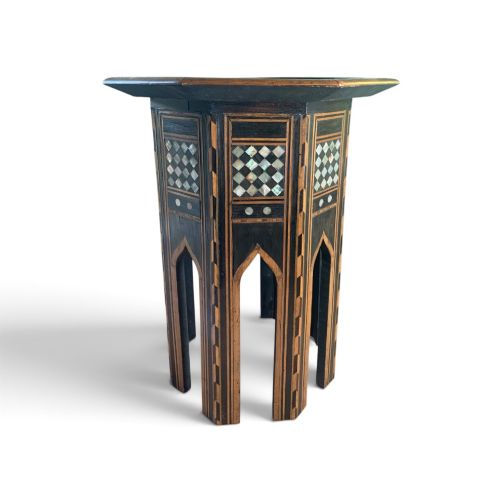
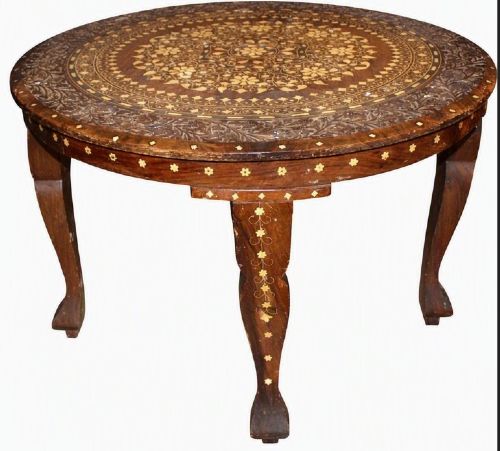
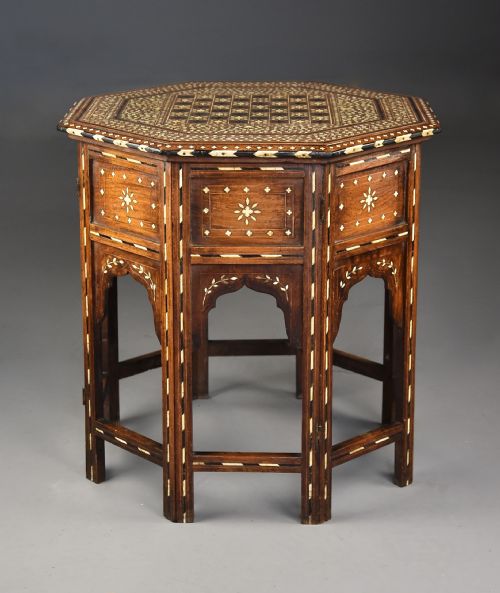
Marquetry and parquetry techniques create pictorial and geometric patterns across the surfaces. Cabinetmakers also incorporated bone inlay and brass fittings on specific Anglo-Indian and Moorish revival variants.
Listings feature mahogany, satinwood, and walnut across occasional tables, quartetto nests, and tray forms.
Distinctions in Quality
Quality rests upon the crispness of the boxwood inlay and the selection of figured timber veneers. Superior examples display tight grain matching and hand-cut marquetry rather than printed or stamped decoration.
Structural integrity separates standard production from finer cabinetwork, particularly in nests where tables must slide smoothly and stack flush. The choice of secondary timbers and the precision of the joinery mark the distinction between workshops.
Liberty & Co·Edwards and Roberts·Gillows
The Edwardian Inlay Coffee Tables Glossary
- Quartetto
- A set of four graduating tables designed to nest beneath one another. These sets represent a popular space-saving innovation of the period.
- Marquetry
- The art of applying pieces of veneer to a structure to form decorative patterns and pictures. Craftsmen selected different woods to create tonal contrast without paint.
- Satinwood
- A durable timber with a golden sheen used extensively for tabletops and stringing. It provides a bright background for darker mahogany borders.
- Boxwood
- A pale, dense wood utilised for fine stringing and inlay lines. Its uniform texture allows for sharp, narrow cuts.
Edwardian Inlay Coffee Tables: Frequently Asked Questions
What is a quartetto nest?
A quartetto nest consists of four tables designed to slide neatly beneath the largest one. This format gained popularity in the late nineteenth and early twentieth centuries.
Households used them for serving tea or holding small items, deploying them around a room as needed before stacking them away to save space.
How do I care for satinwood?
Satinwood surfaces require gentle dusting with a dry cloth and protection from direct sunlight. Excessive heat and light can cause the pale veneer to darken or crack over time.
Applying a traditional beeswax polish occasionally helps nourish the wood and maintain its golden lustre without building up heavy residues.
Are these tables sturdy enough for daily use?
Most occasional tables from this era were built to support moderate weight such as books, lamps, or tea services. Their slender legs require sensible handling rather than heavy loading.
Placing them on level flooring prevents undue strain on the joints and keeps nests sliding smoothly within their frames.
How can I tell Edwardian from Victorian styles?
Edwardian furniture generally exhibits lighter proportions and brighter satinwood veneers compared to heavier Victorian walnut and mahogany pieces. Neo-Classical and Sheraton Revival influences dominated the later Edwardian workshop output.
Victorian examples often feature deeper tones and bolder carved details, whereas Edwardian pieces lean towards delicate inlay and restrained geometric borders.