
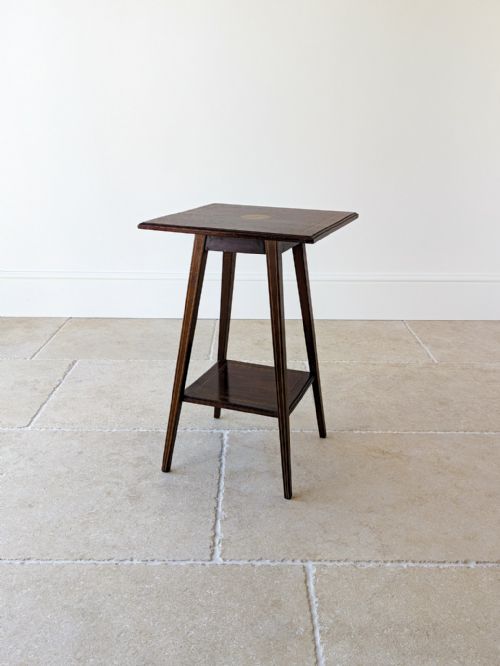
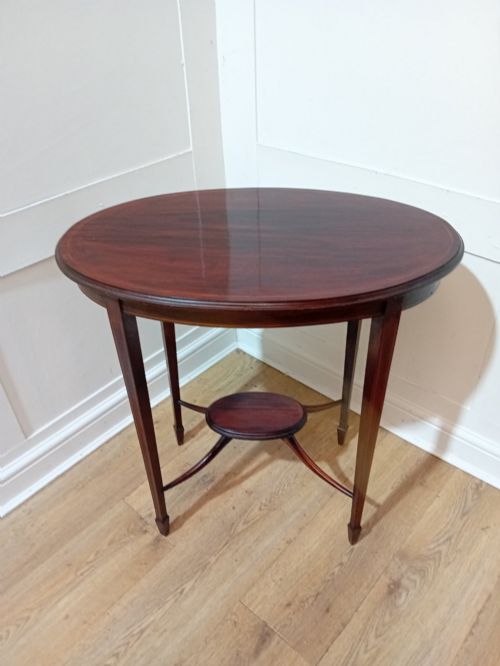

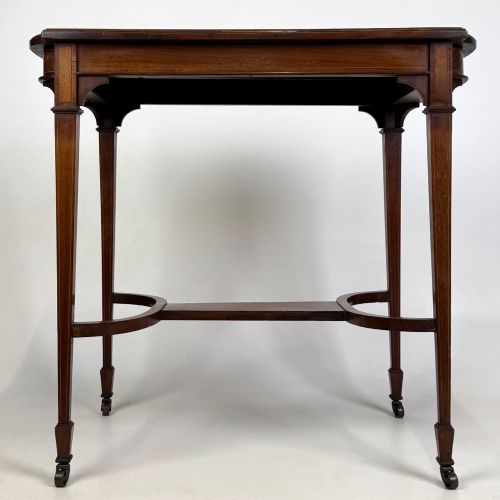
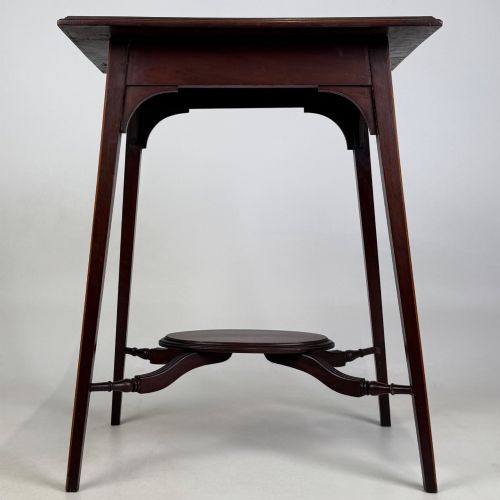

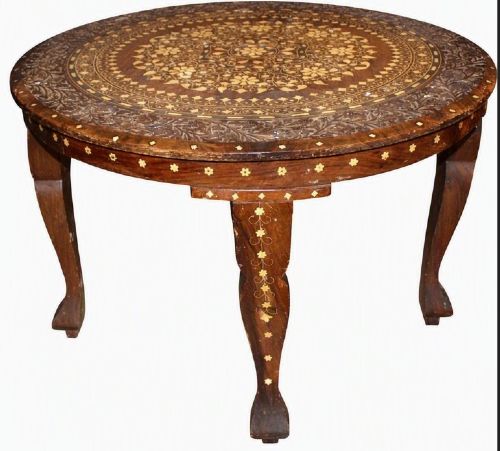
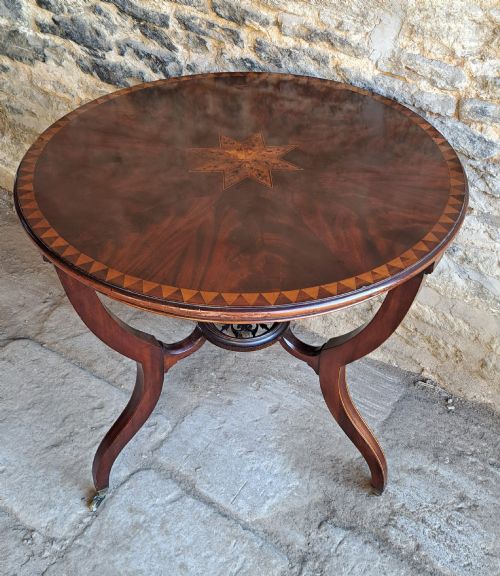
Edwardian Inlay Accent Table
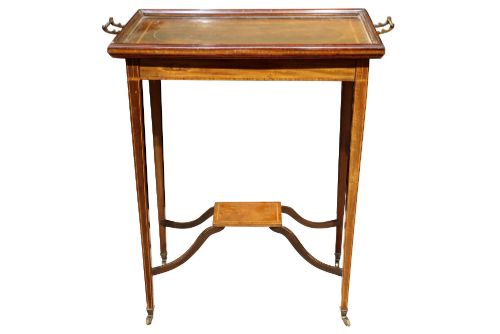
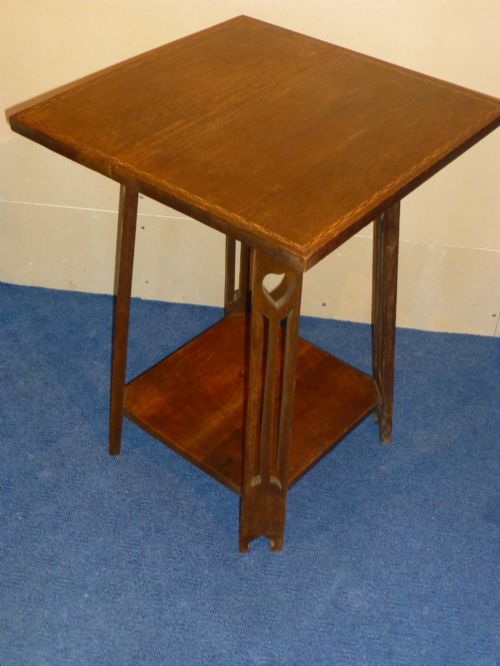
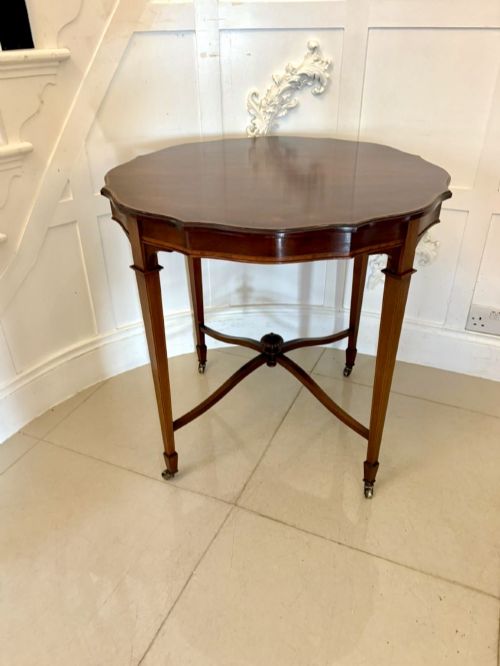
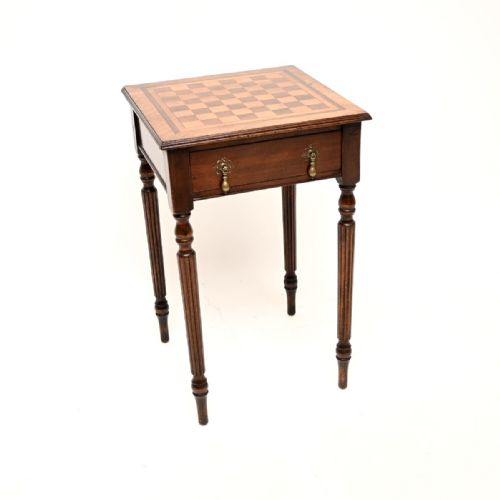
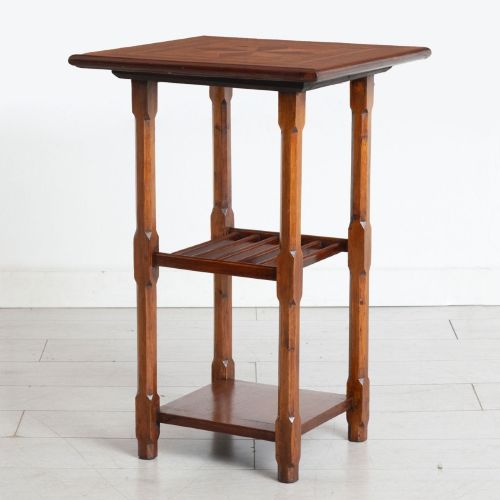
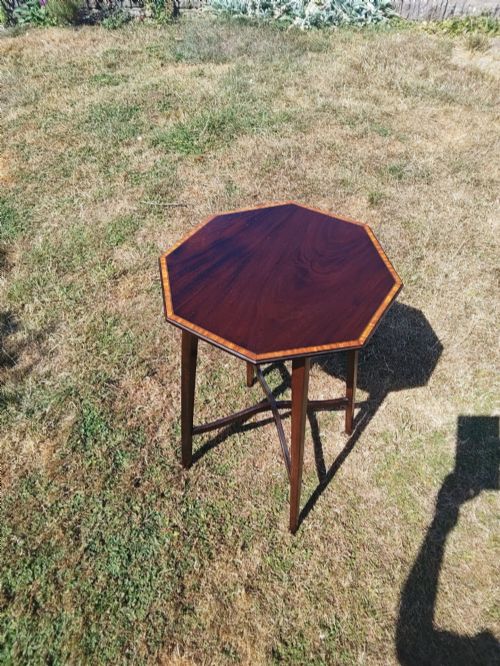
An edwardian inlay accent table brings light woods and subtle marquetry into a room, serving as a versatile spot for a lamp or books.
Edwardian Inlay Accent Table
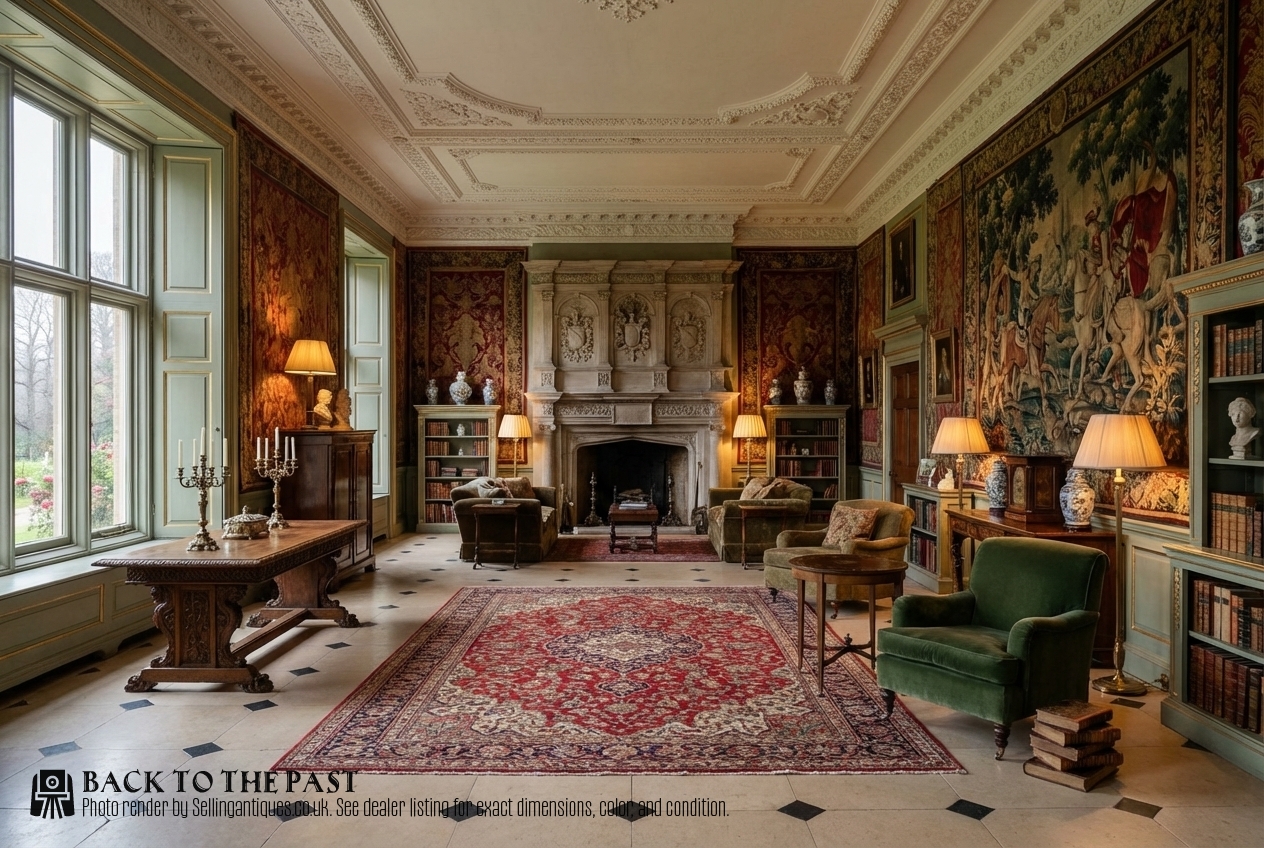
An edwardian inlay accent table appears most frequently in forms such as occasional tables, side tables, and nests of tables dating from the late nineteenth and early twentieth centuries. These pieces were designed to be easily moved around a drawing room or parlour to hold small lamps, tea sets, or decorative items.
Materials and technique
Cabinet makers relied primarily on mahogany, satinwood, and rosewood as primary timbers, augmented by contrasting stringing and banding in boxwood and walnut. Surface ornamentation often involved intricate wood inlay, marquetry, and occasional bone inlay set flush into the timber.
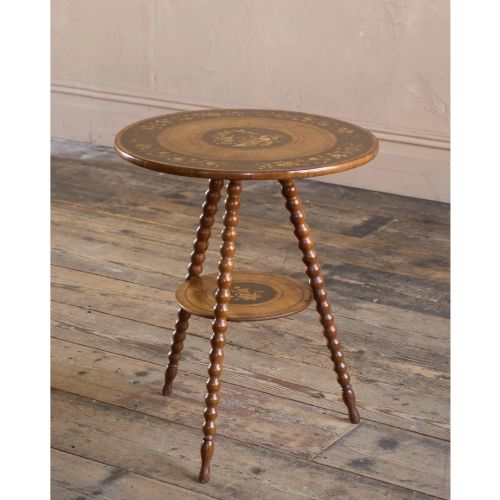
Structural elements utilise traditional joinery combined with turned legs, bobbin legs, or cast iron supports depending on the workshop and style. Trays and tabletops frequently feature raised edges, shaped galleries, or glazed fitted interiors.
Some tables include hidden fitted interiors designed long ago for holding very specific small treasures.
Quality variations
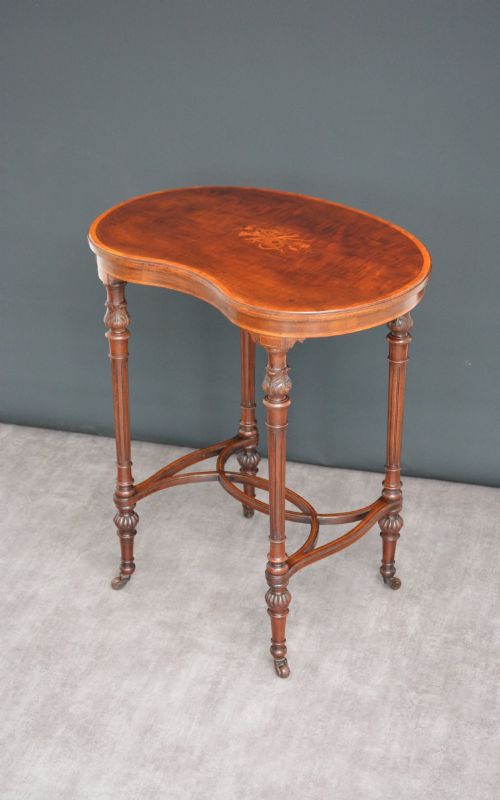
The distinction between standard production and exhibition quality pieces lies in the precision of the marquetry and the choice of secondary woods. Pieces bearing attribution to notable makers or featuring complex kidney and serpentine forms display superior hand-cut detail in the boxwood and satinwood inlay.
Proportion and timber selection dictate the overall merit of an item, with finer tables exhibiting balanced grain patterns, intact original brass or wooden fittings, and crisp carving on legs and friezes.
Liberty & Co.·William Birch·Collingson & Lock
The Edwardian Inlay Accent Table Glossary
- Marquetry
- Decorative patterns formed by fitting together small pieces of veneered wood into a design on a solid ground. This technique creates pictorial or geometric motifs across tabletops.
- Satinwood
- A hard, durable timber with a golden sheen used extensively for fine veneer and banding during the Sheraton Revival. It provides high contrast against darker mahogany.
- Quartetto nest
- A set of four graduating occasional tables designed to slide one beneath another when not in use. They became particularly popular in satinwood during the Edwardian era.
- Stringing
- Thin lines of contrasting wood inlaid into grooves on table legs and borders. Boxwood is frequently utilised for this linear detail.
- Pembroke table
- A small rectangular or oval table with two hinged drop leaves supported by folding brackets. These were often finished with delicate inlay on the top.
Edwardian Inlay Accent Table: Frequently Asked Questions
How do I identify Sheraton Revival work?
Sheraton Revival pieces emulate the lighter neoclassical furniture designs of the eighteenth century using satinwood, mahogany, and delicate floral inlay. They typically feature tapering legs and symmetrical geometric banding.
These later interpretations date from the Victorian and Edwardian eras rather than the original Georgian period.
Where were these tables used?
These tables served as portable furniture in drawing rooms, sitting rooms, and parlours for holding lamps, writing materials, or beverages. Their light construction allowed owners to reposition them easily around the room as needed.
Nested tables and smaller wine tables were particularly favoured for entertaining guests in confined spaces.
What is a specimen table?
A specimen table incorporates various samples of different woods, marbles, or decorative stones arranged in geometric patterns across the top. Each section highlights a distinct material type and colour.
These pieces often reflect the eclectic tastes of the late nineteenth and early twentieth centuries.