







Edwardian Inlaid Workbox
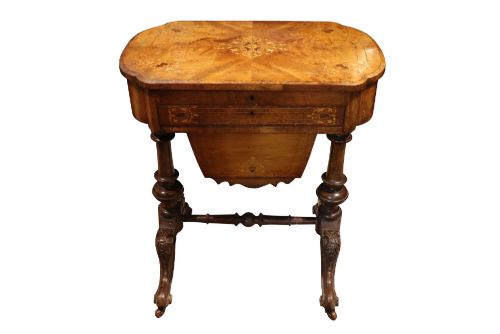
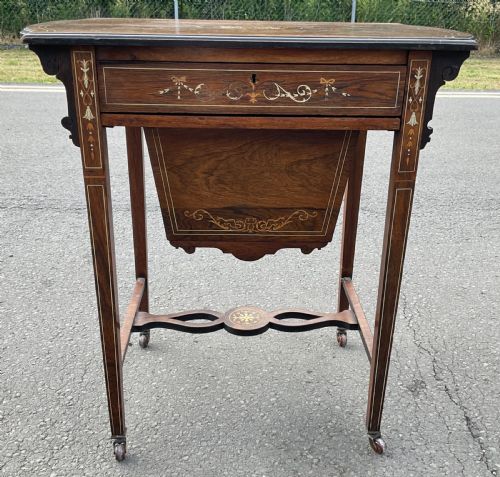
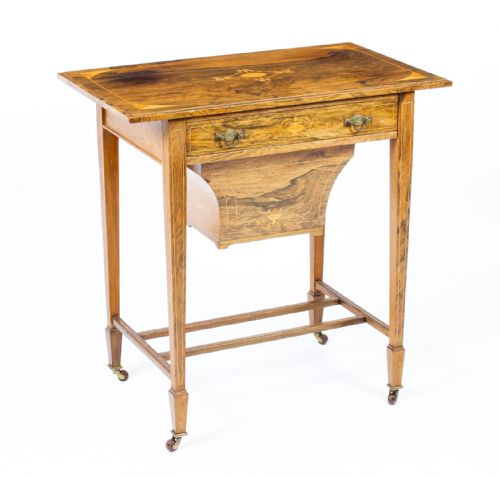
These edwardian inlaid workbox examples are refined desktop and freestanding receptacles built to house sewing tools and personal treasures.
Edwardian Inlaid Workbox
An edwardian inlaid workbox brings together compact table forms and tabletop boxes designed for sewing and storage. You find these pieces spanning the Edwardian period, the Victorian era, and the late nineteenth century.
The selection here encompasses occasional tables, sewing tables, and decorative boxes. These items typically feature fitted interiors meant to organise needles, thread, and small valuables.
Mahogany and satinwood dominate the table forms, whilst rosewood and burr walnut appear in the smaller box designs. Many examples display Sheraton Revival influence through balanced proportions and crisp geometric stringing.
How they were made
Cabinet makers built these pieces using solid timbers and decorative veneers applied to secondary woods. Mahogany and rosewood provide sturdy carcases, while satinwood and boxwood supply contrasting tones for detailed stringing and marquetry.
Inlay work relied on contrasting timber species embedded flush into the primary surface, sometimes accompanied by hand painted motifs. Brass hardware such as hinges, escutcheons, and drop handles secure the lids and drawers of these fitted containers.
Edwardian Inlaid Workbox Retail Price Guide 2026
Typical asking prices for edwardian inlaid workbox among the pieces listed under this phrase on Sellingantiques today, from the lower quarter to the upper quarter. They describe what is for sale here now, not the wider market.
Many a Victorian needleworker relied on these tidy compartments to keep runaway thimbles from vanishing into sofa cushions.
What varies in quality
The refinement of the timber selection dictates the initial tier of quality in an edwardian inlaid workbox. Finely figured burr walnut and carefully matched satinwood veneers elevate a piece above standard mahogany constructions.
Execution of the inlay distinguishes superior workshops from standard production. Crisp mitres in the boxwood stringing and delicate precision in shell motifs show the hand of a skilled artisan rather than hurried assembly.
The Edwardian Inlaid Workbox Glossary
- Satinwood
- A lustrous yellow timber imported from tropical regions and utilised extensively for decorative veneers and stringing lines during the late nineteenth and Edwardian periods.
- Inlay
- A technique where pieces of contrasting wood, shell, or metal are inserted into recesses carved in a solid timber surface to create decorative patterns.
- Sarcophagus shaped
- A distinctive box profile featuring a domed or sloping lid atop a tapered rectangular body, reminiscent of ancient monumental tombs.
- Sheraton Revival
- A late nineteenth century design movement that revived the graceful neoclassical forms and delicate ornamentation associated with eighteenth century cabinet maker Thomas Sheraton.
- Fitted interior
- An internal arrangement of lidded compartments, small trays, and partitioned sections designed specifically to hold sewing implements and personal trinkets.
Edwardian Inlaid Workbox: Frequently Asked Questions
What is an edwardian inlaid workbox used for?
These pieces served primarily to store sewing equipment, threads, and needles for domestic handiwork. Today they function equally well as decorative containers for letters, jewellery, and small keepsakes.
Their compact footprints allow them to sit neatly upon side tables or serve as standalone occasional tables in a sitting room.
How do I tell Victorian from Edwardian pieces?
Victorian examples often employ darker timbers such as rosewood and walnut, frequently featuring heavier proportions and richer ornamentation. Tunbridge ware and sarcophagus shapes belong firmly within this earlier nineteenth century tradition.
Edwardian pieces lean towards lighter woods like satinwood and mahogany with restrained Sheraton Revival motifs. The overall aesthetic shifts from heavy Victorian opulence to bright, airy Edwardian elegance.
Are these tables or desktop boxes?
Both forms exist within this category, encompassing freestanding sewing tables with legs and portable tabletop boxes. Table versions often incorporate fabric catch bags or lower shelves beneath the main compartment.
Desktop boxes rely entirely on their compact structure to sit securely upon larger furniture surfaces.
How should I care for inlaid wood surfaces?
Maintain these antique wooden surfaces by keeping them away from direct sunlight and steady heat sources that dry out timber. Gentle dusting with a dry cloth prevents particle buildup without harming delicate veneers.
Apply a quality furniture wax sparingly when the wood appears dull to preserve the natural sheen of the polish.