






Brown Wood Workbox
A brown wood workbox is a fitted container for sewing and crafting gear, prized for rich timber grains and clever internal compartments.
Brown Wood Workbox
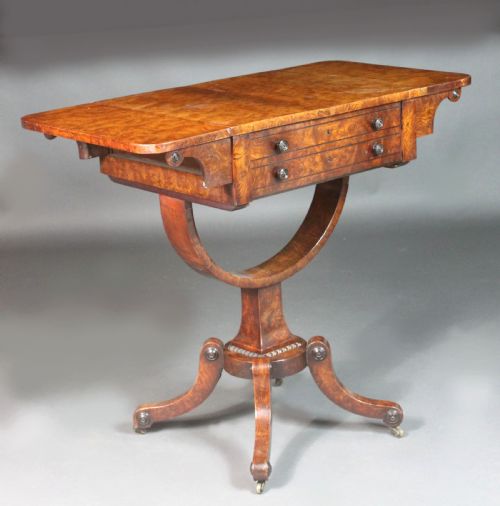
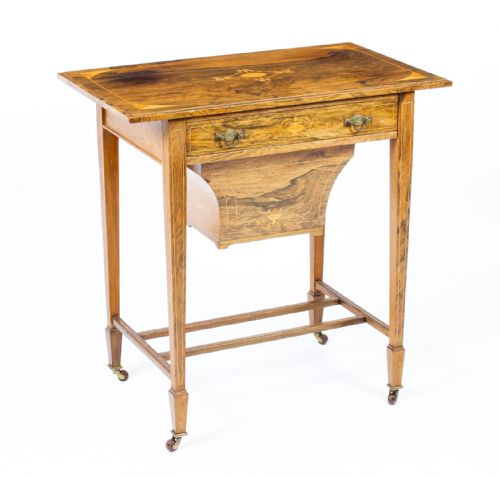
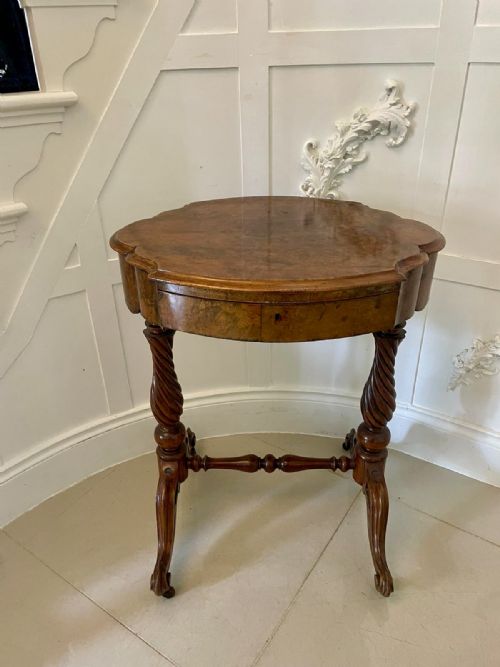
A brown wood workbox encompasses portable desktop caskets and larger freestanding tables designed to house sewing implements, threads, and small crafting projects. These items date primarily from the nineteenth century, including Victorian, Regency, and William IV eras, alongside occasional later pieces.
The versions most commonly met on this page range from compact table boxes in burr walnut, olive wood, and coromandel to larger trumpet and sewing tables featuring fitted interiors. Makers utilised diverse regional traditions, creating English, Italian Sorrento ware, and Anglo-Indian variants.
Buyers encounter forms that merge utility with display, such as games tables with chess boards and writing or sewing combinations. These objects reflect the domestic habits of past centuries, when needlework formed a central part of daily household life.
How they were made
Construction relies heavily on dense, highly figured timbers such as walnut, burr walnut, rosewood, and feathered mahogany, selected for their rich brown tones and distinct grain patterns. Cabinetmakers applied veneers carefully over solid wood carcases to create decorative exterior surfaces.
Intricate decoration involved marquetry inlay, boxwood stringing, and specialised regional techniques like Sorrento mosaic work or Tunbridge ware micro-mosaic patterns. Brass fittings, hinges, and escutcheons added structural reinforcement and visual contrast to the polished timber.
Brown Wood Workbox Retail Price Guide 2026
Typical asking prices for brown wood workbox among the pieces listed under this phrase on Sellingantiques today, from the lower quarter to the upper quarter. They describe what is for sale here now, not the wider market.
Many Victorian workboxes conceal secret drawers triggered by hidden wooden pins, built to outsmart prying family members and protect private letters.
What varies in quality
Quality rests in the selection of timber figures, where heavily burr-figured walnut or exotic coromandel elevate the visual impact of the piece. The precision of marquetry inlay and the subtlety of contrasting boxwood stringing distinguish finer workshops from standard production.
Internal complexity dictates a higher grade of craftsmanship, particularly where fitted lift-out trays, lidded compartments, and integrated writing slopes survive intact. The preservation of original polished surfaces and tight joints ensures the piece retains its intended character.
The Brown Wood Workbox Glossary
- Burr walnut
- A highly prized wood taken from the burl growth of a walnut tree, displaying swirling, knotty grain patterns. It creates a decorative, highly textured surface on nineteenth-century boxes and tables.
- Marquetry inlay
- The art of applying small pieces of veneer to a structure to form decorative patterns or pictures. Craftsmen used various contrasting woods to achieve pictorial depth.
- Tunbridge ware
- A type of woodworking characterised by tiny mosaic tiles formed from multiple coloured woods, creating detailed geometric designs. It was popular in nineteenth-century England for small boxes and ladies' accessories.
- Trumpet table
- A nineteenth-century occasional table featuring a column shaft expanding downwards into an octagonal, trumpet-shaped body. The interior typically serves as a sewing or work bag container.
Brown Wood Workbox: Frequently Asked Questions
What is a brown wood workbox?
A brown wood workbox is a portable or freestanding container made from timbers like walnut, mahogany, or rosewood, designed to hold sewing gear and small valuables.
These pieces feature hinged lids, internal trays, and compartments tailored for spools, needles, and thimbles.
How were workboxes used historically?
In past centuries, these boxes served as personal receptacles for ladies' needlework, embroidery, and correspondence. They kept small tools organised and secure in the parlour or bedroom.
Larger versions doubled as occasional tables, placed beside seating for easy access during craft sessions.
How do I identify a Victorian workbox?
Victorian workboxes often display rich dark timbers like burr walnut or rosewood, frequently enhanced with brass stringing or mother-of-pearl inlay. Their interior fittings typically include velvet-lined trays and carved bone or ivory winders.
Construction methods from this period rely on dovetail joints and hand-cut veneers rather than modern adhesives.
Where should I place a workbox in my home?
These boxes suit tabletops, sideboards, or console tables where their timber grains and decorative inlays can be admired. Freestanding sewing tables fit well beside armchairs or in hallways as distinctive accent pieces.
Keep them away from direct sunlight and strong heat sources to protect the polished wood finish.
What is the difference between a workbox and a sewing table?
A workbox is generally a compact, portable casket designed to sit on a desk or table, easily carried by a handle or side rings. A sewing table is a larger, freestanding piece of furniture incorporating legs and a fixed internal compartment or bag.
Both fulfil the same function of storing sewing materials but occupy different spaces in a room.